
When a Wok Range Upgrade Starts Paying Back
A Wok Range upgrade starts paying back when faster cooking, lower energy waste, and smoother kitchen automation turn daily operations into measurable savings. For restaurants, central kitchens, and buyers comparing equipment such as a Charbroiler, Heated Display, or Refrigerated Worktable, the real value lies in kitchen innovation that improves output, consistency, and labor efficiency without disrupting service.
What makes a wok range upgrade financially meaningful in commercial kitchens?
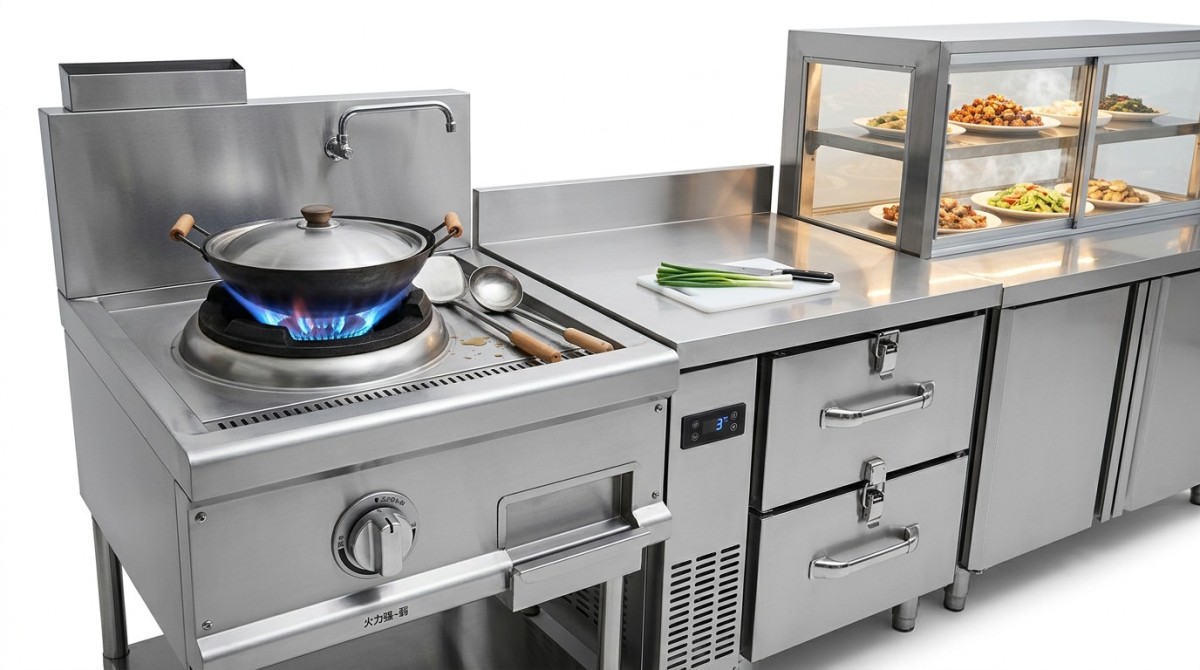
A wok range is not just a heat source. In high-volume foodservice, it is a production tool that affects speed, fuel use, staffing pressure, dish consistency, and kitchen workflow. An upgrade begins to pay back when the new unit supports a better balance between heat intensity, response time, ventilation fit, and cleaning efficiency across daily operations.
For operators, the most visible gain is throughput. In many busy Asian restaurants, hotel kitchens, and central cooking lines, a wok station may run in repeated short cycles for 3–6 peak hours per day. If heat recovery is faster and burner control is more stable, the kitchen can reduce waiting time between batches and maintain a smoother order flow during lunch and dinner rush periods.
For procurement teams and decision-makers, payback is broader than energy savings alone. It often comes from four linked areas: lower wasted fuel, less downtime, easier maintenance, and reduced dependence on highly experienced wok chefs to compensate for inconsistent equipment behavior. In other words, the upgrade matters when it improves the system, not only the appliance.
This matters across the wider kitchen equipment industry, where automation, intelligent controls, and energy-efficient kitchen solutions are becoming standard evaluation criteria. A modern wok range must now fit into a connected kitchen environment alongside a Charbroiler, Heated Display, refrigerated prep line, and digital monitoring practices rather than operate as an isolated heat point.
Where the return usually appears first
- Shorter cooking cycles during rush periods, especially in menus with repeated stir-fry batches and high pan turnover.
- Lower fuel waste from improved burner efficiency, better flame concentration, or more stable induction control where applicable.
- Reduced cleaning and maintenance time when splash control, grease handling, and drainage design are improved.
- Better line coordination with adjacent equipment, including prep tables, holding units, and ventilation systems.
A practical way to judge payback
Many buyers review a 12–24 month horizon rather than expecting immediate savings in the first week. A meaningful evaluation should compare daily covers, average batch size, operating hours, and maintenance interruptions before and after installation. Kitchens with two or more wok stations often see clearer results because line balancing and staff allocation improve at the same time.
Which performance indicators should buyers compare before replacing a wok range?
A wok range purchase should not be based on burner power alone. Buyers need a structured comparison that covers heat delivery, utility compatibility, ergonomics, cleaning access, ventilation requirements, and integration with the rest of the kitchen equipment layout. This is especially important in projects where a wok line works beside a Charbroiler or a Refrigerated Worktable in a limited footprint.
The table below helps procurement teams compare an existing unit with a typical upgraded option using practical selection dimensions. These are not fixed product specifications. They are decision categories commonly used in commercial kitchen planning, especially for restaurants, food courts, hotel banquets, and central kitchens handling medium to high meal volumes.
The value of this comparison is that it turns a technical discussion into a business decision. If an upgraded wok range cuts a few minutes from each cleaning cycle, improves throughput across 40–80 peak orders, and lowers wasted fuel over a 6-day operating week, the financial effect becomes easier to justify even without relying on exaggerated claims.
Technical review should also cover utility conditions. Gas pressure stability, electrical availability, water access, drainage slope, and hood extraction capacity can all influence real-world performance. In retrofit projects, these site factors often determine whether a high-output wok range performs as expected or becomes an expensive mismatch.
Three core technical checks before approval
- Confirm production demand: estimate hourly batch frequency, menu mix, and whether the station serves dine-in, takeaway, or central kitchen prep.
- Review installation conditions: verify gas or electrical supply, ventilation interface, and cleaning access within the current line.
- Assess maintainability: check service access, spare parts path, and expected maintenance intervals every month or quarter.
How do application scenarios change the right wok range choice?
Not every kitchen benefits from the same wok range configuration. A quick-service outlet with limited menu variation has different needs from a hotel banquet kitchen or a food processing support kitchen. Buyers should match the equipment to service rhythm, pan capacity, available utilities, and staffing level instead of choosing a model based only on output claims.
Scenario-based selection is especially important in the modern kitchen equipment sector, where intelligent cooking systems and integrated kitchen layouts are becoming more common. The wok station must align with surrounding production steps such as ingredient staging, cold holding, plating, and pass-through display. If one station advances while the rest of the line remains slow, the real payback is limited.
The following table outlines common commercial scenarios and the operational focus behind each one. It can help users, purchasers, and decision-makers understand why the same upgrade may produce different returns in different kitchen formats.
This kind of scenario planning also helps avoid overbuying. A high-capacity unit may sound attractive, but if the actual workload is moderate and the ventilation system is limited, a simpler and better-matched solution can deliver stronger value. In many projects, the best upgrade is the one that fits the kitchen process within 1 shift, 2 peaks, and the current staffing model.
Common scenario-specific risks
Restaurants with fast peaks
The biggest risk is choosing a unit with good nominal output but weak recovery between consecutive batches. This creates hidden delays exactly when speed matters most.
Central kitchens and production hubs
The risk is poor process integration. If cooked product cannot move efficiently to holding or cooling equipment, the wok range upgrade may only shift the bottleneck downstream.
Hotels and mixed-format operations
The key issue is flexibility. Kitchens handling both à la carte and event service need controls and station layouts that support changing batch sizes without excessive retraining.
What should procurement teams check on cost, implementation, and compliance?
The purchase price of a wok range is only one part of the decision. Real procurement value comes from total operating impact over the first 12 months and beyond. That includes installation, utility adaptation, commissioning time, training, spare parts planning, and any required line adjustments involving exhaust, drainage, or adjacent worktables.
A practical procurement review often works best in 4 stages: requirement definition, technical confirmation, site validation, and delivery planning. For replacement projects with minimal civil changes, lead time may be around 2–6 weeks depending on configuration and destination. More complex projects involving line redesign or export documentation may take longer.
Compliance should also be reviewed early. Requirements vary by market, but buyers commonly check food-contact material suitability, gas or electrical safety compatibility, sanitation-oriented design, and documentation needed for import, inspection, or internal approval. For international trade, it is wise to confirm these points before deposit, not just before shipment.
The table below shows a useful cost and implementation framework for comparing options. It helps decision-makers avoid selecting a lower upfront price that later creates higher installation complexity or operational inefficiency.
A structured review like this is useful not only for a wok range but for the whole kitchen equipment package. The same logic applies when a buyer evaluates a Heated Display for service holding or a Refrigerated Worktable for ingredient prep. The strongest projects are those where each item supports a coherent production flow rather than being purchased in isolation.
Five checks that reduce procurement risk
- Measure the available footprint, service access zone, and operator clearance before confirming the layout.
- Verify local utility conditions and ventilation match the intended wok range configuration.
- Request a parts and maintenance explanation, not only a quotation sheet.
- Clarify delivery scope, commissioning support, and any assembly tasks on site.
- Align the purchase with menu volume, labor availability, and future expansion plans for the next 1–3 years.
FAQ: what do users, buyers, and decision-makers usually ask?
How do I know whether my current wok range is underperforming?
Look at operational symptoms rather than age alone. Common signs include slow recovery between batches, unstable flame or control response, excessive idle consumption, repeated cleaning difficulty, and growing maintenance interruptions. If these issues appear during 2 major service windows each day, the station may already be affecting labor efficiency and ticket flow.
Is a wok range upgrade only worth it for high-volume restaurants?
No. High-volume kitchens usually see faster payback, but medium-volume sites can also benefit if the current unit wastes fuel, causes uneven cooking, or disrupts staff workflow. In kitchens with limited skilled labor, a more stable wok range can improve consistency and reduce training pressure even when total daily output is moderate.
What should be compared with nearby equipment such as a Charbroiler or Refrigerated Worktable?
Compare workflow timing, heat and ventilation load, cleaning routines, and operator movement. If a wok range upgrade speeds up cooking but the adjacent refrigerated prep zone cannot support faster replenishment, or the hood system cannot handle the new thermal pattern, the expected gain may not materialize. Kitchen equipment should be evaluated as one connected production environment.
How long does implementation usually take?
For a straightforward replacement, site confirmation and installation can often be planned within a 2–6 week window, depending on configuration, destination, and utility readiness. More complex projects involving custom fabrication, export documentation, or line modification usually need additional time. Early utility and layout review is the most effective way to avoid delays.
What is the most common purchasing mistake?
The most common mistake is buying for maximum headline output instead of real operating fit. Kitchens then face excessive fuel use, ventilation mismatch, awkward cleaning, or poor line integration. A better approach is to evaluate 3 things together: actual batch rhythm, installation conditions, and maintenance practicality over a normal operating quarter.
Why choose us when planning a wok range upgrade or broader kitchen equipment solution?
We support buyers who need more than a basic product list. If you are comparing a wok range with related kitchen equipment such as a Charbroiler, Heated Display, or Refrigerated Worktable, we can help you organize the decision around workflow, utility fit, cleaning practicality, and long-term operating value rather than headline specifications alone.
Our support can start with the issues that matter most in real procurement: parameter confirmation, layout matching, delivery timing, compliance document review, and configuration suggestions for restaurants, hotels, and central kitchens. If your project has a tight timeline of 2–4 weeks, we can help identify what must be confirmed first to reduce rework and approval delays.
You can contact us for practical discussion on several points: suitable wok range type for your menu and output, site utility review, replacement versus upgrade options, coordination with ventilation and prep equipment, sample or specification support, and quotation communication based on your project stage. This is especially useful when multiple stakeholders need a clear basis for approval.
If you are preparing a new kitchen line or replacing an aging wok station, send your layout, expected batch volume, utility conditions, and target delivery window. We can help you narrow the right configuration, identify possible installation risks, and build a more efficient kitchen equipment plan with fewer surprises after purchase.
Popular Tags
Kitchen Industry Research Team
Dedicated to analyzing emerging trends and technological shifts in the global hospitality and foodservice infrastructure sector.
Industry Insights
Join 15,000+ industry professionals. Get the latest market trends and tech news delivered weekly.
No spam. Unsubscribe anytime.



Contact With us
Contact:
Anne Yin (Ceramics Dinnerware/Glassware)
Lucky Zhai(Flatware)