
Restaurant Kitchen Equipment Checklist for Renovation Projects
A practical restaurant kitchen equipment checklist is essential for keeping renovation projects on schedule, within budget, and aligned with operational goals. For project managers and engineering leads, the right planning process helps reduce installation risks, improve workflow efficiency, and ensure compliance with safety and energy standards. This guide outlines the key equipment categories and planning points you need to support a smoother, smarter kitchen upgrade.
What is a restaurant kitchen equipment checklist, and why does it matter during renovation?
A restaurant kitchen equipment checklist is more than a purchasing list. In renovation projects, it acts as a coordination tool connecting operations, design, engineering, procurement, and installation. It helps project teams confirm what equipment is required, where it will be placed, how it connects to utilities, and whether it supports menu volume, labor efficiency, and code compliance.
For project managers, the checklist reduces expensive surprises. A combi oven may need upgraded electrical capacity. A new walk-in cooler may affect floor drainage, panel access, and ventilation paths. A dishwasher station may require changes to hot water supply, grease management, and staff circulation. Without a structured restaurant kitchen equipment checklist, renovation work can quickly become reactive instead of controlled.
This is especially important in today’s kitchen equipment industry, where foodservice operations increasingly expect intelligent controls, energy-saving performance, and integrated production flow. A modern renovation is rarely about replacing one appliance at a time. It is about building a system that supports food safety, speed, consistency, and future growth.
Which equipment categories should every restaurant kitchen equipment checklist include?
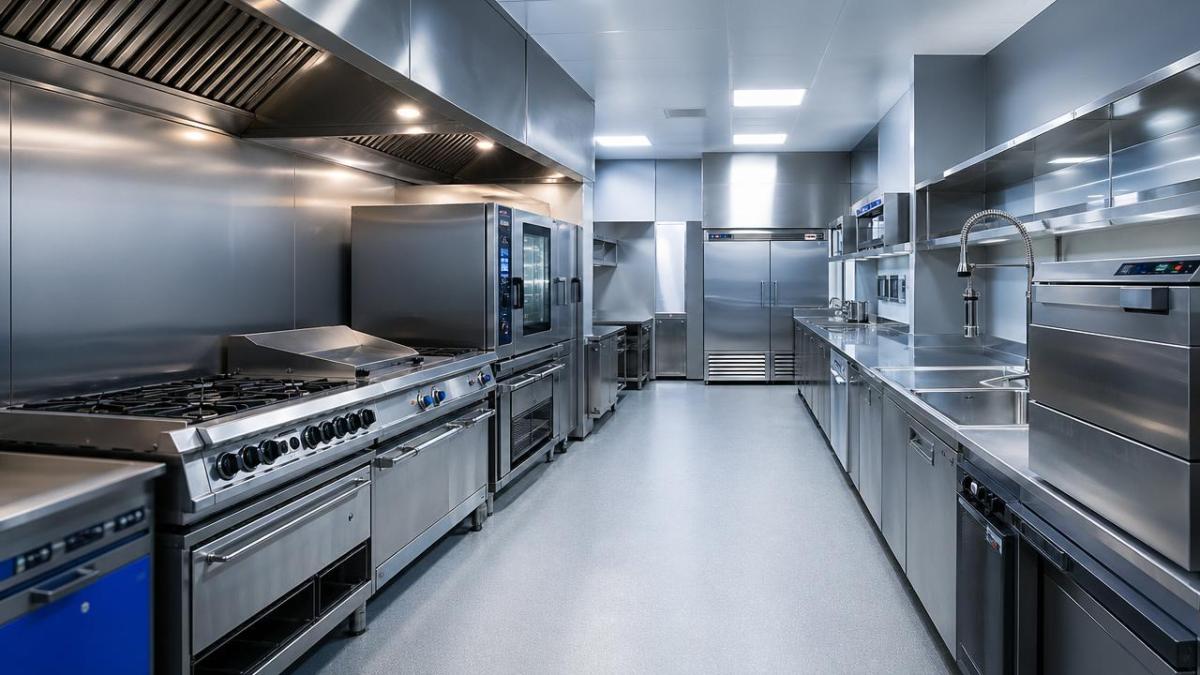
A complete restaurant kitchen equipment checklist should cover all major functional zones of the back-of-house. The exact mix depends on the restaurant concept, but most renovation projects should review the following categories before drawings and procurement are finalized.
- Cooking equipment: ranges, ovens, fryers, grills, griddles, steamers, combi ovens, salamanders, induction units, and specialty cooking lines.
- Refrigeration and cold storage: reach-in refrigerators, freezers, undercounter units, prep tables, blast chillers, walk-in coolers, and ice machines.
- Food preparation equipment: mixers, slicers, processors, blenders, meat grinders, dough equipment, and vegetable prep machines.
- Washing and sanitation: dishwashers, pot washers, sinks, hand wash stations, drainboards, sanitizing systems, and water filtration.
- Ventilation and exhaust: hoods, make-up air systems, fire suppression interfaces, grease filters, and duct coordination points.
- Holding and service equipment: hot holding cabinets, bain-maries, heated shelves, pass-through stations, and display solutions.
- Storage and support items: shelving, ingredient bins, mobile racks, stainless tables, utility carts, and waste handling units.
- Utility-connected systems: gas valves, electrical panels, smart monitoring devices, and energy management interfaces linked to key appliances.
The strongest checklists also include non-equipment notes such as connection loads, dimensions, service clearances, cleaning access, and replacement lead times. That level of detail helps avoid conflicts between architectural plans and real operating needs.
How do you decide what equipment should stay, be upgraded, or be replaced?
This is one of the most common renovation questions, and it is where a restaurant kitchen equipment checklist becomes a decision framework rather than a static document. The best approach is to evaluate each asset through five filters: condition, capacity, compliance, efficiency, and operational fit.
Condition refers to age, maintenance history, downtime frequency, and spare parts availability. Capacity means whether the unit still supports target production volume, especially at peak periods. Compliance covers fire safety, sanitation design, ventilation compatibility, and local energy requirements. Efficiency focuses on utility use, labor savings, and digital monitoring capability. Operational fit asks whether the equipment still matches the updated menu, service speed goals, and workflow design.
A common mistake is keeping equipment only because it still runs. If an old fryer increases oil consumption, causes service delays, or does not integrate with the revised line layout, it may cost more over time than replacement. On the other hand, not every renovation requires a full equipment reset. Well-maintained stainless prep tables, dry storage systems, and some refrigeration units may be retained if they support the new plan without compromising code or performance.
Quick evaluation table for renovation teams
What should project managers check before specifying equipment on renovation drawings?
Before equipment is placed on final drawings, project leaders should verify much more than dimensions. A restaurant kitchen equipment checklist should connect every major appliance to technical, operational, and installation realities. This is where many renovation delays begin, particularly when procurement happens before engineering confirmation.
Start with utility mapping. Confirm electrical voltage, phase, breaker needs, gas type, water pressure, drainage, ventilation demand, and condensate management. Then review spatial coordination, including door swing, service access, cleaning clearance, and movement of staff, carts, and ingredients through the kitchen.
Next, align equipment with production logic. The ideal kitchen flow usually follows receiving, storage, prep, cooking, holding, service, and wash-up. If a prep table is placed too far from cold storage, or the dishwashing return path crosses the plating line, even premium equipment will not fix the workflow issue. Renovation should improve process efficiency, not simply refresh the room.
Finally, check delivery and installation sequencing. Large kitchen equipment often has long lead times, and some units must be positioned before walls, counters, or hood sections are completed. A practical restaurant kitchen equipment checklist should therefore include procurement milestones, factory release dates, site readiness checkpoints, and commissioning responsibilities.
How can a checklist help control budget, schedule, and long-term operating cost?
For engineering leads and project managers, the value of a restaurant kitchen equipment checklist is not limited to specification accuracy. It also supports cost control across the full project lifecycle. Renovation budgets are often damaged by hidden utility upgrades, rushed substitutions, and layout revisions caused by incomplete equipment planning.
A good checklist separates capital cost from operating cost. One oven may be cheaper to buy, while another offers lower energy consumption, faster recovery time, and fewer labor steps. In high-volume kitchens, the second option may provide better value over several years. The same principle applies to refrigeration, warewashing, and food prep machinery.
Scheduling benefits are equally important. When each equipment item is tagged with dimensions, utility needs, vendor lead times, and installation dependencies, the project team can build a more realistic sequence. This improves coordination between contractors, MEP specialists, kitchen consultants, and operations managers.
Long-term operating cost should also include cleaning time, preventive maintenance, water use, consumables, downtime exposure, and training requirements. Smart kitchen technologies can add value here. Digital monitoring, programmable cooking, and connected refrigeration alerts can improve consistency while reducing energy waste and emergency service calls.
Budget and schedule checkpoints to include
- Initial equipment audit with photos and model data
- Utility gap analysis before final procurement
- Lead time review for custom or imported items
- Installation access check for large equipment
- Commissioning, testing, and staff training plan
- Spare parts and warranty support confirmation
What are the most common mistakes when using a restaurant kitchen equipment checklist?
Many teams create a restaurant kitchen equipment checklist but still face rework because the list is not used in a disciplined way. One frequent mistake is treating all equipment as equal. In reality, some items are mission-critical and others are flexible. Core cooking, refrigeration, ventilation, and sanitation systems usually deserve earlier technical review than loose support tables or mobile racks.
Another mistake is choosing equipment based only on price or brand familiarity. Renovation success depends on fit. A well-known product can still be the wrong choice if it overloads utilities, disrupts line balance, or complicates maintenance access. Teams also underestimate interoperability. As smart and automated kitchen solutions become more common, compatibility with monitoring platforms and management systems matters more than before.
A third mistake is failing to involve operations early. Chefs, kitchen supervisors, and sanitation staff often identify practical issues that are not visible in equipment brochures, such as cleaning difficulty, pass-through congestion, or prep bottlenecks. The best checklists combine technical detail with operating reality.
Lastly, some renovations ignore future adaptability. If menu changes, delivery growth, or production centralization are likely, the equipment plan should leave room for expansion, modular upgrades, or more automated food processing support. That is especially relevant in a market moving toward intelligent, energy-efficient, and integrated kitchen systems.
What should be included in the final pre-purchase and pre-installation review?
Before issuing purchase orders or approving installation, project teams should run a final review against the restaurant kitchen equipment checklist. This review should confirm that each item has complete specification data, utility coordination, supplier commitments, and operational approval.
At minimum, verify model numbers, dimensions, performance capacity, connection requirements, certification status, finish materials, accessories, and service clearances. Confirm whether the equipment ships assembled or in sections, whether special lifting or access routes are needed, and whether startup support is included. If imported kitchen equipment is involved, check customs timing, voltage compatibility, and local service network availability.
This is also the right stage to confirm operator training and preventive maintenance handover. A renovation project is only successful when the kitchen performs consistently after opening. That means the checklist should not end at delivery; it should extend through testing, balancing, calibration, and the first weeks of live operation.
Which questions should you ask suppliers or internal stakeholders before moving forward?
If you need to finalize a renovation plan, refine equipment parameters, or compare suppliers, begin with a focused set of questions tied to the restaurant kitchen equipment checklist. Ask which equipment directly supports the target menu and peak-hour throughput. Confirm what utility upgrades are required and whether any equipment creates ventilation, drainage, or fire protection impacts. Review lead times, service response commitments, warranty coverage, and parts availability. Clarify how installation, commissioning, and staff training will be handled. Finally, ask whether each major item supports long-term goals such as energy efficiency, digital monitoring, and future production flexibility.
When these questions are answered early, project managers and engineering leads can make more confident decisions, reduce risk, and build a renovation roadmap that is practical, scalable, and aligned with modern kitchen equipment standards.
Popular Tags
Kitchen Industry Research Team
Dedicated to analyzing emerging trends and technological shifts in the global hospitality and foodservice infrastructure sector.
Industry Insights
Join 15,000+ industry professionals. Get the latest market trends and tech news delivered weekly.
No spam. Unsubscribe anytime.
Contact With us
Contact:
Anne Yin (Ceramics Dinnerware/Glassware)
Lucky Zhai(Flatware)