
A Clear Restaurant Kitchen Equipment Guide for First Projects
Starting your first foodservice project can be overwhelming, especially when selecting the right tools for performance, safety, and budget. This restaurant kitchen equipment guide helps information-focused buyers understand the essential categories, key selection factors, and current trends shaping modern commercial kitchens. Use it as a practical starting point to plan a more efficient, compliant, and future-ready kitchen setup.
If you are planning a first restaurant, café, cloud kitchen, hotel outlet, or small catering operation, the biggest mistake is usually not buying too little equipment. It is buying the wrong equipment in the wrong order. For first projects, success depends less on having the most advanced kitchen and more on matching equipment to menu, volume, workflow, compliance, and operating cost.
That is the core search intent behind a restaurant kitchen equipment guide: readers want a clear framework for deciding what equipment is essential, what can wait, what affects efficiency, and how to avoid expensive early-stage errors. In other words, they are not only looking for a product list. They want a smarter way to plan a working commercial kitchen.
What first-time buyers really need to know before choosing equipment
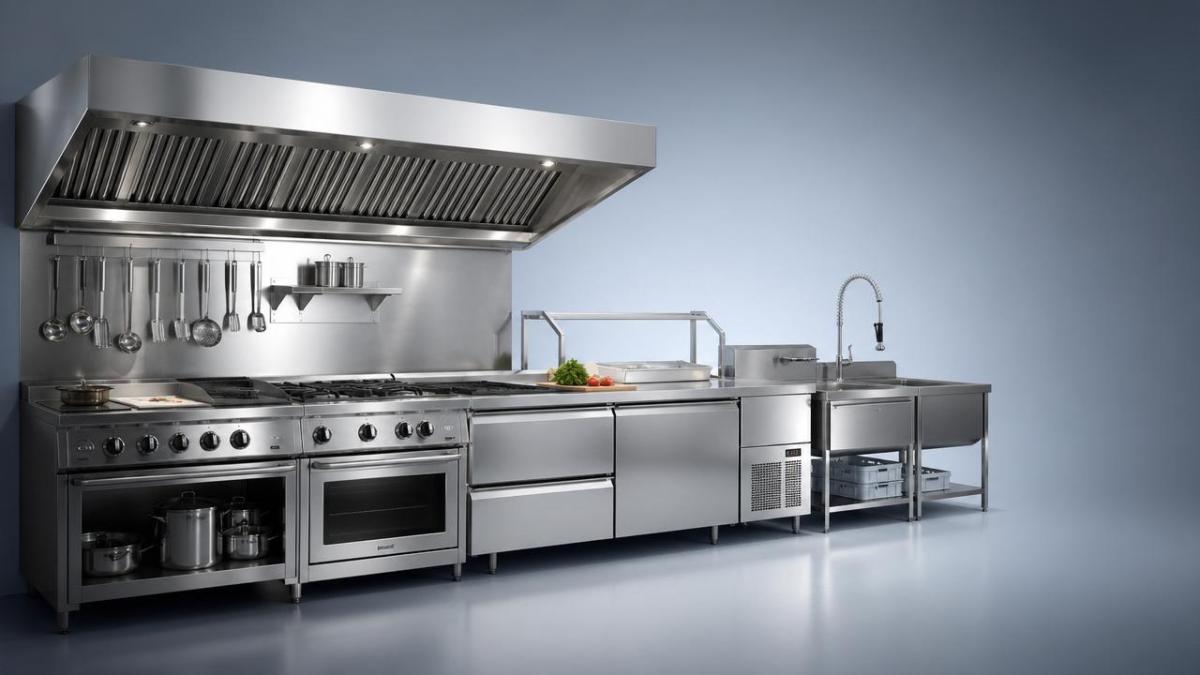
For information-focused readers, the most important questions are practical. What equipment is truly necessary for launch? How should it be prioritized? What specifications matter most? Which choices reduce long-term cost and risk? These questions should shape every purchasing decision.
Before comparing brands or prices, define five basics: your menu, expected service volume, kitchen footprint, local compliance requirements, and utility conditions. A fryer that looks affordable on paper may become a poor choice if your power supply is limited, your ventilation setup is incomplete, or your menu does not justify its output capacity.
A useful restaurant kitchen equipment guide should therefore begin with planning logic, not catalog browsing. Equipment is part of a system. Cooking, preparation, cleaning, storage, ventilation, and food holding all need to work together. If one category is underplanned, the entire kitchen can slow down or fail inspections.
Start with the menu and production flow, not the equipment list
The best commercial kitchens are designed backward from food production. Ask what will be prepared, how often, in what batch size, by how many staff, and during which service peaks. A breakfast café, quick-service burger shop, bakery, and central kitchen all require very different equipment mixes even if they share similar square footage.
For example, a menu based on grilled proteins, sautéed sides, and plated service may require a cooking line centered on ranges, griddles, charbroilers, holding cabinets, and refrigeration near the line. A beverage-heavy concept may need more ice production, undercounter refrigeration, and blender stations than hot-line capacity.
Flow matters just as much as menu. Raw receiving should move logically into storage, then prep, cooking, plating, service, and warewashing. Poor flow leads to staff congestion, cross-contamination risks, slower ticket times, and higher labor cost. This is why experienced buyers do not treat kitchen equipment as separate purchases. They evaluate how each item supports movement and productivity.
For first projects, this step helps answer a critical budget question: which equipment drives revenue directly, and which equipment mainly supports compliance or convenience? Both matter, but they should not be funded equally in a tight opening budget.
The essential categories in a restaurant kitchen equipment guide
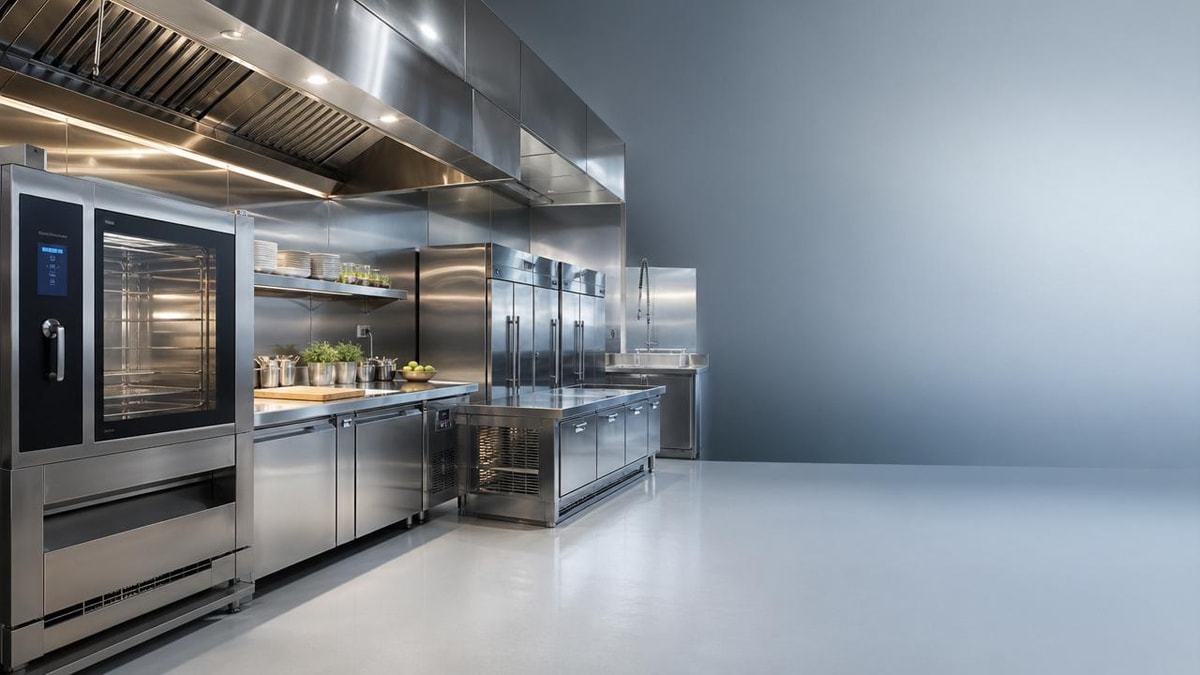
Most first projects should evaluate equipment across six main categories: cooking equipment, refrigeration, food preparation equipment, ventilation and exhaust, warewashing and sanitation, and stainless workspaces plus storage. Some concepts also need beverage systems, display equipment, food holding, or light processing machinery.
Cooking equipment is typically the largest decision area. It may include commercial ranges, ovens, fryers, griddles, steamers, combi ovens, salamanders, pasta cookers, or induction units. Selection depends on menu style, output volume, speed requirements, and staff skill level.
Refrigeration includes reach-in refrigerators, freezers, undercounter units, prep tables, walk-ins, and blast chillers for some operations. Reliability is especially important here because refrigeration failures affect food safety, waste, and business continuity immediately.
Food preparation equipment covers mixers, slicers, processors, peelers, scales, vacuum sealers, and prep tables. These items often determine labor efficiency more than buyers expect. The right prep equipment can reduce repetitive manual work and improve product consistency.
Ventilation and exhaust systems are often underestimated in first projects. Yet hoods, ducts, make-up air, grease control, and fire suppression are foundational for safety and regulation. Cooking equipment choices are tightly linked to ventilation requirements, so these decisions should be made together.
Warewashing and sanitation equipment includes sinks, dishwashers, glasswashers, handwashing stations, grease traps, and sanitation accessories. This area is not glamorous, but underinvestment here can create hygiene failures, staff bottlenecks, and inspection problems.
Worktables, shelving, and storage systems support organization, prep speed, and cleanliness. Stainless steel tables, wall shelves, dry storage racks, mobile carts, and ingredient bins may look secondary, but they are essential for a functional kitchen environment.
How to prioritize equipment when the budget is limited
Few first projects can buy every ideal item at once. A realistic restaurant kitchen equipment guide should help readers separate must-have equipment from phase-two upgrades. A simple prioritization method is to divide purchases into three groups: operationally critical, compliance critical, and efficiency enhancing.
Operationally critical equipment is what you need to produce and serve your core menu from day one. If your concept depends on frying, refrigeration, and holding, those items come first. If they are missing or undersized, revenue suffers immediately.
Compliance critical equipment includes ventilation, hand sinks, warewashing, refrigeration standards, and fire safety systems required by local rules. These are not optional. Delaying them can block opening approvals or create legal risk.
Efficiency-enhancing items improve labor productivity, speed, or consistency but may not be essential at launch. Examples include specialized processors, advanced smart controls, secondary holding units, or premium multifunction equipment. These can be valuable, but only if the core kitchen system is already secure.
Another smart approach is to compare lifecycle cost instead of purchase price alone. An energy-efficient oven or refrigerator may cost more upfront but save significantly through lower utility bills, less downtime, and longer service life. That matters even more in operations with narrow margins.
What specifications matter most when comparing options
First-time buyers often focus too heavily on visible features and too little on operating fit. In most commercial kitchens, the most important specifications are capacity, output speed, footprint, utility requirement, material durability, cleanability, temperature stability, and service support availability.
Capacity and output should match realistic peak demand, not only average daily volume. If lunch service is highly concentrated, undersized cooking or refrigeration equipment can create serious bottlenecks even if the unit seems adequate on paper.
Footprint and kitchen layout are equally important. A larger machine is not always better if it disrupts staff movement, blocks cleaning access, or reduces prep area. Space efficiency often has more operational value than extra theoretical capacity.
Utility compatibility is another major factor. Check voltage, phase, gas type, water pressure, drainage needs, and ventilation load early. Equipment that requires expensive site modifications can shift the total project budget dramatically.
Durability and cleanability influence daily operations over the long term. Stainless steel construction, smooth surfaces, accessible components, and removable parts make cleaning easier and help maintain food safety standards. In high-use kitchens, easier cleaning often translates into labor savings as well.
After-sales service and parts support should never be ignored. Even strong equipment loses value if spare parts are hard to obtain or qualified technicians are unavailable locally. For first projects especially, dependable support reduces downtime risk and decision stress.
Common mistakes in first restaurant kitchen projects
One common mistake is overbuying based on future growth that may not happen soon. New operators sometimes purchase equipment sized for an idealized second-stage volume rather than actual launch demand. This can create unnecessary capital pressure and larger utility bills without improving early performance.
Another mistake is underestimating refrigeration and storage needs. Foodservice operations often focus on hot cooking equipment first, but lack of cold storage can disrupt purchasing, prep timing, and food safety. A well-balanced kitchen usually performs better than one with an oversized cooking line and weak support infrastructure.
Many first projects also overlook ergonomics and cleaning access. Equipment may fit physically but still create operational friction if doors cannot open fully, staff must cross paths during rush periods, or cleaning crews cannot reach under and behind key units.
A further issue is ignoring compliance until late in the process. Health regulations, fire protection rules, drainage requirements, and ventilation standards can all affect equipment selection. Early coordination with local consultants, contractors, and inspectors can prevent expensive redesigns.
Why smart and energy-efficient equipment is gaining attention
The kitchen equipment industry is moving toward automation, intelligence, and energy efficiency for good reason. Labor pressure, rising utility costs, food safety expectations, and the need for consistent output are encouraging more operators to consider digital and connected solutions even in smaller projects.
Smart equipment can include programmable ovens, temperature monitoring systems, digital control panels, connected refrigeration alerts, and integrated kitchen management tools. For first-time buyers, these features are valuable when they simplify training, improve consistency, or reduce waste. They are less valuable when they add cost without solving a real operational problem.
Energy-efficient restaurant equipment is also becoming more relevant. Efficient refrigeration, induction cooking, insulated holding systems, and optimized ventilation can reduce operating costs over time. In markets with high electricity or gas prices, efficiency should be treated as a financial factor, not just a sustainability preference.
That said, not every first project needs the most advanced technology. The best decision is usually a balanced one: invest in smart features where they improve control, food safety, and repeatability, but stay disciplined about gadgets that do not meaningfully support the concept.
How to build a practical shortlist and make better purchase decisions
Once you understand your menu, flow, budget, and compliance conditions, build a shortlist by category. For each item, document its purpose, required output, dimensions, utility needs, estimated daily usage, cleaning demands, and whether it is essential for opening. This helps compare options objectively.
It is also useful to request layout-based recommendations rather than product-only quotations. Suppliers who understand workflow can often identify spacing conflicts, ventilation implications, or missing support equipment that basic quotations fail to show.
When comparing proposals, ask specific questions: What is the lead time? What warranty is included? Are spare parts stocked locally? What maintenance is required? What is the expected energy use? Has this model performed well in similar foodservice settings? These answers often reveal more than a price sheet does.
For information researchers, the main goal is not to finalize every specification immediately. It is to develop a sound evaluation framework. A strong restaurant kitchen equipment guide gives you that framework so you can move from confusion to confident comparison.
Final thoughts on planning a first commercial kitchen
Your first foodservice project does not need perfect equipment in every category. It needs the right foundation. The most effective kitchen plans start with menu logic, realistic production needs, compliance requirements, and total operating cost rather than impulse buying or feature-driven selection.
As this restaurant kitchen equipment guide shows, the best purchasing decisions usually come from asking better questions: What equipment directly supports the concept? What prevents bottlenecks? What protects safety and compliance? What reduces long-term cost? And what can wait until the business proves its demand?
If you use those questions as your filter, you will be far better prepared to create a kitchen that is efficient, safe, scalable, and financially sensible. For first projects, that clarity is more valuable than any single piece of equipment.
Popular Tags
Kitchen Industry Research Team
Dedicated to analyzing emerging trends and technological shifts in the global hospitality and foodservice infrastructure sector.
Industry Insights
Join 15,000+ industry professionals. Get the latest market trends and tech news delivered weekly.
No spam. Unsubscribe anytime.
Contact With us
Contact:
Anne Yin (Ceramics Dinnerware/Glassware)
Lucky Zhai(Flatware)