
Bakery proofer machine upgrades are reshaping plant investment
Bakery proofer machine upgrades are changing how food plants evaluate capital spending, balancing throughput, consistency, and energy efficiency. For buyers comparing bakery oven machine, dough mixer machine, planetary mixer machine, dough divider machine, and dough sheeter machine options, today’s investment decisions increasingly connect with broader kitchen preparation equipment planning, from kitchen prep table layouts to integrated production workflows.
This shift matters to researchers, operators, procurement teams, and business decision-makers because proofing is no longer an isolated bakery step. In modern food plants, the proofer affects dough stability, labor rhythm, oven loading, product repeatability, hygiene control, and even utility planning. When one machine is upgraded, upstream mixing and downstream baking often need to be reviewed at the same time.
In the wider kitchen equipment industry, investment decisions increasingly favor integrated systems that improve control, reduce waste, and support flexible production. That is why bakery proofer machine selection is now discussed together with dough handling equipment, kitchen prep table organization, tray logistics, digital monitoring, and maintenance planning rather than as a single line-item purchase.
Why bakery proofer machine upgrades are influencing plant investment priorities
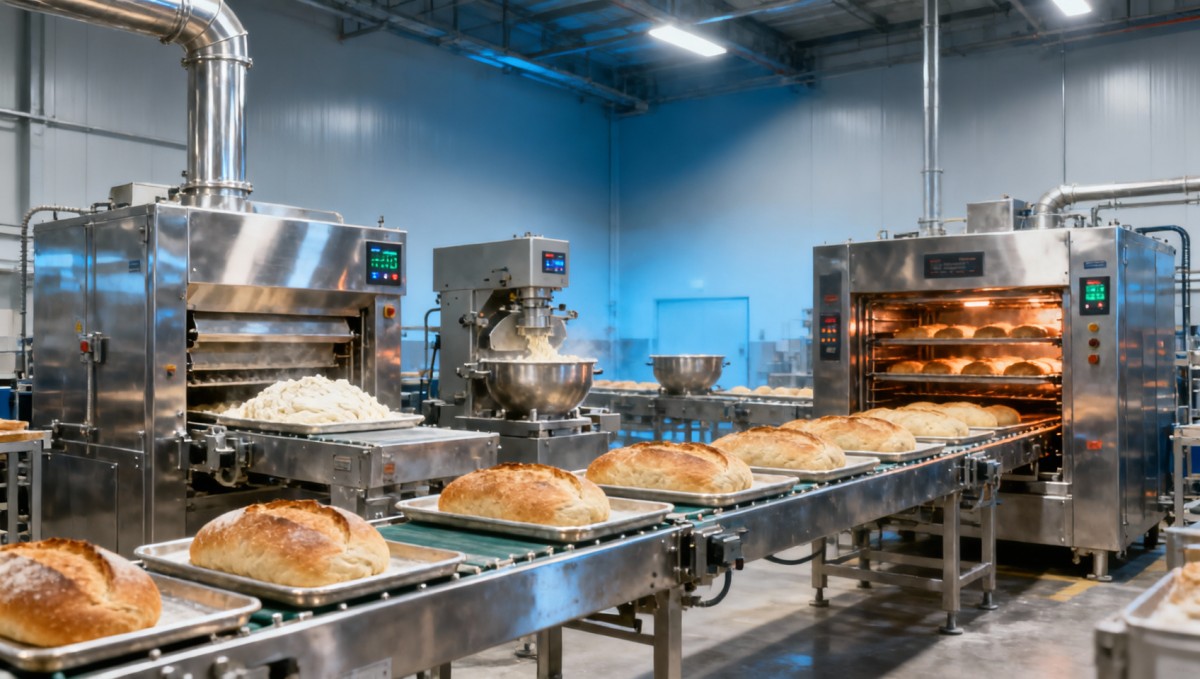
A bakery proofer machine directly affects fermentation stability, product volume, crust quality, and batch timing. In practical terms, a plant that upgrades from basic manual proofing to a controlled chamber with temperature and humidity adjustment can reduce process variation across shifts. Typical industrial proofing ranges run around 30°C to 40°C with relative humidity between 75% and 90%, depending on dough type, line speed, and desired finish.
For procurement teams, the real issue is not only the machine price. It is the cost of inconsistency. A line producing buns, toast, pizza bases, or laminated dough may lose yield when proofing fluctuates by even 2°C to 3°C or when chamber recovery time is too slow after door opening. Those losses show up as under-proofed trays, rework, delayed oven loading, and avoidable labor hours.
For operators, better proofers simplify daily control. Touchscreen recipes, programmable stages, and alarms for humidity drift can reduce manual checking frequency from every 15 minutes to every 30 to 60 minutes in stable production runs. That matters in facilities where one operator may already supervise a dough mixer machine, dough divider machine, and sheeting area in the same shift.
For business decision-makers, upgrades support broader plant goals: lower energy use, more predictable output, and improved compatibility with automated kitchen and food processing systems. In many medium-capacity plants, proofing capacity expansion is evaluated in connection with a 3-year to 5-year production plan, not only today’s order volume.
The investment drivers behind proofer modernization
- Higher throughput targets, such as moving from 300 trays per shift to 450 or more without adding parallel manual proofing space.
- Consistency requirements for multi-site operations where recipes must perform similarly across 2 to 5 plants.
- Energy management goals, especially where HVAC, ovens, and proofers account for a large part of utility load.
- Food safety and cleaning expectations that favor stainless interiors, easier drainage, and clearer maintenance access.
How proofing influences the rest of the line
A proofer upgrade often changes how upstream and downstream machines should be sized. If proofing time becomes more stable at 35 to 55 minutes, oven loading can be scheduled more tightly. That may expose a bottleneck in a bakery oven machine, tray handling system, or dough divider machine that previously went unnoticed because proofing variation masked the line imbalance.
Likewise, if a planetary mixer machine or spiral mixing system starts producing more uniform dough temperature, the proofer may be able to run narrower control bands. This is why experienced buyers increasingly compare complete process compatibility rather than selecting each unit independently.
Comparing bakery proofers with related dough and kitchen preparation equipment
A bakery proofer machine is most valuable when it fits the rhythm of the entire production environment. Buyers often compare proofers with bakery oven machine capacity, dough mixer machine output, dough sheeter machine speed, and kitchen prep table space allocation. The best investment is rarely the largest machine; it is the one that balances line timing, sanitation needs, and labor patterns.
The following comparison outlines how key equipment categories contribute to production control and where they create dependencies for bakery plant investment. This is especially relevant in central kitchens, hotel bakery departments, and food processing facilities that operate 1-shift or 2-shift schedules with mixed SKU output.
The key takeaway is that proofer upgrades should be assessed as part of a system. A plant may gain little from a larger proofer if the bakery oven machine can only absorb 70% of the added tray volume. Likewise, excellent proofing control cannot compensate for unstable dough temperature caused by mixing inconsistency.
When kitchen preparation equipment also matters
In smaller plants and central kitchens, kitchen prep table layout has direct impact on proofing performance. If tray loading stations are cramped or located too far from the proofer, operators may add 20 to 40 seconds per tray transfer. Across 150 trays per shift, that delay becomes meaningful. Better layout can deliver measurable gains without increasing machine count.
This is why integrated kitchen equipment planning now includes movement paths, tray staging, washdown zones, and digital production boards. The proofer is no longer viewed as a stand-alone cabinet but as a timing hub inside the broader workflow.
Key selection criteria: capacity, control range, energy use, and serviceability
Selecting the right bakery proofer machine starts with real production data. Buyers should estimate required tray or rack capacity based on peak hour output, not average daily volume alone. For example, if a line needs 240 trays across an 8-hour shift but processes in 3 concentrated loading windows, the effective proofing requirement may be closer to 40 to 60 trays at one time rather than the arithmetic average.
Control range is equally important. A plant producing both enriched dough and lean bread may need multiple programmable zones or recipes. Typical evaluation points include temperature stability within a narrow band, humidity control responsiveness, and chamber recovery after frequent door openings. Machines with clearer parameter logging can also support troubleshooting when product volume changes unexpectedly.
Energy efficiency should be judged in relation to total line operation rather than sticker claims. Better insulation, efficient steam or humidity generation, and faster stabilization may reduce utility waste, especially on lines running 10 to 16 hours per day. However, oversizing the chamber can offset those gains if large empty volume must be conditioned repeatedly.
Serviceability is a practical factor often overlooked during tender comparison. Access to sensors, drainage components, seals, fans, and control panels affects downtime. In food plants, a maintenance stop of 2 hours during a production window can create more financial disruption than a moderate difference in purchase price.
A practical procurement checklist
- Define product mix: bread, buns, pizza, pastry, or mixed output across 3 to 10 SKUs.
- Match proofer holding capacity to actual line rhythm, including dough divider machine and oven loading intervals.
- Confirm utility requirements such as power, water, drainage, and ambient HVAC interaction.
- Review cleaning access and spare part replacement time for routine wear items.
- Check whether the control interface supports recipe storage, alarms, and operator training simplicity.
Common sizing mistakes
One common mistake is buying for theoretical expansion without confirming floor space, workflow width, and loading labor. Another is selecting a unit with advanced controls but failing to standardize dough input from the dough mixer machine or planetary mixer machine. A proofer can stabilize a process, but it cannot fully correct inconsistent scaling, mixing, or sheeting.
Implementation, integration, and return-on-investment planning
The strongest plant investments are usually supported by a phased implementation plan. In bakery operations, installation is not only a delivery event. It includes layout confirmation, utility connection, trial recipes, operator training, cleaning validation, and line balancing. Depending on project scope, a practical rollout can take 2 to 6 weeks from site readiness to stable production.
Integration is especially important when proofers connect with a bakery oven machine, rack movement system, or digital production schedule. If tray flow is not coordinated, the line may simply move bottlenecks from proofing to loading or cooling. That is why procurement teams increasingly ask suppliers to support workflow mapping rather than only equipment quotation.
Return on investment often comes from a combination of smaller gains instead of one dramatic improvement. Typical contributors include lower batch rejects, reduced manual monitoring, fewer delays between proofing and bake, and more stable product quality over 2 or 3 shifts. In mixed-production facilities, the ability to switch recipes more predictably can also help shorten changeover losses.
Below is a practical framework that buyers can use when comparing investment value across different machine configurations and implementation approaches.
This table shows that ROI should be documented across time, labor, quality, and maintenance rather than capital cost alone. Plants that measure only output capacity often miss operational savings created by improved consistency and easier control.
A five-step implementation path
- Step 1: Audit current dough flow, proofing time, tray count, and oven synchronization.
- Step 2: Confirm floor layout, kitchen prep table positions, utility points, and sanitation routes.
- Step 3: Install and test under at least 2 product recipes and more than 1 shift pattern if applicable.
- Step 4: Train operators and maintenance staff on alarms, cleaning, and recipe control.
- Step 5: Review performance after 14 to 30 days and fine-tune settings with production feedback.
Operational risks, maintenance priorities, and buyer FAQs
Even a well-selected bakery proofer machine can underperform if daily operation is not controlled carefully. Common risks include incorrect loading density, poor door discipline, inadequate cleaning of humidity systems, and weak alignment between mixing temperature and proofing recipes. In many plants, these issues appear within the first 30 to 60 days after commissioning, when staff are still adjusting to new equipment logic.
Maintenance planning should be simple and disciplined. Daily inspection of seals, drains, and visible moisture build-up helps prevent hygiene and control issues. Weekly checks often focus on fans, humidity delivery components, and sensor cleanliness. Monthly review may include calibration confirmation, especially if the plant has noticed variation between displayed conditions and actual dough behavior.
For procurement teams, service response and parts access should be clarified before purchase. It is practical to ask which wear components can be replaced on-site, how long routine service takes, and whether spare recommendations are available for the first 6 to 12 months. These details matter as much as technical brochures when uptime is critical.
How do I know if my plant needs a proofer upgrade?
If product volume varies by shift, proofing queues regularly delay the bakery oven machine, or operators are manually correcting dough condition too often, an upgrade may be justified. Other signals include rising reject rates, frequent chamber recovery delays, and inability to support more than a narrow product range without manual intervention.
What should buyers prioritize first: capacity or control accuracy?
In most cases, start with actual line balance. A larger unit without suitable control will not solve inconsistency, while excellent control in an undersized chamber creates queues. A balanced decision normally reviews 4 areas together: holding capacity, recovery speed, control stability, and service access.
Can a bakery proofer machine improve results without replacing other equipment?
Yes, but only to a point. If the dough mixer machine creates unstable dough temperature or the dough divider machine has poor weight consistency, proofing benefits will be limited. The best results usually come from coordinated adjustment of 2 or 3 linked process steps rather than expecting the proofer to compensate for all upstream variation.
Buyer reminder
When comparing suppliers, request practical information: recommended cleaning frequency, expected spare list, installation support scope, operator training depth, and compatibility with your current bakery oven machine or kitchen preparation equipment. These details reduce project risk and improve ownership confidence.
Bakery proofer machine upgrades are reshaping plant investment because they influence more than one process step. They affect throughput, product consistency, labor structure, energy use, and the fit between mixing, dividing, sheeting, proofing, and baking. For food plants, central kitchens, hotels, and bakery operations, the smartest choice is an integrated decision that matches machine capacity with workflow, sanitation, and long-term production goals.
If you are evaluating bakery oven machine, dough mixer machine, planetary mixer machine, dough divider machine, dough sheeter machine, or related kitchen preparation equipment, now is the right time to review the full line instead of replacing one unit in isolation. Contact us to discuss your production target, compare equipment options, and get a tailored solution that fits your plant layout and operational priorities.
Popular Tags
Kitchen Industry Research Team
Dedicated to analyzing emerging trends and technological shifts in the global hospitality and foodservice infrastructure sector.
Industry Insights
Join 15,000+ industry professionals. Get the latest market trends and tech news delivered weekly.
No spam. Unsubscribe anytime.
Contact With us
Contact:
Anne Yin (Ceramics Dinnerware/Glassware)
Lucky Zhai(Flatware)