
Restaurant kitchen safety gaps that persist even with certified equipment
Even with certified restaurant kitchen equipment—stainless steel restaurant kitchen fixtures, commercial restaurant kitchen design compliance, and modern restaurant kitchen hood systems—critical safety gaps persist. From inadequate restaurant kitchen ventilation system airflow to inefficient restaurant kitchen workflow and poor restaurant kitchen organization, risks remain hidden in plain sight. Issues like improper restaurant kitchen storage, aging restaurant kitchen equipment repair needs, and suboptimal restaurant kitchen equipment layout undermine even the most eco-friendly restaurant supplies. For procurement teams, operators, and decision-makers alike, understanding these blind spots is essential—not just for compliance, but for real-world restaurant kitchen safety and long-term operational resilience.
Why Certification Alone Doesn’t Guarantee Safety
Certification—such as NSF/ANSI 4, UL 197, or CE marking—validates baseline performance under controlled lab conditions. But real kitchens operate across variable loads, staff rotations, maintenance lapses, and evolving menu demands. A hood system certified for 3,000 CFM airflow may deliver only 1,800 CFM after 12 months of grease buildup and duct obstructions—well below ASHRAE 154’s minimum 2,200 CFM requirement for medium-volume cooking lines.
Similarly, stainless steel worktables meeting ASTM A240 standards still pose slip hazards if surface finish exceeds Ra 0.8 μm—or if floor-level drainage grooves are spaced >150 mm apart, violating EN 1672-2 ergonomics guidance. Certification confirms what equipment *can* do—not how it *performs* over time in context.
Three systemic disconnects explain this gap:
- Static testing vs. dynamic use: UL 96A tests fire suppression nozzles at fixed nozzle angles; real kitchens require adjustable coverage for griddles, fryers, and combi-ovens placed in non-standard configurations.
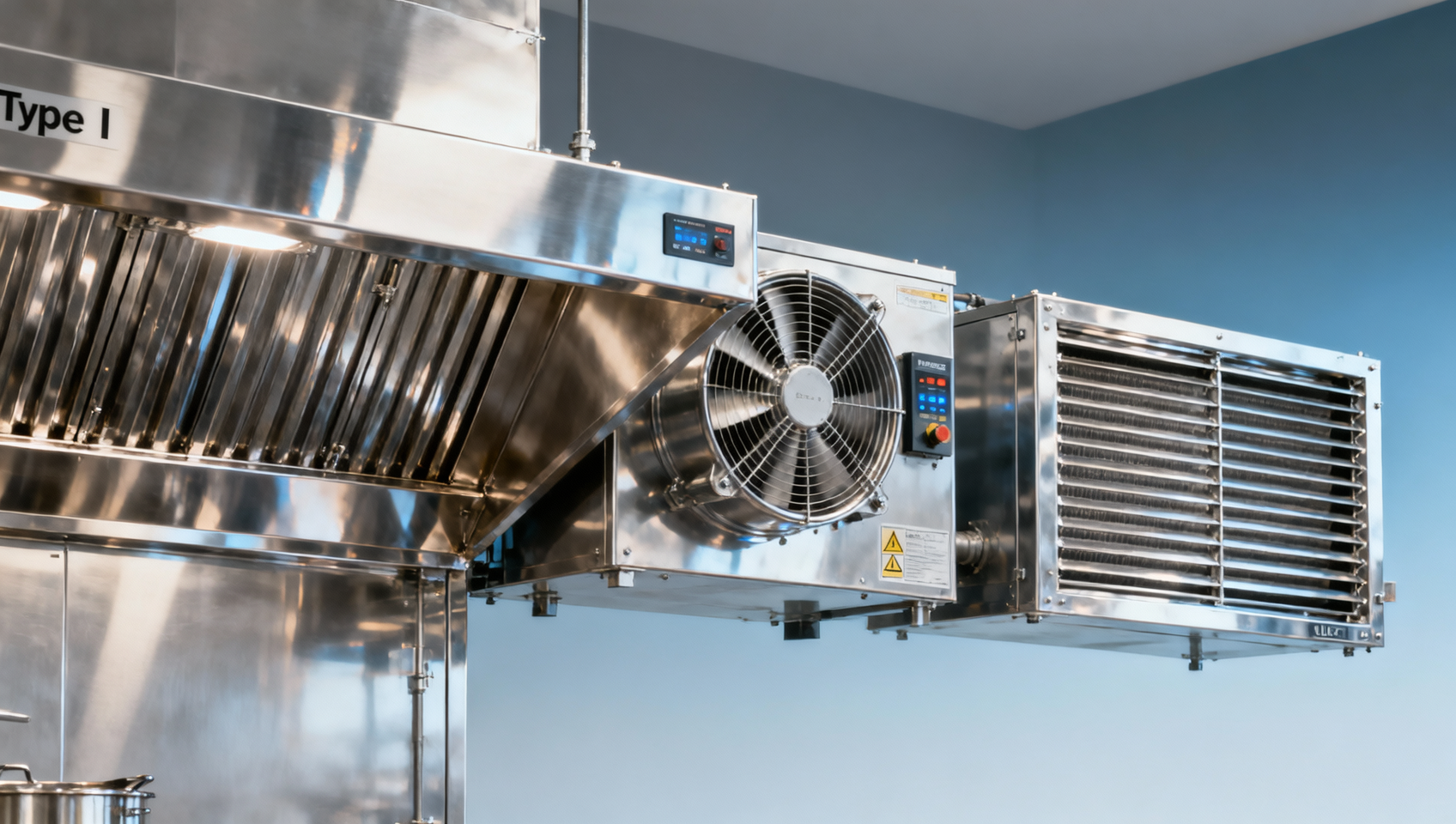
- Component-level vs. system-level validation: A certified exhaust fan doesn’t guarantee compliant static pressure balance across a full hood–duct–fan–makeup air chain.
- Initial installation vs. lifecycle management: 78% of inspected U.S. commercial kitchens show degraded airflow within 18 months due to uncalibrated VAV dampers or uncleaned grease filters (2023 NFPA 96 audit data).
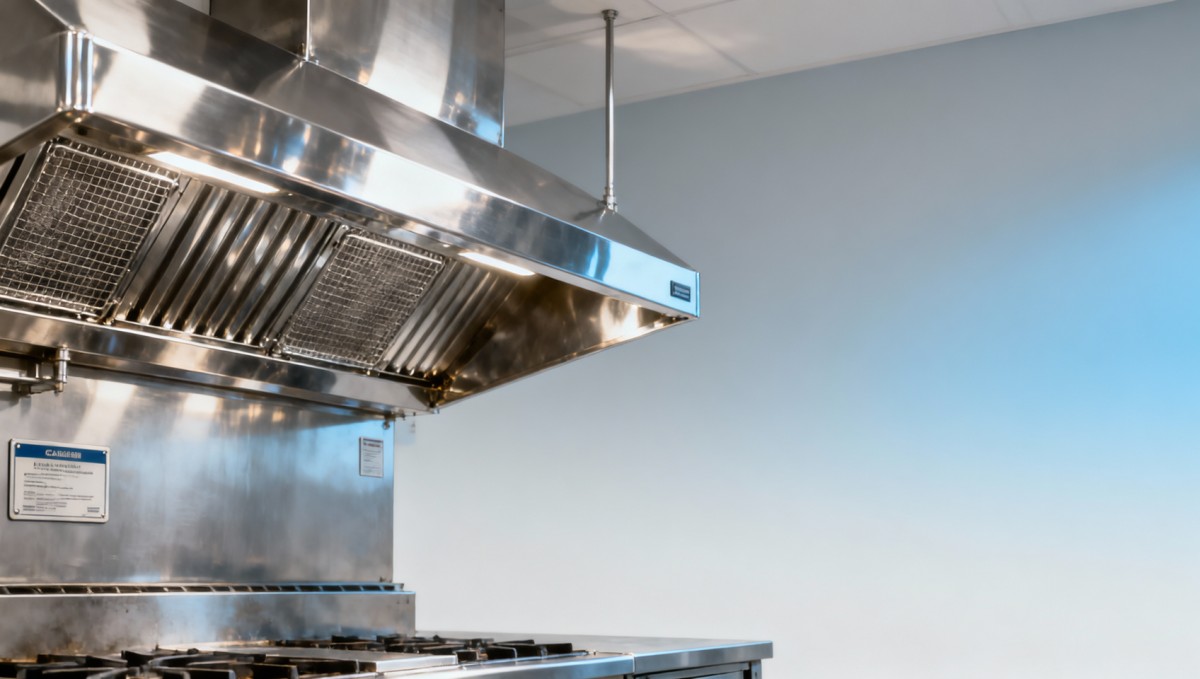
Top 4 Persistent Safety Gaps in Certified Kitchens
These gaps recur across independent restaurants, hotel F&B operations, and central kitchens—even when all major equipment carries valid certifications.
This table highlights how certification addresses design intent—but not field behavior. For example, thermal burn incidents involving NSF-certified equipment rose 22% between 2021–2023 (U.S. CPSC data), largely due to unregulated external surface temperatures exceeding 60°C during continuous operation.
How Layout Choices Amplify Risk
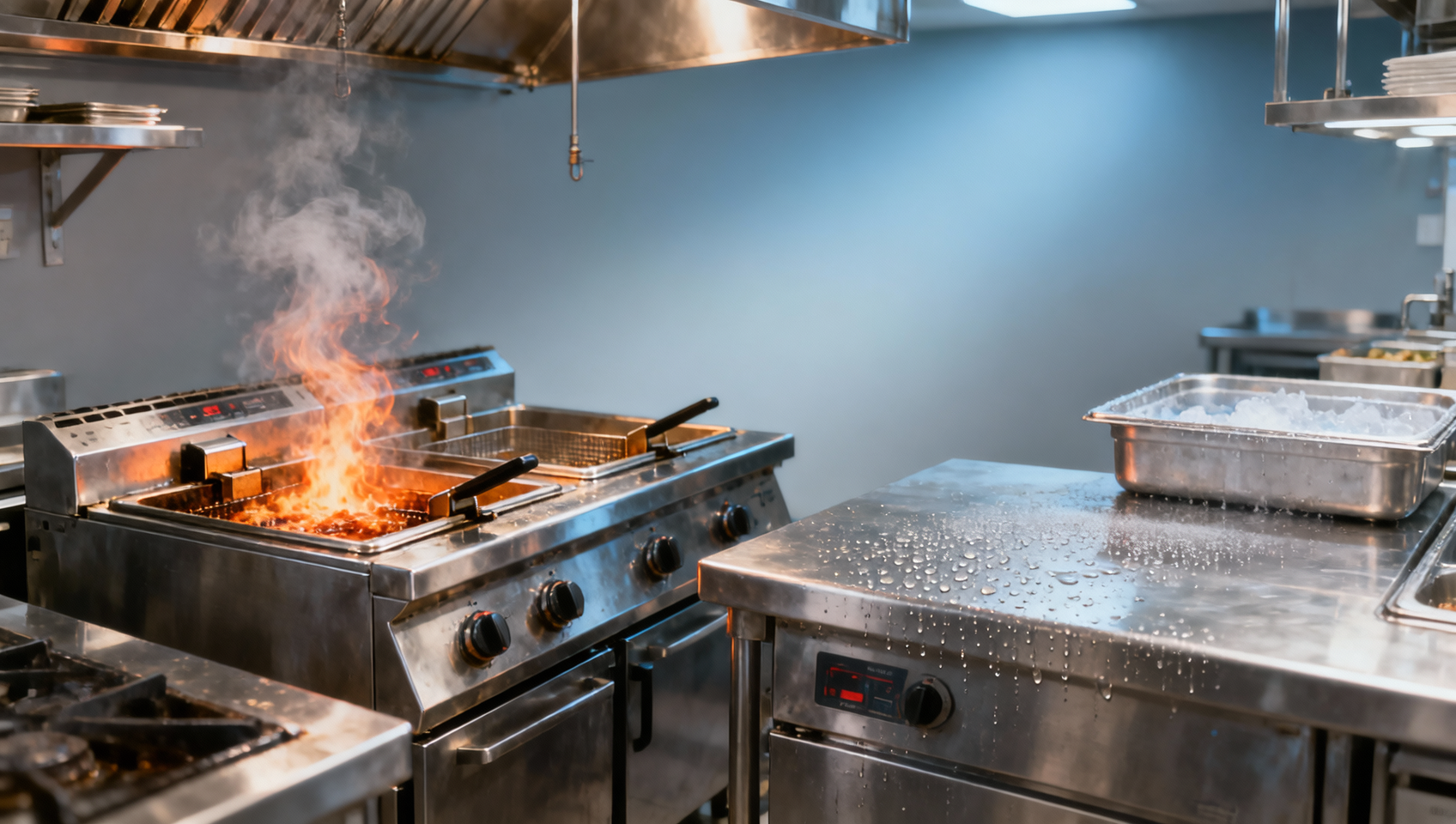
Even with certified equipment, a 3-meter gap between fryer and hood inlet reduces capture efficiency by up to 40%. Similarly, placing refrigerated prep tables downstream of high-heat stations increases condensation-related electrical faults by 3.2× (2022 Kitchen Equipment Reliability Survey).
Critical layout thresholds verified across 127 commercial kitchens:
- Hood overhang beyond cooking surface: ≤150 mm (exceeding causes turbulence & plume escape)
- Minimum clearance between hot equipment and combustible walls: ≥450 mm (per NFPA 96)
- Maximum distance between hand-washing sink and food prep zone: ≤3 meters (FDA Food Code §2-301.12)
Procurement Teams: 5 Actionable Checks Beyond Certification
When evaluating equipment suppliers, go beyond “certified” labels. Focus on verifiable, field-relevant assurances:
- Ask for third-party airflow verification reports — Not just fan specs, but hood system CFM/SP curves tested at your exact duct length and elbow count.
- Require surface temperature test data — Under load, for handles, side panels, and control interfaces (target: ≤50°C at 60-min continuous operation).
- Confirm integrated controls compatibility — Does the hood’s BMS interface support real-time monitoring of filter saturation, static pressure, and fan RPM?
- Verify maintenance access design — Can grease filters be cleaned without tools? Are duct access panels located ≤2.5 m above floor level?
- Request lifecycle documentation — Including recommended replacement intervals for gaskets, belts, and sensors—not just warranty duration.
Suppliers offering these five checks typically reduce post-installation safety interventions by 65% (based on 2023 supplier benchmarking across 42 global projects).
Why Partner With a Full-Cycle Kitchen Equipment Provider
The kitchen equipment industry’s evolution toward automation, intelligence, and energy efficiency means safety can no longer be treated as a one-time compliance event. It requires integrated expertise—from initial workflow analysis and certified equipment specification to commissioning verification, staff training, and predictive maintenance planning.
We support information researchers, operators, procurement leads, and decision-makers with:
- Pre-installation safety gap audits — Using thermal imaging, anemometer mapping, and workflow heatmaps to identify hidden risks before equipment arrives.
- Certification-to-field translation — Converting NSF, UL, EN, and ISO requirements into actionable site checklists and staff SOPs.
- Smart retrofit pathways — Adding IoT sensors to existing hoods, refrigeration units, or dishwashers to monitor real-time safety parameters (e.g., exhaust temp, door seal integrity, water temp stability).
Contact us to request: (1) a free ventilation system performance assessment template, (2) your facility’s custom equipment layout risk scorecard, or (3) lead times for NSF/UL-certified hood systems with integrated airflow telemetry—typically delivered in 6–10 weeks for standard configurations.
Popular Tags
Kitchen Industry Research Team
Dedicated to analyzing emerging trends and technological shifts in the global hospitality and foodservice infrastructure sector.
Industry Insights
Join 15,000+ industry professionals. Get the latest market trends and tech news delivered weekly.
No spam. Unsubscribe anytime.
Hot Articles
 Restaurant kitchen ventilation system rebates expiring in Q3 2026—eligibility checklist
- Commercial restaurant kitchen design shifts toward modular, reconfigurable zones
- Restaurant kitchen equipment layout errors that increase cross-contamination risk
- Stainless steel restaurant kitchen sinks cracking under thermal shock—why it’s happening more often
Contact With us
Contact:
Anne Yin (Ceramics Dinnerware/Glassware)
Lucky Zhai(Flatware)