
Commercial restaurant kitchen design shifts toward modular, reconfigurable zones
As commercial restaurant kitchen design shifts toward modular, reconfigurable zones, optimizing restaurant kitchen workflow, storage, and ventilation becomes critical—especially when integrating stainless steel restaurant kitchen systems with smart restaurant kitchen equipment layout. From restaurant kitchen hood system efficiency to eco-friendly restaurant supplies and non-stick kitchen tools, today’s operators demand flexibility without compromising safety or cost. Whether you’re a procurement professional sourcing restaurant kitchen equipment for sale, a facility manager coordinating restaurant kitchen equipment repair, or a decision-maker evaluating restaurant kitchen equipment suppliers, this evolution reshapes how we approach restaurant kitchen organization, ventilation system design, and long-term operational resilience.
Why Modular Kitchen Zones Are Reshaping Commercial Foodservice Operations
Modular, reconfigurable kitchen zones respond directly to three accelerating industry pressures: volatile menu innovation cycles (requiring layout changes every 6–18 months), labor shortages driving demand for workflow standardization, and tightening food safety regulations mandating traceable, cleanable surfaces. Unlike fixed-line kitchens built for single-concept consistency, modular systems allow operators to swap cooking stations, adjust exhaust hoods, or reassign cold prep areas in under 72 hours—without structural renovation.
This shift aligns with global kitchen equipment industry trends toward automation, intelligence, and energy efficiency. Stainless steel framework systems now integrate plug-and-play power/data conduits, enabling rapid deployment of intelligent cooking equipment—including induction ranges with AI-powered temperature calibration and combi-ovens with cloud-connected recipe libraries. The result is not just physical flexibility but digital interoperability across restaurant appliances and central kitchen management platforms.
For procurement professionals and enterprise decision-makers, modularity reduces total cost of ownership by extending equipment lifecycle. A typical stainless steel modular base unit supports 3–5 configuration iterations before replacement—versus 1–2 for welded, site-fabricated alternatives. This translates to 40% lower capital refresh frequency over a 10-year horizon, based on field data from U.S. and EU multi-unit operators.
How to Evaluate Modular Kitchen Equipment Suppliers: 5 Critical Procurement Dimensions
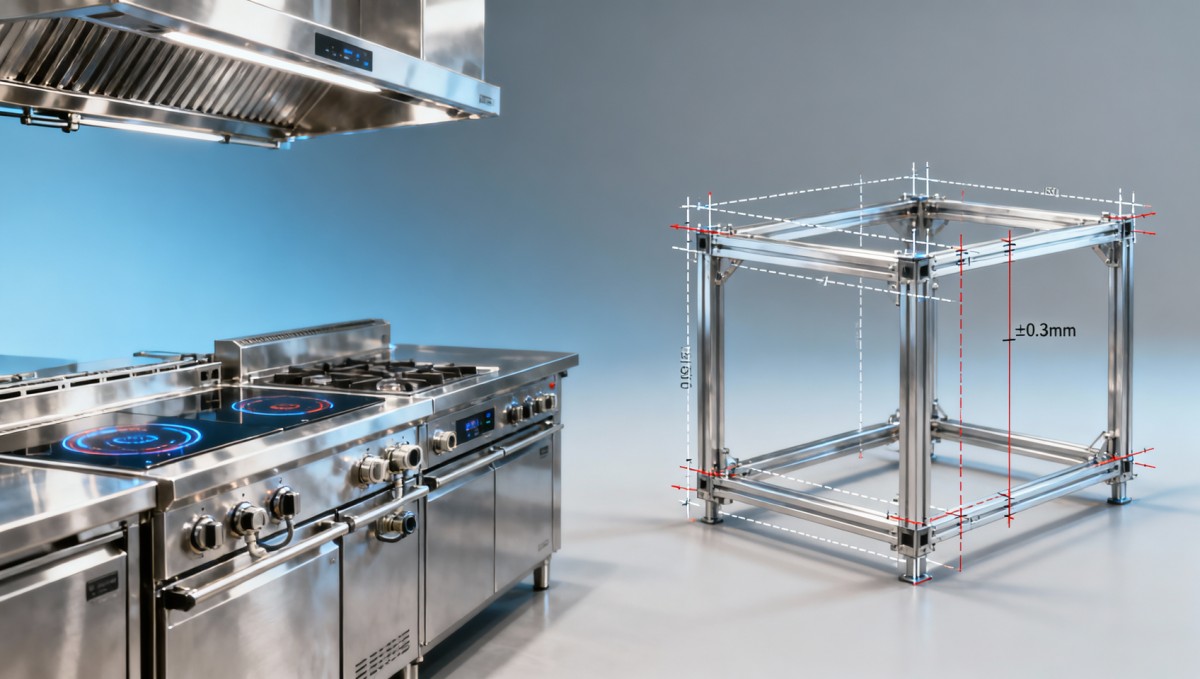
Selecting the right supplier goes beyond price—it hinges on compatibility, compliance, scalability, service depth, and integration readiness. Below is a comparative assessment framework used by foodservice facility managers across North America and APAC markets:
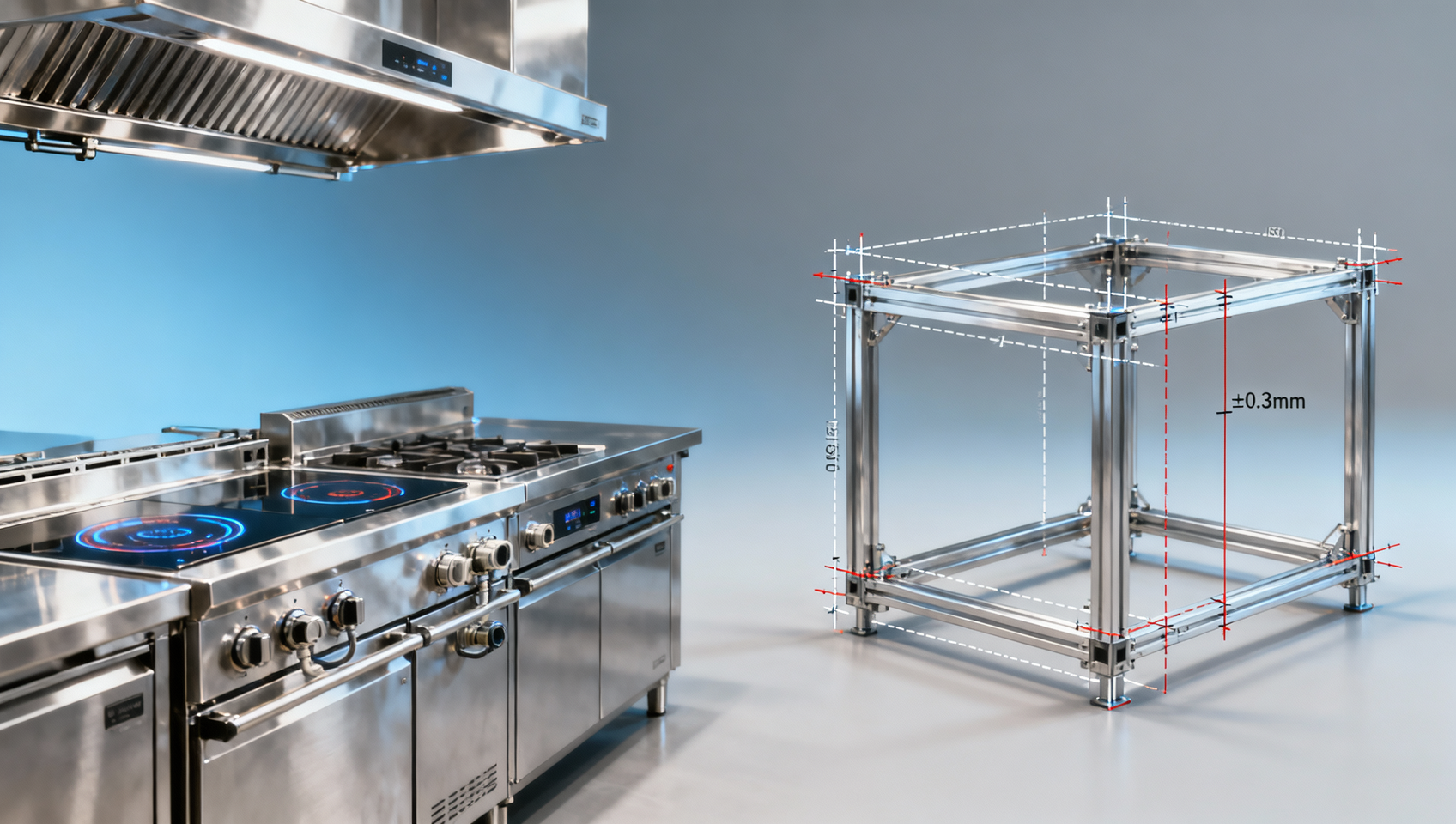
This table reflects real-world procurement criteria—not theoretical ideals. For example, ±0.3mm precision enables drop-in replacement of griddles, fryers, or blast chillers without re-leveling or recalibration—a time saver of 3–4 hours per station during retrofit. Similarly, IEC 61850 compliance ensures seamless integration with existing building management systems, avoiding costly middleware development.
What Users and Operators Actually Need to Know
- Stainless steel restaurant kitchen systems must use AISI 304 or higher-grade material for food contact surfaces—AISI 201 is not acceptable under NSF/ANSI 2 or EN 1672-2.
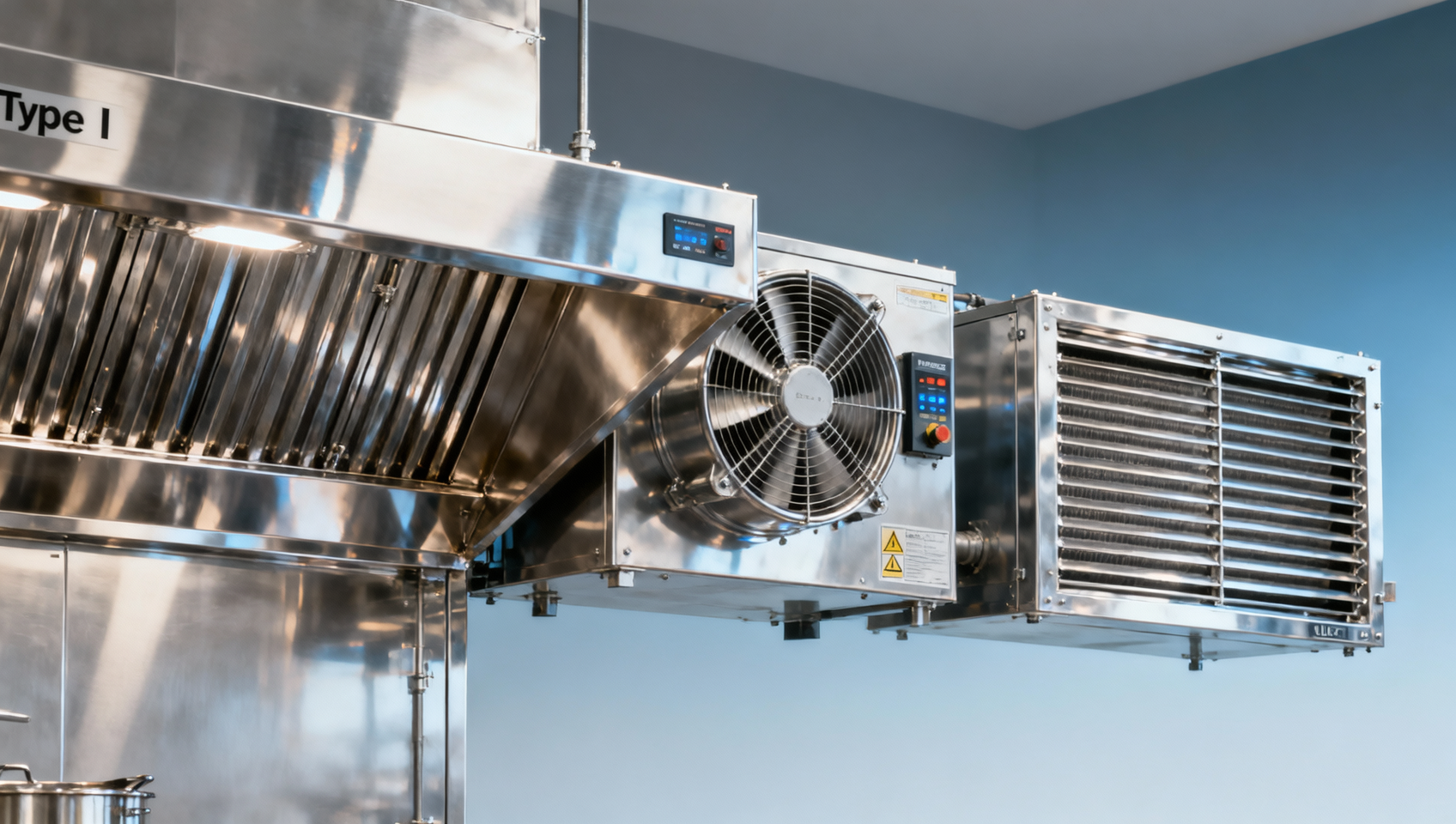
- Restaurant kitchen hood system efficiency depends on capture velocity: minimum 100 fpm at face, verified via ASHRAE 110 testing—not just CFM ratings.
- Non-stick kitchen tools require FDA 21 CFR 175.300 compliance for repeated high-heat exposure—PTFE-based coatings degrade above 260°C unless specifically stabilized.
- Eco-friendly restaurant supplies must meet either EU Ecolabel (EN 13432) or Green Seal GS-53 for compostable packaging, not just “biodegradable” claims.
Implementation Realities: Timeline, Labor, and Compliance Handoffs
Deploying a modular kitchen isn’t plug-and-play—it follows a structured 4-phase implementation process: (1) Site survey & zoning validation (3–5 business days), (2) Component engineering & local code review (7–12 days), (3) Factory pre-assembly & FAT (Factory Acceptance Test) with third-party inspector (10–14 days), and (4) On-site installation & commissioning (3–5 days for a 200 sq ft zone). Total lead time averages 28–35 days from PO to handover—significantly faster than traditional builds requiring 90+ days.
Critical compliance checkpoints include UL 300A fire suppression certification for hood systems, NSF/ANSI 4 certification for food contact surfaces, and local jurisdictional electrical permits—particularly where smart restaurant kitchen equipment integrates with HVAC or security networks. Leading suppliers provide full documentation packages aligned with ISO 9001:2015 audit trails.
Operators report that modular systems reduce post-installation rework by 65% versus custom-built layouts—primarily because factory-assembled modules undergo dimensional QA before shipping. This eliminates field-fit issues that typically consume 12–18 labor hours per station in conventional installations.
Why Partner With a Global Kitchen Equipment Industry Leader
We support information调研者, procurement teams, operations managers, and C-suite decision-makers with end-to-end modular kitchen solutions backed by manufacturing hubs in China, Germany, Italy, and Japan—ensuring regional compliance, localized service response (<48-hour technician dispatch), and multilingual technical documentation.
Whether you need stainless steel restaurant kitchen systems sized for a 30-seat bistro or a 500-meal-per-hour central kitchen—or require restaurant kitchen equipment repair protocols, smart restaurant kitchen equipment layout consulting, or custom certification support for emerging markets—we deliver validated configurations, not generic catalogs.
Contact us to request: (1) A zone-specific equipment compatibility matrix, (2) Local regulatory checklist for your target market, (3) Lead time confirmation for your configuration, (4) Sample FAT test reports, or (5) Reference case studies from your segment—fast-casual, healthcare, education, or hospitality.
Popular Tags
Kitchen Industry Research Team
Dedicated to analyzing emerging trends and technological shifts in the global hospitality and foodservice infrastructure sector.
Industry Insights
Join 15,000+ industry professionals. Get the latest market trends and tech news delivered weekly.
No spam. Unsubscribe anytime.
Hot Articles
 Restaurant kitchen ventilation system rebates expiring in Q3 2026—eligibility checklist
- Commercial restaurant kitchen design shifts toward modular, reconfigurable zones
- Restaurant kitchen equipment layout errors that increase cross-contamination risk
- Stainless steel restaurant kitchen sinks cracking under thermal shock—why it’s happening more often

Contact With us
Contact:
Anne Yin (Ceramics Dinnerware/Glassware)
Lucky Zhai(Flatware)