
How to Pick the Right Commercial Kitchen Oven Capacity
Choosing the right commercial kitchen oven capacity is essential for balancing output, energy use, and kitchen workflow. Whether you run a restaurant, hotel, or central kitchen, the right oven affects food quality and daily efficiency. In this guide, we explain how to evaluate commercial convection oven and commercial pizza oven capacity based on menu type, production volume, and available space.
How should you define the right commercial kitchen oven capacity?
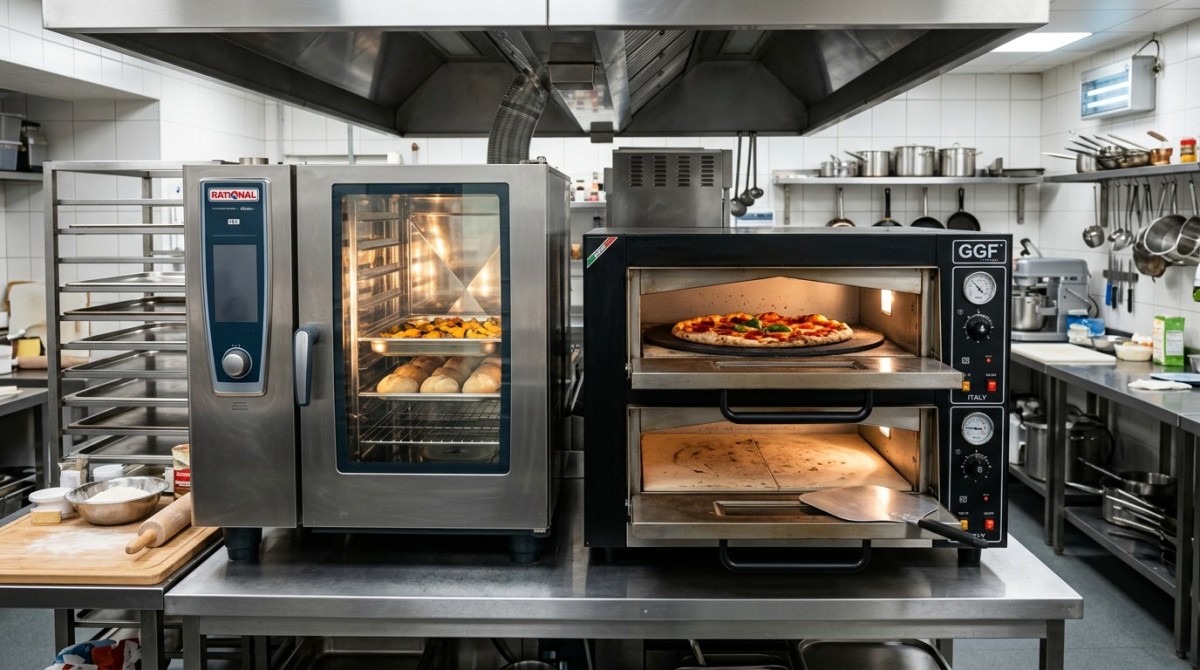
Commercial kitchen oven capacity is not just the internal chamber size. In real purchasing decisions, it means how much food an oven can process per batch, per hour, and across a full service period without slowing down the kitchen. For restaurants, hotels, bakeries, and central kitchens, the right capacity must match menu mix, peak demand, tray format, and staff workflow.
A common mistake is choosing by outside dimensions or by a simple “bigger is better” mindset. Oversized units can increase idle energy use, ventilation load, and floor space pressure. Undersized ovens create production bottlenecks, longer ticket times, and inconsistent food quality during peak periods such as lunch rushes, banquet service, or 2–4 hour production windows in central kitchens.
In the kitchen equipment industry, capacity selection is increasingly linked with automation, energy efficiency, and digital kitchen planning. Modern buyers often compare not only rack count or deck size, but also recovery time, temperature stability, loading flexibility, and compatibility with integrated kitchen systems. This is especially relevant for businesses planning multi-site growth or standardized production.
For most buyers, capacity assessment starts with 3 core questions: how many portions are needed per hour, what products are baked or roasted, and how much kitchen space and power supply are available. Once these three points are clear, the choice between a compact commercial convection oven, a higher-volume rack oven, or a specialized commercial pizza oven becomes much more precise.
Three capacity dimensions that matter in daily operation
Operators should evaluate oven capacity through three practical dimensions rather than one number alone. This approach helps procurement teams avoid mismatch between catalog specifications and real kitchen output.
- Batch capacity: the number of trays, pans, pizzas, or gastronorm containers loaded at one time, such as 4-tray, 6-tray, or 10-tray formats.
- Hourly throughput: the practical output under normal working conditions, influenced by cook time, loading intervals, door opening frequency, and preheating.
- Peak service capacity: the ability to maintain consistent production during 1–3 high-demand periods each day without quality drop or operator overload.
This three-part method is particularly useful in B2B settings where owners focus on return on investment, chefs focus on product consistency, and facility managers focus on power, ventilation, and maintenance requirements.
Which oven capacity fits your menu, output, and kitchen layout?
The right commercial kitchen oven capacity depends first on menu structure. A quick-service restaurant producing a narrow menu with repeated batches has very different needs from a hotel kitchen handling breakfast, à la carte dining, banquets, and room service. If the menu includes pizzas, artisan bread, roasted proteins, baked sides, and reheating tasks in one day, capacity must be planned with flexibility in mind.
Production volume should be mapped in practical time blocks. Instead of asking only for daily output, ask how much product is needed in 30-minute, 1-hour, and 4-hour periods. For example, a kitchen serving 80–120 meals during lunch may manage with a smaller convection oven, while a site producing 200–400 meals in a short window often needs larger chamber volume, multiple decks, or dual-oven planning.
Layout matters just as much as output. In many urban restaurant projects, oven width, door swing, loading clearance, hood placement, and staff circulation create more constraints than cooking demand itself. A large oven that blocks prep flow or limits access to refrigeration can reduce total kitchen efficiency even if its nominal capacity looks attractive on paper.
Procurement teams should also connect oven capacity with utility conditions. Typical checks include power availability, gas connection, exhaust setup, and heat load management. In retrofit projects, the ideal oven on paper may require electrical upgrades or ventilation changes that extend lead time by 2–6 weeks and alter the total project cost.
Typical capacity planning by business type
The table below gives a practical way to link commercial oven capacity to common foodservice environments. These are planning ranges rather than fixed rules, but they help narrow the shortlist before requesting technical drawings or quotations.
These ranges should be verified against actual menu engineering. A kitchen producing long-roast items, delicate pastries, and high-moisture dishes may need more chamber flexibility than a site making repetitive baked products with stable cycle times.
Checklist before locking the capacity
- Measure peak-hour demand in portions, trays, or pizzas rather than daily totals alone.
- Map the longest and shortest cooking cycles on your menu, because mixed cycles reduce effective throughput.
- Confirm available installation space, loading aisle clearance, and ventilation layout before final model selection.
- Allow a realistic 15%–25% operating buffer if the business expects seasonal growth, delivery expansion, or banquet demand.
That final buffer is important. Buying exactly for today’s output may create replacement pressure in 12–24 months, especially in fast-growing foodservice operations.
Commercial convection oven vs commercial pizza oven: what capacity differences really matter?
Many buyers compare a commercial convection oven and a commercial pizza oven only by overall size, but their usable capacity is measured differently. A convection oven is usually evaluated by tray quantity, pan compatibility, airflow performance, and its ability to handle varied products. A pizza oven is more often judged by deck area, pizza diameter, bake time, and recovery between repeated loads.
If your menu is diversified, convection ovens often provide broader value because they support roasting, baking, finishing, and reheating in one unit. However, if pizza is the core product and service speed matters, a dedicated commercial pizza oven may deliver more stable crust results and more predictable output per hour. The “right” capacity therefore depends on specialization versus menu diversity.
Another capacity difference involves thermal behavior. In high-frequency operations, the real issue is not just how much food fits inside, but how quickly the oven returns to target temperature after each opening. A pizza shop with 60–90 second loading intervals needs rapid heat recovery, while a banquet kitchen may prioritize batch uniformity over rapid single-load repetition.
This distinction affects capital planning. Some businesses save budget by using one large convection oven for everything, but later discover it slows a high-margin pizza line. Others overspend on a large pizza deck although only 20% of their menu requires it. Capacity planning works best when linked directly to revenue-driving products.
Comparison table for practical selection
Use the following comparison to determine whether your business should prioritize flexible chamber capacity or specialized production capacity.
The comparison shows why capacity cannot be separated from product type. In many B2B projects, the best answer is not choosing one oven category over the other, but combining a medium-capacity convection oven with a targeted pizza solution to reduce queue pressure and improve workflow resilience.
When a hybrid setup makes sense
A hybrid setup is often suitable when pizza contributes significant revenue but not the entire menu. For example, a restaurant may use a dedicated pizza oven for front-line pizza production and a 5–10 tray convection oven for sides, proteins, desserts, or overflow support. This structure reduces cross-traffic and allows operators to run 2 separate production streams during busy periods.
For central kitchens or hotel operations, a hybrid plan can also protect service continuity. If one oven type requires cleaning, maintenance, or recalibration, the kitchen still has partial production capacity available. That matters in environments where downtime of even 1 service period can affect guest satisfaction and labor efficiency.
What technical parameters and hidden costs should buyers check?
A reliable commercial kitchen oven capacity decision should include both technical performance and total ownership factors. Chamber size alone does not show how the oven will behave under repeated daily use. Procurement teams should compare at least 5 key dimensions: usable internal format, temperature range, recovery behavior, power or gas demand, and cleaning or service access.
For convection ovens, tray spacing, fan design, and temperature uniformity influence how much of the nominal capacity is actually usable. For pizza ovens, deck material, heating balance, and insulation quality affect how many pizzas can be baked consistently during long runs. In both cases, an oven that holds more product but slows recovery may underperform a smaller but faster unit.
Hidden cost often appears in installation and operation. Larger ovens can trigger upgrades in power supply, ventilation, or extraction systems. They may also require more preheating time or generate more ambient heat, which can impact staff comfort and cooling requirements. These indirect costs matter when comparing alternatives in restaurant renovations and new facility builds.
Buyers should also review maintenance practicality. In busy kitchens, removable components, access to service points, and routine cleaning intervals influence uptime. A theoretically efficient oven can become expensive if it demands long shutdowns every week or difficult parts access every quarter.
Technical and cost review table
Before requesting a quotation, use this table to compare technical capacity with operating impact. It is especially helpful for purchasing teams, chefs, and project managers reviewing multiple offers.
In practice, the most cost-effective commercial oven capacity is the one that matches production, utilities, and labor rhythm together. A lower purchase price does not always mean lower project cost once installation, energy consumption, and downtime exposure are included.
Standards, compliance, and project coordination
Although exact requirements vary by market, commercial kitchen buyers should confirm applicable electrical safety, food contact, gas, and ventilation compliance before final purchase. For international supply projects, this review often sits alongside shipping lead times, local installation rules, and after-sales support planning.
A structured procurement process usually includes 4 steps: requirement definition, technical matching, site confirmation, and commercial quotation. If the project also includes custom fabrication or integrated kitchen systems, total lead time may range from 2–4 weeks for standard models to longer for project-based solutions. Early technical alignment reduces costly redesign later.
What mistakes do buyers make, and how can you avoid them?
One of the most frequent mistakes is buying by advertised capacity without testing workflow logic. An oven may hold enough trays, but if loading is awkward, recovery is slow, or products need different temperatures, real throughput falls below expectation. This issue is common when restaurant owners, operators, and procurement staff evaluate the same oven from different priorities and never align them in one specification sheet.
Another mistake is ignoring future volume. Foodservice businesses often add delivery, catering, or extended hours after installation. If the oven is selected only for current dine-in demand, the kitchen may hit a ceiling quickly. A practical growth allowance of 15%–25% is often safer than a like-for-like replacement mindset, especially in competitive urban markets.
A third risk is separating equipment choice from the wider kitchen system. Ovens interact with prep tables, blast chilling, holding equipment, extraction, and digital production management. In modern kitchen equipment planning, capacity works best when integrated into a broader flow that reduces labor friction and supports food safety discipline.
Finally, some buyers underestimate operator usability. If staff training takes too long, controls are unclear, or cleaning routines are difficult, performance suffers. Capacity is only valuable when the team can use it consistently across shifts, including new staff or temporary labor during seasonal peaks.
FAQ: practical questions before purchase
How do I calculate commercial kitchen oven capacity for my restaurant?
Start with peak-hour output, not total daily sales. Count how many trays, pans, or pizzas must be finished in 30–60 minutes, then compare that with actual cook times and reload intervals. Add a modest reserve for menu changes and growth. This gives a more reliable figure than choosing by external size or brand category alone.
Is a larger oven always more efficient?
Not necessarily. A larger oven may increase preheating time, standby energy use, and ventilation demand. If average loads stay low for most of the day, the unit can become inefficient. Efficiency improves when chamber size, batch frequency, and product mix are matched to actual operations.
When should I choose a commercial pizza oven instead of a convection oven?
Choose a commercial pizza oven when pizza is a core product, crust quality is critical, and the business needs repeated fast cycles during peak periods. Choose a commercial convection oven when the menu is broader and requires more flexible cooking across multiple food categories.
What is a reasonable lead time for procurement?
For standard models, commercial review and delivery planning may fit within 2–4 weeks, depending on stock, utility confirmation, and shipping route. If the project includes custom configuration, integrated kitchen planning, or export compliance checks, the timeline can extend further. Confirm this early to avoid delays in opening schedules.
Why work with a kitchen equipment supplier that understands capacity planning?
Choosing commercial kitchen oven capacity is easier when equipment selection is linked with workflow, utilities, compliance, and long-term operating goals. In today’s kitchen equipment industry, buyers increasingly need more than a product list. They need practical support on configuration logic, project coordination, and the balance between productivity and energy efficiency.
A capable supplier can help translate business targets into technical requirements. That includes confirming tray or deck format, comparing commercial convection oven and commercial pizza oven options, checking installation constraints, and planning a capacity buffer for future growth. This reduces the risk of underbuying, overbuying, or selecting equipment that does not fit the real kitchen process.
If you are evaluating a new kitchen project, a replacement purchase, or a multi-site rollout, you can consult on specific points such as parameter confirmation, output estimation, space planning, delivery cycle, utility matching, certification expectations, sample support, and quotation comparison. These details are often where purchasing confidence is built.
Contact us to discuss your menu profile, expected hourly volume, preferred oven type, and project timeline. We can help you review suitable capacity ranges, compare solution paths, and prepare a more practical shortlist for procurement, budgeting, and implementation.
Popular Tags
Kitchen Industry Research Team
Dedicated to analyzing emerging trends and technological shifts in the global hospitality and foodservice infrastructure sector.
Industry Insights
Join 15,000+ industry professionals. Get the latest market trends and tech news delivered weekly.
No spam. Unsubscribe anytime.
Contact With us
Contact:
Anne Yin (Ceramics Dinnerware/Glassware)
Lucky Zhai(Flatware)