
Heated Display Temperature Issues That Hurt Food Quality
Heated Display temperature issues can quickly damage food texture, flavor, and safety, making them a critical concern for operators, buyers, and decision-makers. In today’s fast-moving kitchen innovation landscape, where equipment such as Refrigerated Worktable, Charbroiler, and Wok Range supports daily service, stable heat control is essential for consistent quality. This article explores how temperature problems affect performance and what foodservice teams can do to prevent losses.
For restaurants, hotels, central kitchens, and food retail counters, a heated display is not just a holding cabinet. It is the final control point before service. If food is held too hot, moisture evaporates and texture breaks down. If temperatures drift too low, food can fall into unsafe holding ranges and lose customer trust within a single service period.
This matters to multiple audiences. Operators need stable performance during peak hours, purchasing teams need equipment that delivers reliable temperature control, and business leaders need solutions that reduce waste, complaints, and unplanned maintenance. In a market moving toward smart kitchen systems and energy-efficient equipment, heated display temperature stability has become a practical buying criterion rather than a minor technical detail.
Why Heated Display Temperature Stability Directly Affects Food Quality
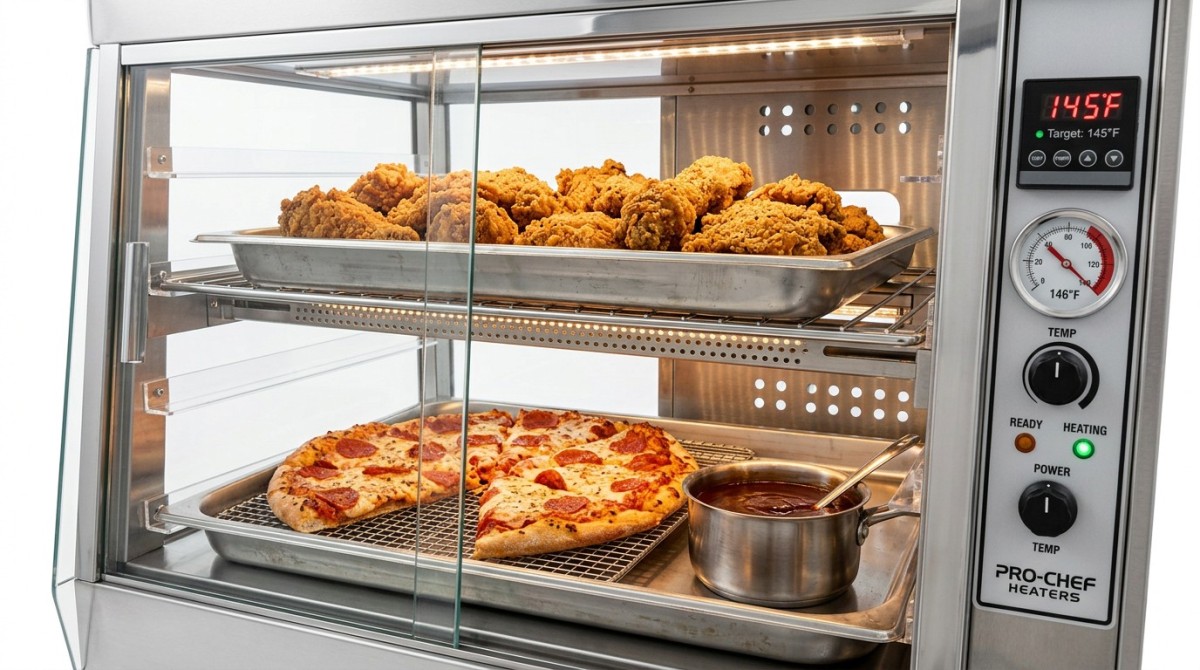
A heated display is designed to keep ready-to-serve food within a controlled holding range, typically around 60°C to 75°C depending on product type, local food safety practice, and service duration. The challenge is not simply reaching a target setting. The real issue is whether the cabinet maintains uniform heat across shelves, pans, and service cycles.
When a unit produces hot spots above the set range, fried products may dry out in 20 to 40 minutes, baked items can harden, and proteins may continue cooking after they were meant to be held. On the other hand, cold spots near doors, corners, or poorly ventilated zones can leave some portions below safe holding temperature even if the control panel appears normal.
Food quality loss usually appears in four ways: texture change, flavor deterioration, moisture imbalance, and visual decline. Crispy foods become leathery, sauces develop skinning, rice and noodles harden, and glazed items lose shine. For grab-and-go or buffet operations, these changes can happen within 30 to 90 minutes, long before the end of service.
Temperature inconsistency also affects production planning. If food cannot hold well, staff may reduce batch size, increase refill frequency from every 60 minutes to every 20 minutes, or discard items earlier than planned. That creates labor pressure and raises food cost. In high-volume operations, even a 3% to 5% increase in waste can be significant over a month.
Common quality symptoms linked to poor heat control
- Surface drying caused by excessive top heat or long holding times above the recommended range.
- Soggy textures caused by poor airflow, trapped humidity, or low-temperature recovery after repeated door opening.
- Uneven serving temperature across pans, often seen in multi-tier displays with weak air circulation.
- Flavor carryover when enclosed displays trap grease vapor and moisture from mixed menu items.
Operational warning signs
If operators frequently rotate pans to “find the hot area,” rely on manual thermostat changes more than 2 to 3 times per shift, or notice that food quality declines faster on one shelf than another, the heated display likely has a temperature distribution problem rather than a recipe issue.
The Most Common Heated Display Temperature Problems in Real Service Environments
Many heated display temperature issues do not come from a single component failure. They are often the result of combined factors such as incorrect loading, weak thermostat calibration, poor airflow design, excessive door opening, and mismatch between menu type and equipment configuration. A display that works acceptably for pastries may perform poorly for fried chicken or sauced meals.
One common issue is temperature overshoot. After refill, some units heat aggressively and may rise 5°C to 10°C above the set point before stabilizing. This is especially harmful to delicate foods like buns, pizza slices, and baked snacks. Another issue is slow recovery. If a cabinet takes more than 8 to 12 minutes to return to the target range after service access, product consistency will suffer during peak periods.
A second major problem is shelf-to-shelf variation. In vertical or multi-level displays, the top shelf may run noticeably hotter than the lower level. Without independent zone control, operators end up compromising: one product is held too hot, another too cool. This is a frequent issue in mixed-menu counters serving fried foods, sandwiches, and sides from the same cabinet.
Environmental conditions also matter. Units installed near entrance doors, air-conditioning vents, or heavy prep traffic can experience repeated heat loss. In kitchens or front-of-house areas with ambient temperatures from 18°C to 30°C, external conditions may change how often the heating system cycles and whether food stays within the required range during rush hours.
Problem-to-impact comparison
The table below shows how common heated display temperature problems translate into quality, safety, and workflow consequences in commercial foodservice operations.
The key takeaway is that temperature problems rarely stay “technical.” They quickly become quality complaints, waste, and labor inefficiency. For buyers and managers, this is why performance validation should include recovery time, shelf consistency, and real food tests instead of relying only on the thermostat display.
Frequent operator mistakes that worsen the issue
- Loading hot and room-temperature items into the same zone at the same time.
- Overfilling pans beyond the recommended depth, reducing airflow around the product.
- Using a single set point for foods with very different moisture profiles.
- Skipping calibration checks for 30 to 90 days in high-use environments.
How Buyers and Decision-Makers Should Evaluate a Heated Display Before Purchase
Purchasing a heated display should not be based only on cabinet size, appearance, or list price. A lower-cost unit can become expensive if it increases daily waste, product complaints, or service interruptions. For B2B buyers, the better approach is to evaluate performance against menu profile, traffic level, holding time, and maintenance capability.
Start with product mix. A bakery counter, a convenience food station, and a hotel buffet need different heat behavior. Dry products often need gentle and stable holding, while fried foods may need controlled ventilation and moderate humidity management. If the menu changes across breakfast, lunch, and dinner, zoning flexibility becomes more important than one fixed temperature setting.
Next, review technical control points. Buyers should ask about temperature range, shelf variation tolerance, preheat time, recovery time, and whether sensors are located where food is actually held. As a practical benchmark, many operators look for preheat within 15 to 25 minutes, temperature recovery within 5 to 8 minutes after door opening, and stable operation without wide swings during 2 to 4 hours of active service.
Digital control, alarms, and service access also matter. In modern kitchen equipment procurement, equipment is increasingly expected to support repeatable operation across staff shifts and locations. A simple interface with visible actual temperature, not just set temperature, can reduce manual intervention and support better quality management.
Key purchasing criteria
The following table can help procurement teams compare heated display solutions in a structured way before requesting quotations or samples.
A strong procurement process should also include a menu trial. Testing 2 to 4 representative products for 60 to 120 minutes provides more useful insight than reviewing a brochure alone. This is especially important when the heated display will operate alongside other core kitchen equipment such as Refrigerated Worktable prep stations, Charbroilers, or Wok Ranges that influence production timing and batch flow.
Questions to ask suppliers
- What is the typical temperature variation from top to bottom shelf under real load?
- How often should calibration be checked in a 10- to 12-hour daily operation?
- Can the unit support different products with separate zones or adjustable airflow?
- What spare parts are usually replaced within the first 12 to 24 months?
Best Practices for Operators: Setup, Monitoring, and Daily Prevention
Even a well-designed heated display can underperform if setup and operating routines are weak. Daily discipline is often the difference between stable holding and repeated food loss. Operators should treat temperature management as part of the service workflow, not only as a maintenance task.
The first step is proper preheating. Many cabinets need 15 to 25 minutes before loading. Adding food too early causes the system to chase temperature, creating uneven heat distribution in the first part of service. Staff should also verify actual internal conditions with a calibrated probe at least once per shift rather than trusting the panel alone.
Loading discipline is equally important. Avoid blocking vents, stacking pans too deeply, or mixing products with very different holding needs in the same zone. For example, crispy fried items, moist rice bowls, and covered sauced dishes should not automatically share one shelf setting. Small adjustments in product grouping can improve hold quality without changing equipment.
Monitoring should be simple and repeatable. A practical approach is to check actual temperature every 2 hours, document deviations greater than 3°C, and inspect visual product quality every 30 to 45 minutes. If quality drops before the target holding time, the response should include both equipment review and product-specific hold-limit adjustment.
Daily control checklist
- Preheat the heated display fully before the first load and confirm the cabinet has stabilized.
- Check at least 2 positions inside the cabinet with a handheld thermometer or probe.
- Load food in batches that match expected demand over the next 20 to 40 minutes.
- Keep doors or access panels open for the shortest practical time during service.
- Record any repeated hot spot or cold spot pattern and report it for service review.
Maintenance habits that reduce drift
Basic maintenance should include cleaning air passages, inspecting door seals, checking fan operation where applicable, and confirming thermostat response. In demanding commercial environments, weekly visual checks and monthly performance checks are often more realistic than waiting for quarterly reviews. A slow temperature drift of 2°C to 4°C may not trigger immediate alarms, but it can still reduce food quality every day.
For multi-site operations, standard operating procedures are especially valuable. One common problem is inconsistent staff practice across branches. A simple one-page checklist tied to each heated display model can help maintain the same holding standard in restaurants, hotel breakfast areas, and convenience service counters.
Implementation Planning, Risk Control, and FAQs for Foodservice Teams
When adding or replacing heated display equipment, implementation should include more than installation. The safest rollout combines menu testing, operator training, validation of holding performance, and post-install review after the first 7 to 14 days. This reduces the risk of blaming recipes for what is actually an equipment or setup issue.
Decision-makers should also consider how the heated display fits into the broader kitchen system. If upstream equipment such as a Charbroiler or Wok Range produces food in intense bursts, the display must recover quickly from batch loading. If a Refrigerated Worktable feeds assembly continuously, the display may need stable all-day holding rather than sharp recovery capacity alone.
A practical implementation plan usually has 4 stages: requirement review, equipment selection, on-site commissioning, and operational adjustment. Each stage should have simple acceptance criteria, such as temperature verification, workflow fit, ease of cleaning, and actual product hold results over a normal shift.
The final goal is predictable quality. Stable heated display performance supports better food presentation, lower waste, and fewer complaints. In a kitchen equipment market increasingly shaped by smart controls and energy-efficient design, buyers who focus on measurable holding performance will be better positioned to protect both product quality and operating margin.
Implementation risk guide
Before launch, teams can use the matrix below to identify common rollout risks and define corrective actions early.
This type of review helps teams move from reactive troubleshooting to planned control. It also gives procurement and operations a shared framework for evaluating whether a heated display is really performing as expected in a live foodservice setting.
How often should a heated display be checked for accuracy?
In busy commercial use, a quick operational check each shift and a deeper accuracy check every 30 days is a practical starting point. Locations with 10+ hours of daily service, heavy refill cycles, or high complaint sensitivity may benefit from more frequent checks.
What foods are most vulnerable to temperature problems?
Fried foods, baked goods, rice, noodles, carved meats, and sauce-based dishes are all sensitive, but in different ways. Dry products usually suffer from overheating and moisture loss, while moist items often decline when airflow and humidity are poorly balanced.
Is digital control always better than manual control?
Not automatically, but digital systems usually make temperature monitoring easier and reduce shift-to-shift inconsistency. The real advantage comes when the interface is clear, the sensor placement is appropriate, and the control logic limits overshoot and drift during service.
Heated display temperature issues affect more than heat readings. They influence texture, flavor, safety, labor efficiency, and food waste across the entire service chain. By focusing on stable holding range, recovery performance, menu fit, and daily operating discipline, foodservice teams can protect product quality and make better equipment decisions.
If you are evaluating heated display solutions for restaurants, hotels, central kitchens, or food retail operations, now is the right time to compare real holding performance instead of price alone. Contact us to discuss your application, request a tailored equipment recommendation, or learn more about integrated kitchen solutions that improve consistency from preparation to final service.
Popular Tags
Kitchen Industry Research Team
Dedicated to analyzing emerging trends and technological shifts in the global hospitality and foodservice infrastructure sector.
Industry Insights
Join 15,000+ industry professionals. Get the latest market trends and tech news delivered weekly.
No spam. Unsubscribe anytime.

Contact With us
Contact:
Anne Yin (Ceramics Dinnerware/Glassware)
Lucky Zhai(Flatware)