
Commercial Kitchen Oven Import Data: What Changed?
Commercial kitchen oven import data is changing fast, and the biggest takeaway is clear: buyers can no longer rely on old sourcing assumptions. Import flows are shifting by product type, supplier country, and buyer market, which directly affects price stability, lead times, compliance risk, and equipment availability. For procurement teams, operators, and business decision-makers in the kitchen equipment wholesale market, the value of import data is not just in knowing what moved, but in understanding why it changed and what actions to take next.
Whether you are evaluating a commercial convection oven supplier, tracking demand for a commercial pizza oven, or comparing sourcing options for stainless steel kitchen equipment, recent trade changes offer practical signals. They can reveal where competition is intensifying, which markets are becoming more dependent on imports, and how purchasing strategies should adapt in the broader catering kitchen equipment industry.
What Changed in Commercial Kitchen Oven Import Data?
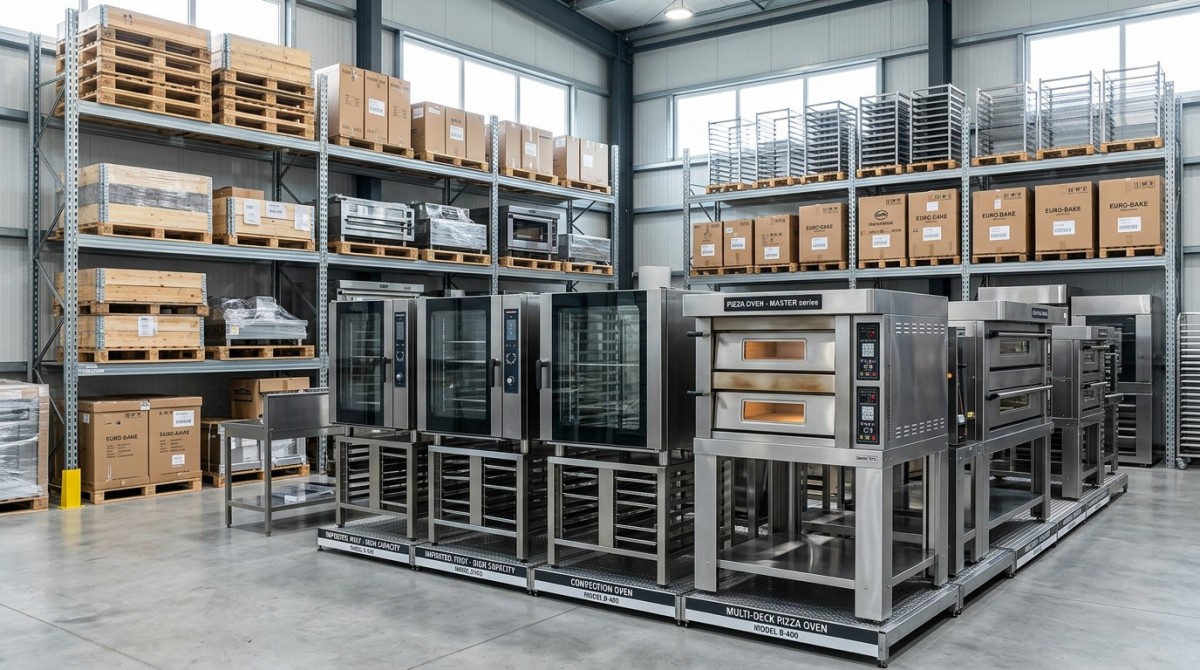
The most important changes in commercial kitchen oven import data typically show up in five areas: source countries, product mix, average import value, shipment volume, and buyer concentration. These shifts matter because they reflect real changes in the commercial kitchen equipment market rather than just statistical noise.
First, sourcing patterns have become less concentrated in some regions and more concentrated in others. Buyers that once depended heavily on one manufacturing base are increasingly exploring alternative suppliers to reduce geopolitical, shipping, and cost risks. This is especially relevant for importers of commercial kitchen ovens, restaurant appliances, and food processing equipment.
Second, product demand is becoming more segmented. Standard-volume oven imports may remain stable, while higher-efficiency, programmable, or application-specific units gain share. For example, demand for commercial convection oven models may rise in institutional and multi-location foodservice operations, while commercial pizza oven imports may grow in restaurant segments focused on fast-casual expansion or specialty menus.
Third, average import values may shift even when shipment counts do not. That often indicates a move toward premium equipment, smarter controls, energy-efficient designs, or heavier-duty stainless steel construction. In other cases, it can also reflect freight cost changes, currency effects, or tariff adjustments rather than pure product upgrading.
Fourth, import volume changes can signal a market expansion or a correction. A sharp increase may suggest strong downstream demand, distributor restocking, or recovery after supply shortages. A decline does not always mean weak demand; it may reflect inventory digestion, delayed purchases, or a shift toward local assembly.
Finally, buyer concentration is becoming more important. If a small number of importers account for a large share of purchases, pricing power and channel control can become tighter for smaller distributors or regional buyers.
Why This Data Matters to Buyers, Operators, and Decision-Makers
For information researchers, import data helps identify where the market is moving before those changes become obvious in pricing sheets or supplier catalogs. It provides a more objective view of the commercial kitchen equipment industry than marketing claims alone.
For users and operators, these changes affect equipment availability, maintenance planning, spare parts access, and product consistency. If imports shift toward new manufacturers or product standards, operational teams may need to reassess training, installation requirements, and long-term service support.
For procurement professionals, import data supports better sourcing decisions. It can help answer practical questions such as:
- Which countries are increasing exports of commercial kitchen ovens?
- Are average prices rising because of quality improvements or supply chain pressure?
- Is a supplier’s market position growing or weakening?
- Are there signs of overdependence on a narrow supplier base?
- Which product categories are becoming more competitive?
For business decision-makers, the strategic value is even broader. Import data can support market entry planning, supplier diversification, demand forecasting, and margin protection. In the catering kitchen equipment industry, where delivery reliability and equipment performance directly affect customer operations, these trade signals are highly actionable.
Which Product Trends Are Most Worth Watching?
Not all oven categories move in the same way, so reading import data correctly requires product-level interpretation.
Commercial convection oven: This segment often reflects demand from bakeries, hotels, institutional kitchens, and chain foodservice operators. Changes in import volume or pricing may indicate broader investment in standardized, high-throughput cooking systems. If import values rise while volume stays steady, buyers may be shifting toward digitally controlled or energy-saving models.
Commercial pizza oven: This category can be especially sensitive to restaurant expansion, menu trends, and regional foodservice growth. Rising imports may signal stronger demand from independent restaurants and franchise chains. Buyers should look closely at whether growth is concentrated in deck ovens, conveyor ovens, or compact specialty units.
Stainless steel kitchen equipment integration: Ovens are often purchased alongside prep tables, storage units, exhaust systems, and fabrication-related items. If imports of stainless steel kitchen equipment rise together with oven imports, it may indicate broader kitchen buildouts rather than simple replacement buying. This is valuable for wholesalers and project-based suppliers.
Smart and energy-efficient models: A growing share of imports in advanced models usually signals a market shift toward lifecycle cost savings. This matters because buyers are increasingly balancing upfront equipment cost with energy use, labor savings, compliance benefits, and operational consistency.
How Should You Interpret Import Data Without Misreading the Market?
One of the biggest mistakes in analyzing commercial kitchen oven import data is treating all growth as healthy demand and all declines as weakness. Import data is useful, but only when read in context.
Here are the key interpretation principles:
- Compare volume and value together. Rising value with flat volume may indicate premiumization, inflation, or freight changes.
- Separate short-term disruptions from structural change. One quarter of volatility may be logistics-driven, while multi-period changes often reveal real sourcing shifts.
- Track product categories individually. The commercial convection oven market can move differently from the commercial pizza oven segment.
- Consider policy and compliance factors. Tariffs, certification requirements, and energy standards can reshape imports quickly.
- Watch buyer concentration. A market dominated by a few large importers may become harder for smaller firms to negotiate in.
It is also important to connect trade data with real operating conditions. If import data suggests growth but operators report long installation delays or service issues, the apparent expansion may be masking downstream constraints.
What Risks and Opportunities Do These Changes Create?
The recent shifts in kitchen equipment imports create both upside and risk.
Opportunities include:
- Finding new supplier countries with better cost-performance balance
- Entering under-served product niches in catering kitchen equipment
- Improving margins through diversified sourcing
- Upgrading product portfolios toward energy-efficient and smart commercial kitchen equipment
- Using import trends to identify fast-growing customer segments
Risks include:
- Overreliance on one country or one supplier network
- Unexpected landed cost increases
- Compliance gaps in imported restaurant appliances
- Service and spare-parts limitations for new or unfamiliar brands
- Inventory mismatch caused by misreading temporary import spikes as long-term demand
For wholesalers and procurement teams, the best response is not simply to buy earlier or switch suppliers faster. It is to build a more disciplined sourcing framework using trade trends, supplier verification, product segmentation, and operational requirements together.
How Can Businesses Use Import Data to Make Better Purchasing Decisions?
If you want to turn import data into practical action, focus on decision quality rather than raw numbers. A useful framework includes four steps.
1. Identify the exact product category.
Do not evaluate all ovens as one market. Distinguish between commercial convection oven units, commercial pizza oven models, combi-style systems, and other application-specific products.
2. Review country-of-origin changes.
If one source country is losing share and another is gaining, investigate whether the shift is driven by price, quality, compliance, or production scale. This helps avoid making decisions based only on unit cost.
3. Compare import trends with your own business model.
A hotel equipment distributor, restaurant chain buyer, and food processing facility may all interpret the same import trend differently. Match the data to your service expectations, installation conditions, and replacement cycles.
4. Use import signals to strengthen negotiation.
Trade data can improve supplier discussions around lead time, pricing transparency, market benchmarks, and sourcing alternatives. In many cases, knowing how the market is shifting provides leverage even if you do not immediately change vendors.
This approach is particularly useful in the kitchen equipment wholesale market, where supply chain decisions affect not only cost but also project timing, customer satisfaction, and after-sales support.
Conclusion: The Real Meaning Behind the Data Shift
Commercial kitchen oven import data is not just a trade statistic. It is a practical decision tool for understanding where the market is heading, which supplier relationships are becoming more or less resilient, and how product demand is evolving across the commercial kitchen equipment industry.
The main change is that the market is becoming more dynamic, more segmented, and more strategy-driven. Buyers are no longer competing only on price. They are balancing lead times, compliance, efficiency, serviceability, and risk exposure. For companies involved in commercial kitchen ovens, restaurant appliances, stainless steel kitchen equipment, and broader catering kitchen equipment, the businesses that read import data well will be better positioned to source smarter, protect margins, and respond to demand shifts with confidence.
If your goal is better purchasing, better planning, or better market positioning, the right question is no longer simply “What changed?” but “What does this change mean for our next decision?”
Popular Tags
Kitchen Industry Research Team
Dedicated to analyzing emerging trends and technological shifts in the global hospitality and foodservice infrastructure sector.
Industry Insights
Join 15,000+ industry professionals. Get the latest market trends and tech news delivered weekly.
No spam. Unsubscribe anytime.

Contact With us
Contact:
Anne Yin (Ceramics Dinnerware/Glassware)
Lucky Zhai(Flatware)