
Why eco-friendly kitchen tools are moving into mainstream sourcing
As sustainability becomes a practical priority rather than a niche preference, eco-friendly kitchen tools are gaining traction across global sourcing channels. From restaurants and hotels to food processors and home brands, buyers are looking for products that balance durability, safety, cost efficiency, and environmental value. This shift reflects broader changes in the kitchen equipment industry, where greener materials, smarter production, and energy-conscious solutions are shaping mainstream purchasing decisions.
A clear market shift is underway in kitchen sourcing
The movement of eco-friendly kitchen tools into mainstream sourcing is not a short-lived marketing wave. It signals a deeper change in how buyers evaluate kitchen products across commercial and residential channels. In the past, sustainable utensils, storage products, prep tools, and serving items were often treated as premium add-ons or niche lifestyle goods. Today, they are increasingly entering regular supplier lists, sourcing discussions, and procurement frameworks.
This change is closely tied to the wider evolution of the kitchen equipment industry. Buyers are under pressure to reduce waste, improve food safety, control long-term operating costs, and respond to customer expectations around responsible purchasing. As a result, eco-friendly kitchen tools are no longer judged only by their environmental claims. They are being assessed as business tools that must perform well, meet compliance requirements, and support brand positioning at the same time.
Another important signal is that sourcing conversations have become more practical. Instead of asking whether green products are desirable in theory, buyers are asking which materials are durable, which suppliers can provide traceability, which certifications matter in export markets, and which product categories can switch without disrupting operations. That practical turn is one reason eco-friendly kitchen tools are moving from the margins to the center of procurement decisions.
Why demand is expanding beyond niche buyers
Several forces are pushing this transition. First, sustainability has become connected to operational risk. Buyers in foodservice and hospitality increasingly recognize that disposable-heavy purchasing models can create cost volatility, waste management pressure, and reputational exposure. Reusable, recyclable, responsibly sourced, or lower-impact kitchen tools offer a more stable long-term direction.
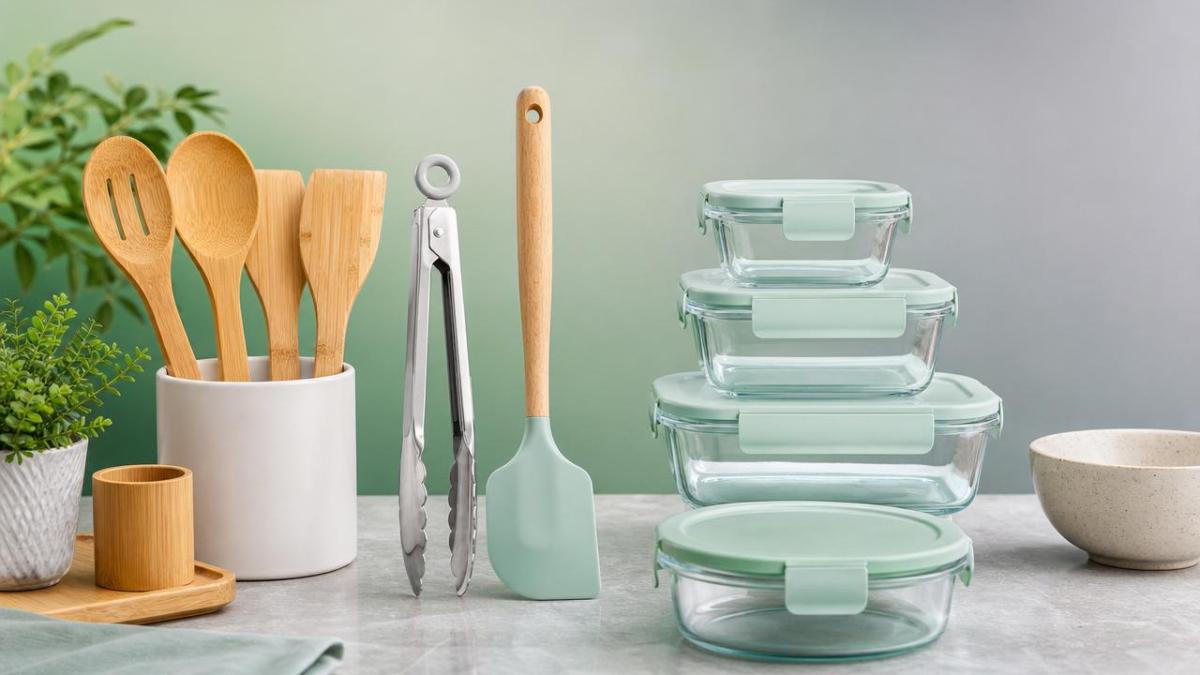
Second, the range of available products has improved significantly. Earlier generations of green kitchenware sometimes faced skepticism over heat resistance, durability, hygiene, or design consistency. Manufacturers have responded by developing better bamboo utensils, recycled stainless steel tools, food-safe silicone alternatives, compostable packaging-linked accessories, and hybrid material solutions that better fit everyday kitchen needs.
Third, eco-friendly kitchen tools now align with broader procurement priorities. Restaurants want tools that last longer and reinforce their sustainability messaging. Hotels want standardized products that support environmental programs without lowering guest experience. Food processors and central kitchens look for tools that are easy to sanitize, durable under repeated use, and compatible with internal compliance rules. Home brands and retailers want products that can satisfy both functionality and consumer values in crowded marketplaces.
These signals show that demand is becoming structured rather than emotional. That is a defining feature of mainstream adoption.
The drivers behind mainstream adoption are becoming more concrete
One major driver is policy and compliance pressure. Different markets are tightening expectations around plastics, packaging waste, chemical safety, product labeling, and environmental disclosures. Even when regulations do not directly target every kitchen tool category, they shape buyer behavior. Importers, distributors, and brand owners often choose to simplify future compliance by favoring products with clearer environmental and material profiles.
A second driver is procurement maturity. Purchasing teams are better equipped than before to compare products beyond price. They consider replacement frequency, breakage rates, storage efficiency, cleaning compatibility, and end-user perception. In this environment, eco-friendly kitchen tools benefit when they can prove they reduce waste, last longer, or support operational consistency.
A third driver is manufacturing capability. Major production centers such as China, Germany, Italy, and Japan have continued improving material processing, product design, and quality control across kitchen categories. This makes it easier for buyers to source greener alternatives at scale rather than through small specialty channels alone. As supply becomes more consistent, mainstream sourcing follows.
Digital sourcing behavior also matters. Buyers researching eco-friendly kitchen tools can now compare supplier claims, certification language, production videos, and customer use cases more easily. Increased visibility rewards manufacturers that invest in transparent communication and practical product data, while making it harder for superficial claims to stand unchallenged.
Who is feeling the impact most strongly
The impact of this trend is not uniform. Some business segments are seeing more immediate pressure, while others are treating eco-friendly kitchen tools as a gradual portfolio upgrade. Understanding who is affected helps explain why sourcing behavior is changing now.
For many of these groups, the most important change is that environmental positioning alone is no longer enough. Buyers want eco-friendly kitchen tools that fit operational reality. If a product is difficult to clean, inconsistent in finish, or too fragile for fast-paced use, sustainability claims will not secure repeat orders. This is why suppliers that combine green positioning with professional-grade performance are becoming more competitive.
What buyers are now evaluating differently
Mainstream sourcing changes the decision criteria. Buyers are moving from simple attribute-based selection to more balanced judgment. They are asking whether eco-friendly kitchen tools can meet performance benchmarks under real use conditions and whether suppliers can support long-term procurement needs.
Material credibility is one key area. Terms such as biodegradable, recyclable, renewable, or recycled content are no longer accepted at face value. Buyers increasingly want to know which part of the product carries that attribute, whether food-contact safety is verified, and whether the material performs well in heat, moisture, or repeated washing environments.
Another area is product lifecycle. A metal tool that lasts much longer than a lower-quality alternative may offer stronger environmental value in practice than a trendy but short-lived item with green branding. This has made lifecycle thinking more important in sourcing decisions, especially for professional kitchens where use intensity is high.
Packaging and logistics are also entering the conversation. Buyers may favor suppliers who reduce unnecessary packaging, improve carton efficiency, or offer consolidated product lines. In that sense, eco-friendly kitchen tools are part of a broader sourcing system, not just a standalone item category.
Signals that deserve close attention over the next phase
Looking ahead, several signals can help buyers and suppliers judge how this market will develop. One is whether sustainability language in procurement documents becomes more specific. If requests for quotation start mentioning recycled content, product traceability, restricted substances, or packaging standards more often, that is a strong sign of further mainstreaming.
Another signal is category expansion. Today, adoption may begin with visible items such as utensils, cutting boards, storage containers, brushes, or serving accessories. Over time, demand may move deeper into broader kitchen systems, including preparation equipment, cleaning support products, and integrated low-waste operational tools. That expansion would show that eco-friendly kitchen tools are influencing adjacent equipment decisions as well.
Supplier behavior is a third signal. Manufacturers that invest in cleaner production, product testing, material documentation, and design improvements are more likely to shape the next stage of competition. If more suppliers present sustainability as part of quality assurance rather than as a separate marketing theme, the market will continue moving toward mature adoption.
How businesses can respond without overreacting
For businesses evaluating this shift, the best response is not to replace every product immediately. A more effective approach is to identify categories where eco-friendly kitchen tools can deliver clear value with manageable risk. High-volume, high-visibility, and frequently replaced items are often the best starting point because they create measurable operational and brand impact.
Companies should also review supplier conversations. Useful questions include: What materials are being used, and why? Which food safety standards are relevant? How does the product perform after repeated cleaning? What documentation supports environmental claims? Can the supplier maintain consistency at scale? These questions help separate strategic sourcing opportunities from weak promotional claims.
Cross-functional review is increasingly important as well. Procurement, operations, quality teams, and brand managers may all view eco-friendly kitchen tools from different angles. Bringing those perspectives together leads to better decisions, especially when balancing sustainability goals with cost, hygiene, and user experience.
A practical decision framework for the next sourcing cycle
If the goal is to judge whether eco-friendly kitchen tools are relevant for your business now, a simple framework can help. First, identify where waste, replacement frequency, or customer visibility is highest. Second, review which product categories have credible greener alternatives with proven performance. Third, test supplier transparency, not just product samples. Fourth, measure outcomes such as durability, user acceptance, and handling efficiency. Finally, scale only where the business case is clear.
This measured approach fits the current stage of the market. The trend is real, but smart adoption depends on careful comparison and category-level judgment. Businesses that move too slowly may miss supply chain and brand advantages, while those that move too quickly without technical review may create operational friction.
Final takeaway for information researchers and sourcing teams
The rise of eco-friendly kitchen tools in mainstream sourcing reflects a larger transformation in the kitchen equipment industry: purchasing is becoming more transparent, more lifecycle-focused, and more closely tied to long-term operational resilience. This is not just a story about consumer preference. It is about how regulations, manufacturing capability, food safety expectations, and business efficiency are reshaping sourcing standards.
For companies trying to understand what this means for their own business, the key questions are practical. Which categories can shift first without compromising performance? Which suppliers can prove both sustainability and quality? Which markets or customer segments are already rewarding this change? If those questions are answered carefully, eco-friendly kitchen tools can move from a trend topic to a meaningful sourcing advantage.
Popular Tags
Kitchen Industry Research Team
Dedicated to analyzing emerging trends and technological shifts in the global hospitality and foodservice infrastructure sector.
Industry Insights
Join 15,000+ industry professionals. Get the latest market trends and tech news delivered weekly.
No spam. Unsubscribe anytime.

Contact With us
Contact:
Anne Yin (Ceramics Dinnerware/Glassware)
Lucky Zhai(Flatware)