
Restaurant supplies sourcing problems that delay openings
Delays in restaurant openings often begin long before construction ends—especially when restaurant supplies sourcing is fragmented, slow, or poorly coordinated. For project managers and engineering leads, missing kitchen equipment, compliance issues, and supplier misalignment can disrupt timelines, inflate costs, and delay launch readiness. Understanding these sourcing problems is essential to keeping commercial kitchen projects on schedule and fully operational from day one.
Why restaurant supplies sourcing becomes a project delay, not just a purchasing task
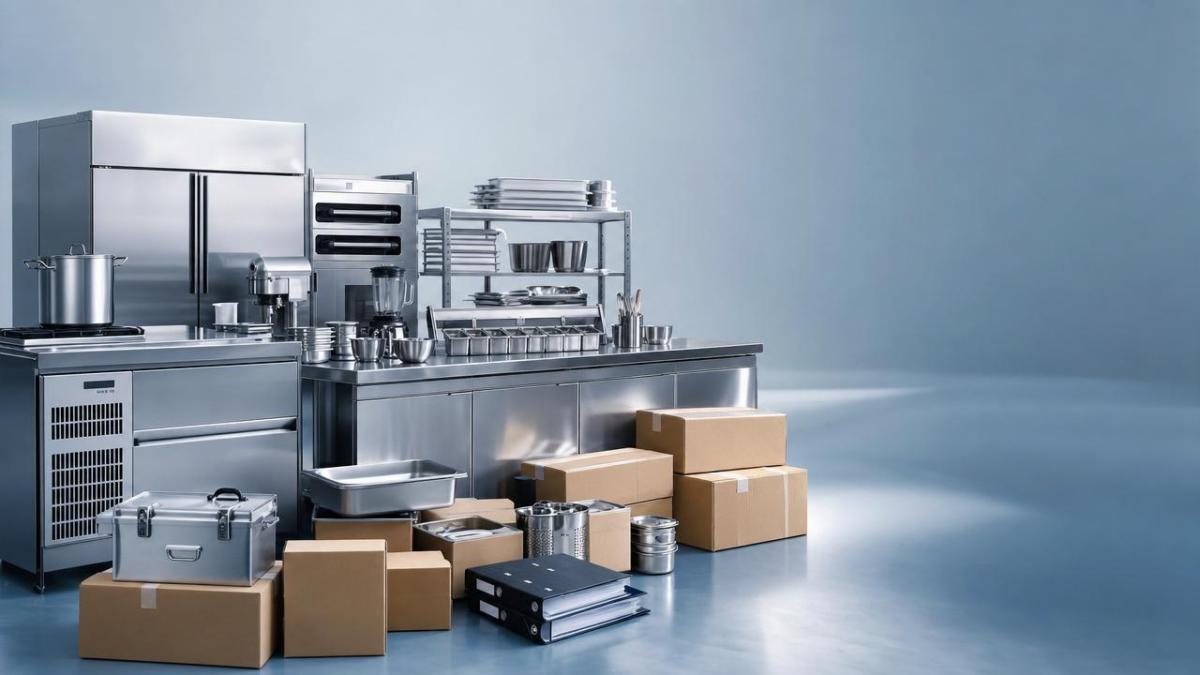
In restaurant development, sourcing is often treated as a back-office activity. In reality, it sits on the critical path of construction, MEP coordination, commissioning, food safety approval, and staff training. When restaurant supplies sourcing starts too late or is split across too many disconnected vendors, the opening date becomes vulnerable.
This problem is more visible in modern kitchen projects because equipment is no longer limited to basic cooking lines. Commercial kitchens now include refrigeration, ventilation interfaces, automated preparation systems, digital controls, energy-saving appliances, food processing machines, and specialized utensils. Each item affects layout, power loads, drainage, workflow, and compliance.
Project managers and engineering leaders usually face the same difficult question: is the delay caused by procurement, design changes, site readiness, or supplier execution? In many cases, the answer is all of them. Weak restaurant supplies sourcing creates chain reactions across the full delivery schedule.
- Equipment dimensions arrive late, so builders cannot finalize walls, service points, or extraction connections.
- Imported appliances require different voltage, plug types, or certification documents than originally expected.
- Smallwares and utility items are overlooked, causing test runs to fail even after major equipment is installed.
- Single-source assumptions collapse when lead times for stainless fabrication, refrigeration units, or ventilation components differ sharply.
What are the most common sourcing problems that delay restaurant openings?
The most frequent failures in restaurant supplies sourcing are not dramatic; they are operational. A late fryer may be visible, but an incorrect gas specification, missing shelf support, delayed fire-related documentation, or absent spare parts can be just as damaging. The table below summarizes common delay points and why they matter during project execution.
For project teams, the lesson is simple: restaurant supplies sourcing must be managed as an integrated delivery function. The risk is rarely one delayed item. The real risk is the accumulation of incomplete data, poor sequencing, and unverified assumptions.
Fragmented supplier management
Many opening delays begin with a fragmented supply base. One vendor handles cooking equipment, another supplies stainless fabrication, another sends refrigeration, and several others cover utensils, dishwashing, shelving, and front-of-house support. If nobody controls interfaces, delivery windows, document flow, and installation dependencies, the project team carries the coordination burden.
Late design freeze
Restaurant concepts often evolve during construction. Menu changes, workflow revisions, or operator feedback can improve the final kitchen, but they also create sourcing instability. A combi oven change may alter water treatment needs. A different preparation line may affect countertop fabrication. A revised cold room location may trigger changes in drainage and insulation details.
Underrated smallwares and operational accessories
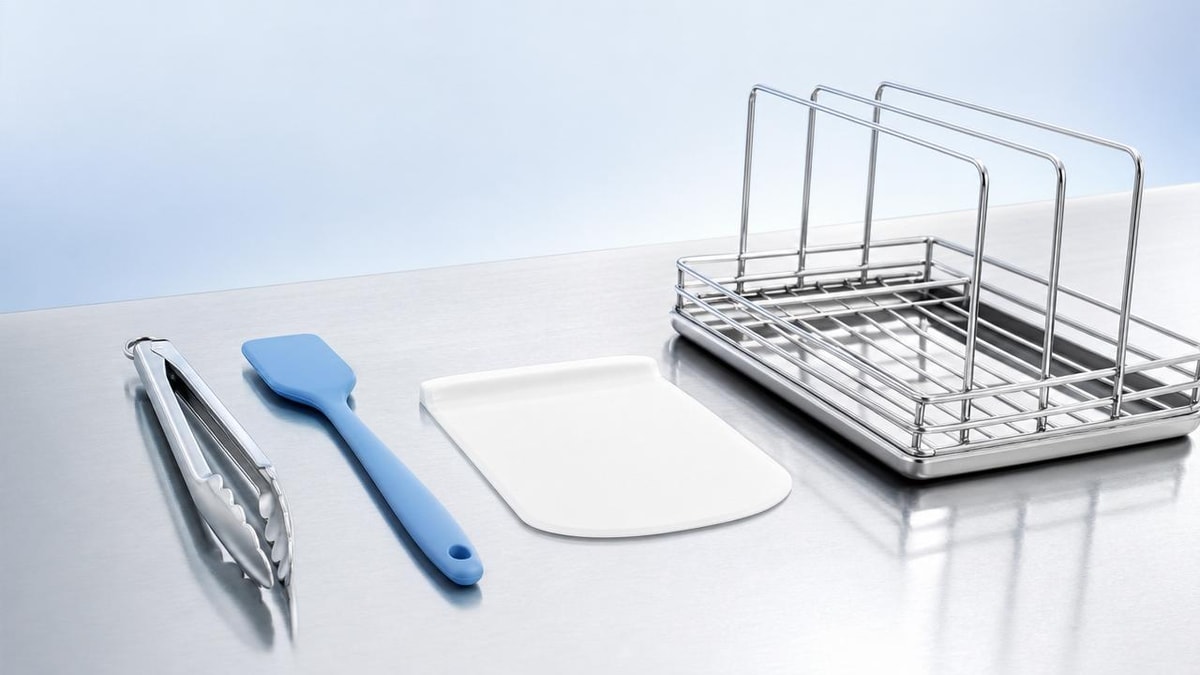
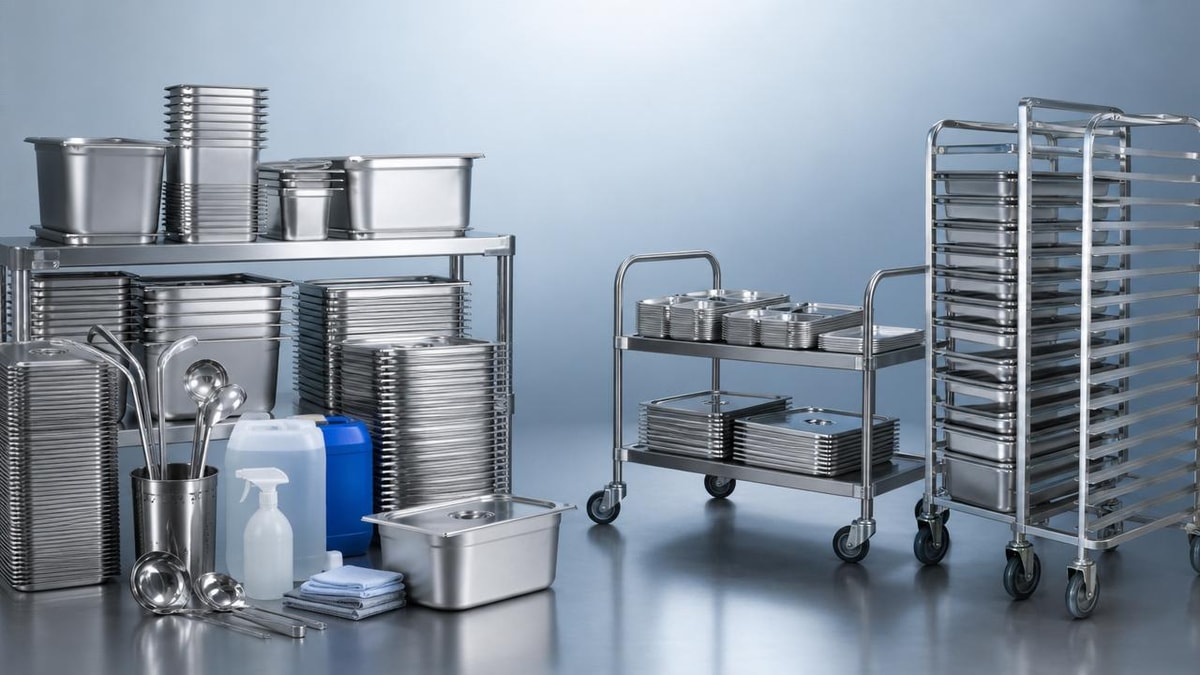
Large equipment gets attention because it is expensive and visible. Smaller items often do not. Yet pans, GN containers, shelving, trolleys, knife systems, bins, utensil racks, and sanitation tools determine whether the kitchen can actually function on day one. Restaurant supplies sourcing should cover the entire operational package, not just the heavy equipment list.
Which categories cause the highest sourcing risk in commercial kitchen projects?
Not all supply categories carry the same risk. Project managers should separate standard stock items from engineered, fabricated, imported, or compliance-sensitive items. This helps teams focus effort where delay impact is highest.
The next table can be used as a practical restaurant supplies sourcing risk map during planning and procurement review.
This category view helps teams allocate attention more effectively. High-risk items should be reviewed earlier, tracked more often, and linked directly to design approvals, logistics milestones, and installation readiness.
How project managers can evaluate suppliers before delays happen
Price remains important, but it is a weak primary filter for commercial kitchen delivery. A lower quote can become expensive if it creates rework, rescheduling, emergency freight, or inspection failure. Good restaurant supplies sourcing depends on supplier capability, document discipline, and coordination reliability.
Supplier evaluation points that matter in real projects
- Can the supplier provide complete technical submittals early, including utility schedules, dimensions, and installation conditions?
- Do they understand destination-market certification expectations and common local authority concerns?
- Can they package mixed categories together to reduce fragmented deliveries and site storage confusion?
- Do they offer pre-shipment verification, item coding, packing lists, and shortage control for opening packages?
- Is after-sales support limited to warranty language, or does it include commissioning assistance and spare parts planning?
In the kitchen equipment industry, suppliers with broader product understanding can reduce interface risk. This matters because restaurant projects increasingly combine standard appliances, custom fabrication, digital control systems, and energy-conscious operating requirements. A supplier that understands integrated kitchen systems can flag conflicts before they reach the site.
Why global sourcing needs tighter control
Global procurement expands choice, especially from manufacturing hubs such as China, Germany, Italy, and Japan. It also introduces timing and compliance challenges. Different factories may use different documentation formats, packaging methods, electrical standards, and production calendars. Restaurant supplies sourcing across borders requires earlier scheduling, sharper specification control, and stronger consolidation planning.
What should be included in a sourcing plan to protect the opening date?
A reliable sourcing plan should do more than list vendors and expected delivery dates. It should connect equipment decisions to engineering, logistics, approvals, installation, and start-up. If any of these links are missing, the opening date remains exposed.
- Create a complete equipment and supplies matrix that covers heavy equipment, fabrication, refrigeration, dishwashing, shelving, smallwares, and spare parts.
- Assign each item a procurement path: stock, made-to-order, imported, custom-fabricated, or approval-sensitive.
- Link every major item to technical dependencies such as load, voltage, gas type, water supply, waste line, exhaust, and floor condition.
- Set document deadlines earlier than production deadlines so engineering review does not hold up release.
- Build buffer time for manufacturing, transit, customs, site access, and installation sequencing.
- Plan pre-opening verification, including counting, inspection, commissioning, and staff handover.
This approach is especially important as kitchens become smarter and more energy-efficient. Automated food processing systems, digital kitchen management tools, and intelligent cooking equipment bring efficiency benefits, but they also increase setup complexity. The sourcing plan must therefore include controls for commissioning logic, operator training, and compatibility with the rest of the kitchen system.
How to balance cost, alternatives, and schedule in restaurant supplies sourcing
Budget pressure is real, especially in multi-site rollouts, hotel F&B developments, and fast-track restaurant openings. However, replacing one item with a cheaper substitute should not be a purely purchasing decision. The right question is whether the alternative preserves workflow, compliance, service life, lead time, and operating cost.
A lower upfront equipment price may increase ventilation demand, energy consumption, cleaning time, or maintenance frequency. On the other hand, an alternative with slightly higher purchase cost may shorten lead time, reduce utility consumption, or simplify installation. Restaurant supplies sourcing should evaluate total project impact, not just unit price.
- Use approved alternatives only after utility, capacity, and fit checks are completed.
- Separate value engineering from emergency substitution; they are not the same process.
- For critical-path equipment, schedule certainty may be more valuable than a small price reduction.
- For non-critical accessories, bundled procurement may reduce logistics complexity and hidden handling costs.
What compliance and certification issues are often missed?
Compliance gaps can stall opening even when all products arrive on time. Depending on market and project type, restaurant equipment may need electrical conformity, food-contact material suitability, hygiene-friendly construction, gas safety compatibility, or documentation for local inspection. These expectations differ by country and authority, so assumptions are risky.
Project teams should verify compliance at specification stage, not after purchase order release. This is especially important for imported kitchen systems, smart appliances, and integrated cooking lines. A product can be technically capable and still be unready for approval if the paperwork is incomplete or the destination requirement was misunderstood.
Practical compliance checks
- Confirm electrical rating, frequency, and plug or hardwire configuration against the project standard.
- Review food-contact surfaces, cleanability, and material suitability for kitchen hygiene requirements.
- Check gas-related compatibility and installation conditions where applicable.
- Request document packs in advance, including manuals, technical sheets, and available conformity records.
FAQ: restaurant supplies sourcing questions project teams ask most
How early should restaurant supplies sourcing begin?
For fast-track projects, sourcing should begin as soon as the kitchen concept and operational workflow are stable enough to define critical equipment. High-risk items such as cooking suites, refrigeration systems, and custom stainless components should be identified early, even if some finishing details are still under review. Waiting for full design completion often compresses manufacturing and logistics beyond a safe level.
What is the biggest mistake in restaurant supplies sourcing for new openings?
The biggest mistake is treating sourcing as separate from engineering and operations. Procurement may secure a good price, but if dimensions, utilities, compliance, and workflow were not aligned, the project still loses time. Integrated review is more important than isolated buying efficiency.
Should project teams source everything from one supplier?
Not always. A single supplier can simplify communication, packaging, and coordination, but only if they truly understand multi-category kitchen delivery. In some cases, specialized categories still require dedicated manufacturers. The better goal is controlled coordination, whether through one integrated supplier or a tightly managed supply network.
How can teams reduce the risk of missing items before opening day?
Use a line-by-line opening checklist tied to menu execution, station setup, and staff count. Count not only the large appliances but also trays, pans, inserts, shelving, bins, knives, cleaning tools, and backup consumables. Pre-opening verification should happen before final commissioning, not after chefs arrive on site.
Why coordinated sourcing matters more as kitchens become smarter and more efficient
The kitchen equipment industry is moving toward automation, intelligent controls, and energy-efficient systems. This creates strong benefits for restaurants, hotels, central kitchens, and food processing operations, but it also raises the standard for planning. Equipment must work not only as individual units, but as a connected operational environment.
For project managers and engineering leads, that means restaurant supplies sourcing is no longer a simple purchasing exercise. It is a delivery strategy that affects layout accuracy, utility coordination, food safety readiness, staff productivity, and opening-day stability. The earlier sourcing is structured, the fewer surprises reach the site.
Why choose us for restaurant supplies sourcing support
We support commercial kitchen projects with a practical, project-driven approach to restaurant supplies sourcing. Instead of focusing only on product lists, we help teams align equipment selection, technical requirements, delivery sequencing, and operational readiness. This is especially valuable for restaurants, hotels, central kitchens, and foodservice projects facing tight launch windows.
You can contact us for specific support on parameter confirmation, equipment selection, lead-time planning, integrated supply lists, customized kitchen solutions, destination-market certification questions, sample evaluation, and quotation discussions. If your project is already under schedule pressure, we can also help review critical-path items, substitution options, and packaging plans before delays escalate further.
Popular Tags
Kitchen Industry Research Team
Dedicated to analyzing emerging trends and technological shifts in the global hospitality and foodservice infrastructure sector.
Industry Insights
Join 15,000+ industry professionals. Get the latest market trends and tech news delivered weekly.
No spam. Unsubscribe anytime.
Contact With us
Contact:
Anne Yin (Ceramics Dinnerware/Glassware)
Lucky Zhai(Flatware)