
Choosing a kitchen design supplier for multi-site projects
Choosing the right kitchen design supplier for multi-site projects can directly impact consistency, efficiency, and long-term operational success. For business decision-makers managing restaurants, hotels, or foodservice facilities across multiple locations, the challenge goes beyond design alone—it requires scalable solutions, reliable delivery, and strong technical support. This article explores how to evaluate suppliers that can meet complex project demands while supporting quality, compliance, and future growth.
Why scenario differences matter in multi-site kitchen projects
A kitchen design supplier may perform well for a single flagship location yet struggle when the same concept must be rolled out across cities, regions, or countries. Multi-site projects introduce variables that do not exist in one-off installations: different utility conditions, local codes, labor skill levels, menu variations, construction schedules, and service expectations. For decision-makers, the real question is not simply who can design an attractive kitchen, but who can repeatedly deliver a workable operating system.
In the kitchen equipment industry, where automation, energy efficiency, and integrated systems are becoming standard, the role of the kitchen design supplier has expanded. Today’s supplier may be expected to coordinate layout planning, equipment selection, smart controls, ventilation logic, food safety flow, installation guidance, and after-sales support. That means supplier evaluation should always be tied to the operating scenario, not just to price or visual design quality.
For restaurant groups, hotel brands, institutional kitchens, and food processing-related facilities, scenario-based assessment helps reduce costly mismatches. A supplier that is ideal for fast-turn casual dining may not be the best fit for luxury hospitality or a centralized production model. The more sites involved, the more valuable standardization, documentation, and responsive support become.
Typical business scenarios where a kitchen design supplier plays a critical role
The need for a strong kitchen design supplier usually appears in expansion, renovation, or operational transformation projects. Below are the most common scenarios where supplier choice has a direct impact on business outcomes.
Chain restaurant expansion
When a restaurant brand opens multiple locations in a short period, consistency is the top priority. The supplier must replicate core kitchen workflows, support standardized equipment packages, and adapt layouts to different building footprints without changing production logic. In this scenario, speed, repeatability, and cost control matter as much as design creativity.
Hotel groups and mixed-use hospitality projects
Hotels often require several kitchen zones, such as all-day dining, banquet production, room service support, bar back-up, and specialty dining. For multi-site hospitality groups, the challenge is balancing brand standards with local menu identity. A kitchen design supplier in this setting should understand both front-of-house expectations and back-of-house complexity.
Central kitchens and commissary-supported operations
Brands using commissaries or central kitchens need suppliers that can integrate production planning, cold chain flow, packaging, and downstream store requirements. The supplier’s role extends beyond site layout into process alignment. This scenario demands strong technical planning and deep understanding of food safety and throughput.
Institutional and contract catering networks
Schools, hospitals, corporate canteens, and public-sector facilities often operate across multiple sites with strict compliance requirements. Here, a kitchen design supplier must be skilled in durability, hygiene zoning, and predictable maintenance. Procurement teams in these sectors usually value lifecycle cost and risk reduction more than custom aesthetics.
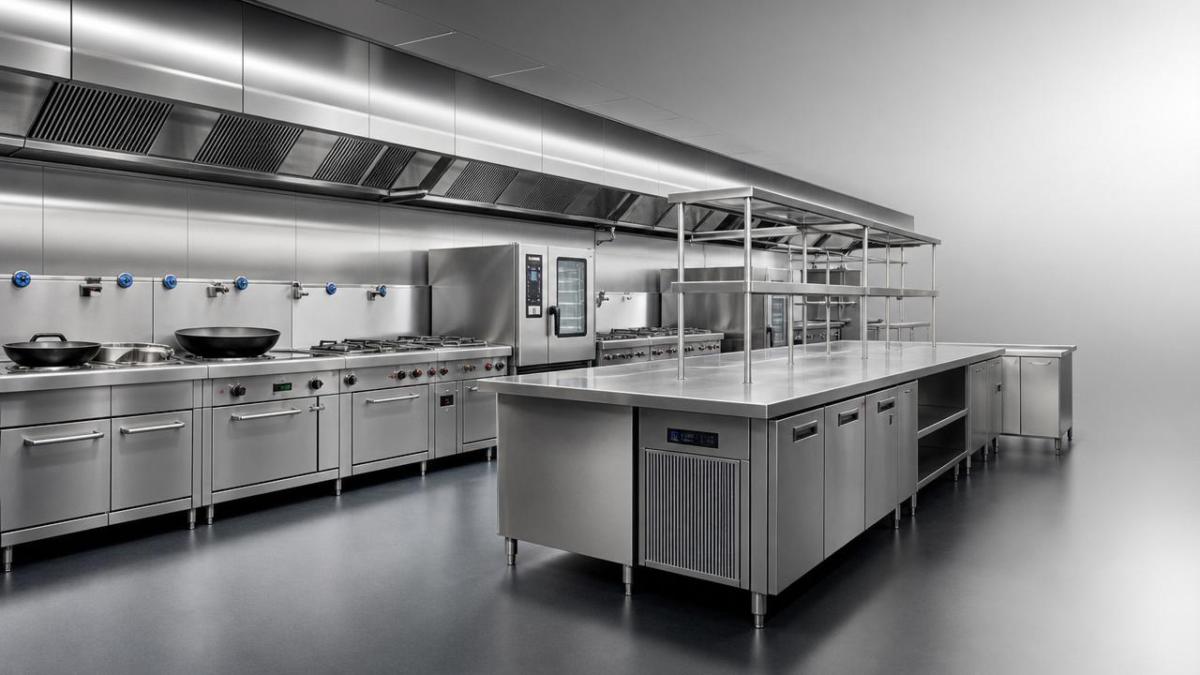
How needs change by scenario: a practical comparison
Choosing a kitchen design supplier becomes easier when decision-makers compare scenarios side by side. The same supplier may be strong in one area and weak in another, so selection criteria should match operational reality.
What enterprise decision-makers should evaluate first
For a multi-site project, a kitchen design supplier should be judged on execution capacity, not only design portfolio. Decision-makers should begin with five practical filters that reveal whether a supplier can support business growth.
1. Standardization capability
Ask whether the supplier can convert one approved concept into a scalable standard. This includes equipment schedules, utility requirements, workflow logic, and drawing packages that can be adapted by site type. Standardization lowers procurement complexity and protects brand consistency.
2. Local adaptation without operational compromise
Every site has different conditions. A capable kitchen design supplier knows how to adjust to local building constraints, ventilation systems, electrical standards, and compliance rules while maintaining the intended production flow. This is especially important for international projects and fast-growing regional brands.
3. Technical depth across equipment categories
Modern kitchens combine cooking lines, refrigeration, dishwashing, prep systems, holding, food processing, and increasingly smart monitoring tools. Suppliers should understand how these systems interact. In a market moving toward intelligent and energy-efficient kitchen solutions, technical integration creates long-term operating value.
4. Project management and rollout control
Multi-site delivery depends on timelines, procurement planning, and communication. A kitchen design supplier should provide clear approval processes, milestone tracking, issue escalation, and installation coordination. Weak project management can erase the benefit of strong design.
5. Service and post-installation support
Decision-makers often underestimate after-sales support. In distributed operations, downtime at one location can affect customer experience and brand reputation. The right supplier should offer training, documentation, troubleshooting pathways, and practical maintenance support over time.
Scenario-specific advice for selecting the right kitchen design supplier
Different business models require different supplier strengths. The best choice is usually the one that matches the operating scenario most closely.
For fast-growing restaurant brands
Prioritize suppliers with rollout discipline. Look for proven template-based design, short lead-time coordination, and the ability to recommend efficient, durable kitchen equipment that can be sourced consistently. A kitchen design supplier in this scenario should reduce friction between design, procurement, and store opening teams.
For hospitality groups
Choose a supplier that can handle complexity across multiple service styles. Review whether they understand banquet surges, premium guest expectations, specialty kitchen zoning, and labor productivity. The right kitchen design supplier should bridge culinary goals and engineering realities.
For industrial foodservice and central production
Focus on process logic and measurable efficiency. Here, layout decisions affect throughput, sanitation, labor usage, and energy consumption. Select a kitchen design supplier that can discuss workflow metrics, capacity assumptions, and system integration instead of only equipment brands.
For institutions and public-sector buyers
Emphasize durability, compliance, and supportability. A supplier should provide strong technical documents, transparent specifications, and practical maintenance planning. In these scenarios, a lower upfront price may not represent the best long-term value.
Common misjudgments in multi-site supplier selection
Many organizations select a kitchen design supplier based on reputation alone, but multi-site success depends on fit. Several recurring mistakes can weaken rollout performance.
- Assuming single-site success proves multi-site capability. Replication systems are different from custom project delivery.
- Overvaluing equipment price while ignoring coordination quality, service support, and operating efficiency.
- Neglecting local compliance, utility variation, or installation conditions until late in the project.
- Selecting a supplier without confirming documentation standards, revision control, and approval workflow.
- Failing to test whether smart kitchen, automation, or energy-saving features match actual staff capability and operating goals.
These misjudgments become more expensive as the number of sites increases. A structured comparison process is therefore essential.
Questions to ask before making a final decision
Before signing with a kitchen design supplier, business leaders should confirm whether the supplier can support both current and future operating scenarios. Useful questions include:
- How do you standardize a concept for different site sizes and local conditions?
- What experience do you have with similar multi-site restaurant, hotel, or institutional projects?
- How do you manage specification updates across multiple openings?
- What level of technical support is available during installation and operation?
- Can you recommend energy-efficient or intelligent kitchen solutions that improve lifecycle performance?
The answers will often reveal whether the supplier is truly equipped for expansion-stage operations or only for isolated projects.
FAQ about choosing a kitchen design supplier for multi-site projects
Should the same kitchen design supplier handle every location?
Not always, but using one lead kitchen design supplier often improves consistency, documentation control, and accountability. In large regional programs, some companies use one strategic supplier with approved local execution partners.
Is a global supplier always better than a local one?
A global supplier may offer stronger systems and broader experience, while a local supplier may have better code knowledge and service response. The best option depends on project scale, geography, and how well the supplier combines standardization with local adaptation.
How important are smart and energy-efficient kitchen systems?
They are increasingly important, especially for brands focused on labor productivity, utility savings, and data-driven operations. However, the kitchen design supplier should recommend technology based on actual operating needs, not trend value alone.
Final decision framework for business leaders
The right kitchen design supplier for multi-site projects is the one that fits your operating scenario, growth speed, and support expectations. For chain restaurants, repeatability may come first. For hotels, complexity management is critical. For institutions, compliance and reliability may carry the most weight. Across all scenarios, the strongest suppliers combine technical knowledge, project discipline, and the ability to align kitchen equipment strategy with business goals.
If your organization is evaluating options, start by defining site types, menu or production requirements, compliance constraints, rollout timing, and service expectations. Then compare each kitchen design supplier against those real-world conditions rather than against generic claims. A scenario-based selection process will lead to better standardization, lower risk, and a more sustainable foundation for future expansion.
Popular Tags
Kitchen Industry Research Team
Dedicated to analyzing emerging trends and technological shifts in the global hospitality and foodservice infrastructure sector.
Industry Insights
Join 15,000+ industry professionals. Get the latest market trends and tech news delivered weekly.
No spam. Unsubscribe anytime.

Contact With us
Contact:
Anne Yin (Ceramics Dinnerware/Glassware)
Lucky Zhai(Flatware)