
Risks to Check When Sourcing Kitchen Equipment in China
Sourcing from kitchen equipment manufacturers China can reduce costs, but hidden risks in quality, compliance, and delivery can quickly impact your business. Whether you need industrial food equipment, hotel kitchen equipment, or support from restaurant equipment suppliers, buyers must carefully evaluate certifications, production capacity, after-sales service, and commercial kitchen layout compatibility before placing orders.
For importers, kitchen operators, procurement teams, and business decision-makers, the challenge is not simply finding a lower unit price. The real task is controlling sourcing risk across performance, hygiene, safety, shipping, installation, and lifecycle support. A fryer, combi oven, mixer, dishwasher, or stainless-steel worktable may look similar in a catalog, yet the differences in materials, electrical standards, and manufacturing discipline can create major downstream costs.
In commercial kitchens, even a 3-day delay or a small compliance mismatch can affect opening schedules, production capacity, staff workflow, and customer service. That is why buyers who source kitchen equipment in China need a structured review process before confirming deposits, approving samples, or signing production agreements.
Understand the Main Risk Categories Before You Place an Order
The first mistake many buyers make is evaluating suppliers only on quotation price. In practice, sourcing risk usually falls into 4 major categories: product quality, regulatory compliance, delivery reliability, and after-sales support. Each category has a direct effect on kitchen uptime, food safety, and total ownership cost over 12–36 months.
Commercial kitchen equipment is different from low-risk consumer goods. Products often operate at 220V–480V, handle temperatures above 200°C, or run continuously for 8–16 hours per day. If insulation, burners, controllers, stainless-steel grade, or welding quality are below standard, the result may be frequent breakdowns, unstable heat output, or sanitation problems that increase operating risk.
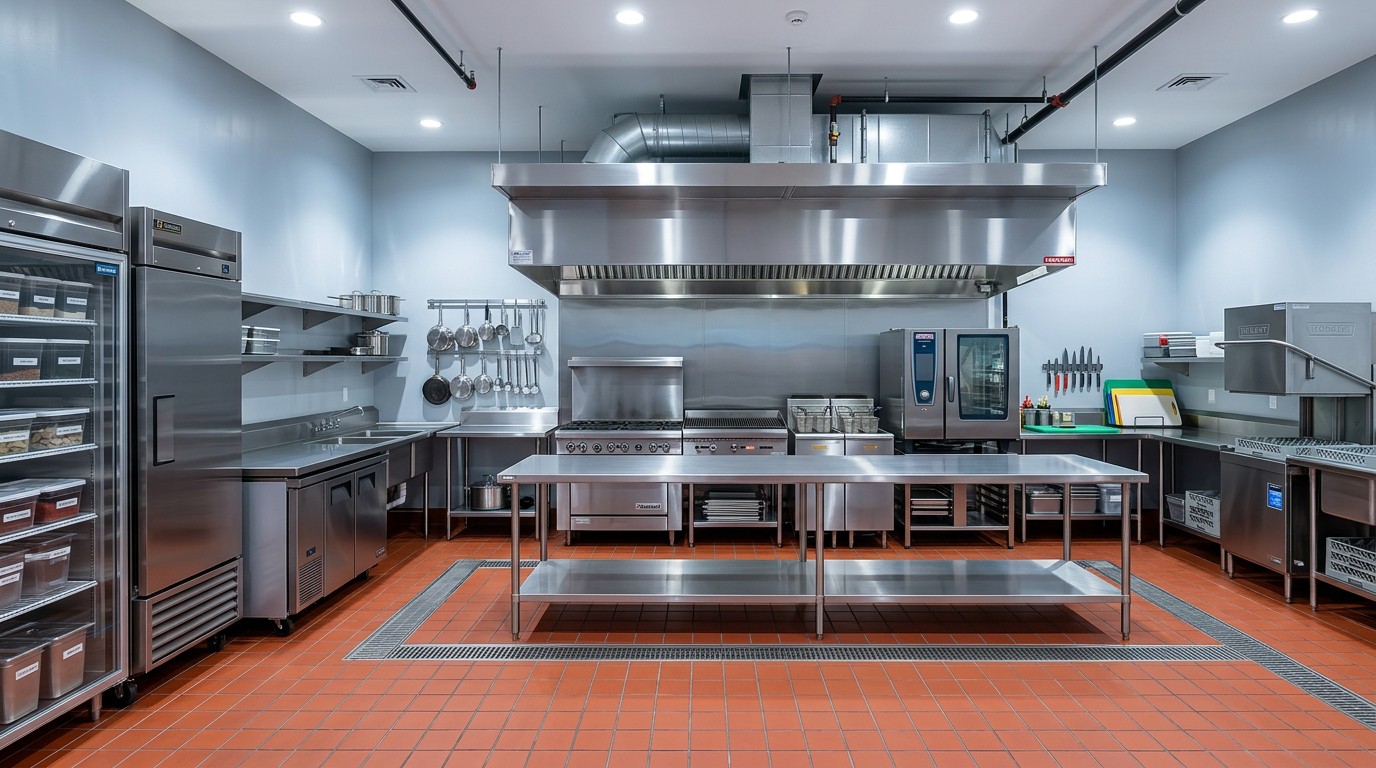
For restaurant groups, hotels, central kitchens, and food processing plants, the impact is multiplied. A single equipment mismatch can disrupt workflow planning, extraction system balance, staff movement lines, and utility loads. Buyers should therefore review not only the machine itself, but also how it fits the full commercial kitchen layout.
The 4 risks that matter most
- Quality risk: thin steel, inconsistent components, weak welding, low-grade thermostats, or poor finishing that shortens service life.
- Compliance risk: missing CE, ETL, UL-related requirements, food-contact material documents, or country-specific plug and voltage compatibility.
- Delivery risk: unrealistic lead time promises such as 15 days for customized lines that usually need 30–45 days.
- Service risk: no spare parts list, no wiring diagram, and no response process within 24–72 hours after installation issues appear.
A clear pre-purchase checklist helps buyers compare kitchen equipment manufacturers in China more objectively. Instead of asking only “What is your best price?”, ask for test methods, material thickness, certification scope, reference lead times, spare part availability, and packaging standards for sea freight.
The table below shows how the most common sourcing risks affect business operations in different ways.
The key takeaway is simple: low purchase cost can quickly disappear if any of these 4 risk areas are ignored. For B2B buyers, source selection should be based on operational fit and supplier control ability, not only on the first quotation.
Check Product Quality Beyond Photos and Catalog Specifications
Kitchen equipment catalogs often show polished surfaces and attractive dimensions, but buyers need to validate the actual construction standard. For example, stainless steel marked as 201 and 304 may look similar in photos, yet their corrosion resistance in humid kitchens is very different. In high-use areas such as sinks, prep tables, cabinets, and cooking lines, material selection has a direct effect on rust resistance and cleaning performance.
Quality review should include 5 basic checks: steel grade, sheet thickness, welding finish, control component brand, and insulation or heat-retention structure. In many projects, a thickness difference of 0.2–0.5 mm can change long-term rigidity, especially for tables, shelves, and oven bodies exposed to heavy loading or repeated thermal cycling.
For powered equipment such as mixers, slicers, fryers, dishwashers, and ovens, buyers should also confirm motor load, heating recovery time, controller accuracy, and continuous operation range. If a unit is sold for commercial use but can only maintain stable performance for 2–3 hours, it may not suit a restaurant that runs lunch and dinner service across 10–12 hours.
What to ask for before mass production
- A bill of materials or at least a confirmed list of critical materials and component brands.
- Photos or videos of welding seams, internal structure, cable routing, and control panels.
- Sample testing records, especially for temperature range, heating time, or motor performance.
- Packaging method details, including foam protection, wooden crate use, and corner reinforcement for sea shipment.
Practical quality indicators for common equipment
For commercial ovens and heated holding units, a temperature deviation within ±5°C is generally a more useful discussion point than broad claims like “high efficiency.” For stainless worktables, load capacity should be stated as a practical range, such as 150–300 kg depending on size and bracing design. For dishwashers, water consumption per cycle and rack throughput per hour are often more relevant than only total power.
The following comparison table helps purchasing teams evaluate whether a supplier is presenting measurable quality data or only sales language.
A supplier that can provide measurable evidence is usually easier to manage during mass production. Buyers do not need perfect documentation for every item, but they should expect traceable answers for the most critical performance points.
Verify Compliance, Electrical Matching, and Food Safety Requirements
One of the most expensive sourcing errors is assuming that “exported before” means “fully compliant for your market.” Kitchen equipment imported into different countries may require different electrical configurations, plug types, gas standards, hygiene-related materials, and product labeling. A machine built for 380V/50Hz may not be ready for a site using 208V/60Hz or 240V single phase.
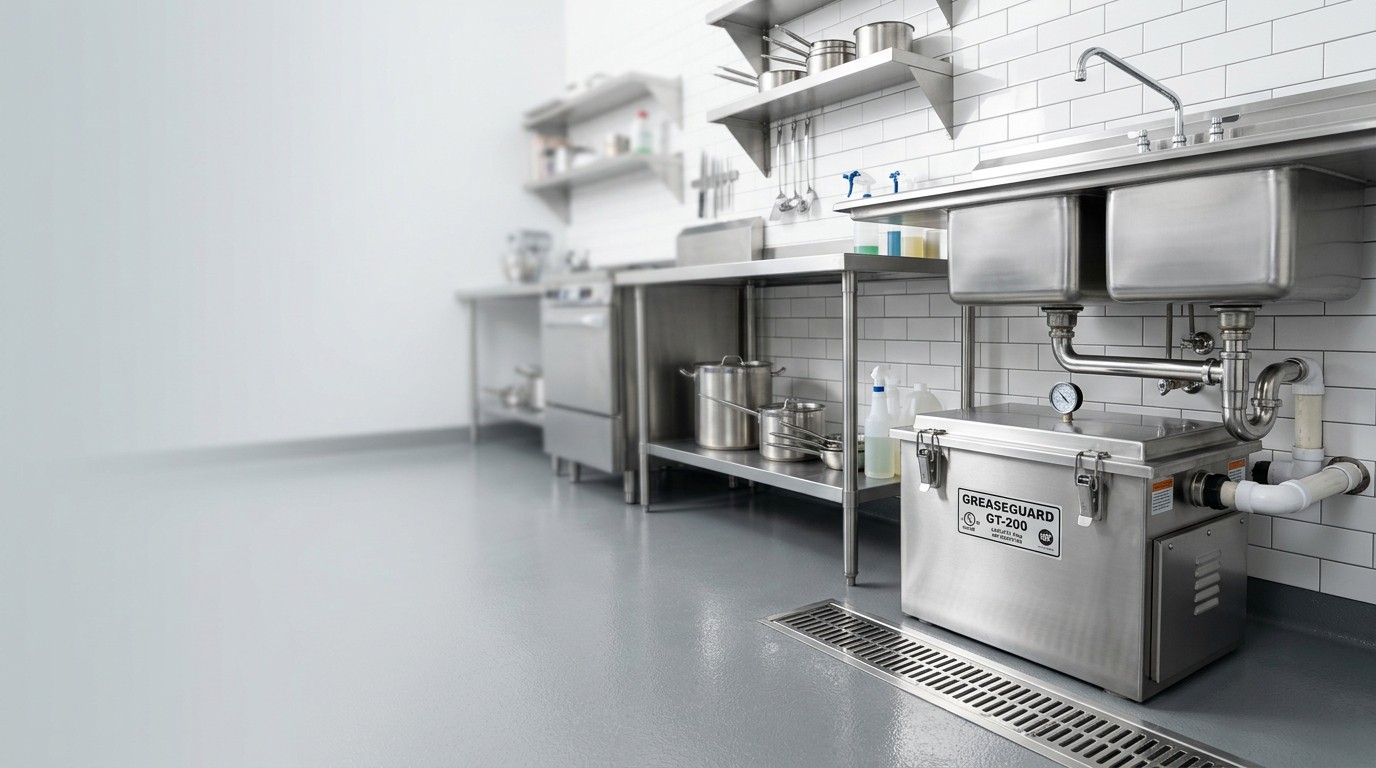
This matters especially for restaurant equipment suppliers serving chain stores, hotel projects, and food factories. Installation contractors need accurate load data, socket plans, drainage points, gas inlet positions, and ventilation coordination. If electrical and utility details are wrong by even one specification line, commissioning can be delayed by 1–2 weeks or more.
Food-contact safety is equally important. Buyers should confirm which parts touch food directly, what material is used, and whether cleaning chemicals or high-moisture conditions will affect long-term hygiene. For processing equipment, seals, belts, blades, tanks, and contact surfaces need particular attention.
Compliance points buyers should confirm
- Voltage, frequency, phase, plug type, and power rating must match the destination market and installation site.
- Gas appliances should specify gas type compatibility and any regulator requirements before shipment.
- Product labels, serial information, and manuals should be available in the language required by the buyer’s market.
- Food-contact materials should be clearly identified, especially for bowls, trays, tanks, blades, and internal surfaces.
Avoid generic certification claims
A common red flag is a supplier sending a generic certificate file without confirming whether it applies to the exact product model, component configuration, or export destination. Procurement teams should ask whether the certification covers the full machine, selected components only, or a previous version. This is particularly important for electrical heating products, gas equipment, and smart kitchen devices with digital control systems.
At the project stage, a simple 6-point compliance review can prevent costly rework: destination voltage, site utility drawing, product certification scope, labeling language, food-contact material confirmation, and installation documentation. That review is often more valuable than rushing to place a deposit within 48 hours of receiving a quote.
Assess Factory Capacity, Delivery Planning, and Packaging Control
A factory may produce high-quality kitchen equipment samples and still fail on delivery performance. This usually happens when buyers do not verify production capacity, outsourcing ratio, and scheduling discipline. In commercial kitchen projects, delivery timing is often tied to fit-out, ventilation, plumbing, and cold-room installation. A slip of 10–20 days can create a chain reaction across contractors and opening dates.
Capacity assessment should cover more than workshop size. Buyers should ask how many production lines the factory runs, whether key processes such as cutting, bending, welding, polishing, and assembly are in-house, and how many customized orders can be handled per month. For stainless fabrication and heated equipment, process control matters more than simple headcount.
Lead times should be reviewed in 3 stages: production, inspection, and shipment readiness. A supplier may quote 25 days, but if packaging needs 3 extra days and container booking needs another 5–7 days, the practical ex-factory schedule may already reach 33–35 days. Buyers should work with realistic planning rather than optimistic promises.
How to evaluate delivery reliability
Ask for a milestone plan with clear dates for drawing confirmation, raw material purchase, main fabrication, assembly, testing, packaging, and final loading. This is especially important for hotel kitchen equipment, central kitchen projects, and mixed orders combining refrigeration, cooking, prep, and stainless-steel items from multiple production teams.
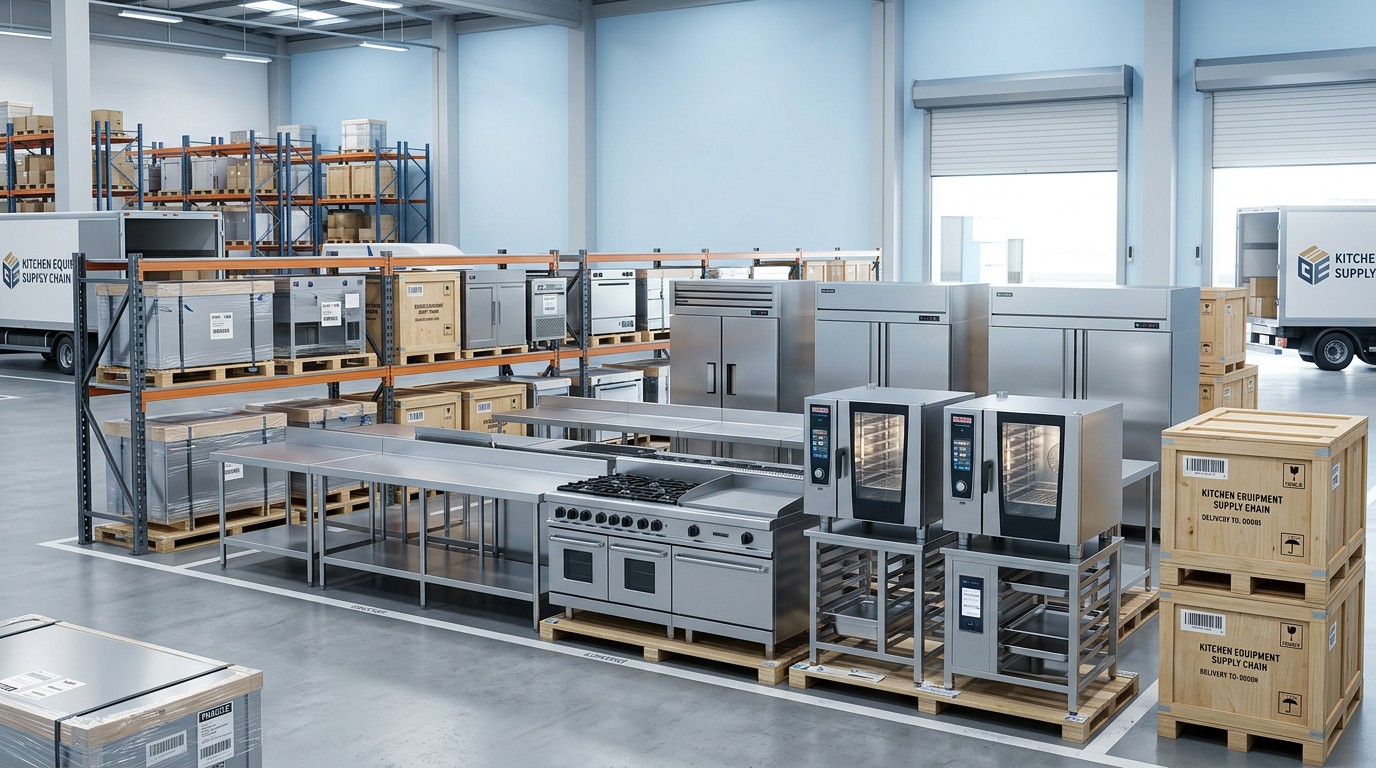
Packaging should also be treated as a sourcing risk, not an afterthought. Long-distance sea freight can expose equipment to vibration, humidity, rough handling, and stacked cargo pressure. Thin carton-only packaging may be insufficient for heavy machines over 80–120 kg or fragile control panels.
The table below provides a practical framework for checking whether a supplier’s delivery commitment is credible.
When buyers request a date-based milestone plan and packaging evidence in advance, delivery discussions become more factual. This approach is especially useful for importers consolidating shipments from several restaurant equipment suppliers in one container.
Review After-Sales Support, Spare Parts, and Installation Compatibility
Many sourcing problems appear only after the equipment reaches the site. A machine may power on but fail to fit the planned workflow, utility connection, or operator routine. This is why after-sales review should begin before ordering, not after arrival. For commercial kitchen equipment, service readiness is part of procurement, not a separate issue.
Buyers should confirm what documents are provided with the order: user manual, parts list, wiring diagram, exploded view, troubleshooting guide, and daily maintenance instruction. Even for relatively simple equipment, these documents reduce installation errors and help local technicians diagnose faults faster within the first 30–90 days.
Spare parts planning is critical for high-use components such as thermostats, switches, heating elements, relays, door gaskets, pumps, and control boards. If a replacement part needs 2–4 weeks to ship internationally, kitchen downtime may become more expensive than the original equipment savings. A better approach is to order a first-year spare kit with the main shipment.
Commercial kitchen layout compatibility matters
Equipment sizing should match aisle width, exhaust hood coverage, drainage slope, service access, and operator movement lines. A 900 mm machine may fit the room dimensionally but still create bottlenecks if the door swing, cleaning space, or loading side was not considered. This issue often affects hotel kitchen equipment and central kitchens with high throughput and strict zoning.
Before production approval, buyers should verify 4 basic layout points: installed footprint, utility connection location, maintenance clearance, and workflow direction. If the project includes 10 or more pieces of integrated equipment, a line drawing or simple placement map can prevent costly on-site modification.
Minimum after-sales questions to ask
- What is the response time for technical questions: 24 hours, 48 hours, or longer?
- Which spare parts are recommended for the first 12 months of operation?
- Can the supplier provide installation drawings, wiring support, or remote video guidance?
- Are wear parts standardized or dependent on a proprietary internal design?
Reliable after-sales support does not always mean a local branch office. In many cases, fast documentation, clear fault diagnosis, and predictable parts support are enough to make imported kitchen equipment workable and cost-effective for professional users.
Build a Safer China Sourcing Process for Procurement Teams
The safest sourcing strategy is process-driven. Instead of depending on one salesperson’s promise, procurement teams should build a repeatable review system covering supplier screening, technical confirmation, inspection, shipping, and post-installation support. This approach is useful for trading companies, foodservice groups, distributors, and direct project buyers alike.
A practical sourcing process usually includes 6 steps: requirement definition, supplier qualification, sample or document review, production monitoring, pre-shipment inspection, and installation follow-up. Even for medium-size orders, these steps reduce disputes and improve communication across purchasing, engineering, operations, and finance teams.
For example, if your order includes industrial food equipment, refrigeration units, stainless fabrication, and cooking appliances, use a category-based checklist rather than one universal form. Powered equipment should be checked for electrical data and performance; stainless products should be checked for material and fabrication; integrated lines should be checked for layout and utility matching.
A practical pre-order checklist
- Confirm the use case: restaurant, hotel, food factory, central kitchen, or distributor inventory.
- Match voltage, frequency, gas type, dimensions, and operating hours to the destination site.
- Request evidence for materials, key components, and applicable certifications.
- Approve production drawings or technical sheets before deposit release where possible.
- Set inspection and packaging standards before the final balance payment.
- Define after-sales contact path, spare parts plan, and warranty handling method.
FAQ for buyers sourcing kitchen equipment in China
How long is the normal lead time?
Standard items may be ready in 15–25 days, while customized commercial kitchen equipment often needs 30–45 days. Complex projects with multiple product categories can require 45–60 days depending on drawing approval and component availability.
Should buyers always request samples?
Not always. For large stainless items or expensive machines, detailed technical review, factory video verification, and pre-shipment inspection may be more efficient than sending a full sample. But for key performance items, a sample or test video is highly valuable.
What is the most common hidden cost?
The most common hidden cost is not freight alone. It is rework caused by mismatched specifications, missing accessories, damage in transit, or delayed installation due to incorrect utility planning. These issues can easily exceed the original unit price savings.
Is the cheapest quote ever a good choice?
Only if the technical scope, materials, certifications, packaging, and after-sales terms are identical. In many cases, a quote that is 8% lower may involve thinner steel, a different controller, weaker packaging, or missing accessories that create higher total cost later.
Sourcing kitchen equipment in China can be commercially smart when buyers manage risk with technical discipline. The most reliable results come from checking quality evidence, compliance details, production capacity, delivery planning, spare parts support, and commercial kitchen layout compatibility before orders are finalized.
If you are evaluating kitchen equipment manufacturers in China for restaurant projects, hotel kitchens, food processing lines, or distributor supply, a structured sourcing review can save significant time and cost over the full equipment lifecycle. Contact us to discuss your project requirements, get a tailored sourcing checklist, or learn more about practical kitchen equipment solutions for your market.
- commercial kitchen equipment
- restaurant equipment
- smart kitchen
- central kitchen
- Commercial Oven
- Griddle
- Slicer
- Mixer
- kitchen equipment
- kitchen equipment manufacturers
- commercial kitchen layout
- restaurant equipment suppliers
- kitchen equipment manufacturers china
- kitchen equipment import
- hotel kitchen equipment
- industrial food equipment
Popular Tags
Kitchen Industry Research Team
Dedicated to analyzing emerging trends and technological shifts in the global hospitality and foodservice infrastructure sector.
Industry Insights
Join 15,000+ industry professionals. Get the latest market trends and tech news delivered weekly.
No spam. Unsubscribe anytime.
Contact With us
Contact:
Anne Yin (Ceramics Dinnerware/Glassware)
Lucky Zhai(Flatware)