
Commercial Kitchen Layout Mistakes That Raise Costs
A flawed commercial kitchen layout can quietly increase labor, energy, maintenance, and compliance costs across restaurants, hotels, and food processing sites. In most cases, the biggest cost drivers are not the obvious equipment purchases, but the hidden inefficiencies caused by poor workflow, bad zoning, difficult cleaning access, and weak coordination between utilities, storage, and prep areas. For operators, buyers, and decision-makers, the key question is simple: does the layout help staff move faster, safer, and with less waste? If not, the kitchen will keep generating avoidable costs long after installation.
Whether you are planning a new facility, upgrading hotel kitchen equipment, or reviewing an existing production space with industrial food equipment, the layout often determines how well every investment performs. This article explains the most common commercial kitchen layout mistakes that raise costs, why they matter, and how to evaluate a better design before problems become expensive.
Why Kitchen Layout Mistakes Cost More Than Most Buyers Expect
Many businesses focus heavily on unit price when buying commercial kitchen equipment, but layout decisions often have a bigger long-term impact on operating cost. A lower-cost installation can become far more expensive over time if staff must take extra steps, wait for shared workstations, work around unsafe hot zones, or clean equipment that was installed too tightly.
For restaurants, hotels, catering facilities, and food processing operations, layout mistakes usually increase costs in five areas:
- Labor cost: inefficient movement, repeated walking, and staff congestion slow output.
- Energy cost: poor equipment grouping and ventilation planning make systems work harder.
- Maintenance cost: equipment placed without service clearance is harder and more expensive to maintain.
- Food safety and compliance risk: cross-traffic and bad zoning increase contamination risk.
- Expansion cost: a rigid layout makes menu changes, capacity growth, or new equipment additions difficult.
This is why experienced restaurant equipment suppliers and catering equipment suppliers often emphasize workflow planning before final equipment selection. The goal is not simply to fit machines into a room, but to create a kitchen that supports output, safety, and efficient daily operation.
1. Poor Workflow Planning Between Receiving, Storage, Prep, Cooking, and Service
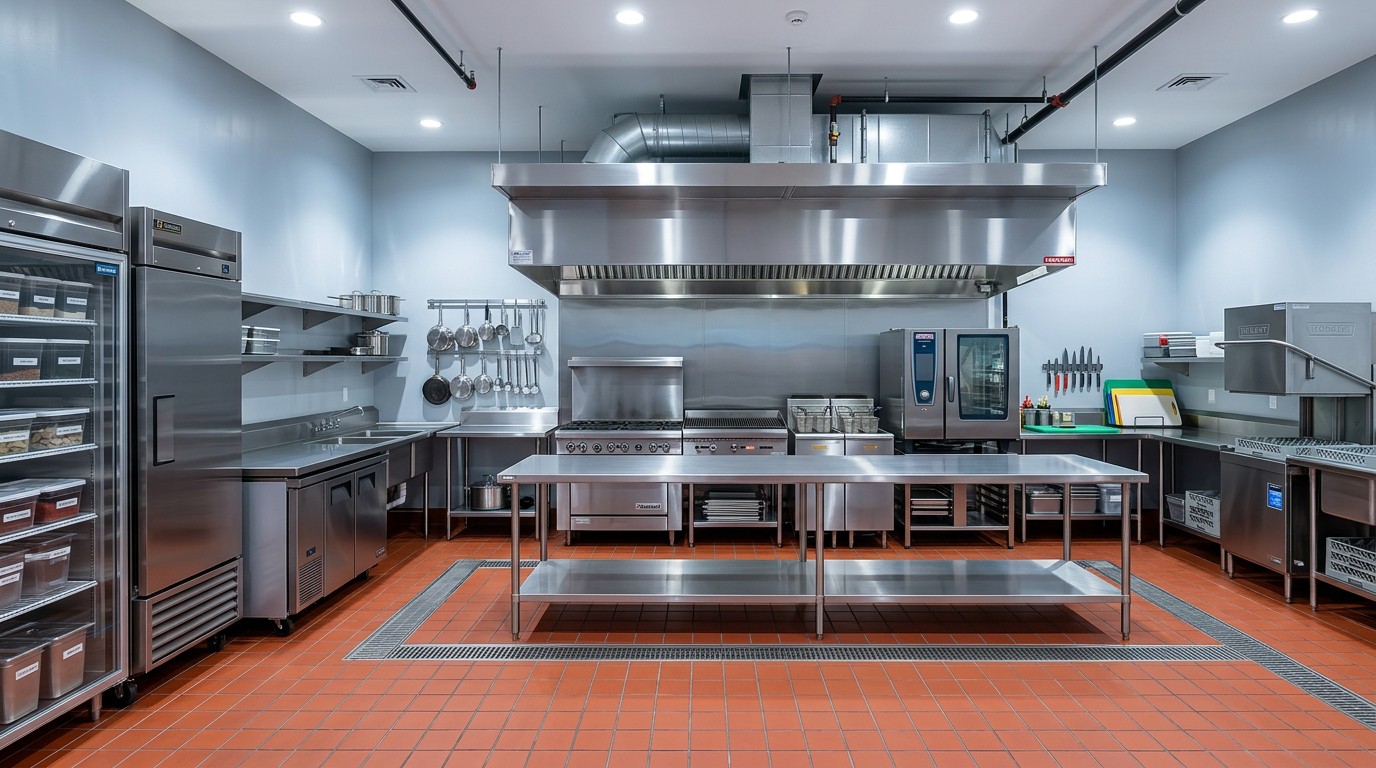
The most expensive layout mistake is often the most basic: the kitchen does not follow the actual path of work. Ingredients should move logically from receiving to storage, then to washing, prep, cooking, plating, service, and cleaning. When that sequence is broken, staff waste time crossing the room, backtracking, or waiting for access.
Common signs of workflow failure include:
- Cold storage located far from prep stations
- Prep tables positioned away from washing areas
- Cooking equipment too far from pass-through or service zones
- Dishwashing traffic crossing food preparation routes
- Shared aisles used by both raw and finished food movement
For hotel kitchen equipment installations or high-volume restaurant operations, these mistakes can create continuous micro-delays that affect every shift. Over weeks and months, small inefficiencies turn into measurable labor costs and lower throughput.
What to do instead: map real task flow before choosing final equipment positions. Observe how products, staff, dishes, and waste will move during peak hours, not just under ideal conditions. A good layout reduces crossing paths and supports a one-way operational logic wherever possible.
2. Creating Bottlenecks Around High-Use Equipment
Not all equipment has the same traffic impact. Cooking lines, combi ovens, fryers, sinks, refrigerators, dishwashers, and plating stations often become high-use points. If too many staff depend on the same narrow area, bottlenecks form quickly.
This issue is especially common in compact kitchens where operators try to maximize equipment density. More machines do not always mean more productivity. If staff cannot open doors fully, carry trays safely, or pass behind one another without stopping, the layout reduces efficiency instead of improving it.
Typical bottleneck problems include:
- Oven doors blocking walkways when opened
- Refrigerator access interfering with prep work
- Multiple stations sharing one hand sink or wash area
- Cooking line too close to plating or dispatch points
- Dish return traffic colliding with food pickup routes
How to evaluate risk: review peak-time movement, not average-time movement. Decision-makers should ask how many people need access to the same area within the same 5 to 10 minutes during service. If the answer is “too many,” the layout likely needs adjustment.
3. Bad Zoning That Increases Food Safety and Compliance Problems
A commercial kitchen layout should separate functions clearly enough to support hygiene and compliance. When raw materials, cooked food, cleaning tools, waste, and dishwashing operations overlap too closely, contamination risks increase.
This matters not only for regulatory compliance but also for operational cost. Food safety failures lead to waste, rework, inspections, complaints, and potential reputational damage. In food processing environments using industrial food equipment, poor zoning can become even more serious because output volume is higher and contamination consequences can affect larger batches.
High-risk zoning mistakes include:
- Raw and cooked food prep areas placed side by side without clear separation
- Cleaning chemical storage near food-contact equipment
- Waste routes passing through active prep zones
- Handwashing stations positioned inconveniently, reducing actual use
- Dishwashing steam and splash affecting nearby food prep spaces
Best practice: define dedicated zones for receiving, storage, raw prep, cooked food handling, service, washing, and waste management. The more clearly these areas are separated in layout planning, the easier it becomes to maintain standards consistently.
4. Ignoring Cleaning Access and Maintenance Clearance
Another common mistake is placing equipment too tightly against walls, corners, or adjacent units. On paper, this may save space. In reality, it often increases cleaning difficulty, service downtime, grease buildup, and maintenance cost.
Commercial kitchens need regular access behind, beside, and sometimes above equipment. If technicians cannot reach utilities or if staff cannot clean spills, crumbs, grease, and moisture properly, sanitation and equipment life both suffer.
This issue is frequently overlooked when comparing quotes from restaurant equipment suppliers. A layout that appears efficient in a drawing may be problematic once equipment doors, service panels, ventilation needs, and cleaning routines are considered.
Check these points before approval:
- Can staff clean under and behind key units?
- Is there enough space to remove panels for maintenance?
- Can grease-producing equipment be cleaned safely and regularly?
- Do refrigeration units have proper airflow clearance?
- Will replacement or future upgrades require major layout changes?
A layout that supports easy maintenance usually lowers total cost of ownership, even if the initial plan appears slightly less compact.
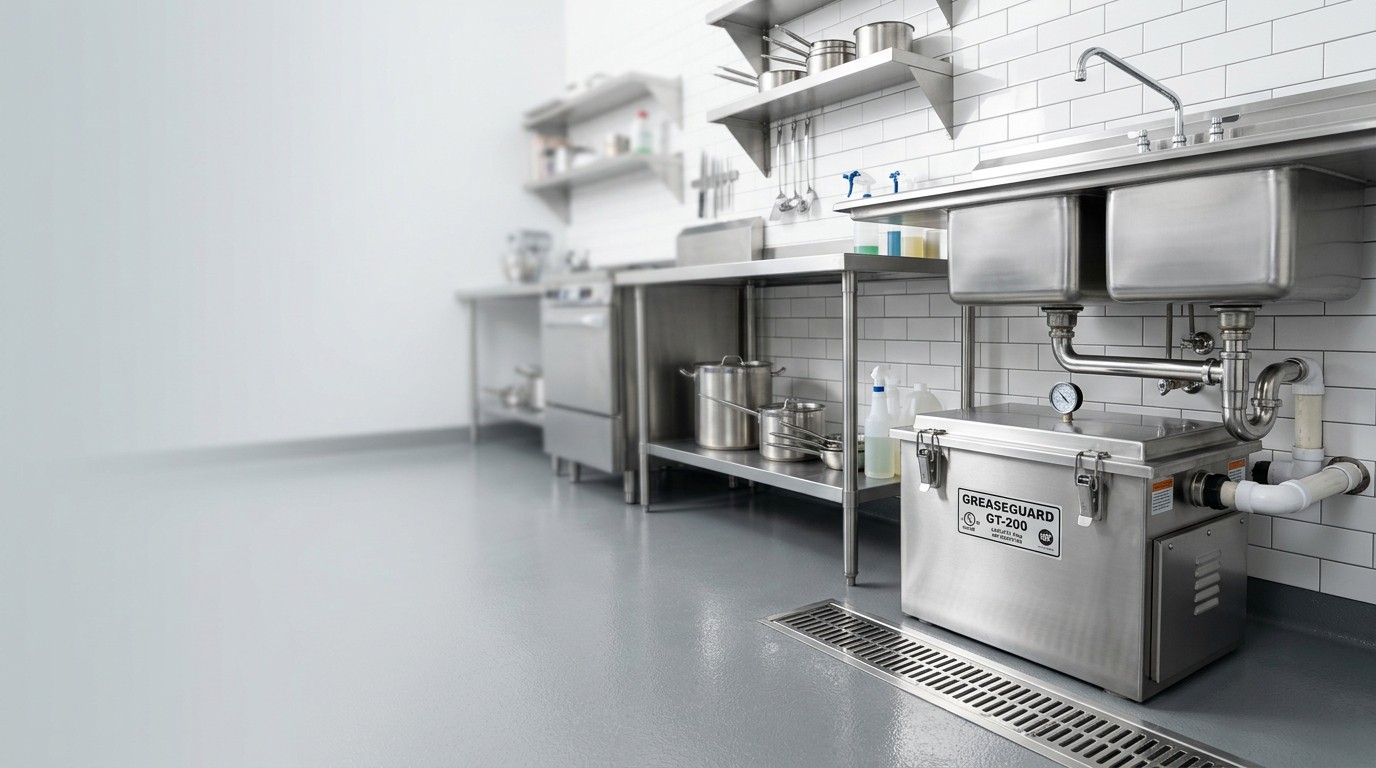
5. Poor Placement of Ventilation, Drainage, and Grease Management Systems
Utilities are often treated as technical details, but they strongly affect operating cost. Bad placement of exhaust hoods, drainage points, and grease trap equipment can cause serious performance and compliance problems.
For example, if grease-producing appliances are installed without efficient grease management planning, operators may face more frequent blockages, odors, cleaning issues, and plumbing service calls. If ventilation is poorly matched to the cooking line, kitchens become hotter, less comfortable, and less energy efficient.
Common mistakes include:
- Installing heavy grease-output equipment too far from appropriate grease handling systems
- Placing grease trap equipment where maintenance access is difficult
- Insufficient floor slope or drainage near wet-process stations
- Poor hood coverage over heat- and smoke-producing appliances
- Utility planning that forces long, inefficient connections
Why this matters to buyers: problems with ventilation and drainage may not appear on day one, but they create ongoing costs through energy waste, emergency repairs, sanitation issues, and staff discomfort. These are layout costs, not just utility costs.
6. Underestimating Storage Requirements and Restocking Frequency
Insufficient storage is one of the fastest ways to create disorder in a commercial kitchen. When dry goods, refrigerated items, utensils, packaging, or cleaning supplies do not have properly planned locations, staff start using temporary surfaces and aisles as overflow areas. That leads to clutter, slower movement, and higher safety risk.
Storage planning should reflect real purchasing volume, menu complexity, delivery frequency, and peak production levels. A kitchen that looks clean during installation can become crowded within weeks if storage capacity was based on optimistic assumptions.
Cost effects of bad storage layout include:
- More time spent searching and restocking
- Higher spoilage from poor product rotation
- Blocked work areas and unsafe walking paths
- Overbuying because inventory visibility is weak
- More frequent emergency deliveries
What helps: place storage close to the point of use, while maintaining hygiene and temperature control requirements. Fast-moving items should be easiest to access. High-volume kitchens benefit from separating bulk storage from line-side working stock.
7. Choosing Equipment Without Considering the Actual Menu and Production Pattern
Some layout problems begin before the floor plan is finalized. Businesses may choose equipment based on catalog popularity, supplier bundles, or estimated growth rather than actual menu demand and production rhythm. The result is a kitchen layout shaped by machines instead of operations.
For example, a facility may install oversized cooking equipment that consumes prime line space but runs far below capacity. Or it may combine too many different cooking functions into one area, creating heat concentration and staff congestion. In food processing sites, industrial food equipment may be selected for output capacity without enough attention to material flow, staging, or operator access.
Better decision approach:
- Start with menu mix, batch size, and service style
- Estimate peak-hour production rather than total daily volume only
- Identify which stations are critical to speed and consistency
- Match equipment size and position to actual use frequency
- Allow room for accessories, loading, unloading, and operator movement
A smart layout is operation-led, not equipment-led.
8. Failing to Plan for Staff Safety and Real Working Conditions
Layouts that ignore ergonomics and safety often increase hidden costs through injuries, fatigue, errors, and staff turnover. This matters to both operators and business leaders because labor retention and safe performance directly affect profitability.
Typical safety-related layout issues include:
- Narrow walkways around hot equipment
- Long carrying distances for heavy pots or trays
- Poor separation between hot oil, open flames, and passing traffic
- Wet areas located near fast movement paths
- Storage shelves placed too high or too low for repeated access
Even if these issues do not immediately cause accidents, they make daily work harder. Over time, slower movement, fatigue, and caution around risky areas reduce output and consistency.
Practical standard: the best kitchen layout supports safe movement during peak pressure, not just during quiet periods. If staff need to twist, reach, wait, or squeeze past one another regularly, the design is already costing more than expected.
How to Review a Commercial Kitchen Layout Before It Becomes Expensive
For procurement teams and business decision-makers, the most valuable step is a structured layout review before purchase and installation. This is where good restaurant equipment suppliers and catering equipment suppliers can add real value if they understand workflow, service needs, cleaning routines, and compliance requirements rather than only product specifications.
Use this checklist when evaluating a commercial kitchen layout:
- Does the layout follow a logical one-direction workflow?
- Are raw, cooked, cleaning, and waste functions clearly separated?
- Can peak-hour staff move without bottlenecks?
- Is there enough clearance for operation, cleaning, and maintenance?
- Are ventilation, drainage, and grease trap equipment properly planned?
- Is storage capacity realistic for actual purchasing and production patterns?
- Does the layout support current needs and reasonable future growth?
- Have operators, maintenance staff, and managers all reviewed the plan?
If possible, walk through the kitchen on paper or in a digital simulation using real tasks: receiving goods, prepping ingredients, cooking peak orders, washing equipment, removing waste, and servicing machines. This often reveals problems that basic floor plans miss.
What Good Layout Planning Looks Like in Practice
An effective commercial kitchen layout does not need to be large or complex. It needs to be intentional. Good planning usually includes clear zoning, short movement paths, accessible utilities, enough storage, safe circulation, and equipment placement based on actual operational priority.
In practice, the best layouts usually share these characteristics:
- High-use stations are positioned for fast access without cross-traffic
- Cleaning and maintenance can be performed without major disruption
- Hotel kitchen equipment and restaurant line equipment are grouped according to service flow
- Industrial food equipment is integrated with material handling and sanitation logic
- Grease-producing areas are supported by practical grease management design
- The kitchen can adapt to menu changes, volume shifts, or equipment upgrades
This kind of planning improves not only cost control, but also food quality, staff performance, and operational resilience.
Conclusion
Commercial kitchen layout mistakes raise costs in ways that are easy to overlook at the buying stage but hard to ignore during daily operation. Poor workflow, bottlenecks, weak zoning, bad utility placement, limited cleaning access, and unrealistic storage planning all create ongoing expenses through labor waste, maintenance problems, safety risks, and lower output.
For information researchers, operators, buyers, and business leaders, the most important takeaway is clear: the right layout is not just a design issue. It is a cost-control strategy. Before investing in commercial kitchen equipment, hotel kitchen equipment, or industrial food equipment, evaluate how the entire space will function under real working conditions. A well-planned kitchen does more than fit equipment into place. It protects efficiency, compliance, and long-term return on investment.
Popular Tags
Kitchen Industry Research Team
Dedicated to analyzing emerging trends and technological shifts in the global hospitality and foodservice infrastructure sector.
Industry Insights
Join 15,000+ industry professionals. Get the latest market trends and tech news delivered weekly.
No spam. Unsubscribe anytime.
Contact With us
Contact:
Anne Yin (Ceramics Dinnerware/Glassware)
Lucky Zhai(Flatware)