
Kitchen preparation equipment sourcing is moving closer to market
As kitchen preparation equipment sourcing moves closer to market, buyers are rethinking how to choose reliable, efficient solutions for fast-changing foodservice demands. From kitchen prep table and commercial sink unit setups to dough mixer machine, bakery oven machine, commercial freezer, and commercial ice maker options, the right equipment strategy can improve productivity, hygiene, and long-term cost control.
This shift is not only about geography. It reflects a broader sourcing change in the kitchen equipment industry, where restaurants, hotels, central kitchens, bakeries, and food processors increasingly want shorter lead times, easier service access, lower inventory risk, and equipment that matches local operating standards. For researchers, operators, procurement teams, and business decision-makers, the question is no longer just where equipment is made, but how quickly it can be evaluated, delivered, maintained, and integrated into real kitchen workflows.
In practical terms, near-market sourcing affects product selection, spare parts planning, installation schedules, utility matching, and total cost of ownership. A commercial freezer that arrives in 2 weeks instead of 10, or a dough mixer machine supported by local technicians within 24–48 hours, can make a measurable difference in startup timing and operational continuity. The same logic applies to bakery oven machine procurement, prep line layout, and sanitation-focused solutions such as commercial sink unit systems.
Why kitchen preparation equipment sourcing is moving closer to demand centers
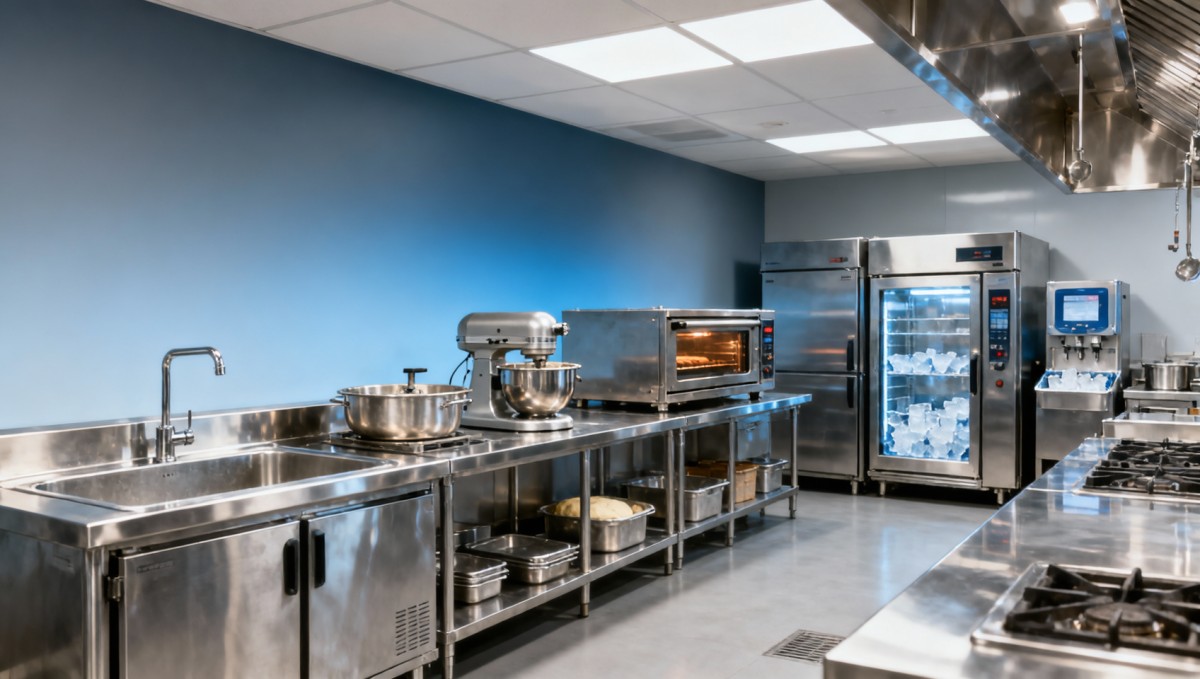
Near-market sourcing has grown because foodservice operations now work on tighter launch schedules and leaner inventories. A new restaurant opening may have only 30–60 days to finalize equipment, complete installation, train staff, and pass local inspections. When sourcing is too far from the point of use, every design revision, shipping delay, or missing accessory can disrupt that timeline.
The kitchen equipment sector has also become more technical. Buyers are no longer comparing only stainless steel thickness or motor size. They are checking energy efficiency, utility compatibility, workflow fit, digital controls, cleaning access, and maintenance intervals. For example, a commercial ice maker may need a specific water filtration setup, while a bakery oven machine may require stable voltage, extraction planning, and floor loading review before installation.
Closer-to-market sourcing reduces communication gaps between manufacturers, distributors, service teams, and end users. It helps procurement teams validate dimensions, test sample configurations, and confirm after-sales support before committing to larger orders. This is especially important for central kitchens and food processing lines, where one equipment mismatch can affect 3–5 connected production stages.
Another driver is risk control. Shipping volatility, customs timing, and component shortages have made long supply chains harder to predict. By balancing global manufacturing with local or regional stocking, buyers can reduce exposure to 6–12 week uncertainties and improve spare parts access for fast-wear items such as seals, thermostats, belts, trays, and water valves.
The table below shows how buying priorities have changed as sourcing moves closer to market.
The key takeaway is that price remains important, but availability, uptime, and support now shape buying decisions just as strongly. In many kitchen preparation projects, a 5%–10% higher purchase price can be justified if it avoids delayed opening, repeated service visits, or lost production during peak hours.
What this means for different buyer groups
Information researchers often compare countries of origin, technology levels, and product categories. Operators focus more on cleaning convenience, ergonomic use, and output stability during 8–12 hour working shifts. Procurement teams need clear specifications, warranty terms, and delivery visibility. Business leaders usually look at total investment, replacement cycles, and the speed at which equipment can support revenue generation.
How to evaluate core kitchen prep equipment for performance and fit
Kitchen preparation equipment covers a broad range of products, but sourcing decisions become easier when buyers group equipment by function: preparation, washing, mixing, baking, freezing, and ice production. Each category has distinct operating conditions. A kitchen prep table must support ingredient flow and food safety, while a commercial freezer must maintain reliable temperature recovery under frequent door opening.
For preparation zones, dimensions and workflow matter as much as materials. A prep table that is 1200–1800 mm long may suit a small restaurant line, but a central kitchen often needs modular stations arranged in 3–4 linked segments. Stainless steel grade, shelf load, edge design, and undercounter storage all affect both durability and cleaning time.
For a commercial sink unit, buyers should look beyond bowl count. Water inlet setup, drainage angle, backsplash height, and leg stability all influence sanitation performance. In high-turnover kitchens, even a 10-minute cleaning delay repeated 3 times a day can add avoidable labor pressure. Good sink design helps teams separate raw handling, utensil washing, and final rinse procedures more effectively.
Dough mixer machine selection depends on batch size, dough type, and daily production frequency. A bakery producing 40–80 kg dough per cycle needs a different machine from a café preparing 8–15 kg batches. Motor power, bowl volume, mixing speed options, and overload protection should be matched to actual use, not just maximum advertised capacity.
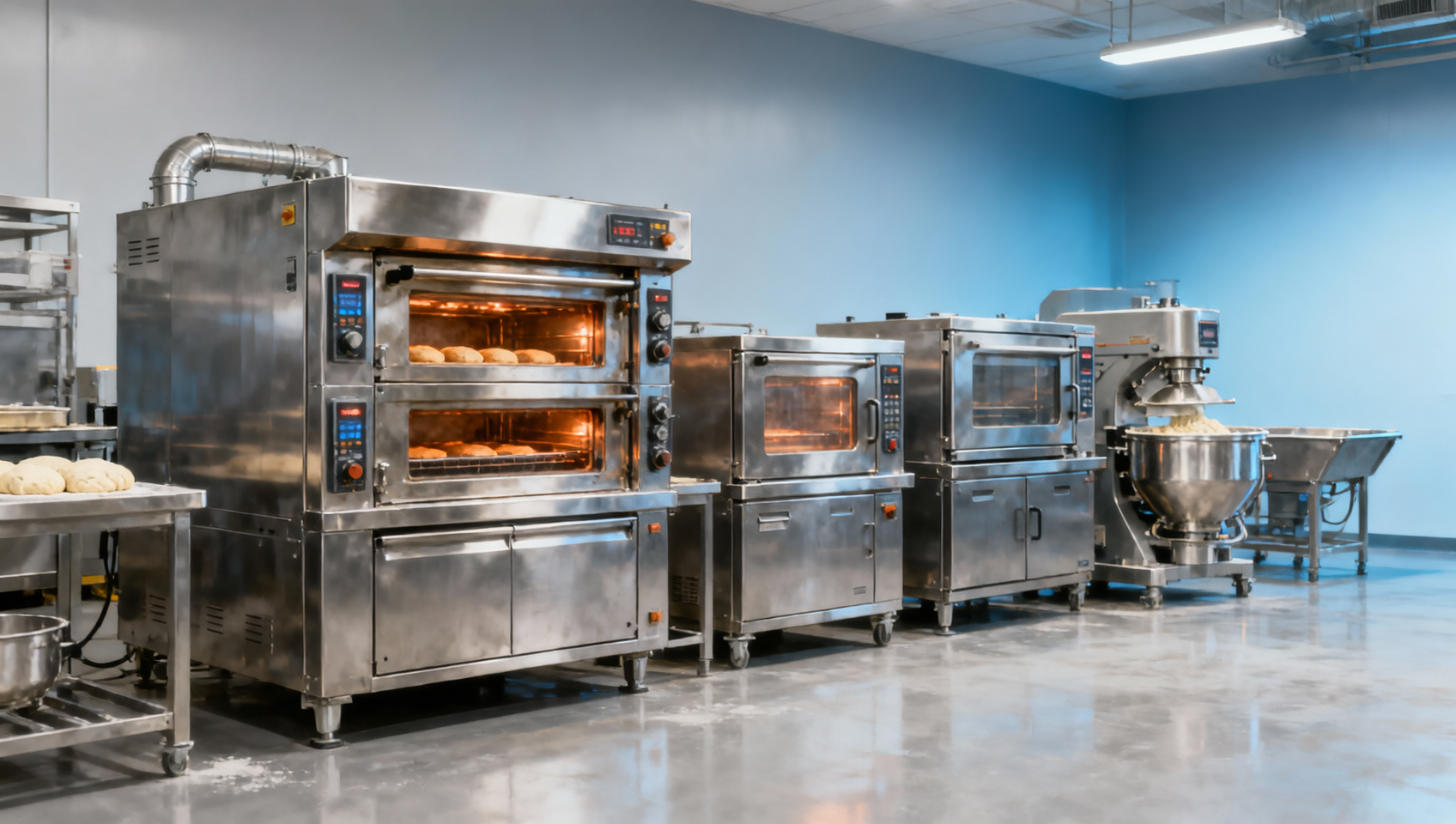
Bakery oven machine, commercial freezer, and commercial ice maker choices require special attention to utility conditions. Oven chambers must match tray count and thermal uniformity expectations. Freezers should align with ambient temperature and product loading patterns. Ice makers should be sized by daily demand, such as 50–100 kg per day for smaller beverage outlets or 300 kg and above for high-volume hospitality operations.
A practical specification checklist
- Confirm voltage, phase, and frequency before quotation approval, especially for 220V, 380V, or 400V environments.
- Measure entry routes, door widths, lift capacity, and final placement space with at least 50–100 mm service clearance.
- Check hourly or daily output against real production peaks, not average demand only.
- Review food-contact materials, weld finishing, and cleanability for hygiene-sensitive operations.
- Ask which parts are stocked locally and which require import lead times of 2–8 weeks.
Recommended evaluation view by equipment type
The comparison table below can help procurement teams align technical and operational expectations before supplier selection.
A structured review like this reduces mismatch risk. Instead of choosing equipment by catalog appearance alone, buyers can compare performance, installation needs, and maintenance implications across the full preparation chain.
Procurement strategy: balancing cost, lead time, service, and compliance
In B2B kitchen equipment purchasing, the lowest quotation rarely represents the lowest operating cost. Buyers should compare at least 4 dimensions: acquisition cost, installation readiness, service support, and lifecycle reliability. A dough mixer machine with a lower initial price may become more expensive if spare parts take 6 weeks to arrive or if the machine needs frequent stoppages after 12–18 months of heavy use.
Closer-to-market sourcing often improves visibility during the procurement cycle. It allows site checks, sample review, local stock confirmation, and faster issue escalation. This is valuable when multiple products must arrive in sequence, such as sinks first, prep tables second, refrigeration third, and baking equipment last. Coordinated delivery can reduce installation conflicts and shorten project commissioning by 5–10 working days.
Compliance matters as well. Foodservice buyers must confirm material suitability, electrical conformity, sanitation design, and any region-specific usage requirements. While exact standards vary by market, the practical rule is simple: verify documentation before purchase and test function before handover. This is especially important for commercial freezer systems, commercial ice maker water connections, and bakery oven ventilation arrangements.
A good procurement process should define acceptable thresholds. For example, response time may need to be under 48 hours for urban locations, key consumable parts should be available within 3–7 days, and installation manuals should be provided before shipment. These are not luxury conditions; they are standard risk-control tools for business continuity.
Five-step purchasing workflow
- Map the menu, production volume, and kitchen process to identify equipment load requirements.
- Confirm utilities, dimensions, and local operating constraints before requesting quotations.
- Shortlist 2–3 suppliers based on support capability, not price alone.
- Review lead time, warranty scope, spare parts list, and installation responsibility.
- Use a staged acceptance process covering visual inspection, trial operation, and operator handover.
Decision matrix for procurement teams
The table below can be used as a practical internal scoring tool when comparing kitchen equipment sourcing options.
For most buyers, the best sourcing model is hybrid rather than purely local or purely overseas. Manufacturing may still be global, but specification review, stock planning, and service support should move closer to the market where the equipment will be used.
Implementation, maintenance, and common sourcing mistakes
Even well-selected kitchen equipment can underperform if implementation is rushed. The handover stage should include unpacking inspection, utility confirmation, no-load testing, loaded testing, and operator training. For a commercial freezer, that means checking temperature pull-down and door sealing. For a commercial ice maker, it means confirming water quality, drain slope, and cleaning cycle setup. For a bakery oven machine, tray loading practice and temperature recovery should be reviewed during actual use.
Maintenance planning should begin before the first day of operation. Daily cleaning, weekly inspection, and quarterly preventive checks are common starting points. High-use dough mixer machine units may require more frequent belt and lubrication review, while commercial sink unit installations need regular seal and drain observation to prevent hygiene issues. A maintenance calendar with 3 levels of checks often performs better than ad hoc repair-based management.
One frequent mistake is overbuying capacity. A restaurant expecting moderate lunch traffic may order a freezer or ice maker sized for banquet-level demand, which increases energy use and floor occupation without proportional benefit. The opposite error is under-specifying equipment for peak-hour output, leading to bottlenecks, staff frustration, and product inconsistency. Capacity planning should consider peak demand, menu complexity, and realistic growth over the next 12–24 months.
Another common issue is ignoring operator behavior. Equipment with advanced controls only adds value if the team can use it correctly. Interfaces should be easy to understand, and cleaning steps should be manageable in real service conditions. In many kitchens, a simpler machine with stable output and 15-minute cleaning time is more valuable than a feature-heavy model that staff avoid using properly.
Common sourcing mistakes to avoid
- Choosing equipment by catalog specification without verifying site dimensions and utilities.
- Assuming all stainless steel constructions offer the same durability, finish quality, and cleanability.
- Ignoring service response time and focusing only on warranty duration.
- Failing to stock critical consumables or wear parts for 30–90 days of operation.
- Skipping operator training during commissioning, which often increases misuse and early breakdown risk.
FAQ
How do I choose between local stock and factory-order kitchen equipment?
If your project has a launch window under 4 weeks, local stock usually offers better risk control. If you need customized dimensions, special tray formats, or market-specific utility adaptation, factory order may still be the better option, provided you allow 6–12 weeks and confirm service support early.
What are the most important indicators for a commercial freezer?
Focus on usable storage volume, temperature recovery speed, insulation quality, defrost logic, door durability, and ambient operating suitability. In busy kitchens, consistent performance under repeated opening is more important than headline capacity alone.
How much service planning is reasonable after installation?
As a practical baseline, perform daily cleaning, weekly operating checks, and a preventive review every 3 months. For high-volume bakeries or central kitchens, some rotating equipment may require monthly inspection depending on workload and product type.
Kitchen preparation equipment sourcing is moving closer to market because foodservice businesses need faster delivery, clearer support, better workflow alignment, and lower operational risk. Whether you are selecting a kitchen prep table, commercial sink unit, dough mixer machine, bakery oven machine, commercial freezer, or commercial ice maker, the best sourcing decision combines technical fit, service readiness, and long-term cost control.
For buyers across restaurants, hotels, bakeries, food processing sites, and central kitchens, a structured approach leads to better results: define the workflow, verify the site, compare suppliers on more than price, and plan maintenance from day one. If you want to explore tailored kitchen equipment solutions, discuss product details, or build a sourcing plan that fits your market and operating model, contact us to get a customized solution and learn more about practical options for your business.
Popular Tags
Kitchen Industry Research Team
Dedicated to analyzing emerging trends and technological shifts in the global hospitality and foodservice infrastructure sector.
Industry Insights
Join 15,000+ industry professionals. Get the latest market trends and tech news delivered weekly.
No spam. Unsubscribe anytime.
Contact With us
Contact:
Anne Yin (Ceramics Dinnerware/Glassware)
Lucky Zhai(Flatware)