
How to compare restaurant kitchen equipment manufacturers
Choosing among restaurant kitchen equipment manufacturers is not just a sourcing task. For business evaluators, it is a risk-and-return decision that affects kitchen uptime, food safety, compliance exposure, operating costs, and long-term asset value. The fastest way to compare manufacturers is to move beyond brochures and ask a practical question: which supplier can consistently deliver compliant, durable, serviceable equipment at the right total cost for your operating model?
In most cases, the best manufacturer is not the one with the lowest quote or the widest catalog. It is the one whose production standards, certifications, engineering capability, lead-time reliability, and after-sales support match your business goals. This is especially important in a market where smart controls, energy-saving systems, and global sourcing options have made vendor comparison more complex than ever.
This guide is designed for business evaluators who need a structured way to assess manufacturers, reduce procurement risk, and justify decisions internally. It focuses on the issues that matter most in commercial purchasing: quality consistency, factory capability, product range, compliance, customization, service, commercial terms, and total lifecycle value.
Start with the real comparison question: fit for your business, not just product availability
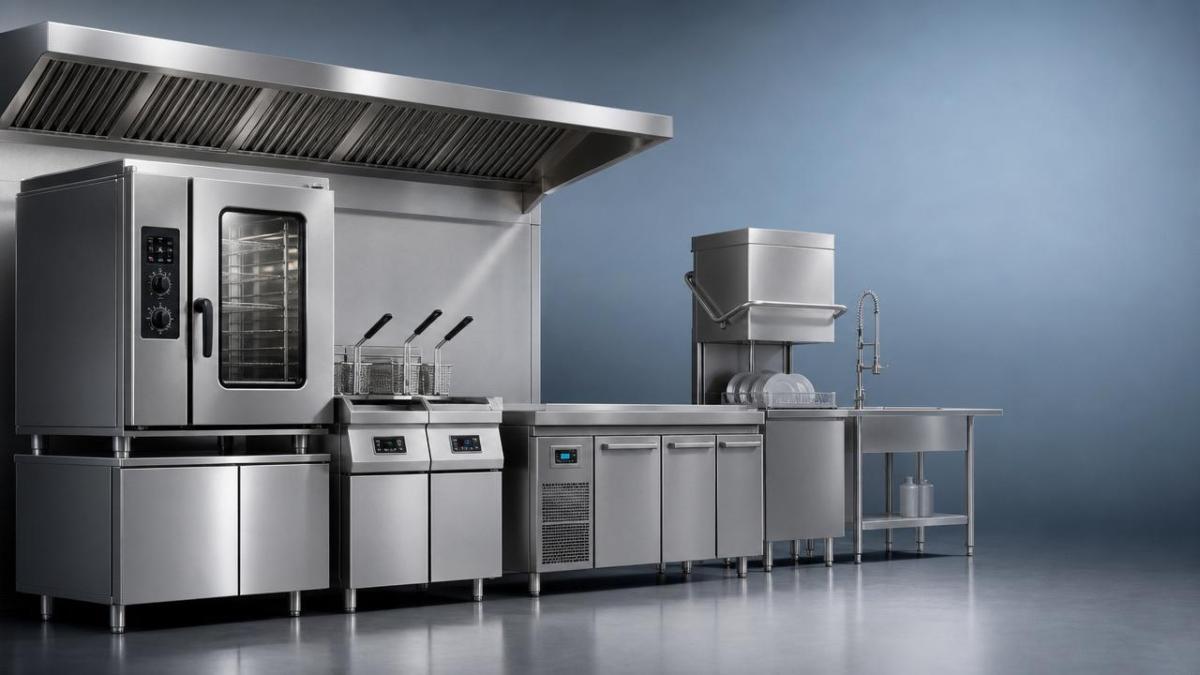
When comparing restaurant kitchen equipment manufacturers, many buyers begin by reviewing product lists. That is useful, but incomplete. Two manufacturers may both offer ovens, fryers, refrigeration units, preparation tables, and dishwashing systems, yet differ greatly in engineering quality, durability, production control, and support infrastructure.
Business evaluators should first define what “fit” means for the specific project. A quick-service restaurant, a hotel kitchen, a cloud kitchen, and a central production facility have very different priorities. One may value speed and standardization, another may need custom layout integration, while a third may focus heavily on energy reduction and labor efficiency.
Before comparing suppliers, clarify the decision framework: required product categories, operating intensity, target budget, expected equipment lifespan, installation country, local compliance requirements, service expectations, and expansion plans. Without this baseline, manufacturer comparison often becomes subjective and price-driven.
A strong evaluation begins by aligning manufacturer capabilities with business use cases. That is what turns a vendor shortlist into a strategic procurement decision.
Which manufacturer can prove consistent quality, not just claim it?
Quality is often discussed in general terms, but evaluators need evidence. The core question is whether a manufacturer can produce the same standard of equipment repeatedly across batches, markets, and timelines. Consistency matters more than a few well-presented samples.
Look at the manufacturer’s quality management system first. International certifications such as ISO 9001 can be useful indicators, but they should not be treated as final proof. Ask how incoming materials are inspected, how welding and assembly are controlled, how electrical safety is tested, and how final inspection is documented before shipment.
For stainless steel equipment, material grade is especially important. Commercial kitchens often require corrosion resistance, hygienic surfaces, and easy cleaning. Manufacturers should be able to specify whether they use 304 or 201 stainless steel in different components and explain why. Vague answers here often indicate weak transparency.
Also assess product durability under real commercial conditions. Equipment used in high-volume kitchens experiences heat, grease, moisture, impact, and repeated cleaning cycles. Ask for test data, warranty claims history, or examples of installations operating successfully for several years. Durable equipment usually reflects stronger engineering discipline, not just better raw materials.
If possible, request production photos, factory audit records, or third-party inspection reports. A professional manufacturer should be comfortable sharing structured proof of quality processes.
Can the factory actually support your volume, timeline, and product complexity?
Not every manufacturer that exports kitchen equipment has the production depth to support larger or more complex commercial projects. Some are strong in standard catalog items but weak in customization. Others perform well on small orders but struggle with larger batches or mixed-product schedules.
Capacity evaluation should include factory size, number of production lines, labor stability, monthly output, and bottleneck processes. In stainless fabrication, for example, key constraints may include cutting, bending, welding, polishing, and assembly. For electrically powered equipment, testing and component sourcing may be the limiting factors.
Lead time reliability is just as important as nominal capacity. A manufacturer may promise fast delivery but depend on unstable outsourced components, imported controls, or seasonal labor. Ask which parts are produced in-house, which are subcontracted, and how procurement risks are managed.
Complexity handling is another useful comparison point. If your project includes custom dimensions, modular systems, integrated ventilation, digital controls, or coordinated installation layouts, choose a manufacturer with engineering and project management capability rather than a simple trading-oriented operation.
For multi-site restaurant groups or distributors planning repeat orders, scalability matters. The right supplier should be able to support both current demand and future rollouts without compromising consistency.
How do you compare compliance and market access readiness?
Compliance is one of the most overlooked areas in evaluating restaurant kitchen equipment manufacturers. Yet it directly affects import clearance, legal saleability, installation approval, safety liability, and reputation. A lower-cost supplier can quickly become expensive if certification gaps delay market entry or trigger product rework.
The exact compliance requirements depend on destination market and product type. For example, gas equipment, refrigeration systems, food-contact surfaces, and electrical appliances may each involve different technical standards. Depending on the region, buyers may need CE, ETL, UL, NSF, RoHS, or other documentation.
Do not simply ask whether a manufacturer is “certified.” Ask which specific products are certified, in which markets, under what model numbers, and by which bodies. Certifications should be traceable and current. Product changes can sometimes affect validity, so documentation should match the exact configuration being quoted.
Food safety and hygiene design should also be part of the review. Smooth welds, easy-clean surfaces, rounded internal corners, drainability, and accessible maintenance points all contribute to safer kitchen operation. Manufacturers that understand global commercial kitchen standards will usually demonstrate stronger design discipline in these details.
For evaluators, compliance is not a paperwork exercise. It is a practical filter that helps eliminate suppliers who may create hidden commercial or legal risk later in the project.
Does the manufacturer offer the right balance of standardization and customization?
One of the biggest differences between manufacturers lies in how they handle non-standard requirements. Some buyers need a broad catalog of proven, standardized products. Others need dimensions adjusted for kitchen layout, utility constraints, menu process, or local regulations.
Customization can create value when it improves workflow, capacity, energy efficiency, or available space usage. But it also introduces engineering risk, longer lead times, and more complicated service requirements. That is why evaluators should compare not only whether customization is possible, but how it is managed.
A capable manufacturer should be able to provide technical drawings, utility load details, material specifications, and revision control during the approval process. They should also explain which components remain standardized and which are custom-engineered. This distinction affects spare parts planning and future repeatability.
If your business relies on chain expansion or franchise replication, excessive customization can become a problem. In such cases, a manufacturer with modular product platforms may be more valuable than one willing to redesign every item from scratch. The ideal partner supports practical adaptation without sacrificing production efficiency or serviceability.
What matters most in pricing: quote level or total cost of ownership?
Price comparison is necessary, but it should never be the main decision criterion on its own. A low initial quote may hide weaker materials, lower energy efficiency, shorter service life, longer downtime, or limited parts availability. For business evaluators, the more useful measure is total cost of ownership.
Total cost includes purchase price, freight, duties, installation, commissioning, utilities consumption, maintenance frequency, spare parts, operator training, expected lifespan, and downtime impact. In busy foodservice operations, equipment failure can quickly create labor disruption, menu limitations, and lost revenue.
Energy efficiency has become especially important. Fryers, ovens, refrigeration units, dishwashers, and ventilation-related systems all affect utility costs. Manufacturers investing in insulated structures, smart temperature controls, variable-speed components, and energy-saving design may offer a higher purchase price but lower operating cost over time.
Warranty terms should also be read carefully. Compare not just duration, but coverage scope, exclusions, response process, and spare parts commitments. A long warranty with unclear service execution may be less valuable than a shorter but more reliable support arrangement.
To make decisions easier internally, many evaluators use a comparison matrix that scores suppliers on lifecycle cost rather than invoice price alone. This approach is especially useful for hotel groups, chain restaurants, and procurement teams managing multiple stakeholders.
How important are service, spare parts, and technical support after delivery?
For commercial kitchens, after-sales support is not secondary. It is part of the product value. Even well-built equipment requires installation guidance, preventive maintenance, replacement parts, and occasional troubleshooting. If support fails, operating disruption follows.
When evaluating restaurant kitchen equipment manufacturers, ask how service is structured in your target market. Do they have local partners, distributor networks, or remote technical teams? Can they provide installation manuals, wiring diagrams, exploded parts views, and troubleshooting guides in the required language?
Spare parts planning is critical. Manufacturers should identify wear parts, recommended stocking lists, average fulfillment times, and substitution policy. If a supplier cannot guarantee reasonable availability for core components, the risk of downtime rises significantly.
For smart or digitally controlled equipment, software support also matters. Firmware updates, sensor calibration, interface troubleshooting, and remote diagnostics may all become part of normal support expectations. Manufacturers that have embraced intelligent kitchen systems should be ready to discuss this clearly.
Strong after-sales support is often what separates a good sourcing choice from a costly one. Evaluators should give it real weight in supplier scoring.
How do you assess innovation without being distracted by marketing claims?
The kitchen equipment industry is moving toward automation, intelligent control, digital monitoring, and energy-efficient systems. These trends are real, but not every manufacturer using terms like “smart,” “automatic,” or “efficient” offers meaningful innovation.
The right question is whether innovation improves operations in measurable ways. For example, programmable cooking cycles can help standardize output across shifts. IoT monitoring can support preventive maintenance. Automated cleaning functions can save labor. Better insulation and heat recovery can reduce energy use.
Ask manufacturers to quantify benefits whenever possible. What is the energy saving percentage? How does the control system reduce training time? What maintenance data can be monitored remotely? How many installations already use the technology in commercial settings?
For business evaluators, innovation should be judged by reliability, return on investment, and operational relevance. A simpler, robust machine may be better than a feature-heavy system if the kitchen environment lacks trained staff or technical support infrastructure.
In short, innovation is valuable when it serves kitchen performance, not when it only improves brochure language.
What red flags should eliminate a manufacturer from consideration?
Some warning signs appear early in the sourcing process and should be taken seriously. One of the biggest is inconsistent information. If product specifications, certifications, material claims, and lead times change repeatedly without explanation, the manufacturer may lack process control.
Another red flag is limited technical transparency. Serious manufacturers should be able to answer questions about materials, components, testing, standards, and production workflow. If responses stay vague or highly sales-driven, evaluators should assume there may be execution risk behind the scenes.
Be cautious with unusually low quotations, especially when the scope appears similar to better-known competitors. Price gaps may reflect lower-grade materials, omitted accessories, weak testing, or poor packaging standards. Hidden costs often emerge later through defects or delays.
Weak documentation is another concern. Missing manuals, unclear drawings, incomplete packing lists, and vague warranty terms often indicate that the supplier is not prepared for structured international business. This becomes more problematic in larger projects with multiple SKUs and compliance checks.
Finally, poor communication itself is a risk factor. Delayed responses, incomplete answers, and difficulty coordinating revisions often predict future service issues.
A practical framework for comparing restaurant kitchen equipment manufacturers
To make supplier evaluation more objective, build a scorecard around the criteria that matter most to your business. Typical categories include product quality, compliance readiness, production capacity, engineering capability, customization management, price competitiveness, total cost of ownership, after-sales service, and communication responsiveness.
Weight the categories according to project priorities. For example, a distributor entering a regulated market may assign more weight to certification and documentation. A restaurant chain expanding rapidly may prioritize lead time consistency, standardization, and service coverage. A high-end hospitality project may value custom fabrication and finish quality more heavily.
It is also useful to compare manufacturers at three evidence levels: what they claim, what they document, and what they can prove through references, audits, samples, or inspections. This helps separate polished marketing from dependable execution.
When possible, combine desk review with live evaluation. Video factory tours, sample orders, third-party inspections, and customer references can all reduce uncertainty. Even a short structured audit often reveals major differences that are invisible in quotations alone.
The goal is not just to find a supplier that can produce kitchen equipment. It is to identify a manufacturer that can support your commercial objectives with less risk and better long-term value.
Conclusion: compare manufacturers by operational value, not by catalog appeal
The best way to compare restaurant kitchen equipment manufacturers is to evaluate them through the lens of business performance. Product range matters, but quality consistency, compliance, engineering strength, delivery reliability, service capability, and lifecycle economics matter more.
For business evaluators, the strongest manufacturers are usually those that can provide clear technical documentation, verifiable certifications, stable production processes, scalable capacity, responsive communication, and practical after-sales support. These are the factors that protect operational continuity and purchasing ROI.
In a global kitchen equipment market shaped by automation, smart systems, and energy efficiency, a disciplined comparison process is the best safeguard against costly mistakes. If you focus on evidence instead of claims, and total value instead of price alone, you will make more confident and commercially sound supplier decisions.
Popular Tags
Kitchen Industry Research Team
Dedicated to analyzing emerging trends and technological shifts in the global hospitality and foodservice infrastructure sector.
Industry Insights
Join 15,000+ industry professionals. Get the latest market trends and tech news delivered weekly.
No spam. Unsubscribe anytime.
Contact With us
Contact:
Anne Yin (Ceramics Dinnerware/Glassware)
Lucky Zhai(Flatware)