
Why restaurant kitchen efficiency often drops after expansion
Many restaurant owners expect growth to improve performance, yet restaurant kitchen efficiency often declines after expansion. More locations, larger menus, and higher order volumes can expose hidden weaknesses in workflow, equipment capacity, staff coordination, and kitchen layout. Understanding why this happens is essential for decision-makers who want to scale operations without sacrificing speed, consistency, food safety, or profitability.
Why does restaurant kitchen efficiency decline after expansion?
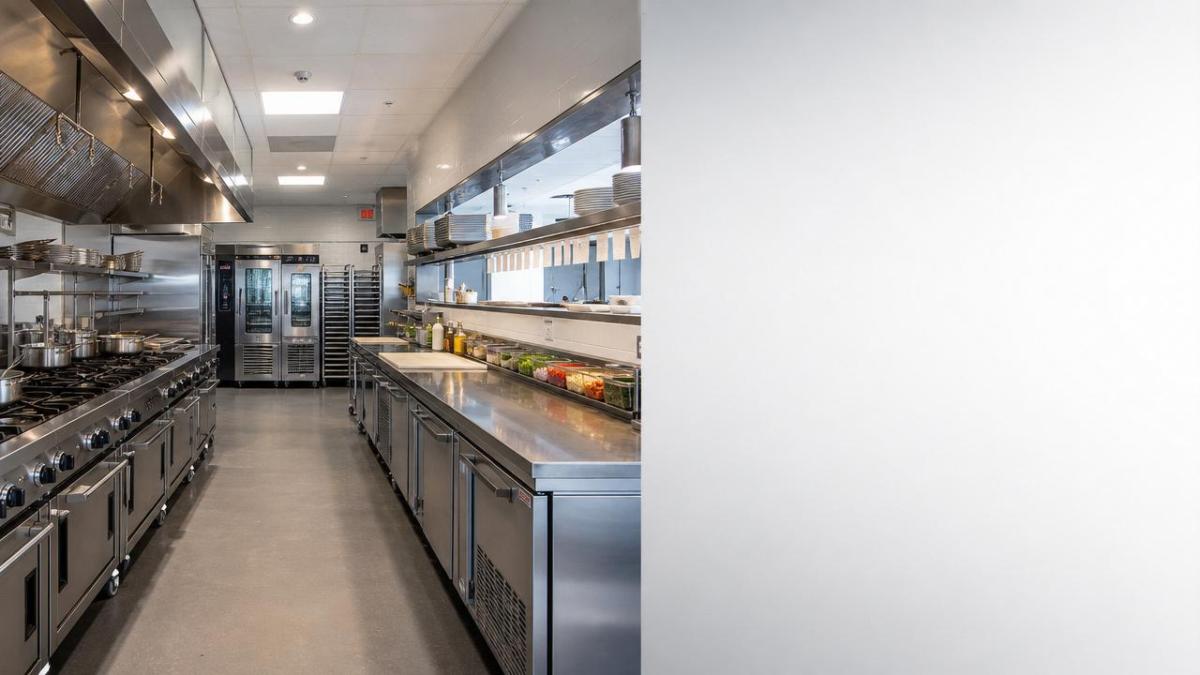
The most common reason is that expansion magnifies problems that were manageable at a smaller scale. A single-site kitchen may operate acceptably with informal communication, experienced staff memory, and flexible prep habits. Once the business adds more seats, more delivery orders, a second unit, or a broader menu, those informal systems stop working. Restaurant kitchen efficiency then drops because tasks that once depended on intuition now require standardization, timing control, and better production planning.
Another factor is volume mismatch. Expansion often increases demand faster than the kitchen’s actual throughput capacity. A line designed for 80 covers may suddenly need to support 140 covers plus takeaway orders. If the number of burners, refrigeration points, prep tables, dishwashing stations, or hot holding capacity remains unchanged, bottlenecks appear immediately. In this situation, restaurant kitchen efficiency is not reduced by poor effort alone; it is reduced by physical and operational limits.
Growth can also create management distance. In a smaller operation, the kitchen leader may directly monitor prep quality, stock rotation, station setup, and equipment use. After expansion, supervision becomes less direct, and minor deviations become daily habits. Ticket times increase, waste rises, and consistency falls. What looks like a staffing issue may actually be a system design issue.
How do menu expansion and workflow complexity affect restaurant kitchen efficiency?
Menu growth is one of the biggest hidden threats to restaurant kitchen efficiency. Expansion often encourages businesses to add signature dishes, seasonal items, delivery-only products, or localized options. While this may seem attractive commercially, each added item creates more ingredient handling, more prep steps, more storage requirements, and more opportunities for error. Complexity accumulates faster than many teams expect.
A larger menu can disrupt station balance. For example, the grill may be overloaded during peak hours while the cold station is underused. Fryers may become congested because several new items share the same cooking equipment and oil management schedule. If plating standards vary across many dishes, the pass becomes slower and coordination weakens. In these cases, restaurant kitchen efficiency suffers because the production flow is no longer aligned with demand patterns.
Preparation complexity matters as much as service complexity. More sauces, more garnishes, more half-prepared components, and more SKUs increase labor pressure before service even begins. If prep is not sequenced well, teams arrive at peak periods already behind schedule. This problem becomes more serious when storage, labeling, and batch control are not upgraded alongside menu growth.
A practical way to protect restaurant kitchen efficiency is to classify menu items into three groups: high-volume core dishes, profitable specialty dishes, and low-value complexity items. The first group should receive workflow priority and the strongest equipment support. The second group should be reviewed for production feasibility. The third group should be challenged aggressively. Not every popular idea deserves permanent space in an expanded kitchen.
Can equipment and kitchen layout become bottlenecks after growth?
Yes, and this is often underestimated. Restaurant kitchen efficiency depends heavily on whether equipment capacity matches the new operating model. Expansion may increase output needs, but many kitchens continue using layouts and machines selected for earlier demand. The result is overuse, waiting time, repeated movement, and uneven production flow.
Several equipment-related warning signs usually appear:
- Prep teams queue for the same sink, slicer, mixer, or cutting area.
- Hot line stations share limited burners, ovens, or holding space.
- Cold storage is overloaded, causing poor organization and longer retrieval time.
- Dishwashing capacity cannot keep up with service turnover.
- Ventilation and heat control reduce staff comfort and speed during peak hours.
Layout also matters. If ingredients, cooking equipment, finishing stations, and pass-through areas are not logically connected, staff walk too much and communicate too often just to complete basic orders. In high-volume environments, seconds lost in movement become minutes lost per ticket. Modern kitchen equipment solutions increasingly focus on integrated kitchen systems, modular workstations, automated holding, smart cooking controls, and energy-efficient appliances because they reduce manual friction while improving consistency.
When reviewing layout, it helps to measure actual movement paths rather than relying on assumptions. A kitchen may look organized on paper but still create constant cross-traffic in reality. Restaurant kitchen efficiency improves when equipment placement supports the sequence of receiving, storage, prep, cook, finish, service, and cleaning without overlap or interruption.
What staffing and coordination problems usually emerge after expansion?
Expansion changes the human side of kitchen performance. Restaurant kitchen efficiency often drops not because there are too few people, but because there are too many process variations between people, shifts, and locations. New hires may learn from different supervisors, interpret recipes differently, and set up stations according to habit rather than standard procedure. Over time, inconsistency replaces speed.
Communication also becomes more fragile. In smaller teams, people can adjust informally. In larger or multi-unit operations, verbal instructions are easily missed, and handoffs between prep, line cooking, and service become more error-prone. If recipe cards, portion standards, prep sheets, and cleaning routines are not documented clearly, every rush period becomes a test of memory.
Cross-training is another weak point. During expansion, many kitchens depend too heavily on a few experienced workers who know how to recover when the line is under pressure. That may work temporarily, but it is not scalable. When those people are absent or transferred, restaurant kitchen efficiency declines sharply. Building flexible station coverage, clear opening and closing procedures, and simple visual control systems can reduce that dependence.
Technology can help, but only when tied to process discipline. Digital kitchen management, order display systems, temperature tracking, and smart equipment monitoring are useful because they reduce missed steps and improve visibility. However, they do not solve unclear roles or poor scheduling by themselves. The best results come when staffing plans, standard operating procedures, and kitchen technology are designed together.
How can you tell whether falling restaurant kitchen efficiency is a system issue or a temporary growth pain?
Some decline is normal during a growth phase, but persistent underperformance usually signals a structural issue. A temporary adjustment period may involve mild training delays or short-term scheduling pressure. A system problem shows up as repeated bottlenecks, chronic overtime, growing waste, inconsistent food quality, equipment overloading, and poor peak-hour recovery.
The table below helps identify where restaurant kitchen efficiency is being lost and what to review first.
If several of these signs occur together for more than a few weeks, the issue is likely systemic rather than temporary. In that case, restaurant kitchen efficiency should be reviewed through data, observation, and process mapping instead of relying on assumptions.
What practical steps help restore restaurant kitchen efficiency after expansion?
The fastest gains usually come from simplifying operations before adding labor. Restaurant kitchen efficiency improves when the kitchen reduces complexity, clarifies standards, and aligns equipment with actual demand. A structured recovery plan can include the following actions:
- Audit menu items by volume, margin, prep time, and station impact.
- Measure ticket times, movement paths, and queue points during peak service.
- Compare current equipment capacity with production targets for each station.
- Standardize recipes, prep sheets, labels, and station setup guides.
- Introduce smart kitchen equipment or digital monitoring where it removes repeat manual tasks.
- Review energy-efficient appliances and integrated kitchen systems when replacing aging assets.
It is also useful to stage improvements in phases. First solve severe bottlenecks that directly affect output and food safety. Then address medium-term upgrades such as modular kitchen equipment, better cold chain organization, automated cooking support, or improved dishwashing flow. Finally, build a repeatable operating model that can support future expansion without restarting the same problems.
In a global kitchen equipment market shaped by automation, intelligence, and energy efficiency, expansion no longer has to mean operational strain. The right combination of layout planning, smart equipment selection, digital kitchen management, and workflow discipline can turn restaurant kitchen efficiency into a scalable strength rather than a recurring weakness.
Restaurant kitchen efficiency often drops after expansion because growth increases complexity faster than systems evolve. The main causes are usually menu overload, capacity mismatch, layout bottlenecks, weak standardization, and uneven staff coordination. The most effective response is to examine the kitchen as a connected production system, not as isolated staffing or equipment problems. By reviewing workflow, simplifying the menu, standardizing execution, and upgrading to efficient kitchen solutions where needed, expansion can support stronger performance instead of undermining it. The next practical step is to run a focused kitchen efficiency audit and identify the top three constraints limiting speed, consistency, and profitability today.
Popular Tags
Kitchen Industry Research Team
Dedicated to analyzing emerging trends and technological shifts in the global hospitality and foodservice infrastructure sector.
Industry Insights
Join 15,000+ industry professionals. Get the latest market trends and tech news delivered weekly.
No spam. Unsubscribe anytime.
Contact With us
Contact:
Anne Yin (Ceramics Dinnerware/Glassware)
Lucky Zhai(Flatware)