
Porcelain Dinnerware Sets That Hotels Actually Use
Porcelain dinnerware is more than a style choice in hospitality—it reflects durability, guest experience, and operational efficiency. From porcelain dinnerware and ceramic soup bowl options to stainless steel silverware, hotels select tableware that performs under pressure while matching brand standards. This guide explores the porcelain dinnerware sets hotels actually use and how they align with modern hotel kitchen equipment and professional catering equipment needs.
In practice, hotels do not choose dinnerware based on appearance alone. They usually buy commercial-grade porcelain that can survive repeated washing, stacking, banquet turnover, and daily restaurant service while still looking refined on the table. For procurement teams, operators, and decision-makers, the real question is not simply which set looks best, but which porcelain dinnerware sets deliver the right balance of durability, replacement consistency, cost control, and guest-facing presentation.
What hotels actually use: commercial porcelain, not household dinnerware
The porcelain dinnerware sets used in hotels are typically commercial products designed for high-frequency use. They differ from retail dinnerware in several important ways:
- Higher firing standards for better hardness and chip resistance
- Reinforced edges to reduce breakage during service and warewashing
- Stackable forms for storage efficiency in busy kitchens
- Consistent production batches so replacements match existing inventory
- Compatibility with dishwashers, warming systems, and banquet workflows
Most hotels favor white or off-white porcelain because it is versatile, timeless, and easy to integrate across breakfast, room service, restaurant dining, buffet, and banquet operations. Neutral porcelain also helps food presentation stand out and simplifies replacement purchasing over time.
Why hotels prefer porcelain over many other tableware materials
Hotels often compare porcelain with stoneware, melamine, glass, and even specialty ceramics. Porcelain remains a common choice because it supports both front-of-house presentation and back-of-house efficiency.
- Professional appearance: Porcelain communicates cleanliness, quality, and consistency.
- Durability: Commercial porcelain performs well under repeated handling and washing when properly specified.
- Heat retention: It helps maintain serving temperature better than some lighter materials.
- Brand versatility: It suits luxury hotels, business hotels, resort dining, and banquet service.
- Menu flexibility: It works for Western, Asian, buffet, and multi-course dining formats.
That said, hotels do not use one material for every situation. Outdoor service areas, poolside spaces, or very high-breakage zones may use alternatives. But for core restaurant and banquet settings, porcelain dinnerware is still the standard in many properties.
Which porcelain dinnerware pieces are most commonly used in hotels
Hotels rarely buy a single “set” in the consumer sense. Instead, they build coordinated collections around operational needs. The most common pieces include:
- Dinner plates: Often 10 to 12 inches for all-day dining and banquet service
- Salad or dessert plates: Used for starters, pastries, and side service
- Soup plates and ceramic soup bowl options: Essential for formal dining, buffet, and room service
- Bowls: For cereal, fruit, salad, noodles, and plated entrees
- Cups and saucers: For breakfast, lounge, and conference service
- Platters and service pieces: Important in banquet, buffet, and in-room dining operations
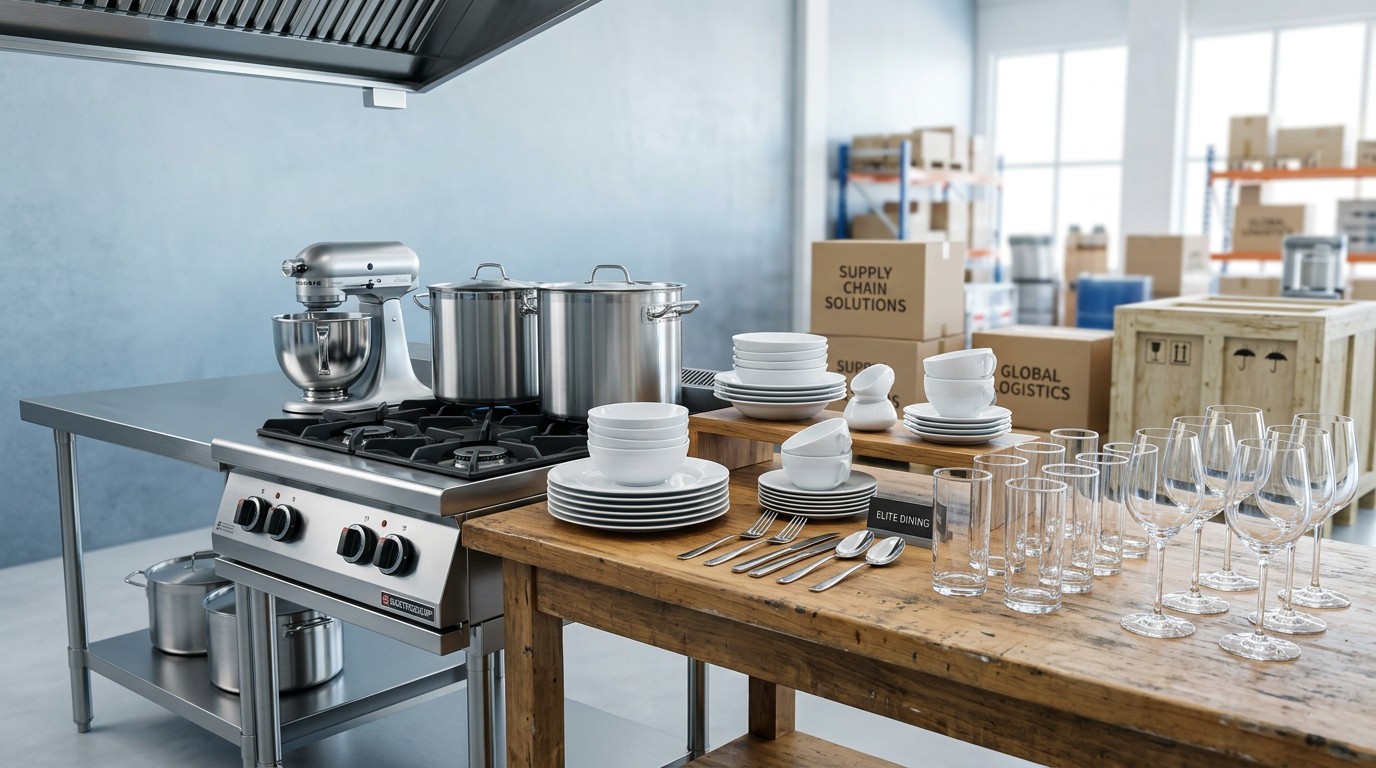
Hotels also coordinate porcelain with stainless steel silverware, glassware, serving trays, and buffet display equipment. This is why procurement decisions often involve broader hotel kitchen equipment and catering equipment planning rather than isolated tableware selection.
What procurement teams care about before buying porcelain dinnerware sets
For buyers and managers, the purchase decision usually comes down to five practical questions.
1. How well will it survive daily hotel operations?
Durability is the first filter. Dinnerware in hotels moves constantly between kitchen, dining room, storage, transport carts, and dishwashing stations. Buyers look for chip-resistant rims, dense porcelain bodies, and proven commercial use cases.
2. Can replacements be ordered consistently?
Hotels need continuity. If a pattern changes every year or is hard to source internationally, replacement becomes expensive and visually inconsistent. Long-life collections are usually preferred.
3. Does the shape work with service flow?
Some beautiful plates are inefficient in real kitchens. Buyers check stacking stability, shelf fit, rack compatibility, and ease of handling for service staff.
4. Does it match the brand positioning?
A luxury hotel may want fine-rim porcelain with a refined finish, while a high-volume business hotel may prioritize robust all-day dining pieces. The “best” dinnerware depends on concept and guest expectation.
5. What is the total cost of ownership?
Low unit price does not always mean low operating cost. Frequent replacement, inconsistent supply, and breakage can make cheap dinnerware more expensive over time.
How hotel operators evaluate durability in the real world
If you are selecting porcelain dinnerware for hotel use, product specifications alone are not enough. Operators should evaluate performance in actual service conditions.
- Check rim design and thickness at impact-prone points
- Ask about chip resistance testing or hospitality references
- Review dishwasher and thermal shock suitability
- Test stack height and unstacking ease during peak service
- Assess weight balance for servers carrying multiple plates
- Confirm glaze quality to resist scratching and staining
A sample test in live service is often more useful than a catalog comparison. Many hotels run trial periods in one outlet before making a full-property purchase decision.
What styles are most common in hotels today
Hotel dinnerware trends have shifted toward understated, flexible designs rather than highly decorative collections. The most common choices include:
- Classic bright white porcelain: Still the dominant choice for broad hospitality use
- Soft coupe shapes: Clean, modern, and easier to mix across meal periods
- Wide-rim plates: Often used in upscale dining and banquet plating
- Minimal texture or reactive finishes: Used selectively in boutique or lifestyle hotels
- Neutral matte-gloss combinations: Popular when hotels want a modern but practical look
Hotels usually avoid designs that are too trend-driven if they need long-term replenishment. Consistency across years matters more than novelty for most procurement strategies.
How porcelain dinnerware connects with broader hotel kitchen equipment planning
Dinnerware is not an isolated purchase. It affects storage systems, warewashing capacity, service speed, plating consistency, and even labor efficiency. In many projects, dinnerware selection is part of a larger professional catering equipment plan that includes:
- Dishwashers and warewashing systems
- Plate racks and transport trolleys
- Buffet and banquet service equipment
- Warming cabinets and pass-through systems
- Storage shelving and space planning
- Matching stainless steel silverware and tabletop accessories
This is especially important in new hotel openings, renovations, and central procurement programs. A plate that looks excellent but reduces warewashing efficiency or causes storage issues can create long-term operational friction.
Common buying mistakes hotels should avoid
- Choosing residential-grade products for commercial use
- Buying based on appearance without service testing
- Ignoring replacement lead times and long-term availability
- Selecting shapes that waste storage space
- Overcomplicating the assortment with too many specialty items
- Failing to align dinnerware with menu style and portion strategy
Many hotels improve efficiency by standardizing core porcelain items across outlets and using specialty pieces only where they create clear guest value.
How to choose the right porcelain dinnerware set for your hotel
A practical selection process usually follows these steps:
- Define service scenarios: restaurant, banquet, buffet, room service, lounge, or multi-use
- Map required item types: plates, bowls, ceramic soup bowl formats, cups, platters, side pieces
- Set durability and replenishment requirements: chip resistance, lead time, stock continuity
- Test with kitchen and service teams: handling, stacking, washing, plating, and transport
- Compare total operating cost: not only purchase price but also replacement and breakage rate
- Ensure brand fit: visual alignment with the hotel’s positioning and guest experience goals
For procurement personnel and decision-makers, the right answer is usually a commercially proven porcelain range that balances aesthetics with operational discipline.
Final takeaway
The porcelain dinnerware sets hotels actually use are commercial-grade collections built for performance, consistency, and presentation. Hotels typically favor durable white or neutral porcelain pieces that support multiple service formats, integrate well with stainless steel silverware, and fit smoothly into larger hotel kitchen equipment and catering equipment systems.
If you are evaluating options, focus less on retail-style “sets” and more on operational suitability: durability, stackability, replacement continuity, service efficiency, and brand alignment. That is how hotels make tableware decisions that hold up not just on the dining table, but across the full demands of daily hospitality service.
Popular Tags
Kitchen Industry Research Team
Dedicated to analyzing emerging trends and technological shifts in the global hospitality and foodservice infrastructure sector.
Industry Insights
Join 15,000+ industry professionals. Get the latest market trends and tech news delivered weekly.
No spam. Unsubscribe anytime.
Contact With us
Contact:
Anne Yin (Ceramics Dinnerware/Glassware)
Lucky Zhai(Flatware)