
Glass Juice Dispenser Buying Mistakes to Avoid
Choosing the right glass juice dispenser may seem simple, but common buying mistakes can lead to leaks, poor durability, and wasted budget. For buyers comparing kitchen equipment wholesale options, restaurant kitchen supplies, or stainless steel kitchen equipment, knowing what to avoid is essential. This guide highlights key pitfalls, helping operators, purchasers, and decision-makers select a glass juice dispenser that fits real service needs and long-term kitchen efficiency.
Why do buyers often choose the wrong glass juice dispenser?
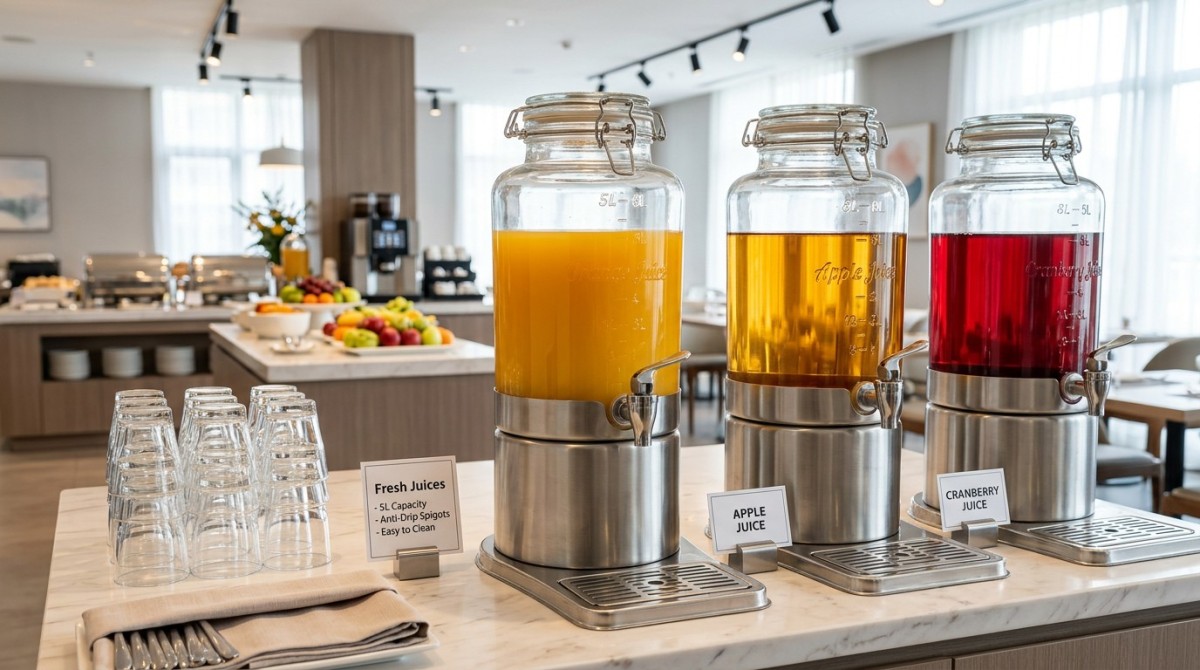
A glass juice dispenser is a simple product on the surface, yet in commercial kitchens, breakfast buffets, hotel dining rooms, and self-service beverage stations, the wrong choice quickly becomes a service problem. Many buyers focus first on appearance or unit price, while ignoring capacity, valve durability, food-contact materials, and cleaning efficiency. In busy operations that refill dispensers 2–6 times per day, those details directly affect labor, hygiene, and replacement frequency.
This issue is especially common in the broader kitchen equipment industry, where buyers often source multiple categories at once, from restaurant appliances to food processing machinery and kitchen tools. During bulk procurement, a glass juice dispenser may be treated as a minor accessory rather than a functional service unit. That creates mismatch risks, particularly when the actual use environment involves high foot traffic, chilled beverages, or strict food safety routines.
For information researchers, the challenge is understanding what truly matters beyond product photos. For operators, it is whether the dispenser pours smoothly during peak periods. For procurement teams, it is balancing cost, durability, and supplier consistency. For business decision-makers, it is about reducing hidden costs over a 12–24 month operating cycle rather than chasing the lowest initial quotation.
A practical buying process should evaluate at least 5 core factors: container strength, spigot construction, lid fit, cooling method, and maintenance workload. If one of these is overlooked, the result may be cracked glass, drip-related mess, slow beverage service, or product waste. In foodservice environments where operational continuity matters, even small equipment errors can create visible customer-facing problems.
The most common assumption errors
- Assuming all glass is equally durable, even though dispenser glass thickness, tempering approach, and handling resistance can differ significantly.
- Assuming a larger volume is always better, when oversized units can increase waste if juice turnover is slow during 2–3 hour service windows.
- Assuming the spigot is a minor part, despite the fact that leakage often starts at the valve, washer, or thread connection.
- Assuming style matters more than cleaning access, which can create hygiene risks in units with narrow openings or hard-to-remove components.
Which buying mistakes create the highest operating cost?
The first major mistake is buying based only on price. A low-cost glass juice dispenser may appear attractive during sourcing, especially when bundled with other commercial kitchen equipment. However, a dispenser used in a hotel buffet or restaurant breakfast line is not a decorative jar. It is a repeated-use serving tool. If the valve fails within 3–6 months, the real cost includes replacement, cleanup time, beverage loss, and staff frustration.
The second mistake is ignoring beverage type. Acidic juices, fruit pulp, infused water, and dairy-based drinks place different demands on sealing parts and cleaning frequency. A dispenser suitable for water may not perform well with orange juice or mixed beverages that leave residue. Buyers should confirm whether the internal surfaces, seals, and spigot design can handle daily contact with chilled acidic liquids and regular wash cycles.
The third mistake is choosing the wrong capacity for the service model. Small cafes may work well with 3–5 liter units, while buffet lines often require 6–8 liters per dispenser to reduce refill intervals. If capacity is too small, labor increases. If capacity is too large, beverages stay exposed longer, reducing freshness and increasing waste. Matching refill rhythm to customer flow is more important than choosing the largest tank available.
The fourth mistake is overlooking installation and placement conditions. A dispenser placed on unstable counters, near heat sources, or in narrow self-service areas is more likely to suffer accidental impact. In commercial use, the supporting base, clearance under the spigot, and compatibility with standard cups or glasses all matter. A poor fit in the serving line can slow down service during peak 30–90 minute periods.
High-cost mistakes to catch before ordering
The table below helps procurement teams compare common buying mistakes by visible symptom, operational impact, and recommended corrective check. This is useful when reviewing kitchen equipment wholesale catalogs or comparing multiple restaurant kitchen supplies vendors.
A buyer who screens these points early can avoid many downstream issues. In practice, the lowest-cost dispenser is often not the lowest-cost solution once labor, waste, and replacement cycles are considered together.
How should purchasers compare technical details that really matter?
When comparing a glass juice dispenser, technical review does not need to be complicated, but it must be disciplined. Start with the vessel itself. Buyers should ask about glass thickness, whether the body is intended for cold beverage service only, and whether the structure is suitable for repeated lifting during refill. A visually attractive design means little if daily handling causes stress around the base or tap opening.
Next, evaluate the dispensing system. The spigot is the most failure-prone component in many beverage dispensers. Stainless steel spigots are often preferred in commercial settings because they usually offer better wear resistance than light plastic fittings, especially in higher-frequency service. However, the assembly quality, thread fit, washer integrity, and easy replacement of seals are just as important as material category alone.
Cooling structure is another practical point. Some dispensers use an internal ice core, while others rely on external chilling or rapid beverage turnover. If service lasts 1–2 hours, passive cooling may be enough. If the line runs 3–5 hours, especially in warm buffet areas, buyers should consider how temperature retention affects both quality and refill procedures. The wrong cooling method can increase condensation, dilution, or maintenance effort.
Finally, cleaning efficiency should be treated as a technical parameter, not a housekeeping afterthought. In foodservice operations, equipment that takes 10 minutes to wash is often preferred over equipment that takes 25 minutes, even if the purchase price is slightly higher. Over weeks and months, that difference affects labor planning, staff compliance, and hygiene consistency.
Technical checkpoints for commercial selection
Use the following table as a shortlisting tool when comparing different glass juice dispenser models for restaurants, hotels, central kitchens, or mixed hospitality projects.
These ranges are not strict specifications for every project, but they provide a practical baseline. Procurement teams can use them to filter unsuitable products before requesting samples, drawings, or final quotations.
A 4-step technical review process
- Confirm the beverage menu, including juice type, pulp content, dairy use, and expected holding time.
- Match volume and cooling method to traffic level, usually small, medium, or high service intensity.
- Inspect spigot, seal, lid, and base construction through detailed photos or physical samples.
- Review cleaning steps, spare parts support, and delivery lead time before order confirmation.
Which dispenser setup fits different service scenarios?
Not every operation needs the same glass juice dispenser configuration. A boutique café serving fresh juice in low volume has very different requirements from a hotel breakfast area or a corporate dining hall. Scenario-based selection helps buyers avoid overbuying and underperforming. It also aligns better with current kitchen equipment purchasing trends, where practical integration and energy-conscious service setups are becoming more important than simple product accumulation.
In restaurants and hotels, appearance still matters because the dispenser is visible to guests. Yet front-of-house presentation should not overrule function. A well-designed commercial beverage station should allow easy refilling, clean pouring, and manageable sanitation. In central kitchens or support catering environments, visual styling matters less, while robustness and handling convenience matter more.
Operators should also consider staffing levels. If only 1–2 staff members are responsible for the beverage line during peak time, dispensers that are heavy, awkward to refill, or difficult to clean create avoidable workflow pressure. This becomes more important when the same team is also handling other restaurant appliances or service preparation tasks.
A good procurement decision often comes from balancing 3 dimensions at once: guest experience, back-of-house efficiency, and replacement predictability. The best choice is rarely the most decorative or the cheapest. It is the one that fits service duration, refill pattern, and hygiene routine with the fewest compromises.
Scenario-based selection guide
- For small cafés or bakeries: choose moderate 3–5 liter units that are easy to move, easy to wash, and suitable for frequent beverage rotation.
- For hotel buffet lines: consider 2–3 matching units with 6–8 liter capacity each to reduce refill pressure during concentrated breakfast traffic.
- For office canteens or event service: prioritize stable bases, smooth dispensing, and quick cleaning because service windows are often short and high volume.
- For mixed beverage menus: verify whether one dispenser type can handle water, juice, and fruit-infused drinks without increased leakage or residue buildup.
What about compliance and food-contact confidence?
Although a glass juice dispenser is not a complex machine, buyers should still request clear information on food-contact materials, routine care instructions, and packaging suitable for transport. In international sourcing, especially from major kitchen equipment export hubs, it is reasonable to ask suppliers for documentation relevant to material safety, component breakdown, and intended use. This helps reduce risk when importing or standardizing equipment across multi-site operations.
For business decision-makers managing larger procurement programs, supplier responsiveness also matters. A distributor or manufacturer who can answer questions on parts, maintenance intervals, sample availability, and typical lead times of 7–30 days is usually easier to work with than one who only sends a catalog image and price sheet.
FAQ: what should buyers and operators still confirm before placing an order?
Even after comparing features and prices, many teams still have practical questions. The following answers focus on purchasing judgment, operating reality, and supplier communication points that often determine whether a glass juice dispenser performs well after delivery.
How many units should a buffet or beverage station prepare?
It depends on guest count, menu variety, and refill staffing. Many buffet setups begin with 2–3 units so guests can choose between water, one or two juices, or a seasonal drink. If service is concentrated into a 1–2 hour breakfast period, additional smaller backup units may work better than one oversized dispenser, because they are easier to refill, clean, and rotate.
Is stainless steel always better than plastic for the spigot?
Not automatically, but in many commercial settings stainless steel kitchen equipment components are preferred for wear resistance and appearance consistency. The full valve assembly still needs careful review. A poorly fitted metal spigot can perform worse than a well-made food-contact plastic one. Buyers should check sealing reliability, thread design, and spare part replacement options rather than judging by material name alone.
What delivery and sourcing details should procurement teams ask about?
Ask about sample availability, packaging protection, spare washers or taps, and standard lead times. For wholesale projects, also confirm carton quantity, breakage-prevention packing, and whether matching beverage service items can be consolidated in one shipment. In many cross-border orders, a 2–4 week supply window is common depending on stock level, packing complexity, and order volume.
What is the easiest way to reduce buying risk?
Use a short approval checklist before issuing the purchase order. Confirm 6 points: capacity, spigot material, cup clearance, cleaning access, cooling method, and spare parts support. If possible, request a sample or a detailed product video showing filling, dispensing, and disassembly. This simple step can reveal fit problems earlier than any static catalog image.
Why choose us for glass juice dispenser sourcing and project support?
In the kitchen equipment industry, successful sourcing is not only about finding a product that looks right. It is about selecting equipment that matches service reality, food-contact expectations, and procurement efficiency. We support buyers who need practical guidance across restaurant kitchen supplies, commercial kitchen equipment, and coordinated beverage service solutions for hotels, restaurants, central kitchens, and distribution projects.
Our support can begin with parameter confirmation. If you are unsure whether you need a 3–5 liter or 6–8 liter glass juice dispenser, whether a stainless steel spigot is necessary, or whether your beverage station needs a cooling insert, we can help organize the selection logic based on service duration, user traffic, and cleaning routine. This shortens the comparison cycle and reduces mismatched purchases.
We can also assist with quotation planning, sample review, packaging discussion, and delivery timing. If your team is comparing kitchen equipment wholesale sources, requesting multi-item procurement, or checking compatibility with existing stainless steel kitchen equipment, you can send your required quantity, target application, and expected lead time. That makes it easier to discuss product options, packing method, and project-specific recommendations in a focused way.
Contact us to discuss product selection, dispenser capacity, material details, sample support, typical lead times, customization needs, and quotation communication. If you are building a new beverage station or replacing underperforming units, sharing your application scenario and purchasing priorities is the fastest way to receive a useful and decision-ready response.
Popular Tags
Kitchen Industry Research Team
Dedicated to analyzing emerging trends and technological shifts in the global hospitality and foodservice infrastructure sector.
Industry Insights
Join 15,000+ industry professionals. Get the latest market trends and tech news delivered weekly.
No spam. Unsubscribe anytime.
Contact With us
Contact:
Anne Yin (Ceramics Dinnerware/Glassware)
Lucky Zhai(Flatware)