
What makes restaurant supplies OEM a sourcing risk?
Restaurant supplies OEM can appear to offer lower costs, faster assortment growth, and customized kitchen equipment solutions. Yet sourcing risk often sits behind attractive quotations, broad catalogs, and flexible branding promises.
In the kitchen equipment industry, safety, durability, hygiene, and energy efficiency directly affect daily foodservice performance. A weak OEM decision can create operational, financial, and reputational exposure.
What Makes Restaurant Supplies OEM a Rising Sourcing Risk?
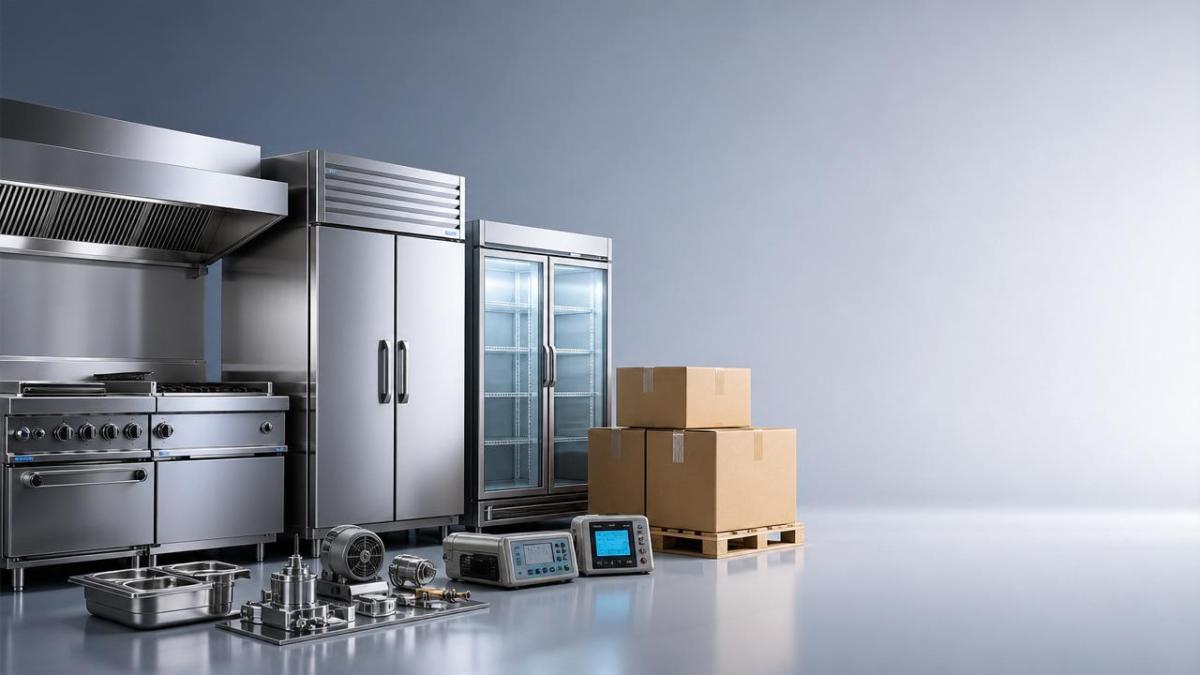
The risk profile of restaurant supplies OEM is changing because kitchen equipment is no longer judged only by price, appearance, or delivery speed.
Commercial kitchens now demand safer heating systems, smarter controls, stainless steel durability, cleaner fabrication, and stable replacement parts over long operating cycles.
At the same time, global buyers face stricter food safety rules, energy regulations, customs checks, and documentation requirements across different markets.
This makes restaurant supplies OEM less like simple product sourcing and more like managing a hidden manufacturing system.
Trend Signals Showing OEM Risk Is Becoming More Complex
Several market signals suggest restaurant supplies OEM decisions now require deeper technical and compliance evaluation.
- More kitchen equipment integrates sensors, displays, programmable controls, and connected service functions.
- Energy efficiency expectations are rising for ovens, refrigeration, fryers, dishwashers, and ventilation systems.
- Foodservice chains expect consistent equipment performance across multiple regions and store formats.
- Custom branding is increasing, but accountability for defects remains difficult to trace.
- Lead times remain vulnerable to component shortages, labor pressure, and logistics disruptions.
These signals mean restaurant supplies OEM risk is no longer limited to defective goods. It extends into certification, data, service continuity, and brand trust.
Why Cost Advantage Can Hide Structural Weakness
Low unit prices often drive interest in restaurant supplies OEM, especially when catalog ranges appear similar across suppliers.
However, price differences may come from thinner materials, simplified insulation, lower-grade motors, weaker heating elements, or limited quality inspection.
A product may look acceptable in photos yet fail during peak kitchen operations, repeated cleaning, or high-temperature use.
In restaurant supplies OEM sourcing, the real cost is measured through warranty claims, downtime, returns, emergency replacement, and customer complaints.
Compliance Pressure Is Reshaping OEM Evaluation
Kitchen equipment operates close to food, water, heat, electricity, gas, and heavy daily use. That creates unavoidable compliance responsibility.
Restaurant supplies OEM products may need different certificates for North America, Europe, the Middle East, Southeast Asia, and other regions.
Relevant standards may involve electrical safety, sanitation, material contact, energy labeling, pressure systems, refrigeration gases, and electromagnetic compatibility.
Risk grows when suppliers provide unclear test reports, expired certificates, mismatched model numbers, or documents issued for similar products.
A reliable restaurant supplies OEM partnership should connect each product model with verifiable drawings, components, test records, and shipment documentation.
Compliance gaps often appear in three places
- The sampled product differs from the certified production version.
- Critical parts are changed without updated testing or approval.
- Manuals, labels, plugs, warnings, or packaging do not match destination rules.
Production Stability Is Now a Core Risk Factor
The kitchen equipment supply chain depends on motors, compressors, controllers, stainless steel, burners, valves, switches, and electronic boards.
When a restaurant supplies OEM supplier lacks strong production planning, small component issues can delay entire shipment schedules.
Production risk also rises when factories accept too many customized orders without sufficient engineering control.
Minor changes in dimensions, wiring, cooling structure, or packaging can create defects that only appear after installation.
This is especially serious for commercial kitchens, central kitchens, hotels, and food processing facilities where downtime disrupts revenue.
Quality Control Must Move Beyond Final Inspection
Final inspection can catch visible damage, missing accessories, or packaging errors. It cannot fully reveal weak design or unstable processes.
Restaurant supplies OEM quality control should begin with supplier capability, raw material verification, process checks, and reliability testing.
For heating equipment, tests should examine temperature stability, insulation performance, wiring safety, and repeated operating cycles.
For refrigeration products, evaluation should include cooling speed, leakage control, compressor performance, noise, and energy consumption.
For stainless steel tables, sinks, shelving, and utensils, weld quality, surface treatment, load capacity, and corrosion resistance matter.
Practical quality checkpoints
- Confirm material grade and thickness before production starts.
- Review engineering drawings for custom restaurant supplies OEM orders.
- Track critical components by batch and supplier source.
- Require functional testing under realistic operating conditions.
- Check packaging strength for international transport stress.
Intellectual Property and Brand Exposure Are Often Underestimated
Custom kitchen equipment designs, private labels, control panel layouts, manuals, and product photography can carry commercial value.
Restaurant supplies OEM arrangements may become risky when designs are shared without clear ownership, confidentiality, or market restrictions.
A supplier may sell similar products to competitors, reuse tooling, or display branded samples at trade events.
The risk is higher when cooperation begins through informal messages instead of signed technical, legal, and commercial agreements.
Strong restaurant supplies OEM management should define ownership of drawings, molds, firmware, packaging, labels, and marketing materials.
After-Sales Accountability Determines the Real Sourcing Outcome
Commercial kitchen equipment must be serviceable. Even well-built machines may require parts, maintenance guidance, or troubleshooting support.
Restaurant supplies OEM becomes risky when suppliers focus on shipment completion but provide limited support after delivery.
Common issues include unavailable spare parts, unclear wiring diagrams, slow warranty decisions, and inconsistent technical responses.
For international foodservice operations, downtime is expensive. A missing thermostat, gasket, fan, or controller can stop service.
Therefore, after-sales terms should be reviewed before order confirmation, not after a failure occurs.
How OEM Risk Affects Different Business Links
The impact of restaurant supplies OEM risk spreads across product planning, sourcing, logistics, sales, installation, and service networks.
When risk is underestimated, product launch schedules become unstable, inventory planning becomes inaccurate, and service teams face avoidable pressure.
Key Points to Watch Before Choosing a Partner
A safer restaurant supplies OEM decision depends on evidence, not only quotation sheets or catalog promises.
- Check whether the supplier owns production capacity or relies heavily on subcontractors.
- Verify certifications against exact models, voltages, materials, and destination markets.
- Request pre-production samples that match planned mass production specifications.
- Define approved component lists for motors, compressors, controllers, valves, and wiring.
- Set inspection points for incoming materials, assembly, function, packaging, and loading.
- Confirm spare parts availability, warranty process, and technical documentation.
- Protect private label assets through agreements and controlled file sharing.
These checks make restaurant supplies OEM evaluation more transparent and reduce dependence on assumptions.
A More Resilient Approach to Restaurant Supplies OEM
The market trend is moving from price-driven OEM selection toward risk-balanced supplier management.
A practical approach separates suppliers by product complexity, compliance burden, technical dependence, and service expectations.
This classification helps align restaurant supplies OEM controls with actual exposure instead of applying one simple checklist to every product.
Next-Step Actions for Lower-Risk Sourcing
Before committing to restaurant supplies OEM cooperation, build a short evidence-based review process.
- Map each product to required safety, sanitation, and energy standards.
- Audit the factory, subcontracting structure, equipment, and inspection capability.
- Approve samples with drawings, materials, components, labels, and packaging locked.
- Set production checkpoints and define defect responsibility before shipment.
- Secure spare parts plans, warranty terms, and technical support channels.
Restaurant supplies OEM can still create strong value when managed with disciplined verification, documented accountability, and realistic cost analysis.
The best next step is to review current suppliers against quality, compliance, production stability, IP protection, and service readiness.
With that structure, restaurant supplies OEM becomes less of a hidden sourcing risk and more of a controlled growth strategy.
Popular Tags
Kitchen Industry Research Team
Dedicated to analyzing emerging trends and technological shifts in the global hospitality and foodservice infrastructure sector.
Industry Insights
Join 15,000+ industry professionals. Get the latest market trends and tech news delivered weekly.
No spam. Unsubscribe anytime.

Contact With us
Contact:
Anne Yin (Ceramics Dinnerware/Glassware)
Lucky Zhai(Flatware)