
Storage Cabinet Selection Guide: Materials, Load Capacity, and Safety
Choosing the right Storage Cabinet is essential for maintaining product quality, workplace safety, and operational efficiency in kitchens, food processing facilities, and commercial environments.
Cabinet selection is not only about storage space. It also involves material durability, load capacity, hygiene compliance, corrosion resistance, and risk prevention.
This guide explains how to evaluate a Storage Cabinet by real application scenarios, helping operations stay cleaner, safer, and more reliable.
Storage Cabinet Selection Starts with the Actual Use Scenario
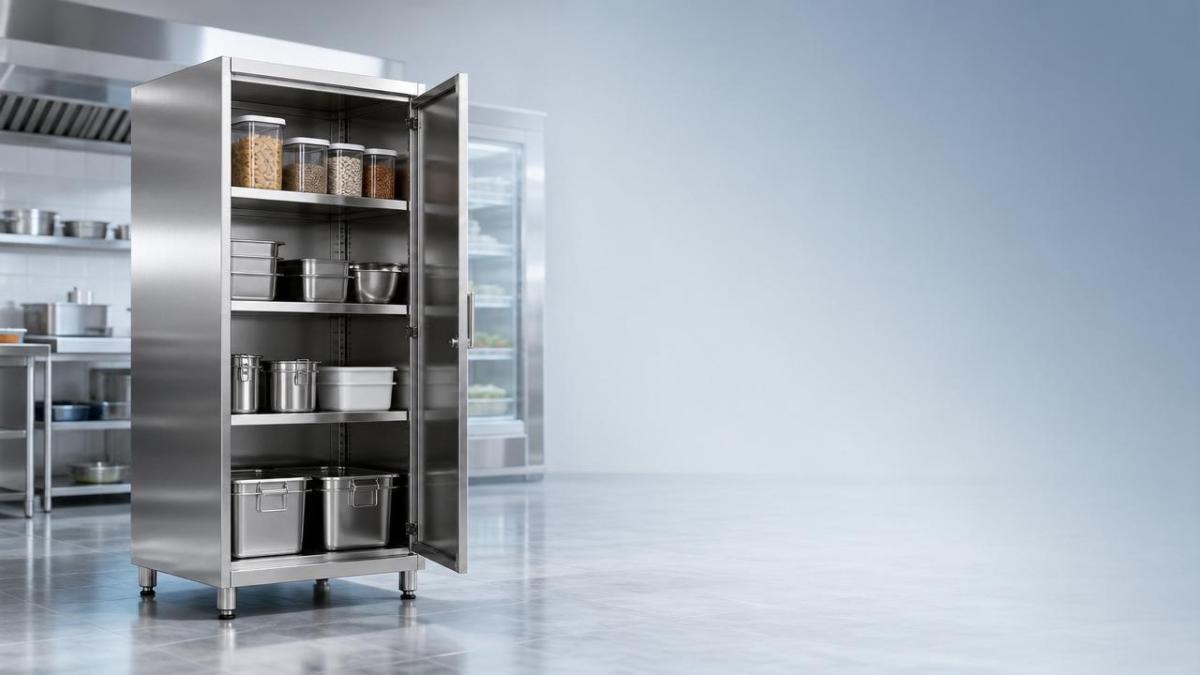
A Storage Cabinet used in a commercial kitchen faces different risks than one used in a dry warehouse or staff area.
Heat, moisture, cleaning chemicals, food residue, and heavy utensils all affect cabinet performance over time.
The first decision should be based on where the Storage Cabinet will be installed and what it will hold.
A wet preparation room requires corrosion resistance. A dry ingredient area needs dust control and stable shelving.
A busy restaurant line needs fast access, while a food processing facility may need stronger hygiene controls.
Scenario-based selection reduces premature replacement, contamination risk, and hidden safety hazards.
Commercial Kitchens Need Hygienic and Corrosion-Resistant Storage
In commercial kitchens, a Storage Cabinet is exposed to steam, oil, salt, sauces, and frequent cleaning.
Stainless steel is usually preferred because it is easy to clean and resists corrosion better than painted steel.
For foodservice environments, 304 stainless steel is widely used for better resistance to moisture and acidic ingredients.
A Storage Cabinet near dishwashing zones should have sealed edges, raised feet, and smooth surfaces.
These details help prevent water accumulation and reduce bacterial growth in hard-to-clean areas.
Sliding doors save space in narrow aisles, while hinged doors provide wider access for large cookware.
The best choice depends on aisle width, workflow speed, and cleaning frequency.
Key judgment points for kitchen use
- Choose stainless steel for moisture, hygiene, and frequent washing.
- Check whether shelves are removable for easier deep cleaning.
- Use adjustable feet to stabilize the Storage Cabinet on uneven floors.
- Avoid rough internal corners that trap grease and food particles.
Food Processing Areas Require Stronger Hygiene Control
Food processing facilities often need stricter control than restaurants because storage mistakes may affect larger production batches.
A Storage Cabinet in these areas should support separation, traceability, and sanitation routines.
Cabinets may store tools, packaging materials, sanitation supplies, or spare production parts.
Each category should be separated to prevent cross-contamination and operational confusion.
Closed cabinets protect contents from dust, splashes, and airborne particles.
Ventilated models may be useful when storing cleaned utensils that still need drying.
For controlled environments, the Storage Cabinet should have smooth welds, non-porous surfaces, and easy labeling areas.
These features make inspection, cleaning verification, and item identification more efficient.
Dry Storage Rooms Focus on Load Capacity and Organization
Dry storage rooms usually hold packaged ingredients, small appliances, spare tools, and consumables.
Here, the most important Storage Cabinet factor is load capacity.
Weak shelves can bend under flour bags, canned goods, stacked containers, or heavy spare parts.
Shelf load ratings should match the heaviest expected item, with extra safety margin.
A practical rule is to avoid using the maximum rating as the normal operating load.
If a shelf is rated for 80 kilograms, daily use should remain comfortably below that value.
The Storage Cabinet should also allow logical zoning by item type, turnover rate, and access frequency.
Fast-moving items belong at waist height. Rarely used items can be placed higher or lower.
Load capacity checks before purchase
- Confirm shelf rating, not only total cabinet capacity.
- Check whether load ratings are tested or only estimated.
- Review shelf thickness, reinforcement ribs, and support structure.
- Consider dynamic stress from frequent loading and unloading.
Chemical and Cleaning Supply Storage Needs Risk Separation
Cleaning agents, sanitizers, and maintenance chemicals should not share space with food, utensils, or packaging materials.
A dedicated Storage Cabinet helps reduce accidental contamination and misuse.
For chemical storage, lockable doors are often necessary to control access.
Spill containment trays or raised lips can help manage small leaks inside the cabinet.
Ventilation may also be important when storing strong-smelling or reactive substances.
The cabinet material should resist corrosion from cleaning chemicals used in the specific facility.
A standard Storage Cabinet may not be suitable for aggressive chemical exposure.
Labels should be visible, durable, and aligned with internal safety procedures.
Cold, Humid, and Coastal Environments Need Better Material Matching
Humidity is one of the most common causes of Storage Cabinet failure.
Rust, swollen panels, weak hinges, and difficult sliding doors often appear after repeated moisture exposure.
In coastal areas, salt in the air increases corrosion risk.
Higher-grade stainless steel or improved surface treatment may be worth the investment.
For cold rooms, material performance and condensation resistance must be considered together.
The Storage Cabinet should not have areas where condensation collects and freezes.
Door movement, hinge durability, and shelf stability should be checked under low-temperature conditions.
Different Scenarios Require Different Storage Cabinet Priorities
This comparison shows why a single Storage Cabinet specification cannot fit every operating area.
The better approach is matching cabinet design with daily risk, cleaning method, and stored item type.
Safety Features Should Match Daily Operating Behavior
A safe Storage Cabinet is designed for how people actually work, not only for how a space looks.
Anti-tip structure is important when heavy items are stored above waist height.
Wall fixing points may be necessary in earthquake-prone areas or high-traffic kitchens.
Rounded edges reduce injury risks during fast movement in narrow service areas.
Door handles should be easy to grip, but not protrude excessively into walkways.
Locking systems should protect restricted items without slowing routine access to approved materials.
For mobile cabinets, caster quality and brake reliability are essential safety checks.
A mobile Storage Cabinet with poor brakes can create serious risks on wet floors.
Common Mistakes When Selecting a Storage Cabinet
Many storage problems begin with small selection mistakes that become costly after installation.
The first mistake is choosing by size alone.
A large Storage Cabinet may still fail if shelves cannot support the actual load.
The second mistake is ignoring cleaning routines.
If staff cannot reach corners and shelf undersides, hygiene quality declines quickly.
The third mistake is mixing incompatible items in one cabinet.
Food-contact tools, chemicals, maintenance parts, and personal items need clear separation.
The fourth mistake is overlooking floor conditions.
Uneven floors can twist doors, overload legs, and shorten cabinet service life.
The fifth mistake is buying without checking replacement parts.
Hinges, handles, shelves, and feet should be repairable or replaceable when needed.
Practical Selection Checklist for Better Fit
- Define the exact installation area before selecting a Storage Cabinet.
- List stored items by weight, size, hygiene risk, and access frequency.
- Confirm stainless steel grade, surface finish, and corrosion resistance.
- Check shelf load capacity with a practical safety margin.
- Choose door style according to aisle width and workflow speed.
- Review cleaning access, removable shelves, and internal corner design.
- Evaluate locks, brakes, anti-tip features, and wall fixing options.
- Plan labels and zoning before the Storage Cabinet enters service.
This checklist supports more consistent decisions across kitchens, processing rooms, warehouses, and facility support areas.
Final Decision: Match Material, Load, and Safety to the Scenario
A reliable Storage Cabinet should match the environment, stored items, cleaning method, and safety expectations.
In wet kitchens, prioritize stainless steel and hygienic construction.
In dry storage, focus on load capacity, shelf adjustment, and organized access.
In chemical areas, emphasize separation, locking, ventilation, and spill control.
In humid or coastal sites, material grade and corrosion protection deserve extra attention.
Before purchasing, map every Storage Cabinet to a defined scenario and verify performance requirements.
This practical step helps reduce contamination risk, improve workflow, and extend equipment service life.
For the next step, review current storage pain points, measure actual loads, and compare cabinet options against real operating conditions.
Popular Tags
Kitchen Industry Research Team
Dedicated to analyzing emerging trends and technological shifts in the global hospitality and foodservice infrastructure sector.
Industry Insights
Join 15,000+ industry professionals. Get the latest market trends and tech news delivered weekly.
No spam. Unsubscribe anytime.

Contact With us
Contact:
Anne Yin (Ceramics Dinnerware/Glassware)
Lucky Zhai(Flatware)