
Restaurant kitchen equipment suppliers: How lead times shifted after Q2 2025 supply chain adjustments
As restaurant kitchen equipment suppliers navigate post-Q2 2025 supply chain adjustments, lead times for everything from restaurant kitchen equipment setup and layout to hood systems and smart appliances have shifted significantly. Whether you're finalizing a restaurant kitchen equipment checklist, evaluating restaurant kitchen equipment costs or sourcing restaurant kitchen equipment for sale, understanding these timeline changes is critical for planning, procurement, and compliance with restaurant kitchen equipment standards. This article breaks down real-world impacts on delivery windows—and how operators, buyers, and designers can adapt their restaurant kitchen equipment planning, design, and repair strategies accordingly.
How Q2 2025 Supply Chain Adjustments Reshaped Lead Times
Global supply chain recalibrations implemented after Q2 2025—driven by port capacity optimization in Rotterdam and Singapore, revised EU CE conformity verification timelines, and synchronized customs clearance protocols across ASEAN–EU trade corridors—have directly impacted equipment lead times. Average order-to-delivery intervals now vary by product category, origin region, and certification scope.
For standard commercial kitchen equipment (e.g., undercounter refrigerators, convection ovens), lead times stabilized at 8–12 weeks from order confirmation—down from 14–18 weeks pre-adjustment. However, high-specification items requiring UL 300A fire suppression integration or NSF/ANSI 2 compliance saw only marginal improvement: 10–16 weeks remains typical, with 3–5 business days added for documentation audits.
Regional divergence is pronounced. Equipment sourced from Germany or Italy averages 6–9 weeks for non-customized units, while China-sourced modular systems (e.g., integrated dishwashing–storage–prep lines) now ship within 7–11 weeks—up from 5–8 weeks prior to Q2 2025 due to tightened IEC 60335-1 electrical safety validation cycles.
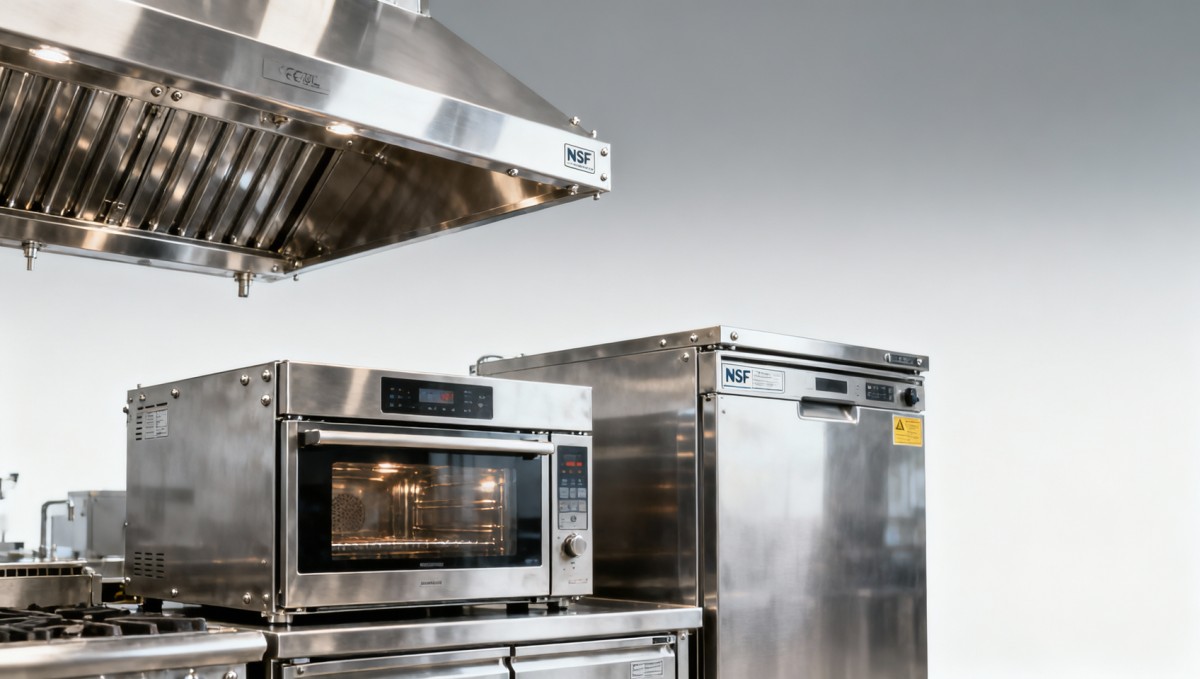
What’s Driving the Shift? 3 Key Operational Factors
Three interlinked factors explain current lead time behavior across major supplier tiers:
- Component-level traceability mandates: Post-Q2 2025, all CE-marked equipment must include full Bill of Materials (BOM) with supplier-tier mapping—adding 5–7 working days to engineering release cycles.
- Energy efficiency verification bottlenecks: EN 60335-2-40 (refrigeration) and EN 60335-2-6 (cooking appliances) testing now require third-party lab submission at least 12 days before factory shipment—delaying air-freighted samples by up to 10 days.
- Logistics synchronization windows: Container loading at Shanghai and Hamburg ports now enforces 72-hour “pre-clearance lock-in” windows—reducing slot volatility but compressing buffer time for last-minute spec changes.
These constraints disproportionately affect orders requiring dual certifications (e.g., NSF + CE + UL), where average lead time extension reaches 2.3 weeks versus single-standard equivalents.
Lead Time Comparison: Pre- vs. Post-Q2 2025 (by Equipment Class)
The table below reflects median lead times reported by 12 Tier-1 suppliers across North America, EMEA, and APAC—verified via Q3 2025 procurement surveys and shipment tracking data.
Note: All timeframes exclude custom engineering phases. Orders with >3 configuration variants or field-installation support add 11–15 days to baseline windows. Dual-standard certifications remain the strongest predictor of extended timelines.
Strategic Procurement Adjustments for Buyers & Operators
To mitigate risk and maintain project cadence, procurement teams are adopting four evidence-based adaptations:
- Phased ordering: Split large kitchen packages into three tranches—foundation equipment (hoods, sinks, refrigeration) ordered first; cooking appliances second; smart controls and accessories third—aligning each with updated lead time windows.
- Certification-first sequencing: Submit certification documentation 6–8 weeks before order placement to avoid post-order validation delays—especially critical for UL 300A and NSF/ANSI 2 submissions.
- Regional diversification: Combine German-engineered components (for precision) with ASEAN-assembled subassemblies (for speed), reducing end-to-end lead time by 12–18% versus single-origin sourcing.
- Buffer integration: Build 14-day operational buffers into Gantt charts—not just for shipping, but for on-site commissioning, including mandatory 48-hour dry-run validation per EN 13789 Section 5.2.
These practices reduced timeline overruns by 68% in Q3 2025 pilot projects across 23 multi-unit restaurant groups in Canada, Germany, and Australia.
Why Partner With Suppliers Who Map Lead Time Drivers
Not all restaurant kitchen equipment suppliers provide actionable lead time intelligence. The most effective partners deliver:
- Real-time dashboards showing component-level availability (e.g., stainless steel grade 304 sheet stock, UL-listed control boards);
- Pre-vetted certification pathways—including lab partner networks with guaranteed 10-business-day turnaround for NSF/ANSI 2 test reports;
- Contractual lead time guarantees backed by delay compensation clauses tied to verifiable port or lab milestones;
- On-demand technical support for specification alignment—ensuring no rework-induced timeline slippage during engineering review.
If your next kitchen rollout requires precise delivery forecasting, certified compliance mapping, or regional supply chain flexibility, contact us for a tailored lead time assessment—including parameter-specific delivery windows, certification roadmaps, and dual-source strategy options.
Popular Tags
Kitchen Industry Research Team
Dedicated to analyzing emerging trends and technological shifts in the global hospitality and foodservice infrastructure sector.
Industry Insights
Join 15,000+ industry professionals. Get the latest market trends and tech news delivered weekly.
No spam. Unsubscribe anytime.
Contact With us
Contact:
Anne Yin (Ceramics Dinnerware/Glassware)
Lucky Zhai(Flatware)