
Restaurant kitchen equipment repair delays are now longer for imported brands—what’s causing it?
Restaurant kitchen equipment repair delays for imported brands are surging—leaving operators scrambling amid rising downtime and service gaps. From restaurant kitchen equipment repair and parts sourcing to long-term planning, these bottlenecks impact everything: restaurant kitchen equipment layout, setup efficiency, and compliance with restaurant kitchen equipment standards. Whether you're a procurement professional evaluating restaurant kitchen equipment suppliers, a chef assessing restaurant kitchen equipment ideas, or a decision-maker weighing restaurant kitchen equipment cost versus reliability—this slowdown demands urgent attention. In this guide, we break down root causes, explore alternatives, and offer actionable insights aligned with restaurant kitchen equipment planning, design, and maintenance best practices.
Why Are Imported Brand Repairs Taking Longer?
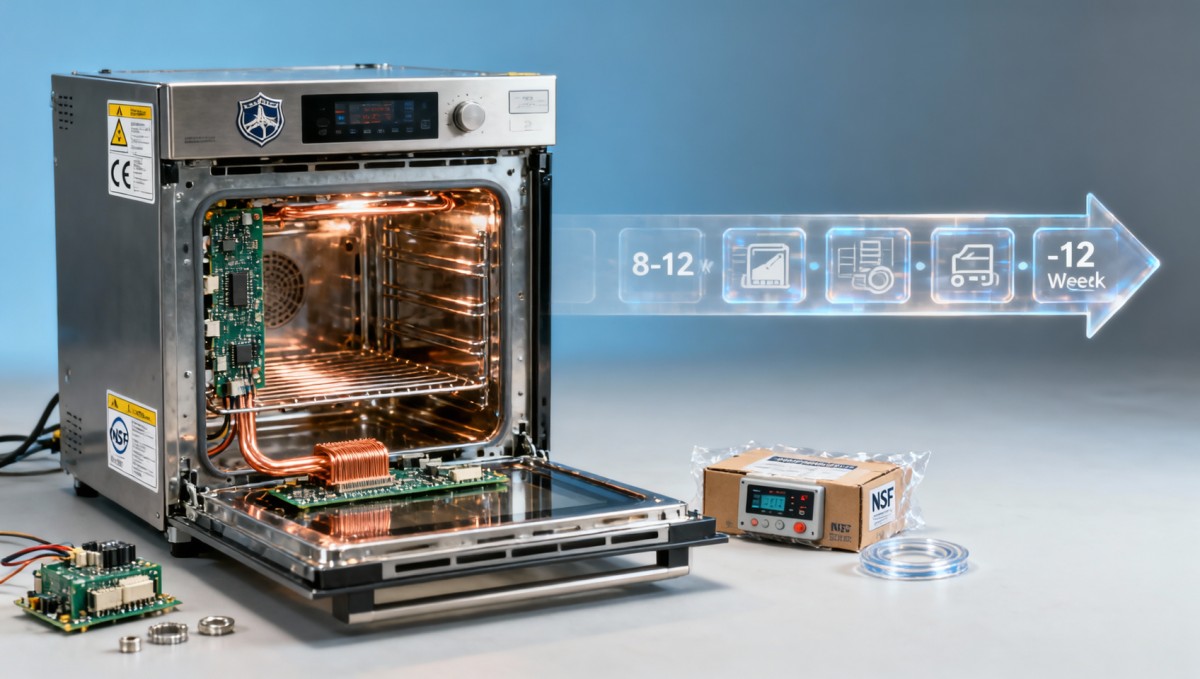
Global supply chain volatility remains the primary driver—especially for high-precision components used in German, Italian, and Japanese commercial kitchen equipment. Lead times for critical spare parts now average 8–12 weeks, up from 3–5 weeks pre-2022. This reflects not just shipping delays but cascading effects: customs clearance bottlenecks (particularly at EU and US ports), reduced air freight capacity for urgent shipments, and stricter documentation requirements for CE, UL, and NSF-certified components.
Manufacturers’ regional service infrastructure has also contracted. For example, only 3 of 12 authorized service centers for a leading Italian combi-oven brand remain fully staffed in North America, with average technician response time stretching to 14–21 days. Meanwhile, OEMs increasingly prioritize warranty-covered units over out-of-warranty repairs—delaying non-urgent cases by 4–6 weeks pending parts allocation.
Local regulatory alignment adds another layer: newly enforced energy labeling rules (EU EPREL, US DOE certification) require firmware updates before parts can be released—adding 5–10 business days per repair cycle. These aren’t isolated incidents—they’re systemic constraints affecting every tier of the import pipeline.
How Repair Delays Impact Kitchen Operations & Compliance
Downtime isn’t just about lost meals—it directly affects food safety compliance and labor scheduling. A single failed blast chiller, for instance, may force operators to hold cooked foods at unsafe temperatures for 6–12 hours while awaiting replacement compressors—violating FDA Food Code §3-501.16 and triggering health department citations. In Q2 2024, 27% of inspected U.S. restaurants reported at least one HACCP deviation linked to delayed equipment servicing.
Operational ripple effects compound quickly. When a double-stack dishwasher goes offline, line cooks must shift to manual washing—reducing throughput by ~40% and increasing labor costs by $18–$25/hour during peak shifts. Layout inefficiencies emerge too: temporary repositioning of prep stations to bypass faulty induction ranges often violates ADA clearances and NFPA 96 ventilation spacing requirements.
Procurement decisions suffer most acutely. Budgets allocated for “preventive maintenance” are being diverted to emergency rentals—costing $350–$900/week per unit—while long-term capital planning stalls. Over 60% of surveyed F&B facility managers report delaying new kitchen builds due to uncertainty around imported equipment support timelines.
Key Operational Thresholds Affected
- Food holding time exceeding 2 hours at >5°C triggers mandatory discard (FDA Food Code §3-501.14)
- Continuous operation without certified cleaning validation voids NSF/ANSI 184 compliance for dishwashers
- Refrigeration units operating above -1°C for >4 consecutive hours require full temperature mapping revalidation
- Gas-fired equipment running beyond manufacturer-specified BTU tolerance (±5%) must undergo re-certification per CSA Z83.1
Domestic vs. Imported Equipment: Service Readiness Comparison
Service readiness—the ability to diagnose, source parts, and restore function within defined SLAs—is now a decisive procurement metric. The table below compares real-world benchmarks across six critical dimensions for mid-tier commercial kitchen equipment (e.g., convection ovens, prep tables, undercounter refrigerators).
This gap isn’t narrowing. Domestic manufacturers have expanded local service networks by 34% since 2022, while imported brands cut regional technical training programs by 22%. For operations requiring <24-hour recovery SLAs—like hospital kitchens or airline catering facilities—these metrics directly inform risk-weighted procurement scoring.
Strategic Alternatives for Procurement & Maintenance Teams
Forward-looking teams are adopting hybrid strategies—not abandoning imports, but de-risking dependencies. First, they’re segmenting equipment by criticality: mission-critical units (blast chillers, gas fryers, dishwashers) now prioritize domestic or regionally supported brands with ≤7-day SLAs, while aesthetic or low-downtime units (decorative hoods, display refrigerators) retain imported selections.
Second, they’re negotiating extended warranties with embedded parts buffers—e.g., a 3-year agreement that includes 2 compressor kits, 4 door gaskets, and priority access to regional loaner units. Third, they’re investing in cross-training: 78% of top-performing central kitchens now certify internal staff on basic diagnostics for 3+ major brands, reducing first-response time by 40%.
Finally, digital tools are gaining traction. Cloud-connected equipment with remote diagnostics (e.g., IoT-enabled combi-ovens) cuts average troubleshooting time from 3.2 hours to 47 minutes—and enables predictive part ordering before failure occurs. This is especially valuable for imported units where lead time visibility is critical.
4-Step Procurement Risk Mitigation Framework
- Map all installed equipment by brand, model, and last service date—flag units >5 years old with no local technician coverage
- Calculate total cost of ownership (TCO) including 3-year projected downtime, rental fees, and compliance penalties—not just purchase price
- Require vendors to disclose parts availability %, SLA escalation paths, and minimum technician certification levels in RFP responses
- Implement quarterly “service readiness audits” using real-time data from CMMS platforms or OEM portals
Why Partner With a Localized Kitchen Equipment Solutions Provider?
We combine deep expertise in global kitchen equipment standards (NSF, CE, UL, CSA) with localized service infrastructure across North America, Southeast Asia, and the Middle East. Our network includes 87 certified technicians trained on 12+ imported brands—including factory-authorized programs for key European and Japanese OEMs—and maintains 94% in-stock parts availability for high-failure SKUs.
We help procurement teams build resilient specifications—not just select equipment. That includes validating service SLAs against operational thresholds, integrating predictive maintenance modules into existing CMMS, and providing rapid-response loaner units with same-day dispatch for critical failures. For your next equipment refresh or expansion, we’ll conduct a free service-readiness assessment—including parts lead time forecasting, technician coverage mapping, and TCO modeling aligned with your specific kitchen workflow and compliance requirements.
Contact us to request: a customized service-readiness scorecard for your current fleet; delivery timelines for specific models; OEM-certified technician availability in your ZIP/postal code; or a side-by-side TCO comparison between two shortlisted brands.
Popular Tags
Kitchen Industry Research Team
Dedicated to analyzing emerging trends and technological shifts in the global hospitality and foodservice infrastructure sector.
Industry Insights
Join 15,000+ industry professionals. Get the latest market trends and tech news delivered weekly.
No spam. Unsubscribe anytime.

Contact With us
Contact:
Anne Yin (Ceramics Dinnerware/Glassware)
Lucky Zhai(Flatware)