
How to compare a kitchen design manufacturer fairly
Choosing the right kitchen design manufacturer is not just about price or appearance. For technical evaluators, a fair comparison requires looking at engineering capability, material standards, customization capacity, production consistency, compliance, and long-term service support. This guide explains how to assess suppliers objectively so you can identify reliable partners, reduce project risk, and make decisions that support performance, safety, and operational efficiency.
What should technical evaluators compare first in a kitchen design manufacturer?
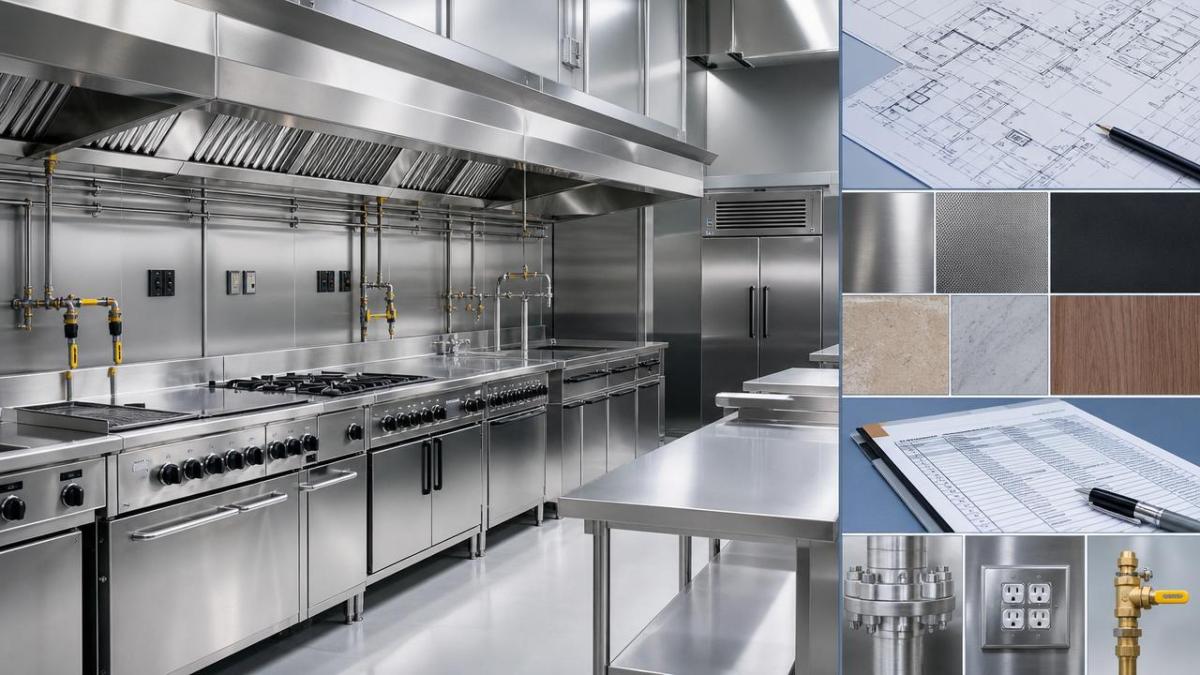
A fair review of any kitchen design manufacturer starts with scope definition. Before comparing factories, you need to define whether the project involves commercial kitchens, central kitchens, food processing support areas, hospitality back-of-house systems, or integrated residential solutions.
This matters because manufacturers often look similar in catalogs but differ sharply in design logic, production depth, and technical control. Some are strong in stainless fabrication but weak in workflow planning. Others can design smart kitchens yet rely on outsourced production for critical modules.
For technical assessment, the first question is not “Which supplier looks better?” It is “Which supplier can meet the exact functional, regulatory, and operational requirements of this project with repeatable quality?”
- Clarify the kitchen type, peak workload, utility conditions, cleaning requirements, and safety constraints before requesting quotations.
- Separate aesthetic design from technical design. Layout rendering alone does not prove production or engineering capability.
- Compare suppliers on the same specification package, not on self-defined proposals that hide differences in material, thickness, controls, or service scope.
Key comparison principles
A kitchen design manufacturer should be judged through standardized criteria. Technical teams often lose comparability when one supplier quotes design only, another quotes equipment plus installation, and a third includes utilities, controls, and commissioning.
To compare fairly, normalize the deliverables. Ask each supplier to define what is included in design development, material specification, fabrication, inspection, logistics, on-site support, and after-sales response.
How to build a fair evaluation matrix for supplier comparison
A structured evaluation matrix helps technical evaluators compare a kitchen design manufacturer across engineering, quality, compliance, and service dimensions. It also reduces bias from low price, polished presentations, or aggressive sales claims.
The table below shows a practical framework that can be used in restaurant, hotel, food processing, and integrated kitchen projects where workflow efficiency, hygiene, and durability are equally important.
This matrix works because it forces every kitchen design manufacturer into the same review structure. It also helps procurement, engineering, and operations teams discuss trade-offs using evidence instead of preference.
Suggested scoring method
- Assign weightings based on project risk. For example, hygiene and material control may outweigh visual design in food processing environments.
- Use a shared scoring rubric from 1 to 5 or 1 to 10 with written evidence required for each score.
- Require document-backed confirmation, such as drawings, sample photos, inspection forms, or technical clarifications.
Which technical details reveal real manufacturing strength?
A capable kitchen design manufacturer should demonstrate more than a product list. Technical evaluators need to review how the supplier translates workflow and hygiene demands into fabricable, maintainable, and serviceable equipment systems.
In today’s kitchen equipment market, where automation, smart control, and energy efficiency are growing fast, engineering depth is often the dividing line between a reliable project and a problematic one.
Technical checkpoints worth verifying
- Whether the design accounts for operator movement, preparation sequence, waste separation, and cross-contamination control.
- Whether the manufacturer can coordinate gas, water, drainage, power, exhaust, and heat-load interfaces with the building team.
- Whether fabrication drawings define tolerances, corner treatment, reinforcement structure, and access for cleaning and service.
- Whether electrical or smart modules support realistic maintenance access, fault diagnosis, and replacement planning.
These points are especially important in hotel kitchens, central kitchens, and foodservice chains, where equipment downtime affects service continuity and labor efficiency. A fair comparison of a kitchen design manufacturer must include both static design quality and dynamic operating logic.
The following table helps technical teams compare specification transparency between suppliers before sample approval or final contracting.
When a kitchen design manufacturer can answer these points clearly, technical risk goes down. Ambiguity usually means hidden scope, inconsistent output, or future disputes over quality responsibility.
How important are standards, certification support, and compliance documents?
Compliance is often where supplier comparison becomes unfair. One kitchen design manufacturer may look expensive because it includes documentation, labeling, traceability, and pre-shipment verification. Another may appear cheaper simply because those items are missing.
For technical evaluators, the right question is whether the supplier can support the target market’s practical compliance pathway. Requirements vary by project and destination, but review should cover electrical safety, food-contact materials, sanitation design, gas-related interfaces where relevant, and installation documentation.
Documents worth requesting early
- Material declarations or traceability records for food-contact surfaces where applicable.
- Electrical component lists, ratings, and wiring documentation for powered modules.
- Cleaning, maintenance, and installation instructions aligned with the project environment.
- Inspection records, packing lists, and dimensional verification reports for complex shipments.
In global trade, many kitchen projects involve cross-border sourcing from manufacturing hubs such as China, Germany, Italy, and Japan. That makes documentation quality even more important, because local installers and project managers depend on complete technical information to avoid delays.
What purchasing mistakes distort a fair supplier comparison?
The most common error is comparing quotations that do not cover the same scope. A low quote from a kitchen design manufacturer may exclude utility coordination, special finishes, site constraints, packing protection, testing, or after-sales support.
Another mistake is focusing on unit price without estimating operating cost. In modern kitchen systems, energy efficiency, cleaning time, spare part availability, and downtime response can influence lifecycle cost more than initial purchase price.
Common comparison errors
- Using incomplete drawings and asking suppliers to “quote based on experience,” which leads to non-comparable assumptions.
- Accepting generic material descriptions without checking grade, thickness, reinforcement, and weld finishing standards.
- Ignoring installation and commissioning responsibilities, especially for integrated or smart kitchen systems.
- Not confirming lead times for custom parts, imported components, or non-standard electrical items.
A disciplined technical review keeps these distortions under control. It also protects procurement teams when internal stakeholders ask why one kitchen design manufacturer was selected over another.
How to assess service, delivery, and long-term project risk
In the kitchen equipment industry, delivery quality is not only about shipping on time. It includes drawing freeze discipline, production scheduling, packing logic, site readiness coordination, and problem resolution after installation.
A kitchen design manufacturer with strong factory capability but weak service coordination can still create major project delays. This is especially true for hotels, chain restaurants, and food processing facilities with opening deadlines or validation schedules.
Questions to ask about execution
- What is the drawing approval process, and how are revisions controlled after production starts?
- How are custom items labeled, packed, and sequenced for multi-zone installation?
- What support is available if dimensions conflict with site conditions during installation?
- How are spare parts, consumables, and maintenance instructions handled after handover?
Service quality becomes more important as kitchens become more intelligent and energy-managed. Integrated systems, digital controls, and automated processing modules require a supplier that can support both hardware and operating logic over time.
FAQ: practical questions when comparing a kitchen design manufacturer
How do I compare two suppliers if one offers more customization?
Break customization into measurable items: design hours, revised drawings, tooling impact, utility coordination, and lead time effect. A kitchen design manufacturer with deeper customization may cost more, but it can reduce installation conflicts and improve operational fit.
What is more important, factory scale or engineering detail?
Both matter, but engineering detail should be confirmed first. A large factory does not automatically produce better kitchen solutions. For technical evaluators, clear specifications, process control, and document discipline are stronger predictors of project success.
Should I prioritize local suppliers over overseas manufacturers?
Not always. Overseas sourcing can provide cost or production advantages, especially in major kitchen equipment manufacturing regions. However, the kitchen design manufacturer must support communication, documentation, shipping protection, and post-delivery coordination reliably.
How can I reduce risk before placing a full order?
Ask for detailed drawings, material clarification, sample confirmation for key finishes, and a defined inspection plan. For complex projects, pilot production review or pre-shipment verification can help confirm whether the kitchen design manufacturer can deliver consistently.
Why choose us for kitchen design manufacturer evaluation and project support
If you are comparing a kitchen design manufacturer for a restaurant, hotel, central kitchen, food processing facility, or integrated smart kitchen project, we can support a more objective decision process. Our approach focuses on practical engineering review, material confirmation, compliance readiness, and delivery risk control.
You can contact us for specific support on parameter confirmation, product selection, customization feasibility, lead time review, packaging and shipping planning, documentation expectations, sample evaluation, and quotation comparison. If your team needs help standardizing supplier bids, we can also assist in building a comparable technical checklist.
A fair comparison does not simply identify the lowest quote. It identifies the kitchen design manufacturer that can meet performance targets, hygiene expectations, and long-term operating needs with fewer surprises. If you want to review drawings, clarify specifications, or discuss certification-related concerns before sourcing, reach out with your project details.
Popular Tags
Kitchen Industry Research Team
Dedicated to analyzing emerging trends and technological shifts in the global hospitality and foodservice infrastructure sector.
Industry Insights
Join 15,000+ industry professionals. Get the latest market trends and tech news delivered weekly.
No spam. Unsubscribe anytime.
Hot Articles
 Kitchen Innovation Trends in Emerging Markets: Where Growth Will Come From in 2026
- How to Choose a Bakery Oven for Consistent Output and Production Volume?
- Which Ergonomic Kitchen Tools Reduce Hand Strain for Daily Meal Prep?
- Kitchen Tools for Restaurants That Reduce Prep Bottlenecks During Peak Service
Contact With us
Contact:
Anne Yin (Ceramics Dinnerware/Glassware)
Lucky Zhai(Flatware)