
Restaurant Kitchen Equipment Supplier Delays and How to Spot Them Early
Supplier delays can disrupt any commercial restaurant kitchen, affecting timelines, budgets, and daily operations. Whether you are sourcing from a restaurant kitchen equipment supplier for a modular restaurant kitchen, catering setup, or food truck project, early warning signs matter. This guide explains how to spot delay risks in restaurant kitchen appliances, restaurant kitchen stainless steel products, and layout planning before they impact service.
For procurement teams, operators, and business decision-makers, the issue is rarely a single late shipment. Delays often ripple through site preparation, utility installation, compliance checks, staff training, and opening schedules. In many projects, even a 7- to 14-day slip on key cooking or refrigeration equipment can force changes to the full commissioning plan.
In a global kitchen equipment market shaped by cross-border sourcing, stainless steel fabrication, automation, and energy-efficient design, early detection is a practical advantage. The earlier you identify risk signals from a restaurant kitchen equipment supplier, the better you can protect service continuity, cash flow, and launch timelines.
Where Supplier Delays Start in Restaurant Kitchen Equipment Projects
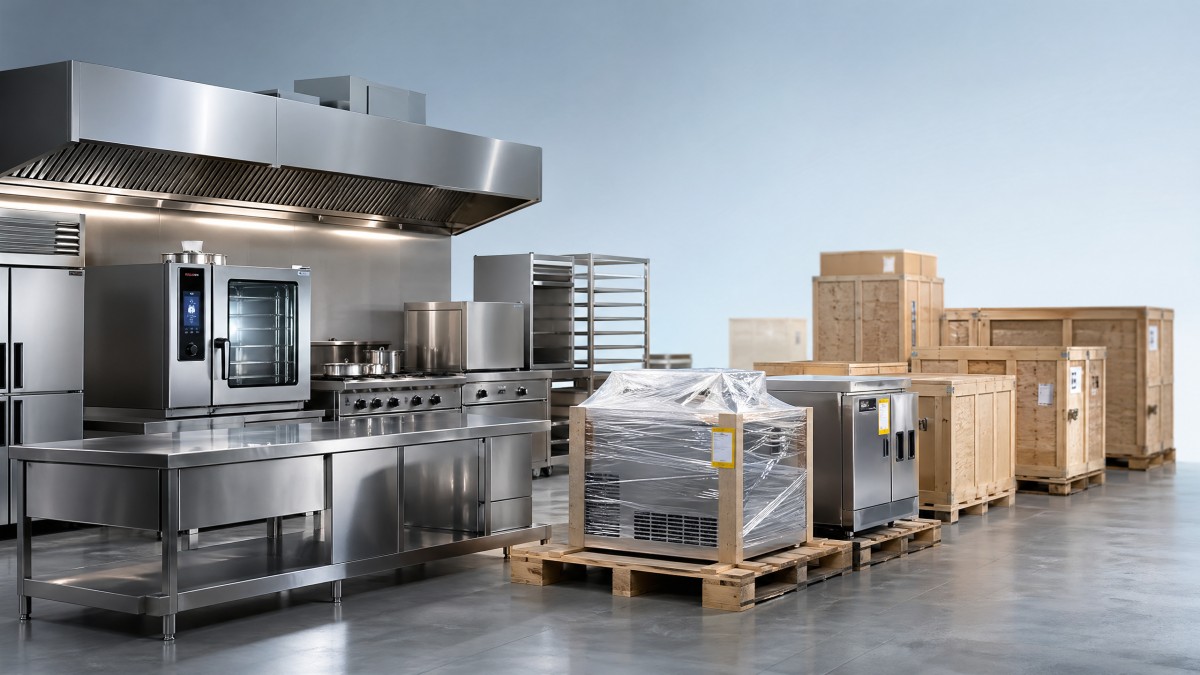
Most delays do not begin at the shipping dock. They usually start much earlier, during specification alignment, drawing approval, material procurement, or production scheduling. Commercial kitchens often combine standard equipment with custom stainless steel counters, hoods, sinks, shelving, and modular workflow elements. That mix increases coordination complexity across 3 to 5 supply stages.
A restaurant kitchen equipment supplier may quote one lead time for standard restaurant kitchen appliances, such as fryers, ovens, or refrigeration units, and another for fabricated restaurant kitchen stainless steel products. Standard items may move in 2 to 6 weeks, while custom fabrication can take 4 to 10 weeks depending on cutouts, welds, drain positions, and finish requirements.
Imported components add another layer of uncertainty. Equipment using digital controls, compressors, sensors, or specialty burners may depend on upstream parts availability. If one subcomponent slips by 10 days, final assembly and factory testing may also shift, even when the main equipment frame is already complete.
Project type matters as well. A food truck build has tighter space tolerances, often within a few millimeters, while a modular restaurant kitchen may depend on coordinated delivery across ventilation, cooking lines, and prep zones. In both cases, one delayed item can block installation crews and create idle labor costs.
Typical delay points across the supply chain
The table below shows where delays usually emerge and what they mean for restaurant projects. These are not rare exceptions; they are common pressure points buyers should review before issuing a purchase order.
The key takeaway is that delay risk often becomes visible before production is complete. Buyers who monitor early-stage documentation, factory scheduling, and approval speed can usually detect trouble 1 to 3 weeks before the delivery date is missed.
Why early visibility matters
- It helps procurement teams adjust installation milestones before contractors arrive on site.
- It allows operators to sequence opening plans around critical equipment such as refrigeration, extraction, and hot line units.
- It gives decision-makers time to approve substitutes, split shipments, or temporary rental solutions.
The Early Warning Signs Buyers Should Not Ignore
A reliable restaurant kitchen equipment supplier should provide a clear path from quote to delivery. When communication becomes vague, response times stretch, or technical details remain unresolved after multiple rounds, the delay may already be forming. In practice, 5 to 8 warning signs appear repeatedly across commercial kitchen projects.
One of the first signs is inconsistent documentation. If the supplier issues revised proformas, layout drawings, utility schedules, or stainless steel shop drawings with conflicting dimensions, that is not only an admin problem. It usually means engineering coordination is incomplete, which can add 1 to 2 weeks later in production.
Another warning sign is overpromising on lead time without explaining manufacturing logic. If custom fabricated items are quoted with the same turnaround as standard stock units, buyers should ask how materials, welding, polishing, assembly, and inspection are actually scheduled. Generic answers often indicate weak planning discipline.
Silence around dependencies is equally important. If a supplier does not ask about power supply, gas type, drain location, extraction height, or access width, they may be missing basic installation realities. That gap often surfaces only when goods are ready to ship or arrive on site.
Checklist of practical red flags
- Quotation validity is short, but no production slot is reserved after deposit confirmation.
- Lead time is stated only as “fast” or “about 30 days” without milestone breakdown.
- Factory photos, testing records, or progress updates are unavailable after 10 to 14 days.
- Material grade for restaurant kitchen stainless steel is not clarified, such as 201 versus 304.
- Packaging and shipping terms are discussed before technical approval is finalized.
- Different contacts provide different answers on the same order status.
Not every red flag means failure, but two or more together should trigger a structured review. Buyers should then ask for a dated production schedule, approved drawings, component availability confirmation, and an updated shipment window rather than relying on verbal reassurance.
What strong suppliers usually provide early
Stronger suppliers tend to confirm 4 basics within the first few business days: final specifications, utility requirements, drawing approval route, and target dispatch period. They also separate standard, semi-custom, and fully custom items because each category carries a different risk profile and lead time range.
This disciplined communication is especially valuable for buyers managing multiple project streams, such as a restaurant group opening two branches in the same quarter or a catering operation upgrading its prep and holding lines in phases.
How to Evaluate a Supplier Before Delays Reach Your Site
Prevention starts before you place the order. A careful supplier assessment can reduce avoidable delays more effectively than chasing updates after production has begun. For kitchen projects, evaluation should cover technical capability, planning transparency, logistics readiness, and after-sales coordination.
Buyers should ask for lead time by product category rather than a single blended number. For example, countertop appliances may move in 10 to 20 days, refrigerated units in 3 to 5 weeks, and custom stainless steel assemblies in 4 to 8 weeks. A supplier that cannot separate these windows may not be controlling workflow well.
It is also useful to verify how the supplier manages engineering changes. In restaurant kitchens, even a small change to sink orientation, shelf depth, caster height, or service void can affect fabrication drawings and packaging dimensions. A mature process should define who approves revisions and how many days each change adds.
For global sourcing, logistics capability should not be treated as an afterthought. Ask whether the supplier handles export packing, palletization, moisture protection, equipment labeling, and loading plans for mixed orders. Poor shipping preparation can turn an on-time factory release into a delayed delivery at destination.
Supplier evaluation matrix for delay prevention
The matrix below helps procurement teams compare suppliers using practical criteria tied to delivery reliability rather than price alone.
This kind of evaluation is especially useful when choosing between a lower-cost supplier with limited process visibility and a slightly higher-cost partner that offers stronger schedule control. In many restaurant projects, a 5% savings on equipment price does not offset the cost of a delayed opening or incomplete kitchen handover.
Questions to ask before issuing a purchase order
- Which items are standard stock, and which require custom fabrication or imported components?
- What are the 4 main milestones from deposit receipt to dispatch, and how will progress be reported?
- How many days are needed for drawing approval, pre-shipment testing, and export packing?
- Can critical-path items ship first if lower-priority accessories are still pending?
Practical Control Measures During Production and Delivery
Once the order is active, delay prevention depends on disciplined follow-up. Buyers should not wait until the promised ship week to request status. A more effective model is to establish checkpoints at day 3 to 5 for documentation, week 2 for material and scheduling confirmation, and week 3 or 4 for production evidence on longer lead-time items.
Critical-path products should be tracked separately. In a commercial kitchen, hoods, refrigeration, combi ovens, dishwashing systems, and custom fabrication often determine the installation sequence. Smaller utensils or loose accessories may be important, but they rarely block MEP coordination or line commissioning in the same way.
A useful practice is to create a traffic-light status sheet. Green means on schedule, amber means a risk of 3 to 7 days, and red means a likely slip of more than 7 days. This simple method helps operators, procurement staff, and leadership align decisions quickly without needing a long technical meeting each week.
For international orders, shipping readiness should be checked in parallel with production. Confirm crate counts, packing lists, gross dimensions, and loading dates at least 5 business days before dispatch. That is especially important for mixed kitchen projects where one missing crate can contain legs, overshelves, or control parts needed for several installations.
A 5-step monitoring process
- Confirm final technical approval and freeze changes before production starts.
- Request milestone dates for each major equipment category and custom stainless steel item.
- Review photo, video, or inspection evidence at agreed checkpoints every 7 to 10 days.
- Prioritize critical-path delivery and split shipments if that protects site progress.
- Match incoming goods to installation zones so receiving teams can verify quickly.
These controls are not just for large restaurant groups. Even a single-site operator launching a café, cloud kitchen, or food truck can use them to avoid rework, temporary storage costs, or repeated site visits by installers.
Common mistakes during active orders
A frequent mistake is approving partial information to save time. If electrical loads, gas configuration, or drain positions are uncertain, production may begin on assumptions that later need correction. Another mistake is focusing only on dispatch date while ignoring site readiness. Equipment arriving 10 days early without storage protection can also create damage and coordination issues.
Good delay management is therefore a balance between supplier follow-up and project sequencing. It protects both schedule and installation quality.
FAQ: Delay Risks, Lead Times, and Buyer Decisions
The questions below reflect common concerns from information researchers, operators, procurement teams, and business owners involved in restaurant kitchen projects. They are useful when comparing suppliers or validating internal timelines.
How long does restaurant kitchen equipment usually take to deliver?
Typical lead times vary by category. Small standard restaurant kitchen appliances may ship in 10 to 20 days, refrigeration and cooking equipment often require 3 to 6 weeks, and custom restaurant kitchen stainless steel products can take 4 to 10 weeks. International shipping and customs add extra time, so buyers should build a buffer of at least 7 to 14 days for critical items.
Which equipment categories most often cause opening delays?
The highest risk usually sits with custom stainless steel fabrication, ventilation-related components, refrigeration, and integrated cooking lines. These categories affect utility coordination, installation order, and commissioning. If one of them slips, the impact is usually larger than a delay on shelving accessories or smallwares.
Should buyers split orders across multiple suppliers to reduce delay risk?
Sometimes yes, but only if coordination remains manageable. Splitting standard appliances from custom fabrication can reduce dependency risk, especially when lead times differ by 2 weeks or more. However, using too many suppliers can create mismatched dimensions, inconsistent finishes, and fragmented accountability. The better choice depends on project complexity and internal coordination capacity.
What should be included in a realistic buffer plan?
A practical buffer plan should include 4 elements: a time reserve for critical-path items, a substitute list for standard products, site readiness checks, and a communication schedule with the restaurant kitchen equipment supplier. For projects with custom fabrication or imported smart kitchen equipment, a 10% to 15% schedule buffer is often more realistic than assuming every stage will run exactly as planned.
Early action is the most effective way to reduce supplier-related disruption in commercial kitchen projects. By checking documentation quality, separating standard and custom lead times, monitoring milestone evidence, and protecting critical-path items, buyers can spot risk before it becomes a costly opening delay.
Whether you are planning a modular restaurant kitchen, sourcing restaurant kitchen appliances, or coordinating restaurant kitchen stainless steel fabrication, a structured supplier review creates stronger outcomes for operations, procurement, and management alike. If you want to assess delivery risk, compare supply options, or build a more reliable procurement plan, contact us today to discuss your project and get a tailored solution.
- kitchen appliances
- smart kitchen
- cooking equipment
- refrigeration equipment
- restaurant kitchen
- kitchen equipment
- restaurant kitchen equipment
- smart kitchen equipment
- restaurant kitchen equipment supplier
- modular restaurant kitchen
- commercial restaurant kitchen
- restaurant kitchen appliances
- restaurant kitchen stainless steel
Popular Tags
Kitchen Industry Research Team
Dedicated to analyzing emerging trends and technological shifts in the global hospitality and foodservice infrastructure sector.
Industry Insights
Join 15,000+ industry professionals. Get the latest market trends and tech news delivered weekly.
No spam. Unsubscribe anytime.


Contact With us
Contact:
Anne Yin (Ceramics Dinnerware/Glassware)
Lucky Zhai(Flatware)