
Why are more brands switching to the glass salad jar
As foodservice and retail brands push for safer packaging, stronger shelf appeal, and more sustainable operations, the glass salad jar is gaining rapid attention. For business decisions across kitchen equipment, prepared foods, and packaging systems, this shift is not only about appearance. It also reflects stricter food safety expectations, changing buyer behavior, and the need for durable packaging that supports brand value over time.
In the broader kitchen equipment industry, packaging choices now connect directly with storage efficiency, cold-chain performance, filling workflows, and waste reduction. A glass salad jar fits this trend because it combines visibility, product protection, and reuse potential in one format. That makes it relevant for restaurants, hotels, central kitchens, retailers, and home-focused food brands.
Why a checklist matters before switching to a glass salad jar
A packaging change affects more than container supply. It can alter prep speed, filling equipment settings, shelf display, transport costs, and customer perception. A checklist prevents rushed decisions and highlights trade-offs early.
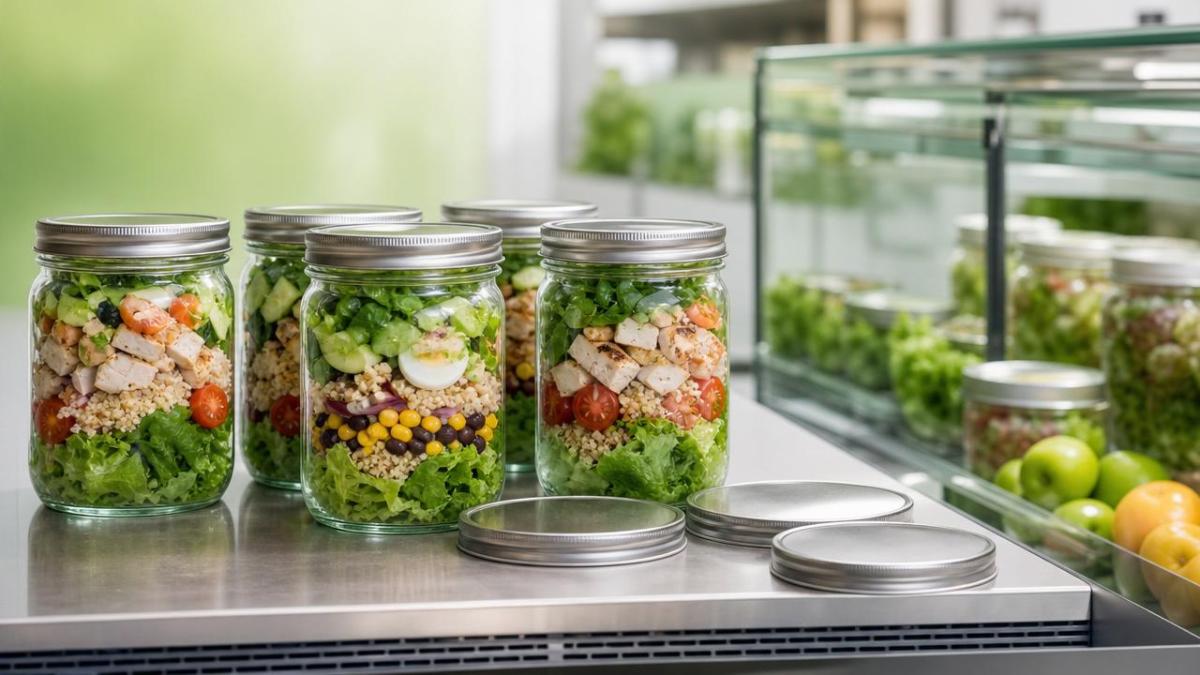
For brands in foodservice and kitchen-related operations, the best results come from comparing operational fit, safety, and market impact together. The glass salad jar often performs well, but only when the full process is reviewed.
Core checklist: how to evaluate a glass salad jar effectively
- Check product compatibility first. Confirm the glass salad jar preserves texture, layered presentation, dressing separation, and cold storage stability without affecting flavor or freshness.
- Measure filling efficiency. Review whether current kitchen equipment, portioning tools, and staff workflows can fill the glass salad jar consistently without slowing output.
- Verify lid performance. Test sealing strength, leak resistance, tamper options, and repeated opening behavior to protect ready-to-eat salads during transport and display.
- Compare shelf presentation. Assess label visibility, ingredient layering, color impact, and transparency to see whether the glass salad jar improves premium positioning.
- Review weight and handling. Glass improves rigidity, but added weight changes carton design, pallet loading, manual handling, and delivery cost calculations.
- Test food safety standards. Confirm the glass salad jar works with sanitation protocols, wash cycles, filling temperatures, and compliance documentation for target markets.
- Analyze breakage risk. Simulate warehouse movement, refrigerated transport, and retail handling to understand protection needs and acceptable damage rates.
- Calculate lifecycle value. Include reuse potential, return systems, reduced odor retention, and waste reduction rather than comparing only unit purchase price.
- Align with sustainability claims. Ensure any environmental messaging about the glass salad jar matches actual recycling access, reuse programs, and packaging recovery systems.
- Confirm supply stability. Evaluate sourcing capacity, lead times, MOQ levels, and replacement consistency so operations are not disrupted during growth periods.
Why more brands are choosing the glass salad jar now
Consumer expectations have changed. Many buyers now connect clear packaging with freshness, honesty, and premium quality. A glass salad jar shows ingredient layers directly, which supports trust at first glance.
This matters in deli retail, grab-and-go meal programs, hotel food displays, and direct-to-consumer prepared meals. Visual appeal often drives impulse purchases, especially when colorful vegetables, grains, and proteins are neatly stacked.
The glass salad jar also aligns with stronger interest in reusable and recyclable packaging. In many markets, sustainability is no longer a side message. It influences repeat orders, menu positioning, and partnership decisions.
At the same time, modern kitchen equipment and filling solutions are making glass easier to handle. Better capping systems, improved conveyor integration, and stronger secondary packaging reduce some of the barriers that once limited adoption.
Application notes across common operating scenarios
Restaurants and café takeaway programs
For quick-service and premium takeaway menus, the glass salad jar supports portion control and visual consistency. It works especially well for layered salads, overnight oats, fruit mixes, and cold noodle formats.
Success depends on speed at assembly stations. If prep lines are tight, wide-mouth jar designs and pre-portioned ingredients help maintain flow without adding labor pressure.
Hotels, buffet service, and event catering
In hospitality, a glass salad jar adds a refined look while improving hygiene. Individual portions reduce open-food exposure and create cleaner presentation for breakfast bars, conference meals, and room-service cold items.
The key requirement is wash and reuse discipline. Jar recovery, sanitation turnaround, and storage space must be mapped before scaling the format across multiple service points.
Retail chilled meals and supermarket merchandising
Retail programs benefit from the visibility of a glass salad jar because color contrast sells freshness. Labels can remain minimal while the product itself carries much of the marketing message.
However, shelf testing is essential. Facing depth, cooler spacing, barcode placement, and case-pack stability all influence whether the format performs smoothly at store level.
Central kitchens and meal-prep operations
Large-scale prep facilities may adopt a glass salad jar for premium product lines or subscription meals. Standardized filling, chilled holding, and recipe repeatability can make the format commercially viable.
The main advantage here is consistency. The main challenge is logistics. Protective packaging and efficient crate design become critical when volume rises.
Commonly overlooked issues and risk alerts
Ignore lid-material compatibility and problems appear quickly. A high-quality glass salad jar still fails if the closure allows leaks, odor transfer, or weak tamper evidence.
Underestimate training needs and line performance drops. Staff must understand fill levels, sealing torque, jar handling, and packing methods to avoid waste and inconsistency.
Focus only on sustainability messaging and credibility suffers. If the glass salad jar is promoted as eco-friendly, recovery, cleaning, or recycling pathways must be realistic.
Skip transport testing and hidden costs rise. Glass breakage often appears not in production, but during last-mile delivery, chilled distribution, or retail shelf replenishment.
Choose appearance over ergonomics and repeat purchase can suffer. A jar that looks elegant but feels hard to open, heavy to carry, or awkward to eat from reduces user satisfaction.
Practical execution steps for a successful switch
- Start with one SKU and one channel, then compare waste, handling time, sales lift, and complaint rates against the current package.
- Run cold-chain and leak tests using real recipes, actual dressings, and normal transport conditions rather than lab-only assumptions.
- Standardize jar size, lid type, and label area to simplify procurement, storage, and workflow training across sites.
- Adjust secondary packaging early, including dividers, trays, and pallet patterns, to protect every glass salad jar in transit.
- Track total cost per usable unit, including returns, breakage, cleaning, and merchandising effect, before final rollout.
Conclusion and next action
The rise of the glass salad jar is not a passing design trend. It reflects a wider move across the kitchen equipment and food packaging market toward safer materials, stronger visual merchandising, and more responsible resource use.
When evaluated with a clear checklist, the glass salad jar can support product quality, brand differentiation, and operational improvement at the same time. The best next step is to test the format under real production, storage, and delivery conditions, then scale only after measurable results confirm the fit.
Popular Tags
Kitchen Industry Research Team
Dedicated to analyzing emerging trends and technological shifts in the global hospitality and foodservice infrastructure sector.
Industry Insights
Join 15,000+ industry professionals. Get the latest market trends and tech news delivered weekly.
No spam. Unsubscribe anytime.

Contact With us
Contact:
Anne Yin (Ceramics Dinnerware/Glassware)
Lucky Zhai(Flatware)