
How to compare a glass storage container manufacturer
Choosing the right glass storage container manufacturer can directly impact product quality, supply stability, and long-term brand competitiveness. For business decision-makers in the kitchen equipment industry, comparing manufacturers requires more than reviewing price alone—it involves assessing production capacity, quality standards, customization options, compliance, and global delivery capabilities. This guide will help you identify the key factors that matter when selecting a reliable manufacturing partner.
In B2B kitchen equipment sourcing, glass containers are not simple accessories. They affect food safety, shelf presentation, logistics costs, replacement rates, and customer satisfaction across restaurants, retail brands, food processors, and homeware distributors.
A structured comparison process helps procurement teams reduce risk before committing to a supplier for 12 months, 24 months, or longer. It also improves negotiation leverage when discussing MOQ, tooling, lead times, and after-sales support.
Why manufacturer comparison matters in the kitchen equipment supply chain
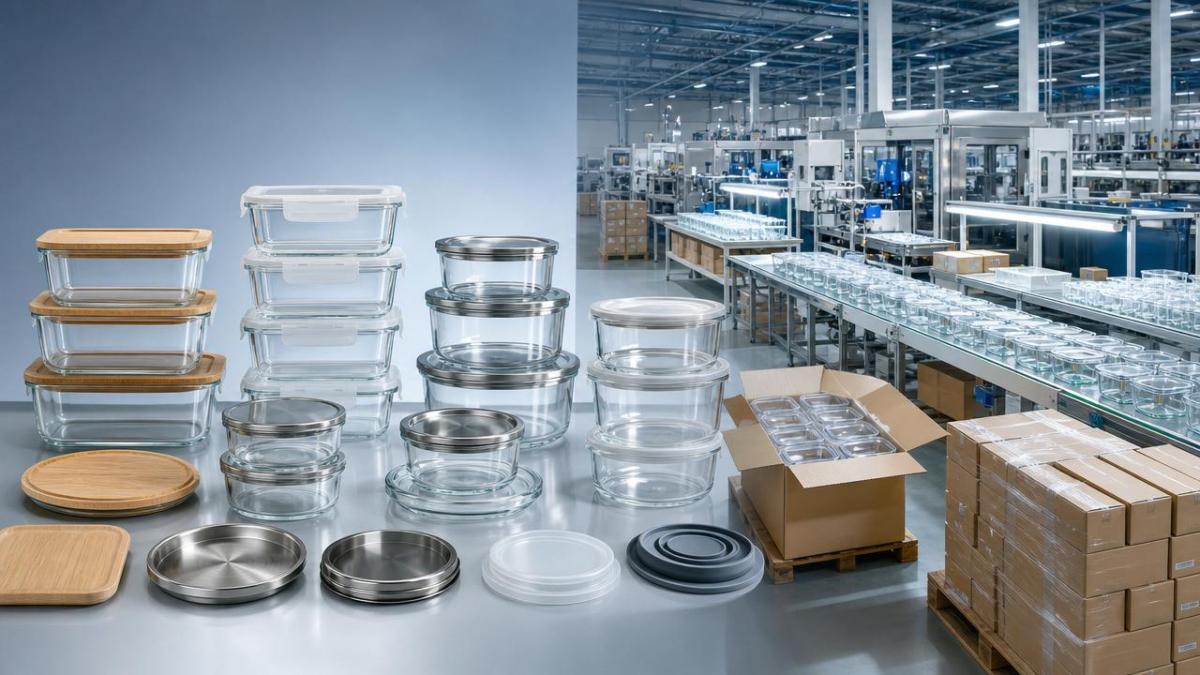
A glass storage container manufacturer serves multiple commercial needs at once: safe food contact, repeatable sizing, reliable sealing performance, and stable packaging for domestic or export shipping. A weak supplier in any one of these areas can create cost leakage throughout the chain.
For example, if dimensional tolerance drifts beyond a practical range such as ±1.0 mm, lids may not fit consistently. If thermal shock resistance is inadequate, breakage can increase during kitchen use, especially in environments moving between chilled storage and hot washing cycles.
Where poor supplier selection creates hidden cost
- Higher breakage rates during transport, warehousing, or daily use
- Inconsistent lid fit causing leakage complaints and returns
- Delays of 2–6 weeks due to unstable furnace scheduling or packaging shortages
- Extra compliance risk in markets requiring food-contact declarations and labeling accuracy
- Low flexibility when demand spikes by 20%–30% during seasonal sales periods
Typical buyer profiles that need deeper comparison
The need to compare a glass storage container manufacturer becomes more critical for importers, private-label kitchenware brands, supermarket suppliers, hospitality procurement groups, and foodservice distributors. These buyers usually manage volume targets, product consistency, and margin control across several markets.
In these cases, the right partner must support not just one product, but a program covering 3 to 10 container sizes, multiple lid materials, barcode labeling, and packaging variants for e-commerce, retail shelves, or wholesale cartons.
The core criteria to compare a glass storage container manufacturer
The most effective way to compare suppliers is to use a scorecard built around operational, technical, and commercial factors. Price matters, but it should sit beside at least 6 other dimensions to give a realistic sourcing picture.
1. Production capacity and scheduling stability
Start by asking about monthly output, batch size flexibility, and peak-season loading. A capable glass storage container manufacturer should explain whether it can support low-volume trial orders and larger repeat runs without pushing lead times from 30 days to 60 days unexpectedly.
You should also confirm how many production lines are dedicated to pressed glass, borosilicate items, decoration, and lid assembly. A factory with only one core line may offer lower prices but higher disruption risk if maintenance or raw material issues occur.
2. Material quality and product performance
Material choice directly influences application fit. Soda-lime glass may work well for mainstream food storage, while borosilicate glass is often preferred for better thermal performance. Buyers should compare wall thickness consistency, clarity, edge finishing, and impact resistance under normal handling.
For lids, review whether the supplier offers PP, bamboo, stainless steel, or silicone-sealed systems. Leakage testing, stackability, and odor resistance are important if the containers are targeted at premium retail or intensive commercial kitchen use.
3. Customization and product development capability
Many B2B buyers need branding support beyond standard catalog items. Compare whether the manufacturer can provide logo decoration, custom embossing, sleeve packaging, color box design, or mold development for unique shapes in 45–90 days, depending on complexity.
If your business model includes private label or differentiated SKUs, prototype support matters. Ask how many sample rounds are included, whether 3D drawings are available, and how tooling changes affect unit cost and minimum order quantity.
4. Quality control and defect management
A reliable glass storage container manufacturer should describe inspection points from raw material feeding to final packing. Practical checkpoints include dimension checks, visual defect screening, lid fit verification, packaging drop resistance, and random carton audits before shipment.
Defect response is equally important. Buyers should ask what happens if the breakage rate exceeds an agreed threshold, such as 1%–3% on arrival, and how replacement, credit, or claim resolution is handled within 7–15 working days.
The comparison table below helps decision-makers evaluate suppliers using practical B2B purchasing criteria rather than headline pricing alone.
This framework makes it easier to compare a glass storage container manufacturer on measurable business value. A slightly higher unit cost can be justified when it reduces replacement claims, protects delivery commitments, and supports long-term product line expansion.
How to verify quality, compliance, and export readiness
Verification should move from documents to samples and then to process review. Decision-makers often lose time by checking certifications first but ignoring whether day-to-day production actually matches the claimed standard.
Document review before trial orders
Ask for recent product specifications, packaging specifications, and food-contact declarations relevant to target markets. Also review carton marks, barcode process, pallet standards, and whether the factory can support multilingual packaging where required.
A strong glass storage container manufacturer should provide a clear sample approval workflow, production confirmation sheet, and claim handling process. These documents help reduce disagreements once production starts.
Sample checks that buyers should not skip
- Measure 3–5 critical dimensions on each sample size
- Test lid opening and closing for at least 20 cycles
- Check leakage after 30 minutes in inverted or tilted position
- Inspect seams, rim smoothness, and bubble visibility under light
- Review packaging drop protection for parcel and pallet transport
Factory audit and process visibility
If annual purchasing value is meaningful, an on-site or third-party audit is worth considering. Review furnace area discipline, annealing control, assembly workflow, and finished goods storage. Even a 1-day visit can reveal whether the supplier operates with repeatable process control or relies on manual correction.
It is also useful to ask about traceability. Can the supplier connect finished cartons to production dates, line numbers, or inspection lots? This becomes important if you need fast root-cause analysis for breakage or fit complaints.
The table below summarizes a practical verification checklist for comparing export-oriented suppliers.
When these basics are verified, comparing a glass storage container manufacturer becomes more objective. You are no longer choosing based on presentation quality alone, but on the supplier’s ability to perform consistently across real delivery conditions.
Commercial terms, risk control, and total landed cost
Many buyers focus on unit price while overlooking the cost drivers around freight efficiency, packaging density, and claims management. In reality, total landed cost often depends on 5 variables: unit price, packaging configuration, breakage rate, lead time reliability, and replenishment flexibility.
Look beyond quoted price
A lower quote may come with thinner cartons, less stable dividers, or higher MOQ. That can tie up cash and increase warehouse pressure. For importers handling mixed kitchen equipment lines, inventory turns are often as important as factory price.
Ask for itemized quotations that separate product price, lid option, decoration cost, packaging upgrade, mold charge, and sampling fee. This makes supplier comparison cleaner and avoids hidden charges after artwork approval.
Risk control questions procurement teams should ask
- What is the MOQ per size, color box design, or custom logo run?
- Can mixed-size orders be combined in one shipment or one container?
- What is the policy for delayed delivery beyond 7 days or 14 days?
- How are transit breakage claims documented and resolved?
- Is there flexibility for forecast changes of 10%–15% close to ship date?
Red flags during quotation comparison
Be cautious if a supplier cannot explain packaging structure, avoids tolerance discussions, or gives lead times that seem unusually short without clarifying stock status. Another warning sign is inconsistent communication between sales, engineering, and quality contacts during the sampling phase.
For long-term sourcing, choose a glass storage container manufacturer that offers commercial transparency and operational predictability. This is especially valuable when your business serves retail campaigns, hospitality chains, or recurring foodservice contracts that cannot absorb supply interruption.
A practical selection process for business decision-makers
A disciplined sourcing process usually delivers better results than negotiating with too many factories at once. In most cases, shortlisting 3 suppliers and comparing them across 8–10 criteria is enough to identify the most balanced partner.
Recommended 5-step evaluation process
- Define target product range, market, annual volume, and packaging needs
- Request technical details, documentation, and standard samples
- Score each glass storage container manufacturer on quality, flexibility, and delivery
- Run a trial order with clear acceptance criteria and packaging review
- Approve a long-term supplier only after stable first-cycle performance
How to align sourcing with kitchen equipment market trends
As the kitchen equipment sector moves toward smarter, safer, and more efficient product ecosystems, storage solutions are also expected to support durability, clean design, and better food organization. This means buyers increasingly value stackable forms, modular sizing, and reliable sealing systems that work across home and commercial environments.
Manufacturers that understand these trends are often better positioned to support product roadmap planning, not just current orders. They can help buyers build collections that fit modern kitchen retail, hospitality efficiency, and food-safe storage expectations.
Common mistake to avoid
The biggest mistake is choosing a supplier after a single sample looks good. Samples prove potential, but bulk consistency is the true test. Always connect sample approval with packaging validation, production planning, and written quality expectations before placing volume orders.
Comparing a glass storage container manufacturer effectively means balancing technical fit, commercial clarity, and supply resilience. The best partner is not always the one with the lowest quote, but the one that can deliver consistent quality, manageable lead times, suitable customization, and dependable support as your kitchen equipment business grows.
If you are evaluating suppliers for retail, foodservice, hospitality, or private-label kitchenware programs, now is the right time to build a clearer comparison framework. Contact us to discuss your sourcing criteria, get a tailored product assessment, or explore more solutions for dependable glass storage container supply.
Popular Tags
Kitchen Industry Research Team
Dedicated to analyzing emerging trends and technological shifts in the global hospitality and foodservice infrastructure sector.
Industry Insights
Join 15,000+ industry professionals. Get the latest market trends and tech news delivered weekly.
No spam. Unsubscribe anytime.
Hot Articles
Contact With us
Contact:
Anne Yin (Ceramics Dinnerware/Glassware)
Lucky Zhai(Flatware)