
What makes an airtight glass storage container truly reliable
For technical evaluators, an airtight glass storage container is only as reliable as its seal integrity, material stability, and long-term performance under real kitchen conditions. In commercial and residential applications alike, choosing the right container affects food safety, freshness, operational efficiency, and compliance. This article examines the key factors that determine whether a storage solution can truly deliver consistent, dependable airtight protection.
When professionals assess an airtight glass storage container, the central question is not whether the lid closes firmly on day one. It is whether the entire system maintains performance after repeated use, washing, temperature shifts, handling stress, and contact with food acids, oils, and moisture.
A truly reliable container combines a stable glass body, a precisely engineered lid, a durable gasket, and manufacturing consistency. If any of these elements underperform, airtight claims become difficult to trust in practical kitchen environments where reliability depends on repeatability rather than marketing language.
What technical evaluators should check first when judging airtight reliability
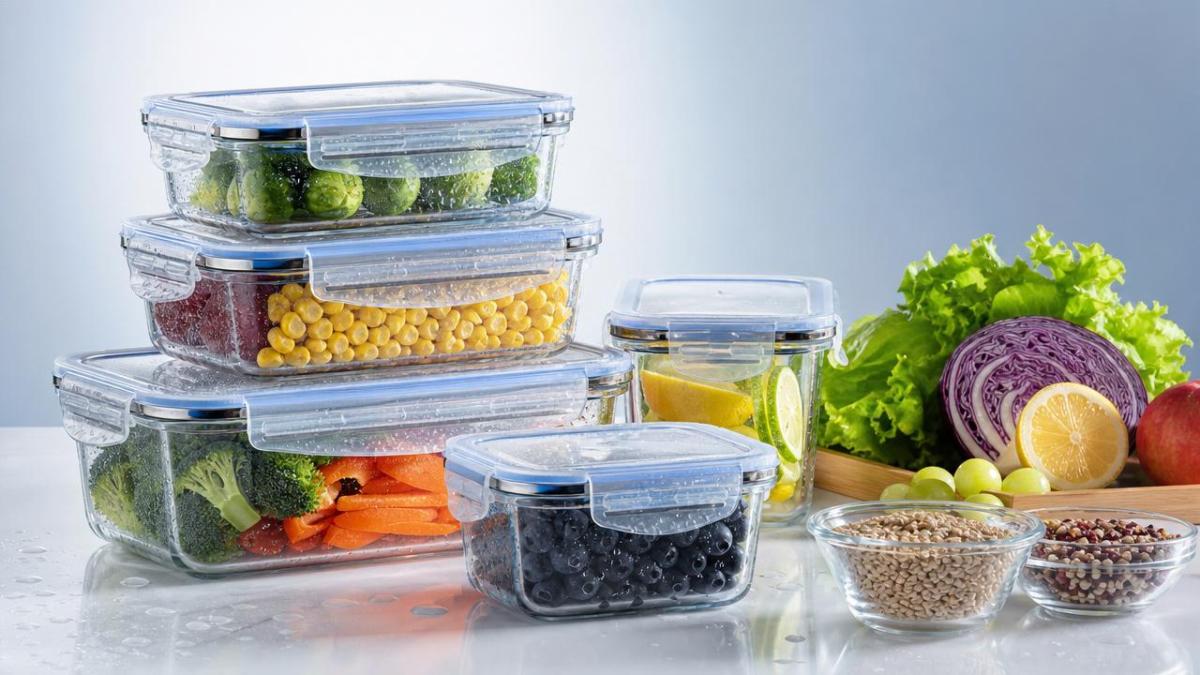
The fastest way to evaluate reliability is to focus on seal performance, dimensional accuracy, and lifecycle durability. These factors reveal much more than appearance, capacity, or brand positioning, especially when the container is intended for frequent operational use.
In technical terms, airtight performance depends on controlled compression between the lid and the container rim. The closure must apply even pressure, and the sealing interface must resist deformation. A container that feels tight initially may still fail if tolerances are inconsistent.
Evaluators should also ask whether performance data exists beyond basic product descriptions. Useful evidence includes leak resistance under inversion, seal retention after repeated opening cycles, dishwasher resistance, thermal shock tolerance, and gasket aging behavior over time.
For procurement or product qualification teams, a reliable airtight glass storage container should therefore be judged as a system. The glass, sealing material, lid locking mechanism, and production quality control all contribute to whether the airtight promise remains valid in service.
Seal integrity is the core of true airtight performance
Seal integrity is the single most important factor because it directly determines whether outside air, humidity, and contaminants can enter the container. In food storage applications, this affects freshness retention, odor control, and exposure risk across both commercial and household settings.
A good seal is not defined only by lid tightness. It depends on gasket material quality, gasket geometry, lid stiffness, and contact uniformity around the full rim. Even a small interruption in sealing pressure can reduce performance significantly during long storage periods.
Silicone is commonly preferred for food storage gaskets because it offers flexibility, temperature resistance, and relatively stable aging behavior. However, not all silicone compounds perform equally. Lower-grade formulations may harden, discolor, absorb odor, or lose elasticity after repeated wash cycles.
Technical evaluators should inspect whether the gasket is removable, securely seated, and easy to clean. A poorly fitted gasket may twist during closure or cleaning, creating leak paths. Hygienic design matters because trapped residue can compromise both sanitation and sealing consistency.
The lid structure also deserves attention. Flexible plastic lids can warp over time, especially under heat exposure. A lid that bends under compression may reduce gasket contact pressure. More rigid lid assemblies often support more stable seal performance over repeated use cycles.
Glass quality determines structural stability and long-term usability
Glass is often chosen for its non-reactive surface, odor resistance, and visibility. Yet not every glass container offers the same reliability. Technical evaluators should distinguish between ordinary soda-lime glass and strengthened or borosilicate glass depending on the intended application.
Borosilicate glass is typically valued for better thermal shock resistance, making it suitable for transitions between refrigeration, room temperature, and moderate heating environments. Strengthened soda-lime glass can also perform well, but its reliability depends heavily on processing quality and thickness control.
The rim finish is especially important. If the sealing edge is uneven, chipped, or dimensionally inconsistent, the gasket cannot compress evenly. This creates localized failure points. A high-quality airtight glass storage container requires precise rim geometry as much as strong body construction.
Wall thickness consistency affects durability and handling confidence. Excessive variation can increase breakage risk under impact or temperature stress. For evaluators working in commercial kitchens or food processing support environments, resistance to routine knocks and stack pressure is a practical concern.
Surface quality should also be checked for bubbles, inclusions, edge defects, and visible stress marks. These may indicate weak process control. Even if such defects do not cause immediate failure, they can reduce service life and undermine confidence in the product’s repeatable performance.
Why lid design and closure mechanics matter more than many buyers expect
Many purchasing decisions focus on the glass body because it is the most visible component. In reality, lid engineering often determines whether the product performs well after months of use. The closure mechanism must repeatedly generate reliable sealing force without becoming loose or misaligned.
Snap-lock lids, clamp systems, and press-fit designs each have advantages, but reliability depends on execution. Poorly aligned latches can produce uneven pressure. Weak hinge areas can fatigue. Overly stiff closures may encourage user misuse or cause premature stress on the lid assembly.
Technical evaluators should examine whether the lock points distribute force symmetrically. Containers with multiple latching points often provide better pressure balance, but only when molding and assembly tolerances are well controlled. More latches do not automatically mean better airtight performance.
User interaction also matters in real environments. If a lid is difficult to seat correctly, operators may close it incompletely. That creates a field reliability issue even if laboratory sealing performance is acceptable. Good design should make correct closure intuitive and repeatable.
Another concern is creep and fatigue in polymer lid components. Repeated dishwasher heat, storage under compression, and daily opening cycles can gradually change the lid shape. Evaluators should consider whether the material and geometry are robust enough for the expected service profile.
How to assess durability under real kitchen conditions
Reliability claims should always be tested against actual use conditions. Kitchen environments expose containers to frequent washing, cold storage, humidity, handling drops, food residue, stacking loads, and occasional thermal stress. A product that passes a simple leak check may still underperform operationally.
Repeated opening and closing is one of the clearest lifecycle indicators. Seal degradation often appears gradually through reduced gasket elasticity, latch wear, or lid distortion. Cycle testing helps evaluators determine whether airtight performance remains stable after realistic use volumes rather than initial inspection only.
Dishwasher resistance is another important screening factor. Heat, detergent chemistry, and mechanical agitation can affect lid plastics, gasket surfaces, and printed markings. If the product is marketed for dishwasher use, evaluators should verify that sealing performance remains consistent after repeated wash cycles.
Temperature change tolerance matters when containers move between chilled storage and ambient preparation areas. In some cases, users may also place the glass component in microwaves or warm environments. The design should tolerate intended temperature ranges without cracking, warping, or seal loss.
Stackability under load can also influence long-term reliability. In central kitchens, restaurants, and organized home storage systems, containers are often stacked. Poorly designed lids may deform under weight, affecting the seal. Structural support features should be reviewed as part of technical evaluation.
Food safety, hygiene, and compliance are part of reliability
For technical evaluators, reliability is not limited to air retention. It also includes safe material behavior, cleanability, and regulatory suitability. A container that seals well but traps residue, sheds particles, or uses questionable food-contact materials cannot be considered truly dependable.
Glass generally performs well in food-contact applications because it is non-porous and chemically stable. However, lid materials, colorants, coatings, and gasket compounds must also meet relevant food-contact requirements in target markets. Documentation should be requested, not assumed.
Cleanability is critical because food residue around the gasket channel can promote odor, staining, and hygiene issues. Designs with inaccessible corners or deep crevices may create maintenance burdens. A reliable airtight glass storage container should support both sealing performance and practical sanitation.
Odor retention and stain resistance are also useful indicators of long-term usability. While glass resists odor well, silicone and lid polymers vary. In kitchens handling spices, sauces, oils, and fermented products, material behavior under repeated exposure can affect both user satisfaction and hygiene confidence.
Where commercial food operations are involved, evaluators may also consider compatibility with internal quality systems, labeling workflows, traceability needs, and storage rotation practices. Reliability is stronger when the container supports smooth operational control rather than creating handling exceptions or sanitation concerns.
Common failure modes that reveal an unreliable product
Technical evaluators can often identify weak products by looking for predictable failure patterns. One common issue is progressive leakage after repeated use, usually caused by gasket fatigue, lid warpage, or latch loosening. These failures rarely appear during quick showroom inspections.
Another warning sign is inconsistency between units. If some containers close smoothly while others require force or show uneven latch engagement, production tolerances may be unstable. Airtight performance depends heavily on dimensional consistency, so batch variation should be treated as a significant risk.
Cracking near corners, rim chips, and stress sensitivity indicate insufficient glass robustness or poor finishing control. Even small rim damage can compromise sealing. In technical evaluation, edge durability deserves close attention because the rim is both a structural and sealing-critical feature.
Gaskets that fall out easily, absorb strong odor, or become sticky after washing signal material or design weakness. Likewise, lids that discolor, warp, or become brittle suggest poor resistance to heat and detergent exposure. These symptoms usually predict short service life and rising replacement costs.
Users may also report practical issues such as trapped water, difficult cleaning, or closures that pinch fingers. These are not minor inconveniences. They often lead to improper use, reduced sanitation compliance, and lower real-world seal reliability, especially in busy kitchens with multiple operators.
How to compare products and make a sound evaluation decision
To compare options effectively, evaluators should use a structured scoring approach rather than rely on isolated product claims. The most useful criteria include seal retention, material quality, dimensional consistency, durability testing results, cleanability, food-contact documentation, and total lifecycle suitability.
Ask suppliers for specific evidence. Useful documents may include material declarations, food-contact compliance statements, internal cycle-test data, impact or thermal resistance information, and quality control procedures for sealing dimensions. Serious manufacturers are usually prepared to provide technical support beyond marketing brochures.
If samples are available, a practical validation protocol should include leak testing, repeated closure cycles, dishwasher simulation, visual inspection after thermal changes, and sanitation review around gasket seating areas. Even a modest in-house protocol can reveal large differences between similar-looking products.
It is also important to match the product with the use scenario. A container suitable for occasional household storage may not be ideal for high-frequency restaurant prep, commissary operations, or food processing support. Reliability should always be defined relative to the service conditions expected.
From a cost perspective, the lowest unit price rarely delivers the best value when seal failure causes food waste, rehandling, hygiene concerns, or frequent replacement. For technical evaluators, a reliable airtight glass storage container is often the one with the strongest performance stability over time.
Final judgment: what truly makes an airtight glass storage container reliable
A truly reliable airtight glass storage container is defined by consistent seal integrity, stable food-safe materials, durable closure mechanics, and proven performance under repeated real-world use. It must do more than close firmly once. It must keep doing its job predictably over time.
For technical evaluators, the best judgment framework is straightforward. Verify the sealing system, inspect glass and rim quality, review lid durability, confirm hygiene and compliance suitability, and test performance under realistic operating conditions. Reliability emerges from evidence, not from labeling alone.
In a market where kitchen equipment is increasingly expected to support safety, efficiency, and long-term value, careful container evaluation matters more than it may first appear. The right product helps protect food quality, reduce waste, simplify handling, and support dependable kitchen workflows across many applications.
Ultimately, if a supplier can demonstrate repeatable sealing performance, robust material selection, and sound manufacturing control, the container is far more likely to justify confidence. That is what makes an airtight glass storage container truly reliable in both technical assessment and daily use.
Popular Tags
Kitchen Industry Research Team
Dedicated to analyzing emerging trends and technological shifts in the global hospitality and foodservice infrastructure sector.
Industry Insights
Join 15,000+ industry professionals. Get the latest market trends and tech news delivered weekly.
No spam. Unsubscribe anytime.
Hot Articles
Contact With us
Contact:
Anne Yin (Ceramics Dinnerware/Glassware)
Lucky Zhai(Flatware)