
Kitchen Manufacturing Process Explained: From Material Selection to Quality Control
Kitchen Manufacturing Process Explained: From Material Selection to Quality Control
Understanding the kitchen manufacturing process is essential when evaluating product reliability, compliance, and production capability.
Every step shapes durability, hygiene, safety, and long-term operating cost.
In modern kitchen manufacturing, strong output depends on controlled materials, repeatable fabrication, disciplined assembly, and measurable quality control.
That matters even more now, as buyers expect energy efficiency, smart integration, and compliance across global markets.
Why the Kitchen Manufacturing Process Starts With Material Strategy
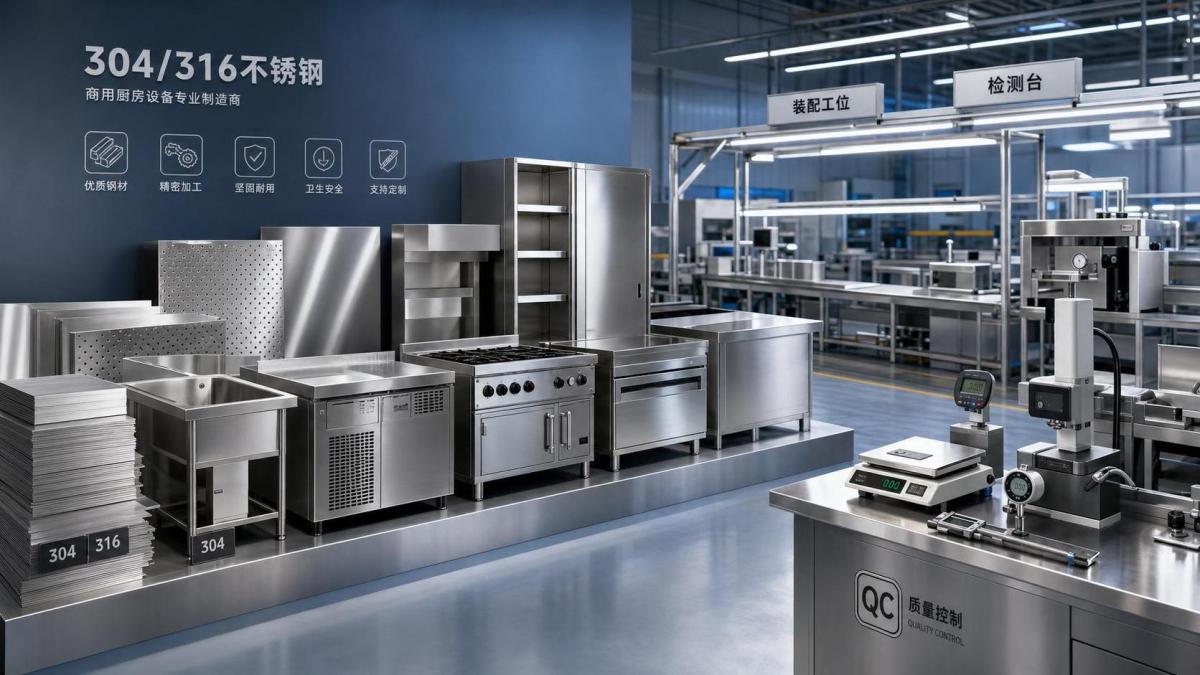
The first decision in kitchen manufacturing is not shape or finish. It is material selection.
Commercial kitchen equipment usually relies on stainless steel, aluminum, coated steel, engineered plastics, glass, copper, and food-contact elastomers.
Among these, stainless steel remains the dominant choice for foodservice applications.
Grades such as 304 and 316 are valued for corrosion resistance, cleanability, and mechanical stability.
In actual factory decisions, material choice depends on four questions.
- Will the part contact food, water, steam, oil, or cleaning chemicals?
- Does the component face heat cycling, impact, or vibration?
- What hygiene standard or market regulation applies?
- Can the chosen material support efficient fabrication at scale?
This is where technical evaluation becomes practical.
A lower-cost sheet may reduce procurement expense, yet increase weld distortion, surface defects, or rust risk later.
So, the kitchen manufacturing process begins with material certificates, supplier qualification, and incoming inspection.
What evaluators should verify at this stage
- Mill test certificates and traceability by batch
- Thickness tolerance and flatness consistency
- Surface finish requirements for visible and food-contact areas
- Food safety compliance for seals, coatings, and plastics
Core Fabrication Steps in Kitchen Manufacturing
Once materials are approved, the kitchen manufacturing flow moves into fabrication.
This stage converts design data into real parts with controlled dimensions and stable repeatability.
For stainless steel kitchen equipment, fabrication usually includes cutting, punching, bending, welding, grinding, polishing, and surface treatment.
1. Cutting and blank preparation
Laser cutting is widely used because it supports high precision and flexible part geometry.
For thicker materials or cost-sensitive parts, plasma cutting or shearing may still be used.
Good kitchen manufacturing keeps burrs low and nesting efficient to reduce waste.
2. Forming and bending
Press brakes shape panels, frames, enclosures, and structural supports.
At this point, tooling accuracy directly affects fit-up quality during assembly.
Inconsistent bend angles can create gaps, weak seams, and difficult door alignment.
3. Welding and joining
TIG welding is common in kitchen manufacturing because it offers cleaner joints and better finish control.
Spot welding, riveting, bolting, and adhesive bonding may also appear, depending on product design.
Weld quality matters beyond appearance. It influences corrosion resistance, cleanability, and structural strength.
4. Surface finishing
Grinding, brushing, polishing, passivation, and coating create the final surface condition.
This stage is often underestimated, yet it strongly affects cleanability and visual acceptance.
Rough or uneven surfaces can trap residue, raise sanitation concerns, and weaken perceived quality.
Assembly, Electrical Integration, and Functional Build Quality
After fabrication, kitchen manufacturing shifts from parts to systems.
This stage includes mechanical assembly, electrical wiring, thermal insulation, control installation, and accessory fitting.
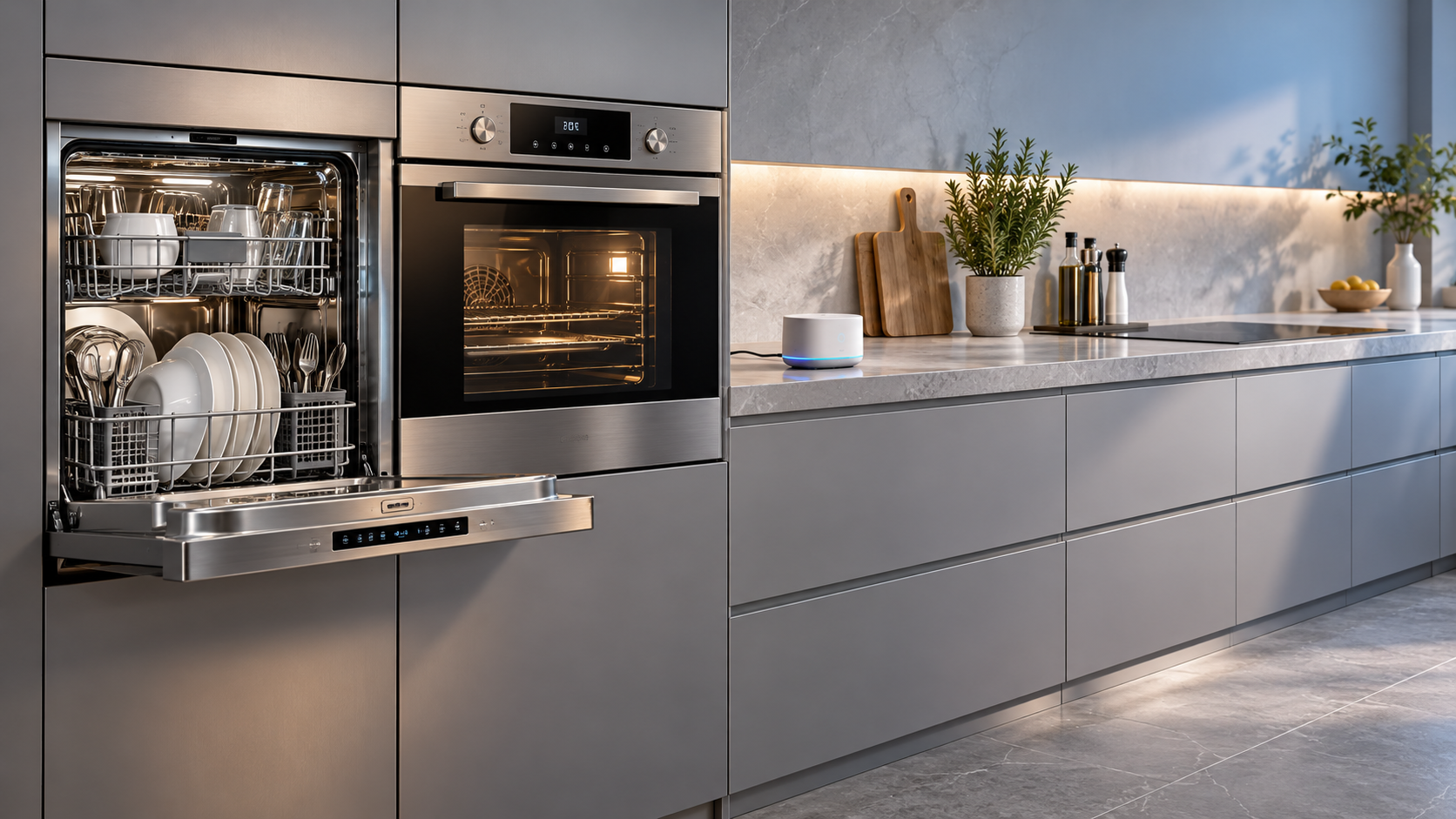
For smart kitchen equipment, software, sensors, displays, and communication modules also enter the process.
More recent projects show a clear shift toward digital controls and connected diagnostics.
That means kitchen manufacturing now requires coordination between metal fabrication, electronics, firmware, and compliance testing.
Key checkpoints during assembly
- Fastener torque consistency and anti-loosening measures
- Cable routing, insulation protection, and connector reliability
- Door, hinge, latch, and drawer alignment
- Seal integrity for heat, moisture, and hygiene control
- Calibration of thermostats, sensors, timers, and control boards
A capable kitchen manufacturing line treats assembly as a controlled process, not a manual correction stage.
If parts need heavy adjustment during fit-up, the root cause usually sits earlier in fabrication or design control.
Quality Control Standards Across the Kitchen Manufacturing Flow
Quality control is not one final inspection table.
In strong kitchen manufacturing systems, quality is built into each process gate.
This usually starts with incoming quality control, then continues through in-process checks, final testing, and shipment release.
Typical quality control structure
- Incoming inspection for materials, purchased parts, and electrical components
- First article verification before batch production begins
- In-process inspection for dimensions, welds, finishes, and assembly points
- Functional testing for heat, airflow, motors, controls, and safety devices
- Final visual, packaging, labeling, and traceability review
Depending on the product, kitchen manufacturing may also require leakage tests, load tests, endurance tests, grounding checks, and temperature uniformity validation.
For export programs, compliance can include CE, UL, NSF, RoHS, LFGB, or local food-contact regulations.
The strongest signal is not just passing tests once.
It is a repeatable system with records, corrective action loops, and measurable process capability.
Useful documents to request
How to Evaluate Manufacturing Capability Beyond the Factory Tour
A clean workshop alone does not prove strong kitchen manufacturing capability.
Real evaluation should connect process design, operator discipline, equipment condition, and quality data.
In practice, a few indicators reveal maturity faster than promotional claims.
- Stable routing sheets and revision-controlled drawings
- Clear rework limits and defect escalation rules
- Production balance between automation and skilled manual operations
- Supplier control for motors, burners, electronics, and insulation parts
- Traceability from raw material to finished unit
One more important signal is how the manufacturer handles change.
As smart kitchen systems grow, product updates happen more often.
Without disciplined engineering change control, the kitchen manufacturing process can drift across batches.
That creates hidden risk in field performance, service compatibility, and certification status.
Final Takeaways for Assessing Kitchen Manufacturing
A reliable kitchen manufacturing system is built on disciplined decisions from the first material check to the last functional test.
Material quality, fabrication precision, assembly control, and documented quality control must work together.
That is especially true for commercial kitchen equipment facing hygiene pressure, energy targets, and smart integration demands.
When reviewing a supplier, focus less on broad claims and more on process evidence.
Ask how kitchen manufacturing is controlled, measured, and improved over time.
That approach makes it easier to judge long-term consistency, compliance readiness, and production resilience before making a sourcing decision.
Popular Tags
Kitchen Industry Research Team
Dedicated to analyzing emerging trends and technological shifts in the global hospitality and foodservice infrastructure sector.
Industry Insights
Join 15,000+ industry professionals. Get the latest market trends and tech news delivered weekly.
No spam. Unsubscribe anytime.

Contact With us
Contact:
Anne Yin (Ceramics Dinnerware/Glassware)
Lucky Zhai(Flatware)