
How does a bakery oven machine affect energy costs?
A bakery oven machine is more than a production asset; it is a long-term operating cost driver.
Energy consumption can shape monthly expenses, profit margins, and return on investment, especially in bakeries with high daily output.
Understanding oven design, insulation, capacity, heating technology, and usage patterns helps evaluate true ownership cost, not purchase price alone.
This article explains how a bakery oven machine affects energy spending and how equipment choices support efficiency and profitability.
How Energy Cost Changes by Bakery Scenario
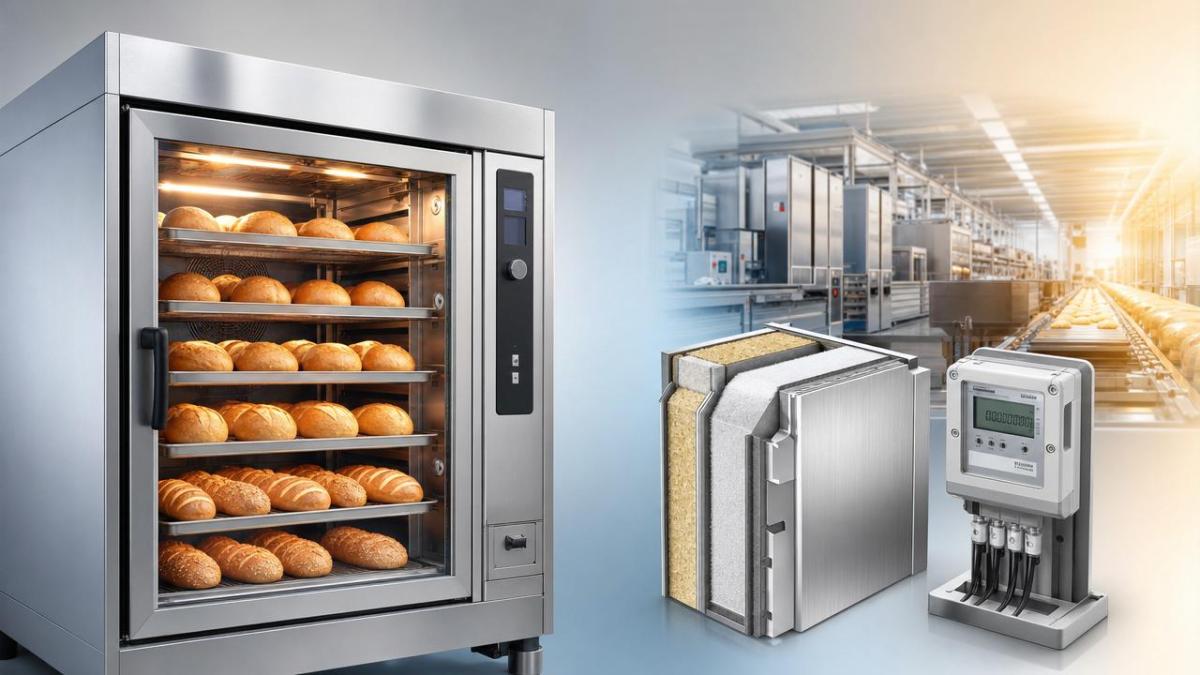
Energy cost is not fixed by the bakery oven machine alone. It changes with production rhythm, product type, and operating discipline.
A small pastry shop, hotel kitchen, central bakery, and frozen dough plant may use similar equipment very differently.
In low-volume settings, standby losses and preheating time often matter more than peak rated power.
In high-volume settings, heat recovery, chamber loading, airflow balance, and continuous baking efficiency become more important.
The same bakery oven machine can deliver different utility results when baking schedules, batch sizes, and door-opening habits differ.
Retail Bakeries: Control Idle Time and Preheating Loss
Retail bakeries usually bake several small batches throughout the day. Freshness is important, but fragmented production increases energy waste.
A bakery oven machine in this setting often spends long periods warming up, waiting, or holding temperature between batches.
The main cost driver is not always baking time. It is the gap between useful heat and unused heat.
Compact deck ovens, convection ovens, or combination units may reduce waste if they match daily batch size.
Oversized equipment can look flexible, but a half-loaded bakery oven machine usually consumes more energy per tray.
Useful judgment points include preheating speed, insulation thickness, chamber zoning, and programmable standby modes.
For shops with morning peaks, rapid recovery after loading can reduce total run time and improve product consistency.
Hotels and Restaurants: Match Menu Variety with Flexible Heating
Hotels and restaurants often use bakery equipment for bread, desserts, breakfast items, and banquet service.
The bakery oven machine must handle variety without excessive reheating, manual adjustment, or repeated temperature changes.
Energy cost rises when menus require frequent switching between delicate pastry, crusty bread, and reheated baked goods.
Programmable controls help standardize baking cycles. They also reduce operator errors that waste heat and electricity.
A bakery oven machine with segmented heating or fan-speed control can serve mixed menus more efficiently.
In this scenario, flexibility matters as much as rated efficiency. Unstable operation can create hidden energy loss.
Ventilation should also be considered. Poorly planned exhaust systems can increase kitchen cooling loads significantly.
Central Bakeries: Energy Cost Depends on Throughput Discipline
Central bakeries usually run longer shifts and larger batches. Here, energy cost is closely tied to throughput per hour.
A bakery oven machine with strong thermal stability can reduce quality variation across trays, racks, or conveyor zones.
When production is continuous, heat retention becomes valuable. Frequent temperature cycling is reduced, improving energy performance.
Rack ovens, tunnel ovens, and multi-deck systems can be suitable, depending on product mix and volume.
The wrong capacity choice can be costly. Under-capacity causes overtime, while over-capacity increases idle energy consumption.
A bakery oven machine should be evaluated by energy per kilogram, energy per tray, or energy per sellable unit.
These measurements are more useful than comparing power ratings alone.
Food Processing Facilities: Continuous Baking Requires System Thinking
Food processing plants often connect mixing, proofing, baking, cooling, slicing, and packaging into one production line.
In this environment, the bakery oven machine affects both direct energy use and upstream or downstream efficiency.
If baking speed does not match proofing output, waiting time increases and heat balance becomes unstable.
Tunnel ovens may deliver strong energy efficiency when product flow is consistent and demand is predictable.
However, tunnel systems can waste energy when production changes frequently or line utilization is low.
A bakery oven machine in industrial settings should support data monitoring, temperature zoning, and maintenance-friendly access.
These functions help track actual energy cost and prevent gradual performance decline.
Key Factors That Make a Bakery Oven Machine Expensive to Run
Energy cost is influenced by design details and operating conditions. Several factors deserve careful review before investment.
Insulation and Heat Retention
Good insulation keeps heat inside the chamber. Poor insulation forces burners or heating elements to work harder.
A bakery oven machine with strong insulation also reduces heat released into the kitchen environment.
This may lower air-conditioning demand in warm kitchens, especially in restaurants and hotels.
Capacity and Load Ratio
Capacity should match realistic daily demand. Oversizing increases idle losses and lowers energy efficiency per batch.
A bakery oven machine should operate near an efficient loading range during most production periods.
Heating Technology
Electric, gas, steam-assisted, convection, deck, rotary, and tunnel ovens all have different energy profiles.
The best bakery oven machine depends on local utility rates, baking process, ventilation, and product requirements.
Controls and Automation
Digital controls reduce unnecessary adjustments. Recipe memory can prevent overbaking, reheating, and repeated trial cycles.
Smart standby modes also lower consumption during short production gaps.
Scenario-Based Energy Cost Comparison
This comparison shows why one bakery oven machine cannot be judged by power rating alone.
The operating scene determines whether the equipment saves energy or creates hidden cost.
How to Estimate Real Energy Spending Before Buying
A practical estimate starts with daily production volume, baking temperature, batch duration, and utility price.
The bakery oven machine should be reviewed under expected working conditions, not only ideal laboratory conditions.
- Calculate daily baking hours, including preheating and standby periods.
- Estimate average loading percentage during each production window.
- Compare energy per batch, tray, kilogram, or finished product.
- Include ventilation, cooling, and maintenance-related energy impacts.
- Review whether automation can reduce operator-dependent waste.
A bakery oven machine with a higher purchase price may cost less over time if it lowers monthly utility use.
Payback analysis should include energy savings, labor stability, product yield, and reduced rejected batches.
Common Misjudgments That Increase Utility Bills
One common mistake is selecting a bakery oven machine only for maximum capacity.
Maximum capacity is useful only when production can consistently fill the chamber or line.
Another mistake is ignoring door-opening frequency. Each opening releases heat and forces recovery energy use.
Poor maintenance also raises cost. Worn seals, dirty fans, blocked burners, and inaccurate sensors reduce efficiency.
Some operations also overlook staff training. Incorrect settings can waste more energy than the equipment specification suggests.
A bakery oven machine performs best when equipment design and daily operation support the same production goal.
Scenario Adaptation Suggestions for Lower Energy Cost
The right bakery oven machine should fit both present output and realistic growth plans.
A balanced choice avoids paying for unused capacity while leaving room for controlled expansion.
Maintenance and Operating Habits That Protect Efficiency
Energy efficiency declines when maintenance is delayed. Regular inspection keeps performance closer to original design levels.
Door gaskets should seal properly. Fans should move air evenly. Temperature sensors should remain calibrated.
A bakery oven machine also benefits from planned cleaning, burner checks, and ventilation inspection.
Operating habits matter every day. Grouping batches by temperature can reduce repeated heating and cooling cycles.
Loading the chamber efficiently improves heat use, shortens baking windows, and supports consistent product quality.
Energy logs can reveal unusual increases before they become serious cost problems.
Final Decision: Look Beyond the Purchase Price
A bakery oven machine affects energy costs through design, capacity fit, control precision, and daily usage patterns.
The most efficient option is not always the smallest, largest, or lowest-priced model.
It is the equipment that matches the production scenario with the lowest practical cost per sellable product.
Before choosing a bakery oven machine, document products, batch sizes, operating hours, energy rates, and growth expectations.
Then compare equipment by lifetime operating cost, not only upfront investment.
For the next step, prepare a production profile and request energy-use estimates under real baking conditions.
This approach turns the bakery oven machine from a cost uncertainty into a measurable efficiency investment.
Popular Tags
Kitchen Industry Research Team
Dedicated to analyzing emerging trends and technological shifts in the global hospitality and foodservice infrastructure sector.
Industry Insights
Join 15,000+ industry professionals. Get the latest market trends and tech news delivered weekly.
No spam. Unsubscribe anytime.

Contact With us
Contact:
Anne Yin (Ceramics Dinnerware/Glassware)
Lucky Zhai(Flatware)