
What the latest kitchen trade shifts mean for sourcing in 2026
As the global kitchen trade adapts to shifting demand, smarter technologies, and tighter supply expectations, sourcing strategies for 2026 are entering a new phase. For buyers and market researchers, understanding these changes is essential to evaluating suppliers, managing costs, and identifying reliable opportunities in commercial and household kitchen equipment worldwide.
For sourcing teams, the biggest shift is not a single product trend but a structural change in how kitchen equipment is specified, quoted, tested, and delivered. Commercial kitchens now expect faster throughput, lower energy use, and easier maintenance. Household buyers increasingly compare design, safety, and connected features. Across both segments, the kitchen trade is becoming more data-driven, more compliance-sensitive, and less tolerant of supply uncertainty.
That matters in 2026 because supplier selection is no longer based only on unit price or catalog range. Buyers need to assess lead times, component sourcing, after-sales capacity, and product adaptability across regions. A stainless steel prep table, combi oven, induction cooktop, or automated food processing line may all sit in different price bands, but each now carries hidden sourcing questions tied to standards, spare parts, software support, and logistics resilience.
How the kitchen trade is changing before 2026
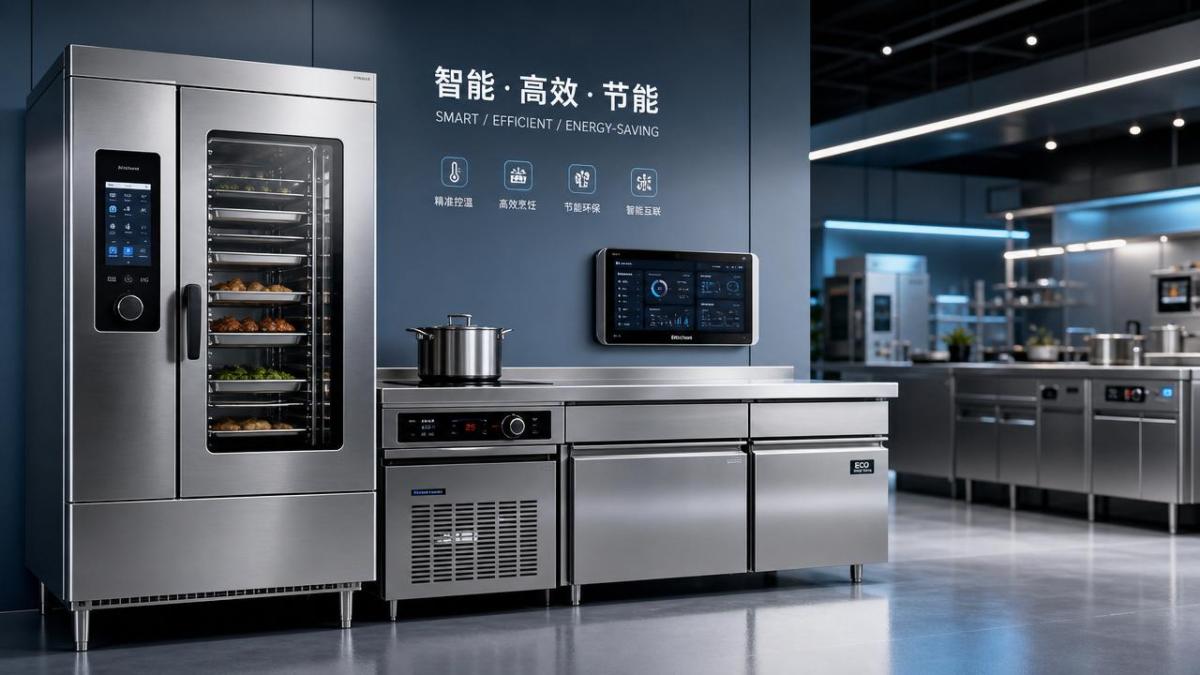
The kitchen trade has entered a period where demand patterns are splitting into at least 3 major tracks: commercial foodservice, food processing, and residential upgrades. Each track has different buying cycles. Hotels and restaurant groups may plan 6–18 months ahead, while distributors of small appliances often work in 60–120 day replenishment windows. This affects how manufacturers allocate production slots and how importers negotiate contracts.
From broad sourcing to category-specific sourcing
A general sourcing strategy is becoming less effective. In the past, buyers could consolidate many kitchen items under one vendor to save time. In 2026, category specialization matters more. Refrigeration equipment, thermal cooking systems, ventilation units, preparation machinery, and smart kitchen controls each have different technical risks, service needs, and compliance demands. A supplier strong in gas ranges may not be equally strong in automated dishwashing or IoT-enabled holding cabinets.
This means sourcing teams should divide suppliers into at least 4 groups: core production equipment, supporting equipment, smallwares and utensils, and smart control systems. That simple framework improves bid comparison and reduces the chance of choosing a vendor whose product line looks broad but lacks depth in critical categories.
Technology is now part of the trade decision
Smart kitchen functions are no longer limited to premium projects. More equipment now includes digital temperature controls, error-code diagnostics, programmable cycles, energy monitoring, or remote access functions. Even when buyers do not need full automation, they increasingly expect baseline digital features that improve consistency and reduce operator error. In practical sourcing terms, software support periods of 2–5 years and spare parts access for 3–7 years are becoming important checkpoints.
Why this matters for buyers
- Technical evaluation takes longer because digital functions must be tested, not just listed.
- After-sales service must cover both mechanical and electrical components.
- Product training becomes more important when equipment includes programmable settings.
- Cross-border orders may require local voltage, plug, gas type, or interface adaptation.
The following table shows how major kitchen trade shifts are changing sourcing priorities for 2026 across common buyer concerns.
The main lesson is that the kitchen trade is becoming less transactional and more qualification-based. Buyers who adapt early will reduce rework, avoid supply gaps, and compare suppliers on performance factors that actually affect operating results.
What sourcing teams should evaluate in 2026
In 2026, a reliable sourcing process for kitchen equipment should combine product review, supplier review, and delivery review. Many purchasing mistakes happen because one of these 3 layers is ignored. A unit may perform well in a showroom but fail to meet local utility conditions. A factory may offer attractive pricing but struggle with documentation or spare parts continuity. Good sourcing requires a broader checklist.
1. Product fit: match specifications to real operating conditions
For commercial kitchen equipment, buyers should check at least 6 specification points before placing an order: power source, operating capacity, temperature range, material grade, cleaning access, and installation footprint. For example, a fryer or combi unit may look similar across suppliers, yet daily output, recovery time, and service access can differ enough to affect labor scheduling and kitchen layout.
In food processing machinery, capacity alignment is especially important. A line designed for 100 kg per hour can create bottlenecks if upstream or downstream systems operate at 150–200 kg per hour. In household kitchen appliances, the mismatch often appears in voltage standards, countertop dimensions, or packaging language requirements.
2. Supplier fit: verify manufacturing and service capability
A practical supplier review should cover 5 areas: production consistency, engineering responsiveness, quality control process, documentation readiness, and after-sales support. Buyers do not always need large-scale audits, but they do need evidence. That can include production photos, sample inspection records, bill of materials confirmation, packing method details, and standard troubleshooting procedures.
For higher-value items such as refrigeration systems, tunnel washers, or automated cooking equipment, it is helpful to ask how many key components are made in-house and how many come from external suppliers. Even a rough split, such as 30% in-house fabrication and 70% outsourced components, helps buyers understand where quality and lead-time risks may arise.
3. Delivery fit: protect the order beyond production
The kitchen trade often underestimates packaging and shipping risk. Stainless steel bodies can dent, glass control panels can crack, and heavy mixers or slicers can shift in transit if crates are underspecified. Ask suppliers to define packaging by product class. Light small appliances may use reinforced cartons, while heavy equipment often needs palletized or plywood protection with corner guards and moisture barriers.
Lead time should also be broken into 3 segments: production, testing, and shipment release. A quoted 45-day lead time is not enough unless the supplier explains how many days are allocated to fabrication, assembly, inspection, and booking. This is especially important when sourcing mixed containers or project orders with 10 or more SKUs.
The table below can be used as a practical sourcing checklist for comparing kitchen trade suppliers in 2026.
A checklist like this turns supplier comparison into a repeatable process. It also helps market researchers distinguish between vendors that are merely active in the kitchen trade and those that are genuinely prepared for project-based international sourcing.
Key risks in kitchen trade sourcing and how to reduce them
Kitchen equipment sourcing looks straightforward until hidden risks affect installation, usability, or total ownership cost. In 2026, the most common risks are likely to come from specification mismatch, compliance gaps, unstable sub-suppliers, and weak service planning. These problems are manageable if buyers address them before order confirmation rather than after arrival.
Specification mismatch remains the costliest mistake
A machine that fits the catalog may still fail in practice. A mixer may be too large for the operator flow. A refrigerator may use refrigerant or electrical settings not suited to the destination market. A conveyorized washing unit may exceed floor loading expectations. Buyers should request dimensional drawings, utility requirements, and maintenance clearance zones as separate files, especially for equipment above 80 kg or with fixed installation points.
Simple prevention steps
- Confirm site conditions before RFQ release.
- Match voltage, frequency, gas type, and water pressure to destination requirements.
- Request operating videos for equipment with moving or heated parts.
- Approve final drawings before mass production.
- Keep one signed specification sheet for purchasing, engineering, and logistics teams.
Compliance and documentation delays can slow market entry
Not every kitchen trade order needs the same document pack, but most international shipments need more than a quotation and invoice. Depending on category and destination, buyers may need electrical safety documents, material declarations, user manuals, carton markings, and cleaning instructions. If these are requested too late, shipment release can be delayed by 1–3 weeks.
This is particularly relevant for products touching food, handling heat, or using pressurized or refrigerant systems. The safest approach is to define document expectations in the purchase order and check them during production, not after the goods are packed.
Service planning is often ignored in export deals
In the kitchen trade, after-sales support is part of the sourcing decision, not a separate issue. If a supplier cannot explain replacement procedures for heating elements, control boards, gaskets, fan motors, or sensors, the buyer may face long downtime after installation. For commercial kitchens operating 12–16 hours per day, even a 48-hour equipment outage can disrupt labor plans and customer service.
A practical solution is to request a basic spare parts package for wear items and high-risk components. The exact list varies by category, but the concept is consistent: source not only the equipment, but also a maintenance path that protects uptime.
Where reliable opportunities are emerging in the kitchen trade
Despite tighter sourcing requirements, 2026 still offers strong opportunities for buyers who focus on the right categories and supplier profiles. The most promising areas are not always the cheapest product groups. Instead, they are segments where demand is stable, product upgrades are meaningful, and supplier differentiation can be verified.
Energy-efficient and labor-saving equipment
Equipment that reduces power consumption, water use, or operator handling time is likely to attract ongoing demand. This includes induction cooking systems, intelligent holding units, automated washing systems, and processing lines with more precise portioning or timing control. Buyers should evaluate not only purchase cost but also operating savings over 12–36 months.
Integrated project sourcing for foodservice expansion
Restaurants, hotels, central kitchens, and institutional catering projects increasingly prefer coordinated equipment packages rather than fragmented purchasing from many vendors. This creates opportunities for suppliers that can combine cooking, refrigeration, preparation, ventilation, and utility planning. For buyers, integrated sourcing may reduce coordination time by several weeks, provided the supplier can manage drawings, packing sequence, and installation logic.
Emerging market demand with localized requirements
Growth in foodservice and food processing in developing regions continues to create space for kitchen trade suppliers, but success depends on localization. Buyers should look for factories able to adapt to different voltages, climate conditions, language needs, and service expectations. A supplier that handles small customization batches, such as label changes or plug variations, may be more valuable than one offering a lower base price with rigid production rules.
A practical sourcing framework for 2026 buyers and researchers
For information researchers and procurement teams, the best response to the changing kitchen trade is a structured decision model. Instead of treating every inquiry as a price comparison, build a 4-step review process: define use case, qualify supplier, validate documentation, and confirm service path. This makes supplier shortlisting faster and produces better long-term decisions.
Recommended 4-step process
- Define the application: commercial kitchen, food processing, distribution, or household retail.
- List critical specifications: capacity, energy type, dimensions, control level, and cleaning needs.
- Screen suppliers using 5 criteria: product depth, lead time transparency, quality evidence, document readiness, and service support.
- Run a final risk check on packaging, spare parts, and installation conditions before payment release.
Questions worth asking suppliers
- Which components have the longest replenishment cycle?
- What is the standard lead time range for repeat orders versus first orders?
- Can the factory support destination-specific electrical or labeling changes?
- What spare parts are recommended for the first 12 months of operation?
- How are finished goods tested before packing?
The kitchen trade in 2026 will reward buyers who source with more precision, not just more volume. Strong decisions will come from understanding category differences, asking better technical questions, and comparing suppliers on delivery reliability, documentation quality, and service readiness. Whether the need is commercial kitchen equipment, food processing machinery, restaurant appliances, or household kitchen solutions, a well-structured sourcing approach reduces uncertainty and improves long-term value.
If you are evaluating suppliers, building a sourcing list, or planning a 2026 kitchen equipment procurement strategy, now is the right time to review your requirements in detail. Contact us to discuss product specifications, sourcing options, and customized solutions for your target market, or learn more about practical kitchen trade opportunities that align with your business goals.
Popular Tags
Kitchen Industry Research Team
Dedicated to analyzing emerging trends and technological shifts in the global hospitality and foodservice infrastructure sector.
Industry Insights
Join 15,000+ industry professionals. Get the latest market trends and tech news delivered weekly.
No spam. Unsubscribe anytime.

Contact With us
Contact:
Anne Yin (Ceramics Dinnerware/Glassware)
Lucky Zhai(Flatware)