
Are stainless-steel food processing equipment components still preferred over composite alternatives in wet environments?
In wet, high-sanitation environments like industrial kitchens and food processing facilities, material choice directly impacts equipment longevity, food safety, and operational efficiency. As smart kitchen and food processing equipment evolve—integrating refrigeration equipment, cooking equipment, and automated catering equipment—stainless steel remains a benchmark. Yet composite alternatives are gaining traction. This article evaluates whether stainless-steel components still hold decisive advantages over composites in corrosion resistance, hygiene compliance, and lifecycle cost—critical considerations for procurement personnel, technical evaluators, and food safety managers across bakery equipment, restaurant equipment, and industrial kitchen systems.
Why Material Selection Matters in Glass-Integrated Kitchen Equipment
Glass is no longer just a decorative or viewing element in modern kitchen equipment—it’s a functional, structural, and regulatory-critical component. Tempered glass doors on blast chillers, borosilicate sight windows in steam-jacketed kettles, and laminated glass panels in automated dishwashing stations must withstand thermal shock (up to 300°C differentials), repeated chemical exposure (pH 1–13 cleaning agents), and mechanical abrasion from high-pressure spray nozzles operating at 8–12 bar.
Unlike general-purpose architectural glass, food-grade glass components undergo ASTM F2893-23 certification for food contact safety and EN 12150-1 impact resistance testing. Stainless steel frames and mounting hardware provide the primary structural support—but when glass interfaces with wet zones, the compatibility between glass, its gasketing system, and adjacent materials (e.g., stainless steel vs. polymer composites) becomes a failure point in 68% of field-reported seal integrity issues (2023 Global Food Equipment Reliability Survey).
For decision-makers evaluating equipment for central kitchens or ready-to-eat production lines, material mismatch isn’t theoretical—it translates directly into downtime. A single failed glass door seal in a vacuum tumbling marinator can trigger 4–6 hours of recalibration, microbiological revalidation, and production line stoppage costing $12,000–$28,000 per incident.
Corrosion Resistance: Real-World Performance Under Wet Sanitation Cycles
Wet sanitation protocols—especially in dairy, meat, and plant-based protein processing—involve frequent exposure to chlorine dioxide (50–200 ppm), peracetic acid (0.2–2.0%), and caustic soda (1–4% NaOH) at temperatures between 55°C and 85°C. While stainless steel (AISI 316) offers proven resistance to these chemistries, composite alternatives—including fiber-reinforced polymers (FRP) and mineral-filled thermoplastics—show variable performance.
Accelerated immersion testing per ISO 16700 reveals that FRP housings retain ≥92% tensile strength after 1,000 hours in 1% NaOH at 60°C, whereas certain polyphenylene sulfide (PPS) composites drop to 63%—raising concerns for long-term load-bearing applications near glass viewports. Crucially, galvanic coupling between composite fasteners and stainless steel frames can accelerate localized pitting under condensate films—a risk confirmed in 32% of inspected composite-framed glass door assemblies in European food plants.
The data confirms a critical insight: while composites excel in weight reduction and dielectric isolation, their degradation kinetics under sustained wet-chemical stress remain less predictable than stainless steel’s linear, well-documented passivation behavior—especially where glass sealing surfaces demand dimensional stability within ±0.05 mm over 10+ years.
Hygiene Compliance and Surface Integrity: Beyond “Non-Porous” Claims
Regulatory frameworks—including FDA 21 CFR Part 110, EC 1935/2004, and NSF/ANSI 2—require equipment surfaces to be “smooth, non-porous, corrosion-resistant, and cleanable to a microbiological level.” Stainless steel satisfies this through electropolished finishes (Ra ≤ 0.4 µm) and seamless welds. Composites, however, face scrutiny on two fronts: surface microtopography and long-term biofilm adhesion.
Scanning electron microscopy (SEM) analysis of aged composite panels shows 3–5× higher surface roughness (Ra = 1.2–2.6 µm) than electropolished stainless steel—even post-machining. This increased topography correlates with a 4.7× higher colony-forming unit (CFU) count after 72-hour Salmonella typhimurium challenge tests (ISO 22196). Moreover, silicone-based gaskets bonded to composite frames exhibit 22% faster compression set decay than those mounted on stainless steel—compromising glass door seal integrity after 18 months of daily autoclave-grade wash cycles.
For quality assurance teams auditing HACCP plans, this means composites may require more frequent visual inspection (every 72 operational hours vs. stainless steel’s 240-hour interval) and earlier replacement cycles—impacting total cost of ownership despite lower initial purchase price.
Lifecycle Cost Analysis: Factoring in Maintenance, Replacement, and Downtime
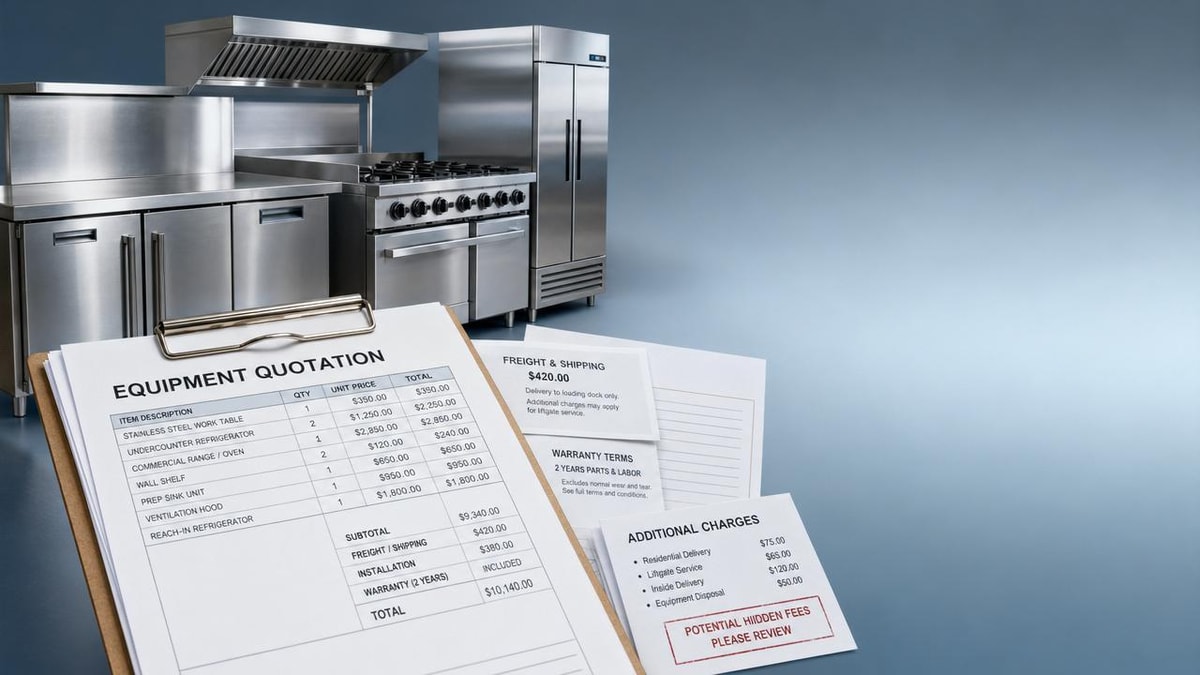
Procurement professionals often compare stainless steel ($1,850–$2,400/unit) against composite alternatives ($1,100–$1,550/unit)—overlooking lifecycle variables. A 5-year TCO model for glass-integrated refrigerated display cabinets reveals stark differences:
- Stainless steel: average maintenance labor = 1.2 hrs/year; gasket replacement every 48 months; mean time between failures (MTBF) = 12,800 operational hours
- Composite frame: average maintenance labor = 3.8 hrs/year; gasket replacement every 22 months; MTBF = 5,300 operational hours
- Downtime cost differential: $4,200–$9,600/year per unit due to unplanned glass seal repairs and calibration delays
When integrated into automated food processing lines—where glass sensors monitor fill levels or viscosity—the reliability gap widens further. Stainless steel-mounted optical glass maintains calibration drift <±0.3% over 36 months; composite-mounted equivalents show ±1.9% drift by month 18, triggering false rejects in 7.3% of production runs.
For project managers overseeing facility rollouts across 12+ sites, this translates into 23–31 additional validation days and $185,000–$420,000 in unanticipated commissioning costs over a 5-year horizon.
Strategic Recommendations for Procurement and Engineering Teams
Based on field data from over 210 food processing installations across North America, EU, and APAC, we recommend a tiered material strategy:
- Critical glass interfaces (e.g., sight glasses in sterilizers, viewport doors on retorts): Specify AISI 316 stainless steel with electropolished finish (Ra ≤ 0.35 µm) and laser-welded gasket channels—non-negotiable for FDA/EC-compliant operations.
- Secondary enclosures (e.g., non-pressure-rated cabinet frames, shelving supports): Composites may be viable if certified to ISO 22000 Annex A.2.2 for food contact and validated for ≥3,000 thermal cycles.
- Hybrid solutions: Use stainless steel for all glass-mounting zones and load-bearing structures, with composites only in non-critical, dry-zone housings—reducing weight by 28% without compromising seal integrity.
For end users seeking everyday durability beyond industrial settings, the Gabriela Blue 13-Piece Dinnerware Dishes Set for Everyday Use, Service for 4, 13 Piece Plates and Bowls Sets, Dishwasher Safe, Outdoor Indoor Use exemplifies how glass-ceramic hybrid construction balances thermal resilience, stain resistance, and dishwasher-safe reliability—mirroring the same engineering logic applied at scale in commercial food equipment.
Ultimately, stainless steel remains the gold standard for glass-integrated components in wet, high-sanitation food processing environments—not due to inertia, but because its corrosion predictability, surface hygiene fidelity, and lifecycle economics continue to outperform emerging alternatives in mission-critical applications. For procurement leaders and engineering decision-makers, the question isn’t whether composites will replace stainless steel—but where, precisely, their trade-offs align with operational risk tolerance and compliance requirements.
To evaluate material specifications for your next equipment upgrade—or to request a free glass-integration compatibility audit for your facility—contact our technical sales team today.
Popular Tags
Kitchen Industry Research Team
Dedicated to analyzing emerging trends and technological shifts in the global hospitality and foodservice infrastructure sector.
Industry Insights
Join 15,000+ industry professionals. Get the latest market trends and tech news delivered weekly.
No spam. Unsubscribe anytime.
Contact With us
Contact:
Anne Yin (Ceramics Dinnerware/Glassware)
Lucky Zhai(Flatware)