
Why restaurant kitchen equipment design affects daily output
Restaurant kitchen equipment design directly shapes how fast, safely, and consistently teams can work during every shift. In today’s foodservice environment, output is no longer driven by labor alone. The relationship between layout, equipment placement, energy use, sanitation flow, and digital coordination now determines whether a kitchen performs smoothly or struggles under pressure.
That is why restaurant kitchen equipment design has become a strategic issue across the broader kitchen equipment industry. As restaurants, hotels, central kitchens, and food processing facilities pursue higher efficiency, smarter systems, and safer production, design decisions increasingly influence daily throughput, quality stability, and long-term operating cost.
Restaurant kitchen equipment design is moving from basic layout to output-centered planning
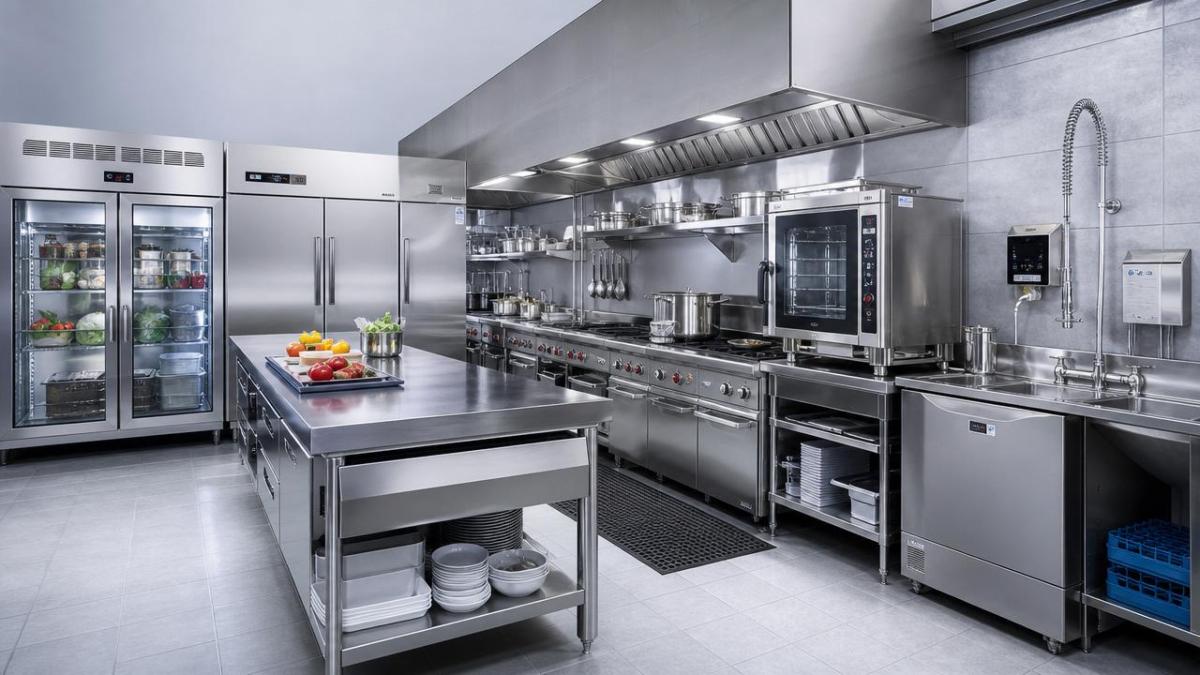
In the past, many kitchens were arranged around available space and basic equipment categories. Today, restaurant kitchen equipment design is increasingly built around production logic. The goal is not only to fit appliances into a room. It is to create a system that supports continuous movement, fast recovery, and predictable service volume.
This shift reflects wider industry change. Commercial kitchen equipment is becoming more intelligent, more energy-efficient, and more connected. As a result, design now affects how automated cooking equipment, holding systems, refrigeration, ventilation, and washing areas work together in real time.
When restaurant kitchen equipment design is weak, daily output often drops in hidden ways. Staff walk longer routes. Hot and cold zones interfere with each other. Prep stations become bottlenecks. Cleaning interrupts service. Equipment capacity fails to match menu demand. These issues reduce speed before operators notice the true cause.
Several clear signals show why better kitchen design now matters more than before
The foodservice market is changing quickly, and these shifts are raising the value of restaurant kitchen equipment design:
- Higher order density during short peak periods requires faster station coordination.
- Delivery, takeaway, and dine-in formats often run simultaneously in one kitchen.
- Food safety expectations demand cleaner zoning and clearer process separation.
- Labor pressure increases the need for simplified movement and ergonomic workflows.
- Energy costs push kitchens toward efficient appliances and smarter load management.
- Digital kitchen systems require layouts that support monitoring, automation, and maintenance.
These signals are not limited to restaurants alone. They align with wider kitchen equipment trends across hotels, central kitchens, and food processing operations. The same idea applies everywhere: equipment design is no longer separate from operational performance.
The main drivers behind restaurant kitchen equipment design can be mapped clearly
The following table shows how major industry drivers shape design priorities and daily output.
This is why restaurant kitchen equipment design should be evaluated as an integrated system. A high-performance oven or refrigeration unit alone cannot solve workflow problems if the surrounding layout creates friction.
Daily output rises when design supports movement, timing, and consistency together
Daily output depends on many small actions repeated hundreds of times. Good restaurant kitchen equipment design reduces wasted seconds across every task. Over a full shift, those seconds become meaningful capacity gains.
Movement efficiency
If prep, cooking, plating, and washing are placed in a logical sequence, staff move less and produce more. Equipment should support the natural direction of work, not force repeated backtracking.
Timing control
Heat equipment, refrigeration, holding cabinets, and prep surfaces must be positioned for smooth handoffs. When timing breaks between stations, food quality drops and service speed slows.
Consistency under pressure
Peak periods test every system. Restaurant kitchen equipment design helps maintain stable production when order volume surges. Standardized stations and balanced capacity prevent one area from slowing the entire line.
In this sense, kitchen design affects not only output quantity but output reliability. Reliable output is often more valuable than occasional high speed.
The impact extends across kitchen operations, safety, maintenance, and cost control
The influence of restaurant kitchen equipment design reaches beyond service speed. It affects several business areas at the same time.
- Workflow: Better layout reduces congestion, confusion, and idle time.
- Food safety: Proper zoning supports hygiene control and cleaner process separation.
- Equipment life: Accessible placement improves cleaning and preventive maintenance.
- Energy use: Smart grouping of cooking and cooling systems lowers waste.
- Training: Clear station design helps new staff adapt faster.
- Scalability: Flexible layouts make future menu or volume changes easier.
These effects matter across the comprehensive kitchen equipment sector, where restaurants increasingly borrow ideas from food processing, central kitchen planning, and intelligent production systems. The boundaries between traditional cooking space and managed production environment are becoming thinner.
Key priorities now emerging in restaurant kitchen equipment design
Several priorities stand out as the industry evolves toward automation, intelligence, and efficiency.
- Match equipment capacity to real service patterns, not theoretical maximums.
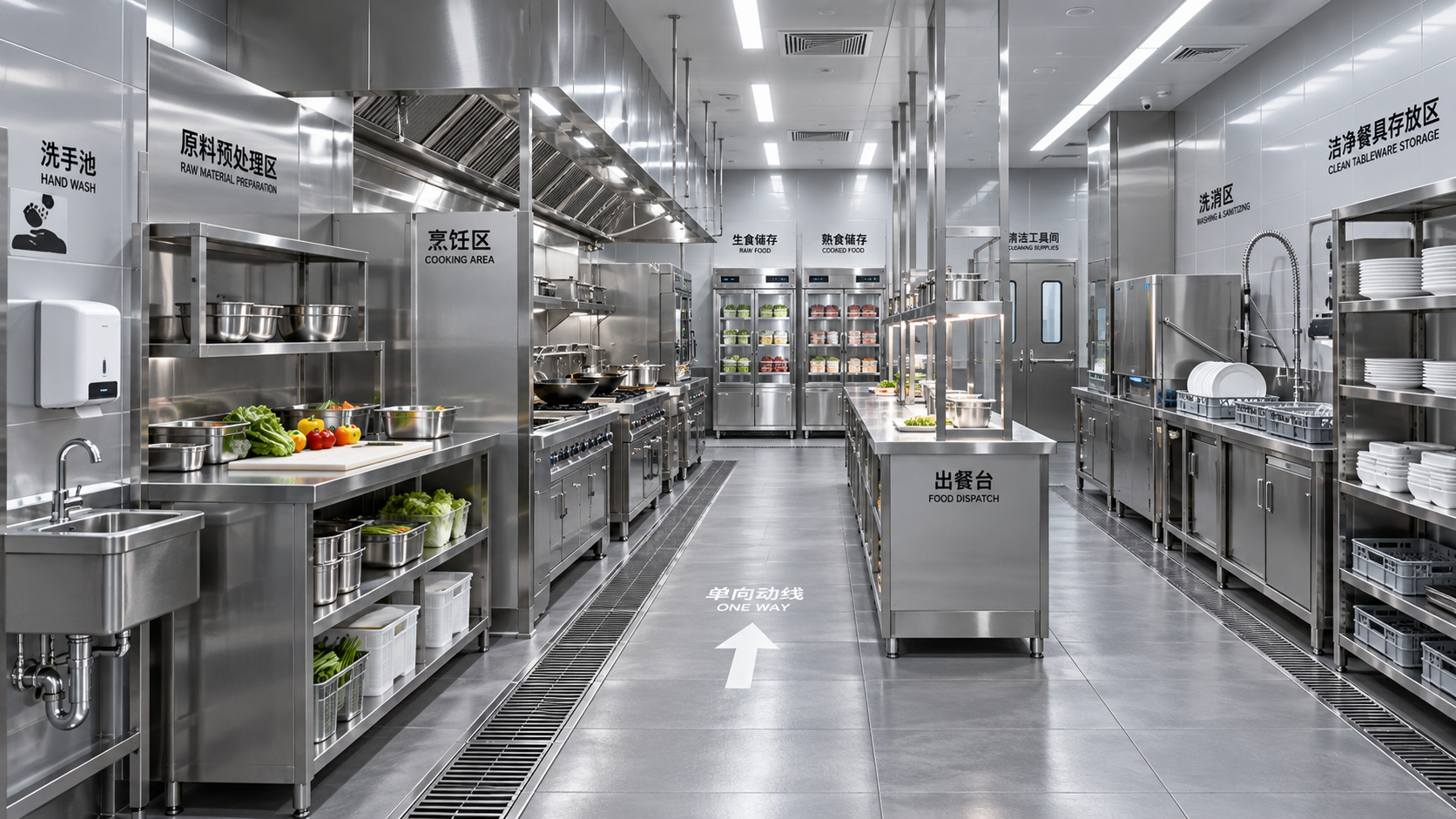
- Create one-way workflow where receiving, storage, prep, cooking, plating, and cleaning are logically separated.
- Reserve space for smart kitchen equipment, sensors, and digital control points.
- Improve ergonomics through reachable storage, proper working heights, and safe access.
- Support sanitation with durable surfaces, drainage logic, and easy-to-clean equipment placement.
- Plan ventilation and heat management together with cooking line design.
- Build flexibility for menu updates, seasonal demand, and future expansion.
These priorities show that restaurant kitchen equipment design is becoming a decision framework, not a simple installation step. Good design aligns equipment selection with production reality.
A practical way to judge whether current kitchen design supports future output
A useful review should focus on signs of friction. If several of the following issues appear, design may be limiting output.
This kind of review connects visible operating pain to underlying restaurant kitchen equipment design choices. It also helps prioritize upgrades that produce measurable daily gains.
The next step is to treat kitchen design as a performance system
Restaurant kitchen equipment design affects daily output because every shift depends on flow, timing, safety, and equipment coordination. As the global kitchen equipment industry advances toward smart technologies, integrated systems, and energy-efficient solutions, kitchens that adapt their design logic will be better positioned for reliable production.
A practical next step is to map the current process from receiving to dispatch, identify repeated delays, compare them with equipment placement, and rank the highest-impact improvements. Even modest changes in station sequence, zoning, or equipment integration can unlock stronger output, cleaner workflows, and more sustainable long-term performance.
Popular Tags
Kitchen Industry Research Team
Dedicated to analyzing emerging trends and technological shifts in the global hospitality and foodservice infrastructure sector.
Industry Insights
Join 15,000+ industry professionals. Get the latest market trends and tech news delivered weekly.
No spam. Unsubscribe anytime.
Hot Articles
 How to Select Restaurant Kitchen Equipment for High-Volume Catering Operations
- Hygienic Restaurant Kitchen Design: Layout Rules to Reduce Cross-Contamination
- Why Glass Tea Servers Crack—and How to Prevent Thermal Shock When Brewing Tea
- How to Choose a Glass Tea Server for Hot and Cold Brewing Without Cracking

Contact With us
Contact:
Anne Yin (Ceramics Dinnerware/Glassware)
Lucky Zhai(Flatware)