
Which restaurant kitchen equipment accessories improve safety?
For quality control and safety managers, choosing the right restaurant kitchen equipment accessories is essential to reducing workplace injuries, preventing contamination, and supporting compliance. From anti-slip mats and splash guards to temperature monitors and protective handles, these accessories can significantly improve daily kitchen safety. This article explores which options deliver the greatest safety benefits and how to evaluate them for commercial foodservice environments.
In commercial kitchens, most incidents do not come from core machines alone. They often result from missing, poorly fitted, or low-grade accessories around prep tables, fryers, ovens, sinks, shelving, and holding equipment. For operations handling food for 8 to 16 hours per day, accessory selection directly affects slip risk, burn prevention, cross-contact control, cleaning efficiency, and audit readiness.
For buyers and safety teams evaluating restaurant kitchen equipment accessories, the priority is not adding more items. The priority is choosing the accessories that control the highest-risk points first, fit the workflow, and remain durable through frequent sanitation cycles, heat exposure, moisture, and chemical contact.
Where restaurant kitchen equipment accessories make the biggest safety impact
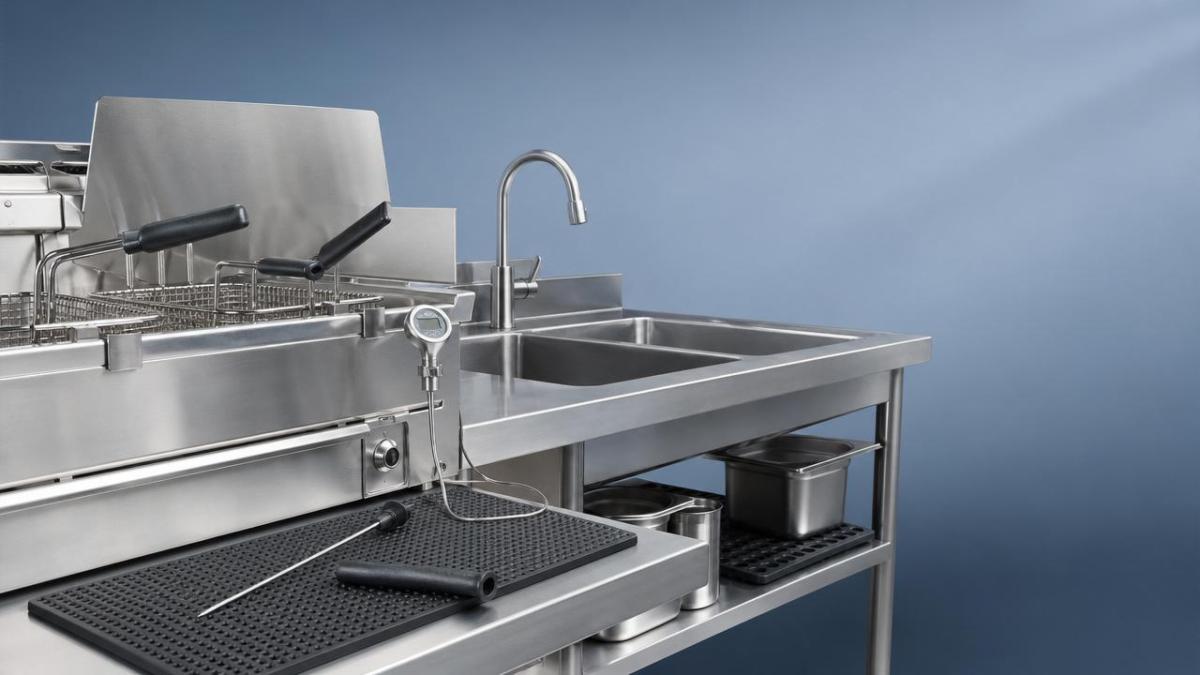
The safest kitchens usually improve performance in 4 areas at the same time: slip prevention, burn and cut protection, temperature control, and contamination barriers. In practice, accessories are often the lowest-cost upgrades with the fastest implementation cycle, usually 1 to 7 days after purchase depending on installation complexity.
1. Floor and drainage accessories for slip prevention
Wet floors remain one of the most common kitchen hazards. Anti-slip floor mats, beveled edge mats, drain covers, and grease-resistant floor runners reduce slip incidents near dishwashers, sinks, ice machines, and fryer stations. For high-traffic work zones, mat thickness in the 10 mm to 20 mm range is common because it balances comfort, drainage, and cart movement.
Quality teams should also review mat surface pattern, drainage hole spacing, and resistance to cleaning chemicals. A mat that performs well for 2 weeks but curls at the edge in month 2 can become a trip hazard. For 24-hour kitchens or central production areas, modular sections are often more practical than one-piece mats because damaged sections can be replaced faster.
What to check
- Grease resistance for hot-line and fryer areas
- Beveled edges to reduce foot and trolley catch points
- Open drainage design for zones washed 2 to 4 times daily
- Easy lift and cleaning process within 5 to 10 minutes per section
2. Heat and splash accessories around cooking equipment
Burns often occur during pan transfer, fryer loading, oven unloading, and steam release. Accessories such as heat-resistant handles, pan grip covers, splash guards, fryer side screens, and insulated knobs reduce direct exposure to oil, steam, and hot metal surfaces. In busy lines where equipment surfaces may exceed 180°C to 260°C, protective handle accessories are a practical control point.
Splash guards are especially useful in open-line kitchens where oil projection can reach adjacent stations. A simple stainless guard or transparent heat-rated barrier can protect staff and also reduce secondary contamination onto nearby prep surfaces. For quality managers, this is important in mixed raw and ready-to-eat zones.
3. Temperature monitoring accessories for food safety control
Temperature is one of the most critical safety variables in any foodservice environment. Probe thermometers, refrigerator thermometers, data loggers, alarm modules, color-coded probe sleeves, and calibration tools help control cooking, hot holding, cooling, and cold storage. Even a basic monitoring routine with checks every 2 to 4 hours can significantly improve hazard detection.
Accessories matter because the core appliance may heat or cool correctly, but without a reliable probe, mounting bracket, or alert device, operators may not detect drift in time. For food quality and compliance teams, repeatable verification matters more than occasional spot checks.
The following table highlights common restaurant kitchen equipment accessories that improve safety, where they are used, and the key risk each one addresses.
The pattern is clear: the most effective restaurant kitchen equipment accessories are not decorative add-ons. They are control tools placed at points where staff contact, movement, heat, and food exposure intersect many times per shift.
How to evaluate accessories for quality, safety, and compliance
Safety managers should evaluate accessories using 5 filters: material suitability, cleanability, fit with existing equipment, replacement frequency, and operator behavior. An accessory that looks durable in a catalog but traps debris, loosens after 30 days, or interferes with sanitation can create a new hazard instead of solving one.
Material and sanitation compatibility
Stainless steel, food-safe silicone, high-temperature polymers, and heavy-duty rubber are widely used in restaurant kitchen equipment accessories because they tolerate moisture, impact, and repeated washdown. The key issue is matching the accessory to exposure conditions. For example, a splash guard near a fryer may face oil, steam, and temperatures above 120°C, while a refrigerator thermometer bracket mainly faces condensation and cold cycling.
Surfaces should be easy to wipe, with minimal seams and no hidden recesses that trap food residue. If an accessory requires 3 disassembly steps just to clean one contact surface, staff compliance may decline during peak service periods.
Fit, installation, and workflow impact
Accessories should fit without blocking doors, restricting drainage, or creating dead spaces. Before rollout, many quality teams use a 3-step validation process: measure the equipment interface, test the accessory in one station for 7 to 14 days, then review cleaning and incident feedback with users. This reduces purchasing mistakes across multi-site operations.
Workflow matters as much as technical fit. A mat that shifts under wheeled racks, a handle guard that slows tray loading, or a thermometer mount placed away from the point of use can reduce adoption. If the accessory adds even 5 to 8 seconds to a repetitive task, staff may bypass it during high-volume service.
Inspection and replacement planning
Restaurant kitchen equipment accessories should be included in preventive inspection routines, not treated as permanent fixtures. Depending on the item, visual checks may be daily, weekly, or monthly. Mats may need daily lift-and-clean review. Probe sleeves and gaskets may need weekly sanitation inspection. Handle covers and guards may require monthly wear checks for cracks, looseness, or discoloration.
The table below can support procurement and audit teams when comparing accessory categories during vendor review or site standardization projects.
This comparison shows that accessory purchasing should be evidence-based. Low unit cost alone is a poor indicator if the item fails sanitation, creates downtime, or needs replacement every few weeks.
High-priority accessory categories for commercial kitchens
Not every kitchen needs the same accessory mix. A quick-service line, a hotel banquet kitchen, and a food production prep room face different hazards. Still, several restaurant kitchen equipment accessories consistently rank as high-priority because they address frequent incidents and common audit observations.
Accessories that reduce contamination risk
- Color-coded cutting board racks and utensil holders to separate raw, cooked, and allergen-sensitive tools
- Probe wipes, protective sleeves, and storage sheaths for thermometer hygiene
- Sink splash shields that limit cross-spray from wash to prep zones
- Sealed shelf liners for dry storage areas where loose debris or spills are common
These accessories are especially useful where staff rotate between stations. In kitchens with 2 to 3 shift changes per day, visible separation tools improve consistency more effectively than verbal reminders alone.
Accessories that reduce contact injuries
- Door handle guards for ovens, warmers, and holding cabinets
- Grip-enhancing covers for hot pans and lids
- Rounded-edge bumpers for carts, counters, and mobile equipment corners
- Knife storage racks that keep blades off prep tables and away from sink clutter
A common mistake is focusing only on PPE while ignoring engineering-style controls. Accessories do not replace training or gloves, but they create a safer physical environment before human behavior becomes the only barrier.
Accessories that support digital and smart monitoring
As kitchen systems become more automated, accessory selection also becomes more technical. Wireless temperature sensors, mounting clips for remote probes, alarm modules, cable protection covers, and labeled calibration stations support safer monitoring in modern kitchens. In multi-cabinet refrigeration or cook-chill systems, these accessories can improve traceability and make exception handling faster.
For quality and safety managers, the benefit is operational visibility. If a cold room drifts outside its target range for 20 to 30 minutes, an alarm-linked accessory system may help teams intervene before product quality is affected.
Implementation mistakes to avoid when buying restaurant kitchen equipment accessories
Accessory programs fail when teams buy by catalog image instead of by risk map. A safer approach is to identify the top 5 hazard points in the kitchen, match accessory types to those points, and then run a limited pilot before standardizing across the site or region.
Mistake 1: Choosing generic products without zone-specific requirements
A dry storage rack liner is not suitable for a hot fryer lane. A lightweight mat for a café service counter may fail quickly in a heavy dish area. The environment should define the accessory specification, including heat tolerance, drainage need, chemical resistance, and traffic volume.
Mistake 2: Ignoring cleaning labor and replacement cycles
If an accessory saves one type of incident but adds 15 minutes of cleaning labor per shift, teams must decide whether the trade-off is acceptable. Replacement planning is also critical. Items exposed to grease, abrasion, and sanitizers rarely last indefinitely, so buyers should ask vendors about normal service intervals and spare availability.
Mistake 3: Failing to train end users
Even the best restaurant kitchen equipment accessories are ineffective if staff do not know where they belong, how they are cleaned, or when they should be replaced. A short 10 to 15 minute onboarding module per station can improve correct use. Posting 4 to 6 visual checks near the work area can further reduce misuse.
Practical rollout checklist
- Map the highest-risk areas by slip, burn, cut, and contamination exposure.
- List current equipment and measure accessory contact points.
- Trial selected accessories in one live zone for 1 to 2 weeks.
- Review sanitation feedback, incident reports, and operator acceptance.
- Standardize specifications and reorder thresholds for ongoing supply.
How safety managers can make better purchasing decisions
The best purchasing decision balances risk reduction, ease of cleaning, service life, and consistency across locations. For large foodservice groups, standardizing 6 to 10 essential accessory types can simplify training, spare stocking, and audit control. For independent restaurants, the first investment should usually focus on the two highest-loss areas: floor safety and temperature verification.
When comparing suppliers, ask for clear material information, sanitation guidance, compatible application zones, and expected wear conditions. If possible, request sample units for a short field evaluation. This is especially important for restaurant kitchen equipment accessories that must withstand high heat, heavy foot traffic, or repeated washdown.
Well-chosen accessories improve more than compliance. They support smoother operations, fewer interruptions, safer staff movement, and better protection of food quality. For quality control and safety managers, that makes accessories a strategic part of kitchen risk management rather than a minor purchasing detail.
If you are reviewing restaurant kitchen equipment accessories for a new site, retrofit project, or multi-location safety upgrade, now is the right time to assess risk points, compare materials, and build a practical accessory standard. Contact us to discuss your application, request a tailored recommendation list, or learn more solutions for safer commercial kitchen operations.
Popular Tags
Kitchen Industry Research Team
Dedicated to analyzing emerging trends and technological shifts in the global hospitality and foodservice infrastructure sector.
Industry Insights
Join 15,000+ industry professionals. Get the latest market trends and tech news delivered weekly.
No spam. Unsubscribe anytime.
Hot Articles

Contact With us
Contact:
Anne Yin (Ceramics Dinnerware/Glassware)
Lucky Zhai(Flatware)