
How to choose a glass storage container with lid that lasts
Choosing a glass storage container with lid that truly lasts means looking beyond appearance. From heat resistance and seal quality to stain prevention and everyday durability, the right container can make food storage safer, cleaner, and more convenient. This guide will help you understand the key features that matter most before you buy.
What makes a glass storage container with lid durable?
A durable glass storage container with lid is built to handle repeated use, temperature changes, and frequent washing without cracking, warping, or losing its seal.
The first thing to check is the glass type. Borosilicate glass usually offers better thermal shock resistance than standard tempered soda-lime glass.
That matters in modern kitchens, where containers move from refrigerator to microwave, dishwasher, or serving table within a single day.
Thickness also matters, but thicker is not always better. Good engineering balances strength, weight, stackability, and comfortable handling.
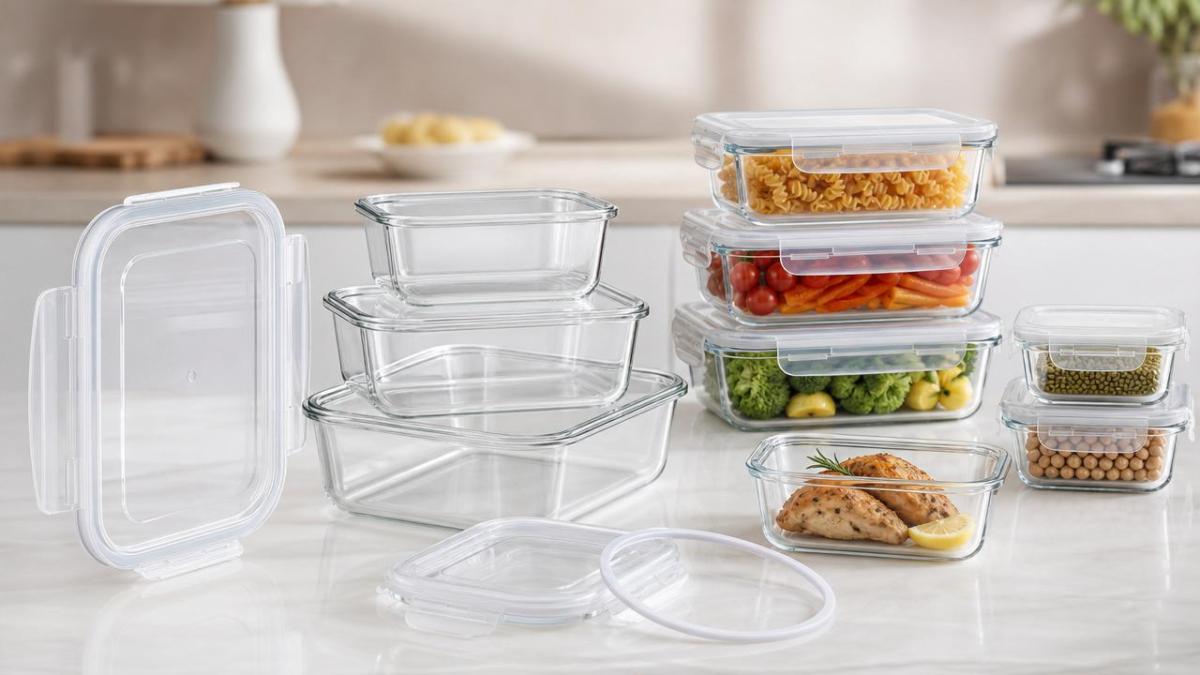
The lid is equally important. A long-lasting glass storage container with lid should have a strong frame, stable locking points, and a gasket that stays flexible.
If the silicone ring dries out, slips, or absorbs odor quickly, the container may fail long before the glass does.
Look closely at edge finishing. Smooth rims and rounded corners reduce chip risk and make cleaning easier after sauces, oils, and prepared meals.
Key durability signs
- Heat-resistant glass with clear temperature-use guidance
- Tight-fitting lid with food-grade silicone seal
- Chip-resistant rim and reinforced corners
- Dishwasher-safe construction
- Stain and odor resistance after repeated use
How do you choose the right glass type and lid design?
Many people focus on shape first, but material choice should come before style. The best glass storage container with lid starts with reliable glass performance.
Borosilicate glass is often preferred for meal prep, leftovers, and foodservice support because it handles temperature shifts more safely.
Tempered soda-lime glass can still be practical. It is commonly used in household and commercial kitchen equipment products due to lower cost.
However, lower price should not replace performance checks. Review the stated oven, freezer, microwave, and dishwasher compatibility carefully.
Which lid style lasts longer?
Snap-lock lids are popular because they improve leak resistance. They are useful for transport, lunch storage, and liquid foods.
Press-on lids can work for dry storage, but they often lose holding power faster under daily use.
Choose BPA-free plastic or glass-compatible composite lids with removable silicone gaskets. Removable seals make deep cleaning much easier.
Avoid lids with weak hinge points, thin clips, or unclear food-contact safety information. These issues often appear before other failures.
What size and shape work best for everyday use?
The most durable product is not always the most useful one. A glass storage container with lid should fit real kitchen habits.
Rectangular containers use shelf space efficiently. They also stack well in refrigerators, prep stations, and compact kitchen cabinets.
Round containers are easier to clean in some cases. They work well for soups, sauces, fruit, and single-portion leftovers.
Shallow formats help with meal prep and quick cooling. Deep formats support bulk storage, marinating, and ingredient separation.
Helpful size planning
- 300–500 ml for snacks, sauces, and cut fruit
- 600–1000 ml for lunches and leftovers
- 1200 ml and above for batch cooking and family storage
If you buy a set, check whether lids are interchangeable. Standardized sizing saves time and reduces lid replacement problems later.
In the broader kitchen equipment market, modular design matters because storage, transport, washing, and shelf management all affect efficiency.
How can you compare glass storage containers for home and commercial kitchens?
A home kitchen may prioritize convenience and appearance. A commercial environment usually requires repeatable performance, faster cleaning, and stronger handling resistance.
Even so, the same selection basics apply. A good glass storage container with lid should support hygiene, workflow, and product longevity.
Comparison points that matter
Check whether the container resists staining from tomato, curry, oil, and vinegar. Persistent stains often signal lower-quality lid or seal materials.
Review whether the base can tolerate repeated dishwasher cycles. Some products remain clear, while others turn cloudy or develop scratches.
See if the lid keeps shape after heat exposure. Warped lids reduce sealing performance and can make stacking unstable.
For kitchens linked to foodservice or food processing, label space and easy visibility also improve organization and reduce handling time.
What mistakes shorten the life of a glass storage container with lid?
Many failures come from use habits, not factory defects. Even a high-quality glass storage container with lid can wear out early when handled poorly.
The biggest risk is thermal shock. Do not move a container directly from freezer to hot oven or from microwave to cold water.
Another common mistake is lifting a full container by the lid alone. Always support the glass base with both hands.
Overpacking can also damage clips and seals. If food presses hard against the lid, the gasket may shift or deform over time.
Avoid these common issues
- Using abrasive scrubbers on lid surfaces and seals
- Closing the lid before steam has reduced
- Ignoring cracks, chips, or loose gaskets
- Stacking unstable sizes without flat support
Regular inspection helps. Small damage around the rim can grow quickly, especially in busy kitchens with constant washing and movement.
How do you know if a glass storage container with lid is worth the price?
Price should be judged against lifespan, safety, and maintenance. A cheaper product often costs more when seals fail or lids need frequent replacement.
Look for clear specifications, food-contact safety statements, and realistic care instructions. Transparent product information usually reflects stronger quality control.
It also helps to check whether replacement lids or silicone rings are available. That extends product life and reduces waste.
In a market shaped by smart, efficient, and sustainable kitchen equipment, long-lasting storage products support lower replacement rates and cleaner kitchen routines.
Quick buying checklist
- Confirm the glass type
- Test lid closure strength
- Check seal removability
- Review temperature-use limits
- Choose shapes that fit storage space
- Prefer sets with replacement support
A lasting glass storage container with lid should feel reliable in daily use, not just look attractive on a product page.
Focus on glass quality, lid performance, cleaning ease, and realistic kitchen habits. Those factors matter more than color, branding, or trendy shapes.
If you compare products using the points above, you can choose a glass storage container with lid that stays useful longer, protects food better, and fits modern kitchen needs with confidence.
Popular Tags
Kitchen Industry Research Team
Dedicated to analyzing emerging trends and technological shifts in the global hospitality and foodservice infrastructure sector.
Industry Insights
Join 15,000+ industry professionals. Get the latest market trends and tech news delivered weekly.
No spam. Unsubscribe anytime.

Contact With us
Contact:
Anne Yin (Ceramics Dinnerware/Glassware)
Lucky Zhai(Flatware)