
Kitchen Design for Food Processing: Layout Principles for Hygiene and Workflow
Why Kitchen Design for Food Processing Matters From Day One
Kitchen design for food processing shapes hygiene, output, labor efficiency, and maintenance cost long before production starts.
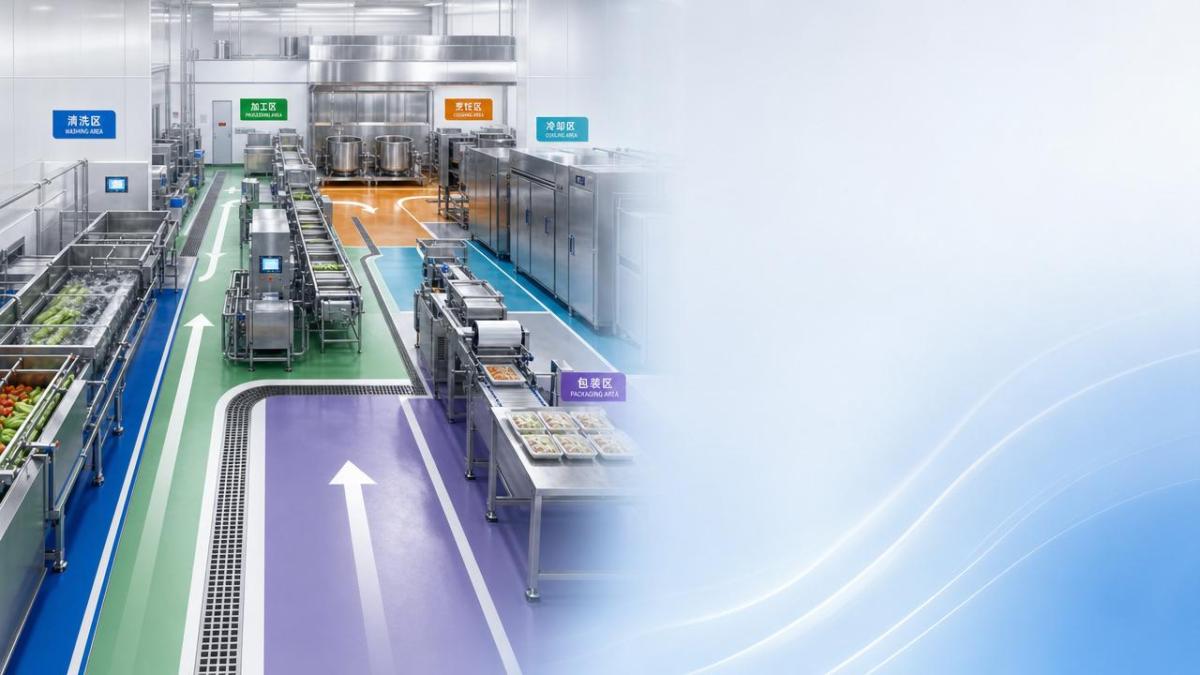
A poor layout creates hidden losses.
Raw materials travel too far, staff paths cross, cleaning takes longer, and contamination risks increase.
A strong kitchen design for food processing does the opposite.
It supports one-way flow, clear zoning, easier sanitation, and more stable product quality across shifts.
In real projects, layout decisions also affect utility loads, expansion options, and audit readiness.
That is why facility planning should connect food safety goals with operational targets from the earliest design stage.
The most effective food processing kitchen layout is not the most complex one.
It is the one that keeps movement simple, surfaces cleanable, and equipment matched to actual throughput.
Start with Process Flow, Not Equipment Lists
Many teams begin with machinery selection.
That often leads to a crowded room filled with expensive bottlenecks.
A better approach starts with process mapping.
List every step from receiving to storage, washing, cutting, mixing, cooking, cooling, packing, and dispatch.
Then define movement between each stage.
This makes kitchen design for food processing more accurate and easier to scale later.
When mapping the line, focus on these questions:
- Where do raw materials enter, and how are they inspected?
- Which steps require separation by temperature, allergen, or cleanliness level?
- Where do waste, packaging, and finished goods leave the area?
- Which tasks create waiting time, backup, or repeated handling?
Once those answers are visible, equipment selection becomes easier and far more practical.
This also reduces the risk of buying machines that fit capacity targets but fail the workflow test.
Build Hygiene into the Layout, Not Only the SOP
Standard operating procedures matter, but layout determines whether people can follow them consistently.
In kitchen design for food processing, hygiene must be physically built into the plan.
The first rule is separation.
Raw and cooked zones should never overlap in ways that allow tools, carts, water, or staff traffic to mix.
The second rule is cleanability.
Every corner, drain area, wall junction, and equipment base should support fast inspection and cleaning.
The third rule is control of high-risk points.
Handwashing stations, sanitation points, and utensil storage must sit where behavior happens, not where space is left over.
Useful hygiene layout practices include:
- Dedicated receiving and deboxing areas away from clean production rooms.
- Airflow planning that limits movement from raw zones toward ready-to-eat zones.
- Floor slopes and drainage that prevent standing water.
- Separate storage for chemicals, cleaning tools, and production utensils.
- Controlled personnel entry with gowning or hygiene checkpoints when required.
In short, a hygienic food processing kitchen layout lowers reliance on perfect human behavior.
That makes compliance more realistic during busy operations.
Use Zoning to Protect Workflow and Food Safety
Clear zoning is one of the strongest principles in kitchen design for food processing.
It helps teams manage movement, control hygiene, and assign utilities more efficiently.
Most facilities benefit from dividing the kitchen into practical zones:
- Receiving and inspection zone.
- Raw storage zone, including chilled or frozen holding.
- Preparation zone for washing, trimming, cutting, or batching.
- Processing zone for cooking, mixing, baking, or thermal treatment.
- Cooling and holding zone where required.
- Packaging and finished goods zone.
- Waste handling and cleaning support zone.
Each zone should support its own task without forcing staff to backtrack across cleaner areas.
This matters even more in facilities handling meat, dairy, sauces, frozen foods, or ready meals.
From a project view, zoning also helps coordinate construction and equipment installation.
Utilities, floor finishes, drains, and ventilation can be tailored to the risk and process load of each area.
Design for One-Way Movement Wherever Possible
One-way flow is a core feature of effective kitchen design for food processing.
Materials, people, waste, and packaging should move forward with minimal crossing.
When paths intersect, contamination and delays become more likely.
In practice, one-way flow means more than placing machines in a row.
It means planning doors, aisles, wash points, trolley routes, staging areas, and pass-through points with discipline.
Common movement rules include:
- Raw inputs move inward through dedicated receiving paths.
- Processed goods move outward through separate packaging and dispatch paths.
- Waste exits through routes that avoid finished product areas.
- Staff access points reduce unnecessary crossing between hygiene levels.
This principle also improves labor productivity.
When teams walk less and search less, output becomes steadier without adding labor hours.
Match Equipment, Utilities, and Space to Real Throughput
A reliable kitchen design for food processing must balance machinery size with usable space and service capacity.
Oversized equipment can be as damaging as undersized equipment.
It consumes floor area, increases cleaning effort, and creates utility demand without adding real efficiency.
Before finalizing layouts, verify five basics:
With smart kitchen technologies and automated food processing systems, this coordination becomes even more important.
Sensors, conveyors, intelligent cooking equipment, and digital controls all depend on a stable physical layout.
Plan Maintenance, Cleaning, and Expansion Early
A kitchen can look efficient on paper yet become difficult to operate after launch.
This usually happens when maintenance and sanitation are treated as secondary issues.
Good kitchen design for food processing leaves space for the tasks that happen every day after installation.
That includes filter access, panel opening, drain cleaning, hose use, part replacement, and inspection routines.
It also includes future change.
Product lines evolve, packaging formats change, and new compliance requirements appear.
A rigid layout raises upgrade costs later.
Practical safeguards include:
- Reserve utility capacity for future equipment loads.
- Keep removable access around critical machinery.
- Use modular equipment where product variation is expected.
- Separate wet cleaning areas from dry processing where possible.
- Review expansion paths before fixing drains, walls, and heavy services.
These choices support long-term value, especially in facilities pursuing automation, energy efficiency, and integrated kitchen systems.
A Practical Checklist for Better Kitchen Design for Food Processing
Before approving a final food processing kitchen layout, run a short but serious review.
The goal is to catch operational risk before construction locks the plan in place.
- Does kitchen design for food processing follow a clear one-way product flow?
- Are raw, cooked, allergen, waste, and packaging paths separated enough?
- Can teams clean every surface and service every machine without disruption?
- Are drainage, airflow, lighting, and utilities matched to process needs?
- Is there enough room for staging, inspection, and temporary holding?
- Can the layout support smart kitchen technology upgrades later?
- Will the design still work during peak output, changeovers, and audits?
If several answers are unclear, the layout probably needs revision.
Strong design is rarely about adding more equipment.
It is usually about simplifying flow, reducing risk, and making the facility easier to run every day.
When kitchen design for food processing is approached this way, the result is cleaner production, steadier output, and better long-term project performance.
Popular Tags
Kitchen Industry Research Team
Dedicated to analyzing emerging trends and technological shifts in the global hospitality and foodservice infrastructure sector.
Industry Insights
Join 15,000+ industry professionals. Get the latest market trends and tech news delivered weekly.
No spam. Unsubscribe anytime.

Contact With us
Contact:
Anne Yin (Ceramics Dinnerware/Glassware)
Lucky Zhai(Flatware)