
Restaurant Kitchen Equipment Checklist for New Commercial Kitchens
Restaurant Kitchen Equipment Checklist for New Commercial Kitchens
Planning a new commercial kitchen requires more than choosing appliances. It demands an equipment strategy shaped by workflow, safety, energy use, and future growth.
A practical restaurant kitchen equipment checklist helps connect design decisions with procurement, installation, compliance, and long-term operating performance.
As foodservice operations become faster, more digital, and more cost-sensitive, restaurant kitchen equipment choices now influence productivity, menu flexibility, and brand consistency.
Commercial Kitchen Planning Is Shifting Toward Integrated Equipment Decisions
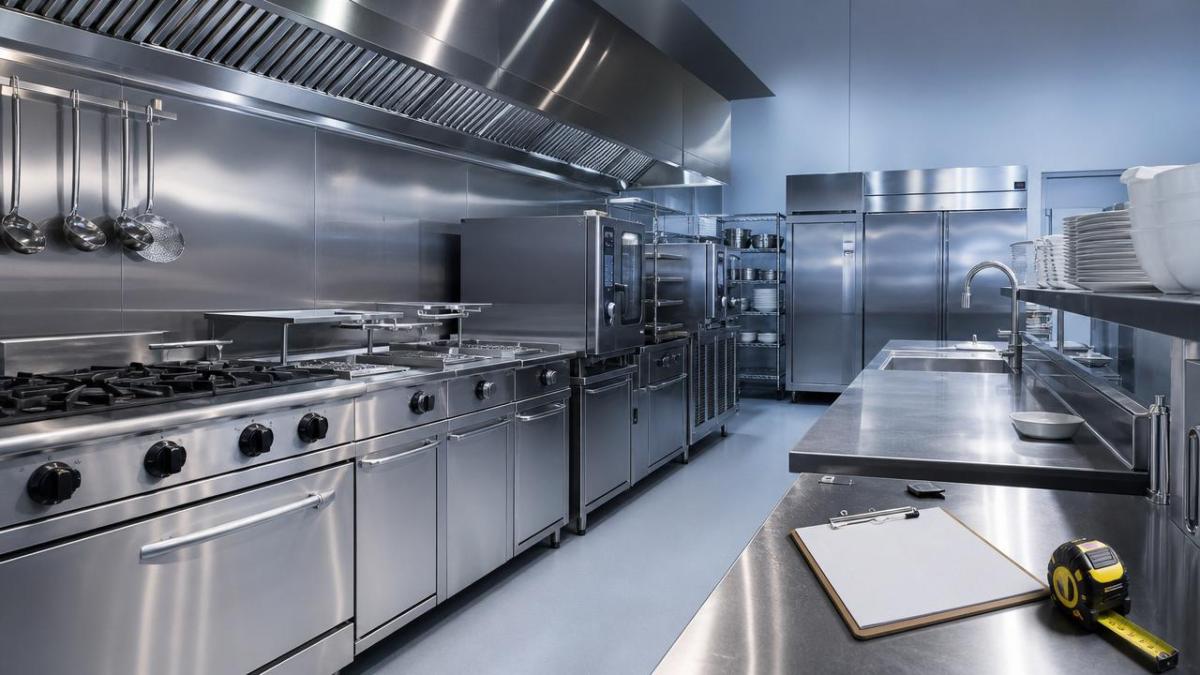
Modern kitchens are no longer designed around isolated machines. They are planned as connected systems that support preparation, cooking, holding, cleaning, and storage.
This shift changes how restaurant kitchen equipment is selected. Capacity, floor space, utility access, heat output, and staff movement must be reviewed together.
Foodservice formats are also changing. Delivery kitchens, fast casual outlets, hotel kitchens, and central kitchens each require different restaurant kitchen equipment layouts.
The strongest projects begin with menu analysis. Every equipment decision should support actual production volume, service speed, and food safety requirements.
Key Trend Signals Reshaping Equipment Selection
- Higher demand for energy-efficient restaurant kitchen equipment that reduces utility costs.
- Growing use of smart controls, sensors, and digital monitoring in commercial kitchens.
- More compact layouts designed for limited urban kitchen space.
- Stricter attention to hygiene, cleaning access, and food contact surfaces.
- Greater focus on equipment uptime, spare parts, and service availability.
Why a Restaurant Kitchen Equipment Checklist Now Matters More
A restaurant kitchen equipment checklist reduces design risk. It prevents missing essential items that affect production, sanitation, or regulatory approval.
It also helps control capital spending. Clear categories make it easier to compare models, energy ratings, maintenance needs, and installation requirements.
The checklist should not be treated as a fixed shopping list. It should evolve with concept type, menu range, service model, and labor strategy.
Core Cooking Equipment Must Match Menu Volume and Service Speed
Cooking equipment is the heart of most kitchens. It directly affects throughput, food consistency, energy use, and staff efficiency.
A balanced restaurant kitchen equipment plan should include only the cooking platforms needed for the actual menu and peak-hour demand.
Essential Cooking Equipment Categories
- Commercial ranges for sautéing, boiling, simmering, and flexible line cooking.
- Ovens, including convection ovens, combi ovens, deck ovens, or specialty baking units.
- Griddles and grills for breakfast items, burgers, proteins, and high-volume menus.
- Fryers for fried foods, appetizers, quick-service items, and batch production.
- Steamers and combi systems for healthier cooking and precise moisture control.
- Induction units for energy-efficient cooking and lower kitchen heat output.
The best restaurant kitchen equipment mix avoids overcapacity. Oversized appliances waste space, increase utility loads, and complicate ventilation design.
Undersized equipment creates bottlenecks. This can slow service, increase staff stress, and reduce food quality during peak operating periods.
Refrigeration and Storage Are Becoming Strategic Control Points
Refrigeration is no longer a back-of-house afterthought. It is central to food safety, inventory control, waste reduction, and menu reliability.
Every restaurant kitchen equipment checklist should separate cold storage needs by ingredient type, receiving frequency, and production schedule.
Cold Storage and Holding Essentials
- Reach-in refrigerators for line access and daily ingredient storage.
- Walk-in coolers for bulk storage and high-volume operations.
- Freezers for frozen ingredients, prepared products, and backup inventory.
- Prep tables with refrigerated bases for salads, sandwiches, pizza, and cold assembly.
- Blast chillers for rapid cooling and safer batch production.
- Hot holding cabinets for service consistency and controlled temperature management.
Digital temperature monitoring is becoming more common. It supports compliance records and reduces manual checking errors.
Energy-efficient refrigeration also matters. Compressors, insulation, door design, and maintenance access affect long-term operating costs.
Preparation Equipment Defines Labor Efficiency and Food Consistency
Preparation zones determine how quickly raw ingredients become service-ready products. Poor planning increases unnecessary movement and cross-contamination risk.
The right restaurant kitchen equipment for preparation should support knife work, washing, mixing, portioning, slicing, and safe staging.
Preparation Equipment to Review
- Stainless steel worktables with suitable gauge, undershelves, and cleanable surfaces.
- Food processors, mixers, slicers, and vegetable cutters for repetitive tasks.
- Scales for portion control, recipe accuracy, and cost management.
- Ingredient bins and shelving for dry storage organization.
- Color-coded cutting boards and food-safe utensils for contamination control.
- Mobile carts for batch movement, staging, and flexible production.
Automation should be considered when repetitive preparation consumes labor. Vegetable cutters, mixers, and portioning systems often deliver measurable savings.
However, automation must match skill levels and cleaning routines. Complex machines create risk if training and maintenance are overlooked.
Warewashing, Sanitation, and Ventilation Shape Compliance Outcomes
Sanitation equipment protects food safety and supports inspection readiness. It also influences labor planning and operational rhythm.
A complete restaurant kitchen equipment plan should include warewashing, handwashing, waste handling, grease management, and ventilation from the beginning.
Sanitation and Support Equipment
- Commercial dishwashers sized for plate count, glassware, trays, and utensils.
- Three-compartment sinks for washing, rinsing, and sanitizing.
- Hand sinks located near preparation, cooking, and service areas.
- Grease traps and waste systems aligned with local utility requirements.
- Exhaust hoods, fire suppression systems, and make-up air solutions.
- Cleaning tools, chemical storage, and mop sinks for daily sanitation routines.
Ventilation should be matched to heat-producing restaurant kitchen equipment. Poor airflow increases discomfort, equipment stress, and energy consumption.
Dishwashing capacity must reflect service style. A high-seat restaurant and a delivery kitchen may have very different warewashing loads.
Equipment Choices Affect Multiple Business Functions
Restaurant kitchen equipment decisions influence more than the kitchen team. They affect construction planning, finance, compliance, maintenance, and brand experience.
Early coordination reduces expensive changes. Utility capacity, drainage, gas lines, electrical panels, and ventilation routes should be confirmed before ordering.
For scalable foodservice operations, standardization can be valuable. Repeating proven restaurant kitchen equipment packages simplifies training and spare parts management.
At the same time, each site may need adjustments. Local codes, menu variations, and available utilities should guide final specifications.
A Practical Restaurant Kitchen Equipment Checklist by Zone
A zone-based checklist is easier to review than a single long list. It connects equipment needs with actual kitchen movement.
Receiving and Storage Zone
- Receiving scales and inspection tables.
- Dry storage shelving and ingredient bins.
- Walk-in coolers, freezers, and reach-in units.
- Labeling tools and temperature monitoring devices.
Preparation Zone
- Worktables, prep sinks, and food processors.
- Mixers, slicers, cutters, scales, and utensils.
- Refrigerated prep tables and mobile carts.
- Food-safe containers and portioning tools.
Cooking and Production Zone
- Ranges, ovens, grills, griddles, and fryers.
- Steamers, combi ovens, induction cookers, and kettles.
- Exhaust hoods and fire suppression systems.
- Holding cabinets, heat lamps, and service counters.
Cleaning and Waste Zone
- Dishwashers, sinks, drying racks, and sprayers.
- Mop sinks, cleaning storage, and chemical stations.
- Waste bins, grease systems, and recycling points.
- Floor mats and safety accessories.
Selection Criteria Should Balance Cost, Performance, and Lifecycle Value
Lowest purchase price is rarely the best decision. Lifecycle value depends on efficiency, durability, serviceability, and operational fit.
Restaurant kitchen equipment should be compared using measurable criteria. This improves decision quality and reduces emotional or rushed buying.
Next-Step Planning Should Turn the Checklist Into an Action Plan
The next step is to translate the restaurant kitchen equipment checklist into drawings, specifications, budgets, and installation milestones.
Start with the menu, expected daily volume, and peak service pattern. Then map zones, utilities, storage needs, and sanitation flows.
Confirm code requirements before final purchase. Fire safety, food safety, ventilation, plumbing, and electrical standards can change equipment choices.
Build a comparison sheet for shortlisted restaurant kitchen equipment. Include capacity, energy rating, dimensions, service access, warranty, and total cost.
A strong commercial kitchen is not defined by the most expensive machines. It is defined by equipment that supports safe, efficient, repeatable operations.
Use the checklist as a living planning tool. Update it as the menu, service model, labor plan, and technology expectations evolve.
For any new commercial kitchen, well-planned restaurant kitchen equipment creates a foundation for smoother opening, better compliance, and stronger long-term performance.
Popular Tags
Kitchen Industry Research Team
Dedicated to analyzing emerging trends and technological shifts in the global hospitality and foodservice infrastructure sector.
Industry Insights
Join 15,000+ industry professionals. Get the latest market trends and tech news delivered weekly.
No spam. Unsubscribe anytime.

Contact With us
Contact:
Anne Yin (Ceramics Dinnerware/Glassware)
Lucky Zhai(Flatware)