Choosing a Glass Beverage Server: Capacity, Spigots, and Cleaning
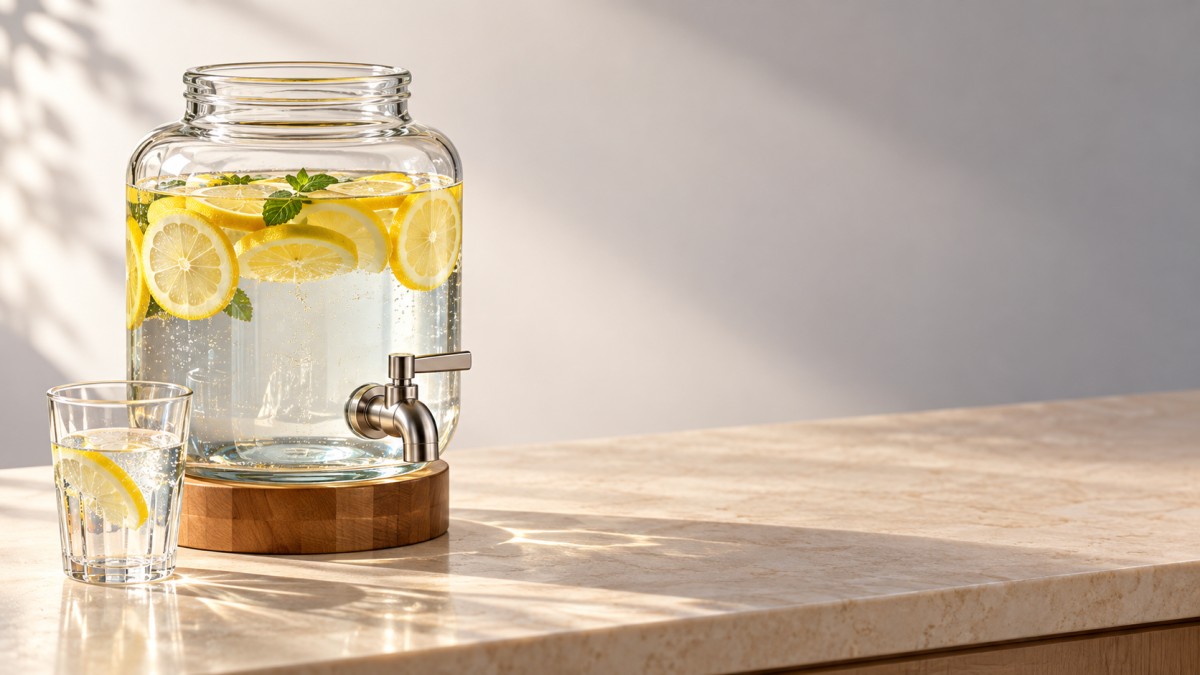
A glass beverage server is easiest to live with when its capacity matches the occasion, its spigot pours reliably, and every drink-contact surface can be cleaned. A large jar with a narrow opening or a tap that cannot be dismantled may look appealing on a table, but those details can make refilling and cleaning more troublesome than expected.
Start with how the server will be used. A small household serving water at dinner has different needs from a host setting out lemonade for a party. The right choice depends not only on how much the container holds, but also on the drinks it will dispense, where it will stand, and how easily it can be emptied and washed afterward.
Choose capacity around the drink, not just the guest count
Capacity labels describe the volume the container can hold, not necessarily the amount of finished drink you can pour. Ice, fruit slices, herbs, and a generous headspace all reduce the room available for liquid. A server filled with fruit-infused water will provide fewer servings than the same container filled with plain water.
Estimate the amount of prepared drink you need by multiplying the number of servings by the serving size. For example, 16 servings of 8 fluid ounces require 128 fluid ounces, or 1 US gallon, of liquid. If ice and fruit will go into the server, allow additional capacity or plan to refill it. The estimate is a starting point: guests may drink more or less depending on the occasion and what else is available.
Refilling is not necessarily a disadvantage. Two smaller batches can be easier to chill, lift, and keep fresh than one large batch left out for hours. On the other hand, a dispenser that needs constant attention can be inconvenient when guests are serving themselves. Consider whether a refill is easy to prepare and whether there is enough refrigerator space for the next batch.
Weight matters as much as volume. One US gallon of water weighs about 8.3 pounds, before adding the glass container, ice, and any stand. A two-gallon server can therefore be awkward to carry when full. If the dispenser is large, place it where it will be used before filling it, and check that the table or counter is stable enough to support it.
Look closely at the spigot before choosing the shape
The spigot determines more than whether a drink comes out. Its position affects how much liquid remains in the bottom, its internal passage affects clogging, and its fittings determine whether it can be removed for cleaning or replacement.
A tap mounted above the base leaves some liquid below the outlet. This can help keep settled fruit pieces or sediment away from the tap, but it also means the last portion may not dispense without carefully tipping the vessel. Compare the outlet position with the shape of the base if minimizing leftover drink matters to you.
The drink itself affects performance. Water, strained iced tea, and lemonade without pulp are generally easier to dispense than mixtures containing seeds, herbs, or small fruit pieces. Large slices may stay inside the vessel, while loose mint leaves or pulp can collect around the outlet. A removable infuser or a strainer can help keep solids away from the tap, but check that it fits and can itself be cleaned.
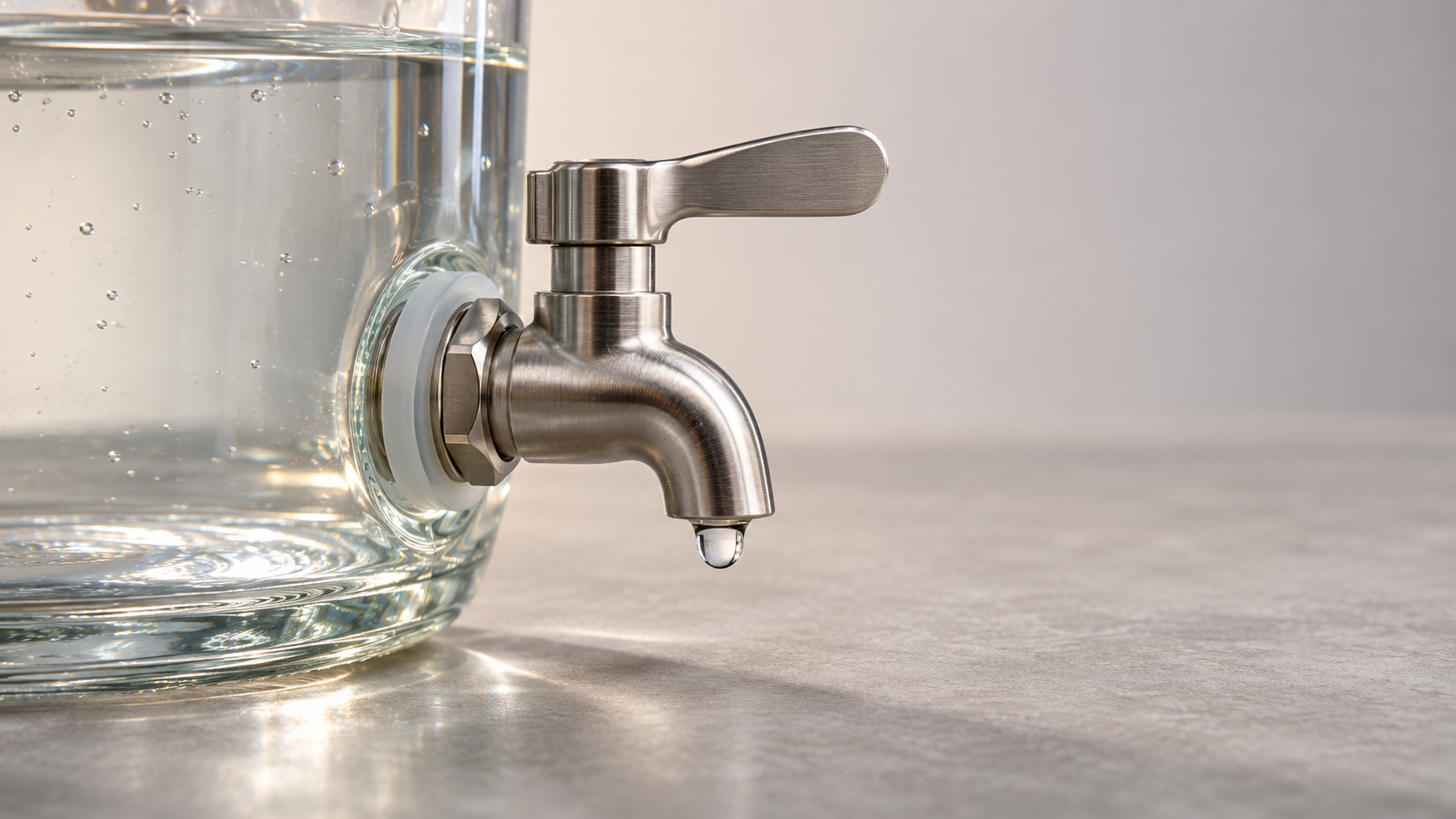
For frequent use, look for a spigot that can be taken apart without special tools. Check whether the valve, washers, and nut can be removed and whether replacement seals or a compatible replacement tap are available. A leak around the mounting hole may result from a worn seal, a poorly seated washer, or an overtightened fitting; tightening harder is not a reliable fix and can put stress on the glass.
Metal and plastic taps both require inspection. Stainless steel can be a durable choice, but a metal-looking finish does not establish what the internal parts are made of. Plastic taps can be lightweight and practical, although threads and moving parts should feel secure rather than fragile. Whatever the material, the parts that touch the beverage should be identified as suitable for food contact by the manufacturer.
If possible, test how the lever or knob operates. It should open and close smoothly without requiring a forceful pull on the glass. Check that it shuts off cleanly and that the outlet leaves enough room for the cups you intend to use. Product dimensions and reviews can help when a hands-on inspection is not possible, but they cannot guarantee that an individual unit will arrive leak-free.
Opening size makes a difference on cleaning day
A wide mouth makes it easier to add ice, arrange fruit, reach inside with a sponge, and see whether residue remains near the bottom. A narrow opening may give a server a streamlined appearance, but it can make routine cleaning dependent on a bottle brush. Before buying, compare the opening with the tools you already own and check whether your hand can reach inside if that is important to you.
The shape inside the glass matters too. Deep shoulders, embossed details on the interior, and tight corners can make it harder to remove sticky drink residue. A broad base may be attractive and stable, but make sure a brush can reach the area beneath the spigot and around the bottom edge.
The lid deserves the same attention. A simple removable lid is easier to wash than one with inaccessible crevices. If it has a gasket, check whether the gasket can be removed and dried. A loose-fitting lid can help protect the drink from debris, but it should not be assumed to create an airtight seal. Some dispensers also need air to enter as liquid flows out, so follow the maker’s instructions rather than sealing a vent.
Dishwasher compatibility should be confirmed for each component. A glass vessel may be dishwasher-safe while its lid, seals, stand, or tap are not. Even when the jar is suitable for a dishwasher, its size may make handwashing more practical.
Think about the drinks you actually serve
For plain water or a lightly flavored drink, a simple server with an accessible tap may be enough. For sweet tea, juice, or lemonade, prioritize a removable spigot and an opening that allows thorough washing: sugar and pulp can collect in parts that are difficult to see.
Fruit-infused drinks benefit from an insert that separates loose ingredients from the outlet. Check its capacity as well as the vessel’s. An infuser occupies space, and a tightly packed insert can be difficult to empty. If you prefer a lot of fruit in the drink, a wide-mouth server without an insert may be easier to fill, provided the pieces are large enough not to obstruct the tap.
Do not assume a glass server is suitable for hot drinks just because it is made of glass. Unless the manufacturer explicitly permits the intended temperature and use, choose it for cold or room-temperature beverages. Sudden temperature changes can damage glass: avoid adding very hot liquid to a cold vessel or placing a hot vessel onto a cold surface unless the instructions specifically allow it.
Carbonated drinks present a different limitation. An ordinary beverage dispenser may not be designed to hold pressure, and carbonation can dissipate during serving. Do not seal a carbonated drink in a container unless the manufacturer specifically states that it is designed for that use.
Check the serving setup, not just the container
A server can have a good tap and still be awkward to use if a glass will not fit beneath it. Measure the distance from the supporting surface to the spigot outlet, then compare it with the height of the cups or glasses you normally use. A stand can provide clearance, but it also raises the center of gravity, so choose one that supports the vessel securely and sits flat.
Check the footprint and overall height with the lid in place. A tall dispenser may fit on a counter but not beneath a cabinet; a broad one may be difficult to place on a crowded table. If you intend to refrigerate the entire server, measure the refrigerator shelf and door clearance before relying on that plan.
Glass lets guests see the drink level and ingredients, but it is heavy and breakable. Inspect the rim, base, and area around the spigot hole for chips or cracks before use. Do not use a damaged vessel, and avoid lifting a filled dispenser by its lid, tap, or decorative parts. Keep it away from counter edges and provide a stable place for guests to set down their cups.
A drip tray or absorbent mat can make a self-service setup easier to manage. Even a well-functioning tap may leave a drop after a pour, and condensation from a cold drink can collect beneath the vessel. Neither should be confused with a persistent leak at the fitting, which needs attention before the dispenser is put into use.
Make cleaning part of the selection decision
After serving, empty the dispenser rather than leaving leftover drink in it indefinitely. Remove the tap and seals as directed by the manufacturer, wash all drink-contact parts with warm water and dish soap, and use a suitable brush to reach the spigot passage. Rinse thoroughly and allow the components to dry before reassembling or storing them. Follow the product instructions if any material requires different care.
For sticky residue, let the removable parts soak in warm, soapy water before brushing. Avoid abrasive tools that can scratch surfaces, and do not force a brush through a narrow valve. If a seal retains an odor, inspect it for trapped residue and wear; replace it when cleaning does not restore it or when it no longer seals properly.
Perishable drinks also need appropriate temperature control. Ice inside a dispenser does not by itself guarantee that the entire drink remains safely chilled for an extended event. Check food-safety guidance for the specific ingredients and serving conditions, and refrigerate or discard leftovers as appropriate.
Before committing to a model, picture the complete cycle: filling it, placing cups under the tap, dispensing the last servings, and washing the valve. A capacity that avoids unnecessary lifting, a tap suited to the drink, and an opening that allows proper cleaning will do more for everyday satisfaction than decorative details alone.
Popular Tags
Kitchen Industry Research Team
Dedicated to analyzing emerging trends and technological shifts in the global hospitality and foodservice infrastructure sector.
Industry Insights
Join 15,000+ industry professionals. Get the latest market trends and tech news delivered weekly.
No spam. Unsubscribe anytime.

Contact With us
Contact:
Anne Yin (Ceramics Dinnerware/Glassware)
Lucky Zhai(Flatware)