
What breaks first in poor kitchen design for catering
In kitchen design for catering, the first failures usually come from poor workflow, weak ventilation, and mismatched equipment selection. Whether planning kitchen design for cafes, hospitals, schools, or industrial kitchens, smart layouts and energy efficient kitchen design directly affect safety, speed, and operating costs. This article explores what breaks first and how commercial restaurant supplies and custom kitchen design can prevent costly mistakes.
What usually fails first in poor catering kitchen design?
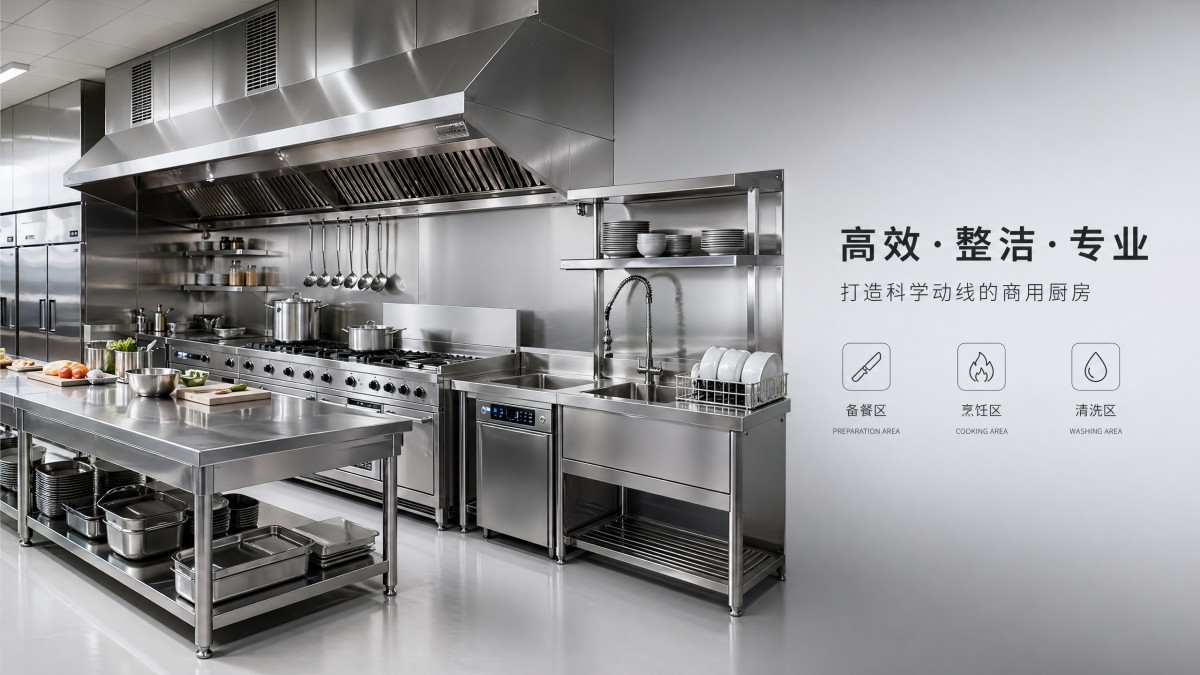
When a catering kitchen is poorly planned, breakdown does not always begin with a machine. It often starts with movement. Staff walk too many extra steps between prep, cooking, holding, and washing. In a busy shift, even an additional 3–5 seconds per task compounds into service delays, queue pressure, and avoidable fatigue. For operators, this is the first visible sign that kitchen design for catering is not supporting production flow.
The second failure point is usually ventilation and heat control. If cooking lines, combi ovens, fryers, and dishwashing zones are grouped without proper extraction and make-up air balance, ambient temperature can rise quickly during 4–8 hour service periods. This creates discomfort, condensation, grease accumulation, and inconsistent equipment performance. In energy efficient kitchen design, airflow planning is not a finishing detail; it is part of the production system.
The third weak point is equipment mismatch. Buyers may choose larger units than the menu requires, or select domestic-style products for commercial duty cycles. In catering operations, equipment may run continuously for several hours, restart many times per day, or need fast recovery between batches. A poor match between output demand and machine capacity leads to underperformance, higher energy use, and early wear on components.
For procurement teams and decision-makers, these failures matter because they appear before obvious mechanical damage. Complaints from staff, heat stress, service bottlenecks, and cleaning difficulty can begin within the first 2–6 weeks after opening. That is why custom kitchen design should be treated as an operational investment, not only as a layout drawing exercise.
Early warning signs that the design is breaking down
- Cooks repeatedly cross each other’s path between cold prep, hot line, and pass, increasing collision and spill risk during peak periods.
- Ventilation hoods cannot capture steam and grease effectively, especially when appliances are added or repositioned after installation.
- Refrigeration doors, dishwasher loading, and waste handling interfere with food production zones, slowing down sanitation cycles.
- Operators rely on temporary tables, mobile racks, or extension power solutions because permanent workstations were underplanned.
Why workflow breaks before equipment does
In most commercial kitchens, workflow failure happens earlier than actual equipment failure because layout errors affect every process, every hour, and every worker. A fryer may still operate, and a refrigerator may still cool, but if receiving, storage, prep, cooking, plating, and cleaning are poorly sequenced, the kitchen loses efficiency from day one. This is especially important in restaurants, hospital kitchens, school catering, and central production units where throughput and hygiene control must coexist.
A practical catering kitchen should separate clean and dirty flows, hot and cold zones, and raw and ready-to-serve handling points. In many projects, the failure begins when these paths overlap. Staff carrying ingredients, hot trays, utensils, and waste move through the same narrow corridor. In a compact kitchen, a difference of 800–1200 mm in aisle planning can change whether two operators can work safely at the same time.
For purchasers comparing commercial restaurant supplies, layout compatibility is just as important as equipment price. A lower-cost unit may require more side clearance, deeper service access, or higher extraction volume. If those hidden requirements are not considered during design, the real operating cost rises later through rework, reduced productivity, or earlier replacement.
For enterprise decision-makers, workflow is also linked to labor cost. A kitchen that needs one extra person during each lunch rush because stations are inefficient may create a larger annual cost burden than the difference between mid-range and premium equipment. Good kitchen design for catering therefore improves both service speed and labor productivity.
Core workflow zones that must be connected correctly
- Receiving and storage: dry, chilled, and frozen goods should move into storage without crossing production output lanes.
- Preparation: vegetable washing, meat prep, and portioning should have dedicated surfaces and waste handling points.
- Cooking and holding: heat-intensive equipment should be grouped under suitable extraction while preserving access to plating.
- Washing and return: dirty item flow should remain isolated from finished food and clean equipment storage.
A quick comparison of common layout risks
The table below highlights where poor catering kitchen design usually starts to fail and what a more resilient custom kitchen design approach looks like in practice.
The key lesson is simple: a kitchen can appear fully equipped and still perform poorly if the sequence of work is wrong. Commercial kitchen success depends on how people, heat, utilities, and equipment interact under real service pressure.
How ventilation, utilities, and equipment sizing create hidden failure points
After workflow, the next major breakdown area in poor kitchen design for catering is infrastructure fit. Many kitchens are specified around menu ideas but not around actual utility demand. Gas load, electrical phase requirements, drainage slopes, water inlet points, and exhaust capacity are often checked late. When that happens, selected appliances may fit on paper but not in daily use.
Ventilation deserves special attention because it affects safety, comfort, and equipment life. A line with fryers, ranges, griddles, and combi ovens generates a different heat and vapor profile than a bakery or cold assembly kitchen. If extraction and fresh air replacement are unbalanced, doors may slam, pilot flames may become unstable, and cooling equipment may work harder in a warmer room. These are classic symptoms of poor energy efficient kitchen design.
Sizing mistakes also happen when procurement focuses on peak output only. A machine designed for large batch production may be inefficient in a kitchen with short service windows and variable menus. Conversely, undersized equipment creates backlog, repeated cycles, and overheating under continuous duty. A practical design should compare expected meals per hour, batch size, service duration, and recovery time across at least 3 operating scenarios: normal day, peak day, and special event.
For integrated kitchen systems, it is also important to consider future expansion. Adding one extra oven, blast chiller, or dishwasher later may require electrical upgrades, ventilation modification, and new drainage work. Planning 10%–20% spare utility capacity where feasible can reduce future disruption and shorten retrofit timelines.
Technical checkpoints before final equipment approval
- Confirm power supply type, load range, and isolation requirements for each major unit before purchase release.
- Review ventilation capture area for heat-producing equipment and check whether canopy layout matches the final appliance line.
- Verify service clearances for cleaning, maintenance, and part replacement, especially behind cooking blocks and refrigeration.
- Check floor drain positions, slope direction, and washdown requirements in prep, cooking, and dishwashing sections.
Typical selection ranges by catering environment
Different operations need different kitchen equipment strategies. The table below compares common environments so buyers can avoid mismatched commercial restaurant supplies and improve custom kitchen design decisions.
This comparison shows why there is no universal layout. Smart kitchen technologies and automated kitchen systems only deliver value when the underlying ventilation, utilities, and production logic are aligned with the specific catering model.
What should buyers, operators, and decision-makers check before approval?
A strong procurement process for kitchen design for catering should combine operational input with technical review. Buyers often focus on quotation comparison, while chefs and operators focus on convenience. Both matter, but neither is enough alone. A better approval method uses 5 key checks: workflow, capacity, utilities, cleaning access, and compliance. This helps prevent expensive changes after fabrication or installation.
For information researchers and first-time buyers, the biggest mistake is comparing unit price without comparing life-cycle fit. A lower purchase cost can still mean higher ownership cost if the equipment causes bottlenecks, needs more maintenance visits, or consumes more energy during daily operation. In foodservice and food processing environments, operating efficiency often matters more over 3–5 years than small differences in initial bid value.
For users and kitchen managers, the design review should also include cleaning and training. If staff need 20–30 extra minutes to dismantle splash areas, remove grease trays, or move mobile equipment for floor cleaning, sanitation discipline may weaken over time. This is where integrated kitchen systems and digital kitchen management solutions can help, but only if the physical layout already supports practical routines.
For enterprise decision-makers, approval should include delivery and implementation risk. A typical commercial project may require 2–4 weeks for design confirmation, 4–8 weeks for manufacturing depending on scope, and several days to 2 weeks for installation and commissioning. If imported components, custom stainless fabrication, or project-specific extraction parts are involved, the lead time review becomes even more important.
A practical pre-purchase checklist
- Match every major appliance to menu type, batch volume, and expected service duration rather than ordering by brand familiarity alone.
- Request layout drawings that show operator movement, door swings, cleaning reach, and utility connection points.
- Review whether the project needs modular equipment, fixed lines, or a hybrid approach for future menu changes.
- Check whether commonly requested compliance items such as food-contact material suitability, electrical conformity, and ventilation safety have been considered.
Questions worth asking suppliers before final sign-off
Many problems can be prevented by asking precise questions early. These are not only technical questions; they are risk-control questions tied directly to project delivery and real kitchen use.
- Which equipment needs the highest extraction capacity, and how will future additions affect the hood system?
- What is the expected maintenance access requirement around each unit in daily operation and annual servicing?
- Which items are standard and which are custom-made, and how does that change lead time and spare parts planning?
- Can the supplier support parameter confirmation, layout revision, installation coordination, and after-sales troubleshooting in one process?
Common misconceptions, compliance issues, and long-term design strategy
One common misconception is that bigger equipment always provides more security. In reality, oversizing can increase idle energy consumption, ventilation demand, and floor occupation without improving output quality. Another misconception is that automation alone solves design weaknesses. Smart kitchen technologies are powerful, but they do not fix poor aisle width, bad zoning, or incomplete drainage planning.
Compliance is another area where poor design often becomes visible late. Depending on the market, projects may need attention to food-contact materials, electrical conformity, fire safety coordination, exhaust discharge practice, and hygienic separation principles. Even when exact certification requirements vary by country, commercial kitchens should still be planned around clear, cleanable surfaces, safe utility routing, and traceable equipment documentation.
Long-term strategy matters because the kitchen equipment industry is moving toward automation, intelligence, and energy efficiency. Commercial kitchen equipment is no longer only about cooking output. Buyers increasingly evaluate digital monitoring, programmable cycles, reduced standby consumption, and better production consistency. For central kitchens and food processing facilities, automated food processing systems can improve repeatability, but only when upstream prep and downstream packaging flows are synchronized.
A well-designed catering kitchen should therefore balance present demand with future flexibility. That may mean choosing modular stations, reserving utility points, or integrating data-capable equipment where operations are likely to scale. In fast-growing markets, the ability to adapt within 6–12 months can be more valuable than a design optimized only for opening day.
FAQ: what buyers and operators ask most often
How do I know if a catering kitchen layout is inefficient?
Look for repeated crossing paths, queues around one station, overheating near the hot line, and cleaning tasks that disrupt production. If staff regularly improvise with temporary tables or move ingredients through dish return areas, the layout likely needs revision.
What matters more: equipment brand or kitchen workflow?
For most projects, workflow comes first. Reliable equipment is important, but even strong machines cannot compensate for poor circulation, wrong zoning, or insufficient extraction. The best results come when equipment selection supports the actual production path.
How long does a custom kitchen design project usually take?
For a standard commercial project, design review and parameter confirmation may take 2–4 weeks. Manufacturing and sourcing often take 4–8 weeks, while installation and commissioning may require several days to 2 weeks, depending on project size and site readiness.
Which areas should never be compressed to save space?
Do not compress ventilation coverage, dishwashing workflow, service access behind major equipment, or separation between raw and ready-to-serve processes. These are the areas where operational problems usually surface first and where later corrections are most disruptive.
Why choose us for catering kitchen planning and equipment selection?
If you are evaluating kitchen design for catering, we can support more than product supply. We help buyers and project teams confirm application parameters, compare commercial restaurant supplies, and align custom kitchen design with workflow, utility conditions, and budget limits. This is especially useful for restaurants, hotels, schools, hospitals, central kitchens, and industrial foodservice projects with mixed operational requirements.
Our support can cover key decision points such as equipment selection, layout optimization, energy efficient kitchen design options, and implementation planning. If you need to compare modular versus integrated kitchen systems, assess standard versus custom fabrication, or review how smart kitchen technologies fit your site, those discussions can happen before procurement mistakes are locked in.
You can contact us for specific topics including output capacity confirmation, utility requirement review, lead time estimation, compliance-related questions, sample support for selected categories, and quotation communication. If your project has tight deadlines, phased opening plans, or international sourcing considerations, early coordination can reduce redesign risk and improve delivery confidence.
For the fastest evaluation, prepare your menu type, expected meals or batches, available floor area, utility conditions, preferred delivery window, and any required standards. With that information, we can discuss suitable kitchen equipment, likely design risks, and practical alternatives that fit your catering operation and purchasing strategy.
Popular Tags
Kitchen Industry Research Team
Dedicated to analyzing emerging trends and technological shifts in the global hospitality and foodservice infrastructure sector.
Industry Insights
Join 15,000+ industry professionals. Get the latest market trends and tech news delivered weekly.
No spam. Unsubscribe anytime.

Contact With us
Contact:
Anne Yin (Ceramics Dinnerware/Glassware)
Lucky Zhai(Flatware)