
Restaurant kitchen equipment requirements that matter
Understanding restaurant kitchen equipment requirements is no longer only about buying ovens, refrigerators, or prep tables.
Today, equipment decisions shape food safety, labor efficiency, energy performance, menu flexibility, and long-term operating resilience.
As foodservice operations modernize, the most important requirements are shifting toward smarter, safer, and more integrated commercial kitchen systems.
This makes it essential to evaluate restaurant kitchen equipment requirements through both current needs and future operational changes.
Restaurant kitchen equipment requirements are moving beyond basic functionality
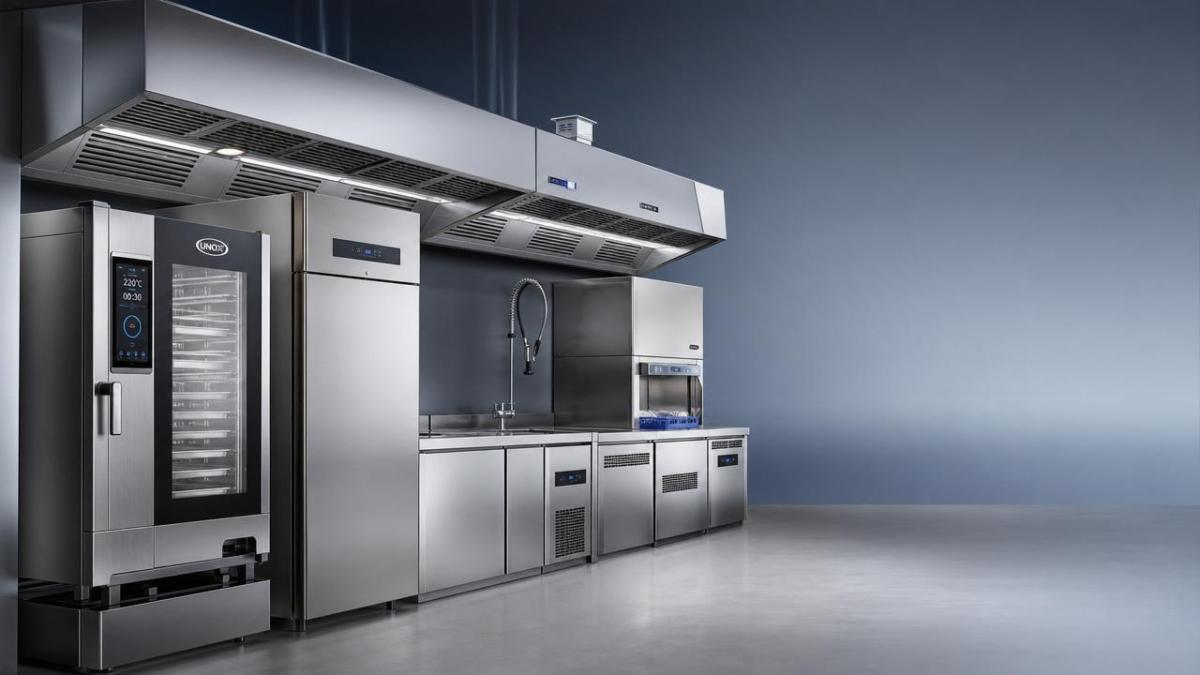
In the past, many kitchens focused mainly on output capacity, durability, and purchase price.
Those factors still matter, but they no longer define complete restaurant kitchen equipment requirements.
New pressure comes from food safety standards, tighter labor markets, rising utility costs, and demand for consistent quality.
At the same time, digital ordering, delivery growth, and centralized production are changing kitchen layouts and equipment priorities.
As a result, restaurant equipment requirements now include workflow design, automation compatibility, maintenance visibility, and energy efficiency.
Several trend signals are reshaping commercial kitchen expectations
The global kitchen equipment sector is evolving with broader foodservice expansion and stricter operational demands.
Restaurants, hotels, central kitchens, and food processing facilities increasingly expect equipment to support fast, predictable, and compliant production.
Smart kitchen technologies are also becoming more visible in daily operations.
Connected combi ovens, programmable fryers, digital temperature monitoring, and remote diagnostics are no longer niche options.
These developments expand the meaning of restaurant kitchen equipment requirements from standalone machines to integrated operational assets.
What the market is signaling
- Energy-efficient kitchen solutions are moving from preference to necessity.
- Automated food processing and cooking systems are reducing dependence on manual repetition.
- Compact equipment is gaining value where urban kitchen space is limited.
- Food safety tracking is becoming a core requirement for cold storage and hot holding.
- Modular systems are supporting changing menus and multi-channel service models.
The drivers behind restaurant kitchen equipment requirements are becoming clearer
Several forces explain why restaurant equipment planning has become more strategic.
These drivers affect initial equipment selection, replacement cycles, layout design, and service contracts.
Core requirements that matter most in modern kitchen planning
Not every kitchen needs the same configuration, yet several requirements appear repeatedly across foodservice environments.
These are the practical areas where restaurant kitchen equipment requirements should be tested.
1. Food safety by design
Equipment should support hygienic workflows rather than relying only on manual discipline.
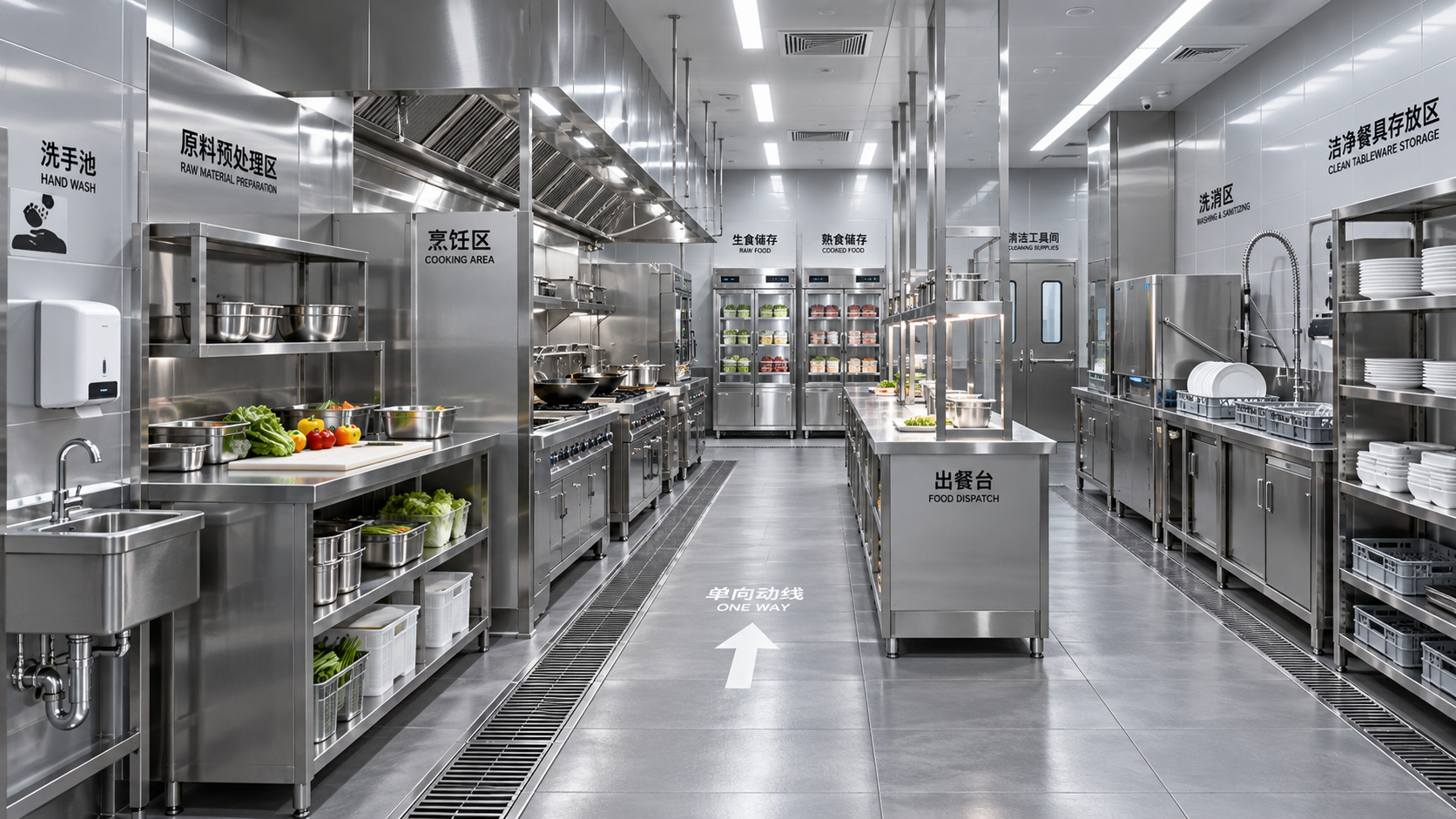
Important details include stainless steel construction, smooth welds, separated raw and cooked zones, and easy-access cleaning points.
Refrigeration must hold stable temperatures during peak opening and frequent door use.
2. Workflow efficiency and kitchen ergonomics
Poor layout can reduce the value of even premium equipment.
Preparation, cooking, holding, and washing zones should reduce crossing paths, waiting time, and unnecessary movement.
Compact line design and correct equipment placement often improve output more than adding more machines.
3. Durability and serviceability
High-volume kitchens create heat, grease, moisture, and repeated handling stress.
Restaurant equipment requirements should therefore include component lifespan, spare parts availability, and ease of technician access.
A cheaper unit can become costly when downtime interrupts service.
4. Energy and water efficiency
Energy-efficient kitchen equipment helps control operating costs and supports sustainability goals.
This applies to dishwashers, refrigeration, ventilation, cooking equipment, and hot water systems.
Evaluating lifetime utility use is often more meaningful than focusing only on purchase price.
5. Smart control and data visibility
Digital functions are becoming part of realistic restaurant kitchen equipment requirements.
Remote alerts, usage records, programmable recipes, and predictive maintenance can improve consistency and reduce avoidable waste.
The best systems simplify operations instead of adding complexity.
The impact differs across kitchen formats and operating models
Restaurant kitchen equipment requirements are not identical in every business environment.
However, the direction of change remains similar: more control, more efficiency, and more adaptability.
- Quick-service kitchens: speed, compactness, and repeatability become top priorities.
- Full-service restaurants: equipment flexibility matters more for wider menus and variable pacing.
- Hotel kitchens: multi-station coordination and batch capacity often drive equipment planning.
- Central kitchens: consistency, automation, and large-scale refrigeration become critical.
- Small urban kitchens: space-saving, venting efficiency, and multifunction equipment matter most.
This is why evaluating restaurant equipment requirements should start from service model, production volume, menu structure, and staffing reality.
What deserves closer attention before making equipment decisions
A useful review process focuses on performance under real conditions rather than catalog descriptions alone.
Key checkpoints
- Can the equipment support target output during the busiest hour?
- Does it meet sanitation, ventilation, and electrical requirements?
- Will cleaning take minutes or create daily bottlenecks?
- Are utilities, service points, and installation conditions fully matched?
- Is the interface simple enough for consistent use across shifts?
- Can the equipment adapt if menu items or service channels change?
A practical way to judge future-ready restaurant kitchen equipment requirements
The next step is to turn requirements into a clear equipment roadmap
Strong decisions begin with a simple audit of layout, bottlenecks, safety risks, utility usage, and maintenance history.
From there, prioritize changes that improve food safety, reduce labor friction, and lower total operating cost.
When reviewing restaurant kitchen equipment requirements, compare equipment not only by specification, but by operational fit.
The most effective commercial kitchen solutions are the ones that support reliable performance today while staying flexible for tomorrow’s service demands.
Popular Tags
Kitchen Industry Research Team
Dedicated to analyzing emerging trends and technological shifts in the global hospitality and foodservice infrastructure sector.
Industry Insights
Join 15,000+ industry professionals. Get the latest market trends and tech news delivered weekly.
No spam. Unsubscribe anytime.
Hot Articles
 How to Select Restaurant Kitchen Equipment for High-Volume Catering Operations
- Hygienic Restaurant Kitchen Design: Layout Rules to Reduce Cross-Contamination
- Why Glass Tea Servers Crack—and How to Prevent Thermal Shock When Brewing Tea
- How to Choose a Glass Tea Server for Hot and Cold Brewing Without Cracking


Contact With us
Contact:
Anne Yin (Ceramics Dinnerware/Glassware)
Lucky Zhai(Flatware)