
Do Kitchen Equipment Warranties Cover Electrical Adapter Failures?
Kitchen equipment warranties may cover electrical adapter failures when the adapter is included in the coverage and fails because of a defect in materials or workmanship. Coverage becomes less likely when damage results from liquid exposure, an unsuitable power supply, physical abuse, or an incompatible replacement. The adapter’s origin, the warranty wording, and the cause of failure determine who pays.
A dead appliance does not automatically mean its adapter has failed, and a failed adapter does not automatically qualify for free replacement. Before buying another power supply, identify the part, check the relevant coverage, and preserve the evidence needed for a claim.
Which type of electrical adapter has failed?
The word “adapter” can describe several different components, and each can have a different warranty status:
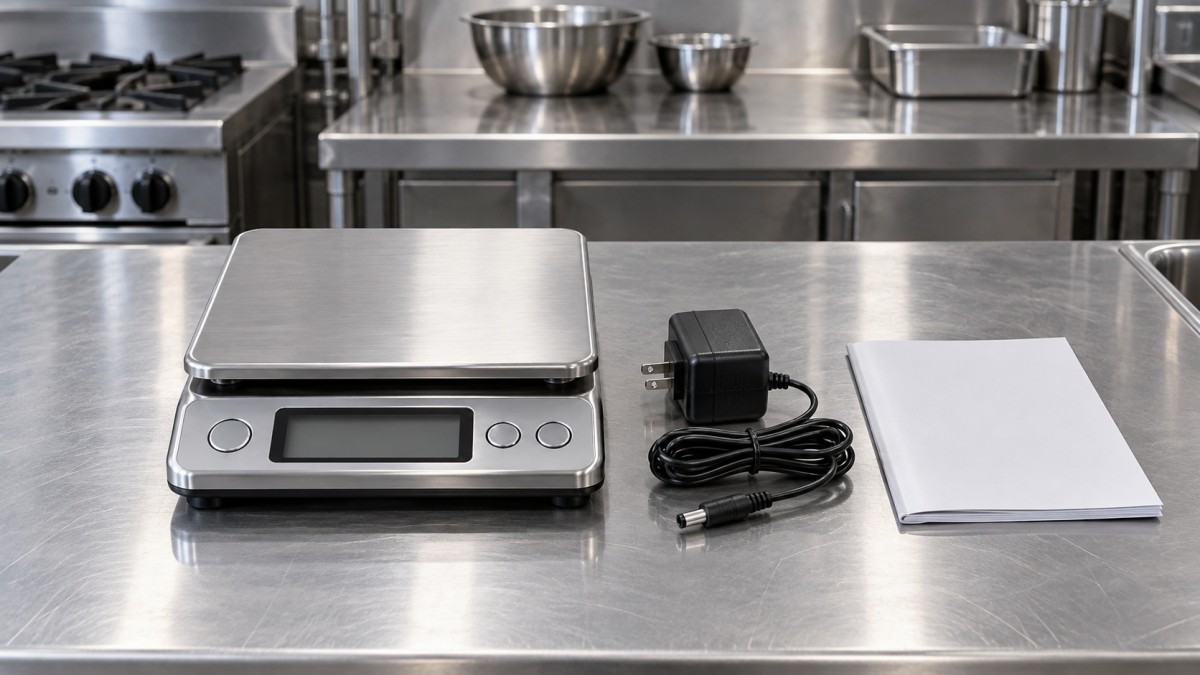
- External power adapter: A power brick or plug-in supply that converts mains electricity into the output required by the equipment.
- Travel or plug adapter: An accessory that changes the plug shape. A basic plug adapter does not convert voltage.
- Voltage converter or transformer: A separate device used to adapt the electrical supply for equipment with different voltage requirements.
- Internal power supply: A component inside the appliance that supplies its electronics, controls, or other circuits.
An external power adapter supplied with a kitchen scale, dispenser, or electronic controller may be covered as an included component. A separately purchased travel adapter usually belongs under its own seller’s or manufacturer’s warranty. An internal power supply is more likely to be assessed under the equipment’s parts coverage, although access and repair may require an authorized technician.
Use the part name and number when contacting support. Reporting “the supplied external power adapter has no indicator light” gives the service team more useful information than simply saying the appliance is broken.
When does a kitchen equipment warranty cover electrical adapter failures?
A claim is most straightforward when the original adapter was supplied with the equipment, the applicable warranty is active, and the adapter stopped working during normal use. Even then, check whether the warranty includes accessories or assigns them a separate coverage period.
Warranties commonly distinguish defects in materials or workmanship from damage caused during use. An internal component that fails under the specified operating conditions may qualify as a defect. A connector crushed under equipment or an adapter soaked during cleaning presents a different cause.
The absence of visible damage does not prove a manufacturing defect. Equally, a warm adapter is not necessarily faulty: power conversion produces heat. Excessive heat, melted housing, or a burning smell calls for stopping use and arranging an assessment.
What warranty wording should you check?
Start with the sections covering included components, accessories, exclusions, and claim procedures. A statement promising coverage for the equipment may be qualified elsewhere by separate terms for external power supplies.
Check when coverage begins and which document establishes that date. Depending on the arrangement, the relevant record might be a purchase receipt, delivery record, or installation document. Also check whether the warranty applies to the equipment’s actual use. Household equipment used continuously in a demanding kitchen may fall outside its intended operating conditions or warranty terms.
Parts coverage and labor coverage can differ. A replacement adapter may be supplied without charge while diagnosis, shipping, or an on-site visit remains payable. If the adapter is part of a larger assembly, the service procedure may also differ from a simple accessory exchange.
For imported equipment, check the service territory and purchasing channel. A product purchased for one market may have a different service route when used elsewhere. This matters particularly when the adapter or appliance has electrical specifications intended for its original destination.
Are surges, moisture, and third-party adapters excluded?
Power surges and unsuitable supply voltage are often treated as external causes rather than manufacturing defects. A separate protection plan may cover some electrical damage, but that protection should not be assumed to exist under the equipment warranty.
Moisture damage is another common issue. An appliance designed for kitchen use does not necessarily have a splash-resistant power adapter. Cleaning solution entering the adapter housing, steam collecting around it, or a connector resting on a wet surface can affect the claim.
Physical damage can include strained cables, broken plugs, crushed housings, or connectors repeatedly pulled by the cord. However, a cable that fails during ordinary handling may still warrant assessment. The cause matters more than a broad label such as “cable damage.”
Using a third-party adapter can complicate coverage, particularly if its electrical output is unsuitable or the warranty specifies approved accessories. It does not support a universal conclusion that every unrelated part of the appliance has lost coverage. Warranty terms and applicable consumer protections can affect that question; for the adapter claim, document exactly which power supply was connected when the fault occurred.
How can you check the fault without making it worse?
If the adapter smells burned, sparks, has exposed conductors, shows melting, or has become wet internally, disconnect it if safe and stop using it. Do not repeatedly reconnect a suspect adapter to see whether it recovers.
For equipment that simply will not power on, limit initial checks to the operating instructions and safe external inspection:
- Check the supply. Establish whether the outlet or circuit has lost power. Repeated protective-device trips require investigation rather than continued resetting.
- Inspect accessible connections. With power disconnected, look for loose plugs, damaged cables, and debris around connectors.
- Record the symptoms. Note indicator lights, error messages, intermittent operation, or whether movement of the cable affects power.
- Read the labels. Compare the adapter’s part number and electrical ratings with those specified for the equipment.
- Ask support about substitution. Use a known-compatible adapter for diagnosis only when the manufacturer’s procedure allows it.
A power light on the adapter does not prove that its output remains correct when the equipment draws power. Likewise, a dark appliance could have a failed switch, damaged input socket, or internal fault. These distinctions explain why support may request diagnosis before approving a replacement.
Do not open a sealed adapter or probe mains wiring to strengthen a claim. Internal electrical testing belongs with a qualified technician, and dismantling the part can complicate both safety and warranty assessment.
What should you include in a warranty claim?
A useful claim connects the equipment, the adapter, and the failure circumstances. Gather the following before contacting the seller or service department:
- The purchase record and equipment model or serial number.
- The adapter’s model, part number, and a readable photograph of its ratings label.
- Confirmation of whether it came with the equipment or was purchased separately.
- Photographs of the adapter, cable, connector, and visible damage.
- A brief description of when the fault appeared and how the equipment was being used.
- Any troubleshooting already completed under the operating instructions.
Describe observations without diagnosing a cause you cannot establish. “The equipment stopped powering on, and the supplied adapter’s indicator remains off” is more useful than “the transformer burned out.” Mention relevant events, including a spill, outage, or recent adapter replacement.
Ask whether the claim requires the adapter alone or the complete appliance, whether return authorization is needed, and who pays shipping or diagnostic charges. Keep the failed part until the claim is resolved. Disposal can remove evidence the service team needs to inspect.
If continuous operation matters, ask whether an approved replacement can be purchased while the claim is reviewed and whether reimbursement is available. Get that arrangement documented before buying; purchasing a replacement independently does not automatically create a right to repayment.
Can you use a replacement adapter while waiting?
Use a replacement only when its compatibility is established. A plug that fits does not establish electrical compatibility. For common low-voltage adapters, the relevant specifications include output voltage, AC or DC output, polarity where applicable, connector dimensions, and available current.
For many regulated DC supplies, the output voltage and polarity must match, while the available current must meet the equipment’s requirement. Some equipment also depends on communication, identification circuitry, or a particular power-delivery protocol. Those systems require more than matching the printed wattage.
Check input suitability as well. A plug-shape adapter cannot make equipment designed for one mains voltage operate safely on another. Grounding requirements must also be preserved.
An approved replacement simplifies compatibility and future service discussions. If adapters repeatedly fail, investigate the appliance and its installation rather than repeatedly replacing the same part. Excessive load, a damaged input socket, poor ventilation, moisture, or supply problems can defeat an otherwise suitable power adapter.
What if the adapter claim is rejected?
Ask for the reason in writing and the warranty provision supporting it. “Accessory not covered,” “coverage expired,” and “damage caused by liquid ingress” require different responses.
If the rejection concerns purchase eligibility or dates, provide the relevant records. If it concerns the adapter’s origin, supply the packing list or documentation identifying it as an included component. When the dispute concerns the failure cause, ask what inspection findings support the decision.
Manufacturer warranty coverage and statutory rights are separate matters. Depending on the jurisdiction and transaction, remedies may also be available through the seller. An extended service plan may offer another route, but its coverage and claim requirements need to match the failure.
Before authorizing a paid repair, request the scope and total charges, including diagnosis, parts, labor, and shipping. For a readily replaceable external adapter, those costs help determine whether the proposed service makes practical sense.
Does a replacement adapter receive a new warranty?
Not necessarily. A replacement supplied under warranty may remain covered only for the original warranty’s remaining term, or it may receive a separate replacement-part period. An adapter purchased as a new accessory may have its own terms. Keep the replacement paperwork and ask how its coverage is calculated.
Will the warranty cover food spoilage or lost operating time?
Replacing a defective adapter does not automatically cover the consequences of equipment downtime. Equipment warranties often limit coverage for losses such as spoiled food or lost revenue. Separate service agreements or insurance may address those costs. When temperature-controlled equipment loses power, follow the relevant food-safety procedures while arranging repair.
What should you do before paying for another adapter?
Record the original adapter’s identity, check whether it is an included component, and open the claim before discarding it. Ask support to establish compatibility for any replacement and explain which costs are covered. That sequence helps preserve a valid claim while reducing the chance of buying a power supply that fits the connector but does not suit the equipment.
Popular Tags
Kitchen Industry Research Team
Dedicated to analyzing emerging trends and technological shifts in the global hospitality and foodservice infrastructure sector.
Industry Insights
Join 15,000+ industry professionals. Get the latest market trends and tech news delivered weekly.
No spam. Unsubscribe anytime.

Contact With us
Contact:
Anne Yin (Ceramics Dinnerware/Glassware)
Lucky Zhai(Flatware)