
How to Compare Kitchen Equipment Manufacturers in China
Choosing among kitchen equipment manufacturers China suppliers can be challenging for business evaluators balancing quality, compliance, cost, and production capacity.
With global demand rising for efficient, smart, and energy-saving kitchen solutions, a structured comparison is essential.
This guide explains the key criteria to assess manufacturers in China, helping you identify reliable partners that match your sourcing goals and long-term business requirements.
Why a structured comparison matters
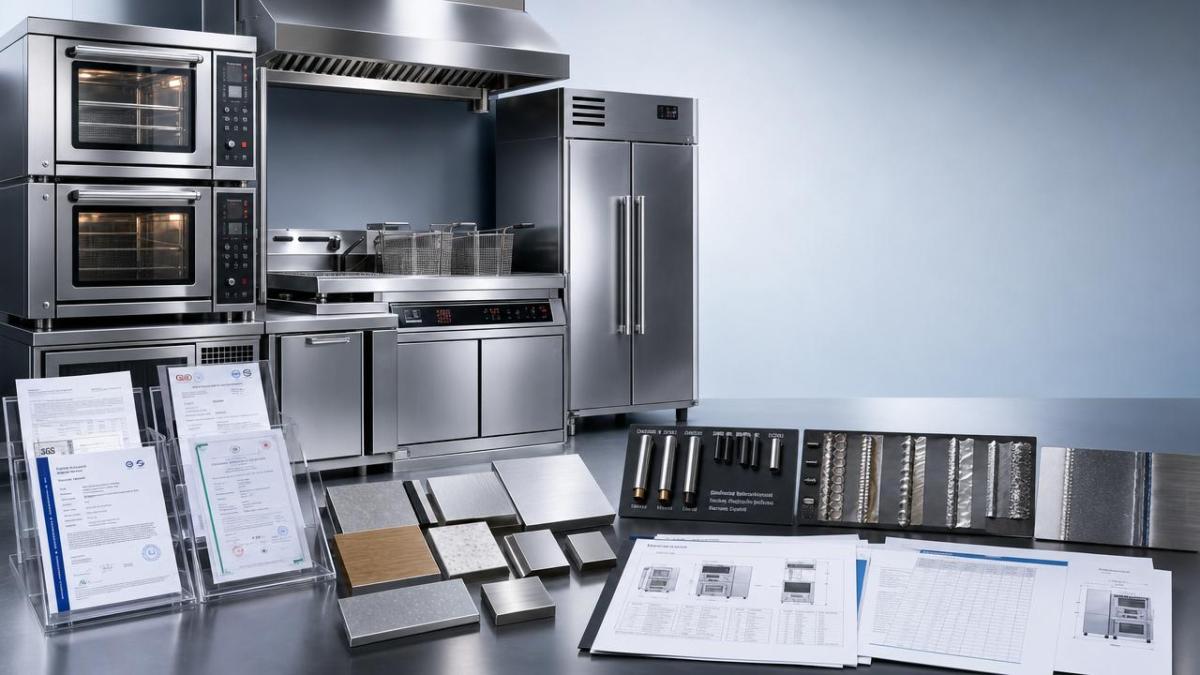
The market for kitchen equipment manufacturers China is broad, competitive, and highly segmented.
Some factories focus on stainless steel worktables, ovens, fryers, and refrigeration.
Others specialize in food processing lines, smart cooking systems, or household appliances.
Without a checklist, comparisons often rely too much on price.
That can lead to hidden costs, delayed shipments, weak after-sales support, or compliance failures.
A structured review helps compare Chinese kitchen equipment suppliers on measurable factors.
It also makes supplier shortlisting faster and more transparent across commercial, industrial, and residential product categories.
Key points to compare kitchen equipment manufacturers in China
Use the following checklist to evaluate kitchen equipment manufacturers China options more accurately.
- Verify product specialization and confirm the factory regularly produces the exact equipment category you need, not only trading mixed products from unrelated subcontractors.
- Check business licenses, export history, and factory audit records to confirm legal operation, international experience, and consistency in supplying overseas markets.
- Review certifications such as CE, ETL, NSF, ISO, or food-contact material reports based on destination market rules and product application requirements.
- Assess engineering capability by asking for drawings, customization cases, technical datasheets, and evidence of support for voltage, size, and workflow changes.
- Inspect material quality, especially stainless steel grades, compressor brands, heating elements, insulation, hinges, seals, and control system components.
- Request sample testing or video demonstrations that show heating performance, temperature stability, safety protection, noise level, and energy consumption.
- Compare production capacity, lead times, and peak-season planning to determine whether delivery promises are realistic for large or urgent orders.
- Ask about quality control checkpoints, incoming material inspection, in-process testing, final inspection reports, and packaging standards before shipment.
- Examine communication efficiency, including quotation clarity, response speed, technical accuracy, and the ability to solve issues before mass production starts.
- Review tooling, OEM, and ODM capabilities if you need private label products, customized dimensions, or integrated kitchen system solutions.
- Compare total landed cost instead of unit price alone, including spare parts, certification expense, mold fees, shipping, duties, and service risk.
- Confirm warranty terms, spare parts availability, and after-sales process to reduce downtime and maintenance problems after equipment installation.
How to score suppliers more objectively
A simple weighted scorecard improves comparisons among kitchen equipment manufacturers China candidates.
Assign percentages to quality, compliance, customization, price, capacity, and service.
Then score each supplier from one to five in every category.
What to check in different application scenarios
Commercial kitchens for restaurants and hotels
For restaurants and hotels, prioritize durability, workflow efficiency, and food safety compliance.
Kitchen equipment manufacturers China suppliers should provide stable heating, easy cleaning design, and reliable stainless steel construction for heavy daily use.
Food processing and central kitchen operations
For food processing lines, consistency and automation matter more than appearance alone.
Focus on throughput, control accuracy, sanitation design, maintenance access, and compatibility with upstream and downstream equipment.
Household kitchen appliances and retail brands
For retail or household products, design detail, packaging, branding, and safety certification become more important.
Chinese kitchen equipment suppliers should also support lower minimum orders, instruction manuals, and barcode or packaging customization.
Energy-saving and smart kitchen solutions
If smart or energy-efficient products are required, compare digital controls, sensors, remote monitoring, and power-saving performance claims carefully.
Ask for actual test data instead of depending only on marketing descriptions from kitchen equipment manufacturers China catalogs.
Commonly overlooked issues and risk alerts
Unclear factory identity
Some quotations come from trading firms while presenting themselves like factories.
Always confirm production location, workshop photos, audit reports, and export documents.
Certification mismatch
A certificate may exist, but not for the exact model, voltage, or destination country.
Check document scope carefully before approving any kitchen equipment manufacturers China order.
Price gaps caused by material changes
Lower prices may reflect thinner steel, lower-grade components, or fewer safety features.
Request a detailed bill of materials when comparing offers from Chinese kitchen equipment suppliers.
Weak packaging and shipping protection
Kitchen equipment is often bulky, heavy, and vulnerable to impact or moisture damage.
Export carton strength, wooden support, corner protection, and loading method should be reviewed early.
Limited spare parts planning
Downtime becomes expensive when thermostats, switches, compressors, or seals are unavailable.
Include spare parts lists and replacement lead times in the supplier comparison process.
Practical steps for execution
- Create a clear product specification sheet covering dimensions, materials, voltage, standards, and packaging needs before requesting quotations.
- Shortlist three to five kitchen equipment manufacturers China candidates with proven experience in your target equipment category.
- Request quotations in the same format so every supplier answers identical technical, commercial, and compliance questions.
- Collect photos, videos, test reports, and certifications, then verify whether each document matches the quoted model.
- Arrange factory audits, video inspections, or third-party quality checks before deposit payment or mass production approval.
- Run a sample order or pilot batch first when the product is customized or intended for long-term brand development.
- Use a written purchase agreement covering specifications, inspection rules, lead time, warranty, and corrective action procedures.
Frequently asked questions
How many suppliers should be compared?
Three to five is usually enough for a meaningful comparison.
Too few limits insight, while too many slows decisions without adding much value.
Is the lowest quote usually the best option?
Not necessarily.
The best option balances compliance, durability, service, and total ownership cost.
Should samples always be tested?
Yes, especially for heating, refrigeration, processing, or smart-control products.
Testing reveals issues that drawings and photos cannot fully show.
Conclusion and next steps
Comparing kitchen equipment manufacturers China suppliers works best when the process is structured, evidence-based, and aligned with application needs.
Focus on specialization, compliance, materials, testing, capacity, and service rather than price alone.
Start by defining product requirements, building a scorecard, and verifying documents carefully.
That approach helps identify reliable kitchen equipment manufacturers China partners for commercial kitchens, food processing projects, and household appliance programs.
Popular Tags
Kitchen Industry Research Team
Dedicated to analyzing emerging trends and technological shifts in the global hospitality and foodservice infrastructure sector.
Industry Insights
Join 15,000+ industry professionals. Get the latest market trends and tech news delivered weekly.
No spam. Unsubscribe anytime.
Hot Articles
 Kitchen Tools for Restaurants That Reduce Prep Bottlenecks During Peak Service
- How to Choose a Leak-Proof Glass Storage Container for Meal Prep and Transport
- How to Size a Commercial Charbroiler for Peak-Hour Restaurant Output
- How to Specify Stainless Steel Kitchen Equipment for High-Volume Commercial Kitchens
Contact With us
Contact:
Anne Yin (Ceramics Dinnerware/Glassware)
Lucky Zhai(Flatware)