
How to Compare Commercial Kitchen Equipment Suppliers Beyond Price
When comparing commercial kitchen equipment suppliers, the lowest quote rarely delivers the best long-term result.
Commercial kitchens depend on uptime, food safety, energy efficiency, and reliable service.
A weak supplier can create delays, compliance risks, repair costs, and operational disruption.
A strong supplier supports performance across installation, training, maintenance, and future expansion.
This guide explains how to evaluate commercial kitchen equipment suppliers beyond unit price and short-term discounts.
Understanding What Commercial Kitchen Equipment Suppliers Actually Provide
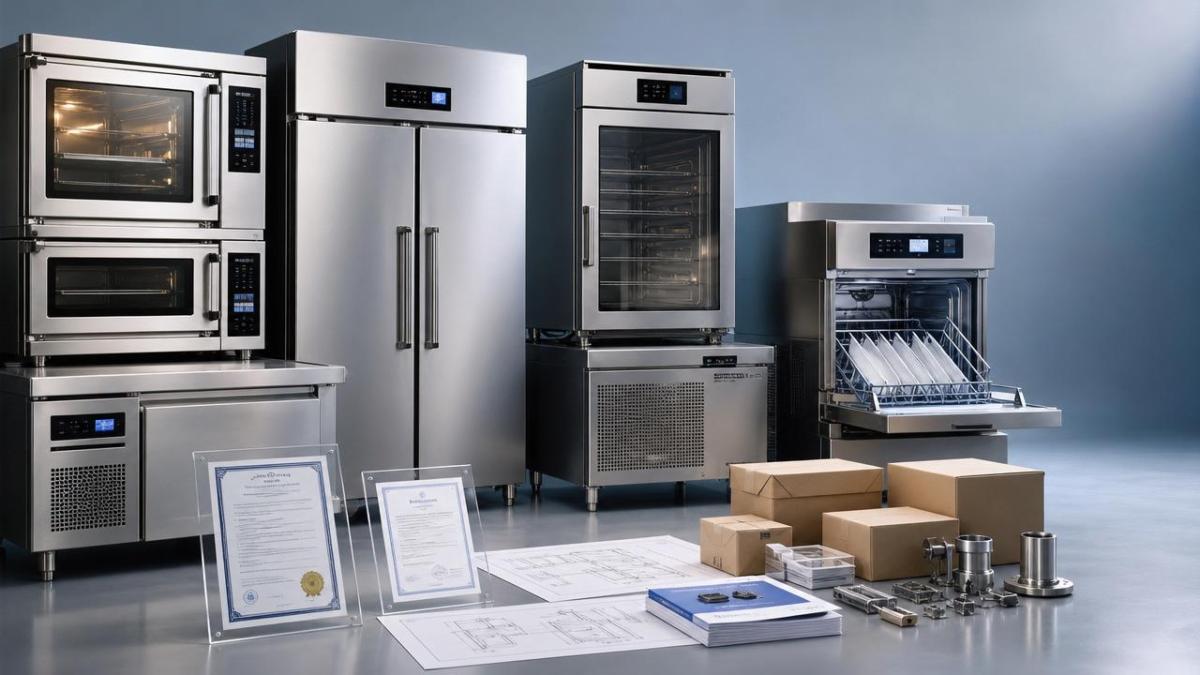
Commercial kitchen equipment suppliers do more than sell ovens, refrigerators, mixers, or dishwashing systems.
The best commercial kitchen equipment suppliers provide technical guidance, product matching, documentation, and lifecycle support.
They also help align equipment choices with kitchen layout, production volume, hygiene standards, and utility conditions.
In global sourcing, supplier capability matters as much as product specification.
A low purchase price can hide weak materials, unstable lead times, or limited spare parts availability.
That is why evaluating commercial kitchen equipment suppliers requires a broader decision framework.
Current Market Priorities in Commercial Kitchen Equipment Sourcing
The kitchen equipment industry is changing quickly due to food safety regulation, labor pressure, and energy costs.
Commercial kitchen equipment suppliers now compete on technology, responsiveness, and operating efficiency, not only on price.
- Smart controls and digital monitoring are becoming standard in premium equipment lines.
- Energy-efficient systems are prioritized to reduce utility expenses over the equipment lifecycle.
- Food-contact materials and sanitation design receive more attention from buyers and regulators.
- Lead time stability has become critical because project delays can affect opening schedules.
- Integrated solutions are preferred for restaurants, hotels, central kitchens, and food processing sites.
These trends make it important to compare commercial kitchen equipment suppliers through both present and future operating needs.
Key Evaluation Criteria Beyond Price
A structured scorecard helps compare commercial kitchen equipment suppliers with greater accuracy and less purchasing risk.
Product Quality and Material Standards
Check stainless steel grade, weld quality, insulation performance, motor durability, and component sourcing.
Consistent quality usually indicates stronger process control and lower failure rates after installation.
Compliance and Certification
Ask whether products meet destination market requirements such as CE, NSF, ETL, UL, or local food safety regulations.
Reliable commercial kitchen equipment suppliers can provide test reports and certification records quickly.
Manufacturing Capacity and Consistency
Capacity matters when projects involve multiple sites, phased rollouts, or repeat orders.
Evaluate factory scale, production planning, quality checkpoints, and backup arrangements for key components.
Customization and Solution Fit
Not every kitchen uses standard dimensions, voltage, output levels, or workflow design.
The strongest commercial kitchen equipment suppliers can adjust specifications without reducing reliability.
After-Sales Service and Spare Parts
Service quality often defines the real ownership experience.
Review warranty terms, response time, parts stock, technical manuals, and remote troubleshooting options.
Communication and Project Management
Fast and accurate communication reduces errors in drawings, specifications, logistics, and installation preparation.
Commercial kitchen equipment suppliers with clear project management usually perform better on complex orders.
A Practical Comparison Table for Supplier Shortlisting
This method makes commercial kitchen equipment suppliers easier to compare on measurable business factors.
Business Value of Choosing the Right Supplier
The right commercial kitchen equipment suppliers can improve efficiency long after installation is complete.
Higher quality equipment usually reduces breakdowns, labor interruptions, and sanitation concerns.
Better engineering can also shorten cooking cycles, stabilize temperature control, and lower utility consumption.
For multi-unit operations, supplier consistency helps standardize training, maintenance, and output quality.
For food processing sites, dependable equipment protects throughput and product safety.
For hospitality projects, timely delivery keeps opening schedules and revenue plans on track.
In each case, total value matters more than headline price.
Typical Equipment Categories and Supplier Priorities
Different equipment groups require different review priorities when screening commercial kitchen equipment suppliers.
Common Risks When Price Becomes the Main Filter
Focusing only on price can hide important weaknesses among commercial kitchen equipment suppliers.
- Unverified certifications may delay customs clearance or local approval.
- Thin materials may lower durability in high-volume kitchens.
- Poor packaging can cause hidden transport damage.
- Limited spare parts can extend downtime after minor failures.
- Weak technical support can create installation and commissioning problems.
- Inconsistent production can affect repeat orders and multi-site standardization.
These risks often cost more than the initial savings.
Practical Steps for Supplier Verification
Before final selection, use a verification process that tests real supplier capability.
- Request detailed specifications, certifications, and warranty terms.
- Review factory audit materials or arrange a remote or onsite inspection.
- Ask for reference projects in restaurants, hotels, or food processing environments.
- Test communication speed and technical accuracy during quotation stages.
- Confirm spare parts policy and post-installation support channels.
- Compare total cost of ownership, not only purchase price.
This approach helps identify commercial kitchen equipment suppliers that can support long-term operations.
Next-Step Decision Framework
Start by defining application needs, expected output, compliance requirements, and utility conditions.
Then build a shortlist of commercial kitchen equipment suppliers using quality, service, and delivery criteria.
Score each supplier across technical fit, certification, capacity, communication, and lifecycle support.
Request samples, drawings, or pilot units where project scale justifies closer validation.
The best decision is usually the supplier offering dependable performance, manageable risk, and strong long-term value.
In a competitive foodservice environment, selecting the right commercial kitchen equipment suppliers supports efficiency, safety, and sustainable growth.
Popular Tags
Kitchen Industry Research Team
Dedicated to analyzing emerging trends and technological shifts in the global hospitality and foodservice infrastructure sector.
Industry Insights
Join 15,000+ industry professionals. Get the latest market trends and tech news delivered weekly.
No spam. Unsubscribe anytime.
Hot Articles
 How to Choose a Leak-Proof Glass Storage Container for Meal Prep and Transport
- How to Size a Commercial Charbroiler for Peak-Hour Restaurant Output
- How to Specify Stainless Steel Kitchen Equipment for High-Volume Commercial Kitchens
- How to Choose Food Containers for Hot, Cold, and Leak-Prone Takeout Meals

Contact With us
Contact:
Anne Yin (Ceramics Dinnerware/Glassware)
Lucky Zhai(Flatware)