
Choosing Durable Hotel Catering Equipment for High-Volume Kitchens
Durable hotel catering equipment is equipment that can handle the kitchen’s busiest service, be cleaned thoroughly between uses, and return to operation quickly when a component fails. A heavy exterior or a generous warranty alone cannot establish that. The better purchasing decision starts with the workload, then examines construction, installation requirements, service support, and the total cost of ownership.
For a high-volume hotel kitchen, a failure can affect several services at once: breakfast, room service, banquets, and staff meals may all depend on the same equipment. A suitable model therefore needs more than enough capacity on a specification sheet. It must fit the way food moves through the kitchen and be maintainable under real operating conditions.
Start With Peak Service, Not Daily Covers
Average meals per day can conceal the load that matters most. A hotel may serve breakfast in a short window, prepare banquet food in batches, and operate a smaller à la carte service throughout the evening. Each pattern places different demands on ovens, refrigeration, dishwashers, and preparation equipment.
Map the busiest realistic service period before comparing models. Record what must be produced, held, chilled, or washed at the same time, and identify where one machine serves multiple outlets. For example, an oven that appears adequate for routine restaurant service may become a bottleneck when banquet production overlaps with room service.
Capacity figures also need context. Ask suppliers how the stated output is measured, including the product type, starting temperature, loading arrangement, and operating cycle. A fryer’s nominal basket capacity, for example, does not tell you how quickly oil temperature recovers after consecutive loads. Similarly, a dishwasher’s stated rack output may not reflect the time needed for scraping, loading, unloading, and changing water.
Allow for recovery time and normal interruptions, but avoid buying the largest model by default. Oversized equipment can consume more space and utilities, increase cleaning work, and operate inefficiently during quieter periods. In some kitchens, two smaller units provide useful flexibility and a degree of backup; in others, a single larger unit is easier to load, clean, and service. Compare the options against available space, staffing, and the consequences of losing one unit.
Inspect the Construction Behind the Finish
Stainless steel is common in commercial kitchens because it can provide a durable, cleanable surface, but the label alone does not establish build quality. Ask which materials are used on food-contact surfaces, panels, frames, and internal components. These areas face different stresses, and not every visible or concealed part will necessarily use the same material.
Look closely at joints, hinges, handles, racks, and supports. Doors that are repeatedly opened during service need hardware suited to frequent use; shelving and tray supports must carry the expected load without excessive movement. On mobile equipment, check that casters, brakes, and mounting points are appropriate for the weight of the loaded unit and the condition of the floor.
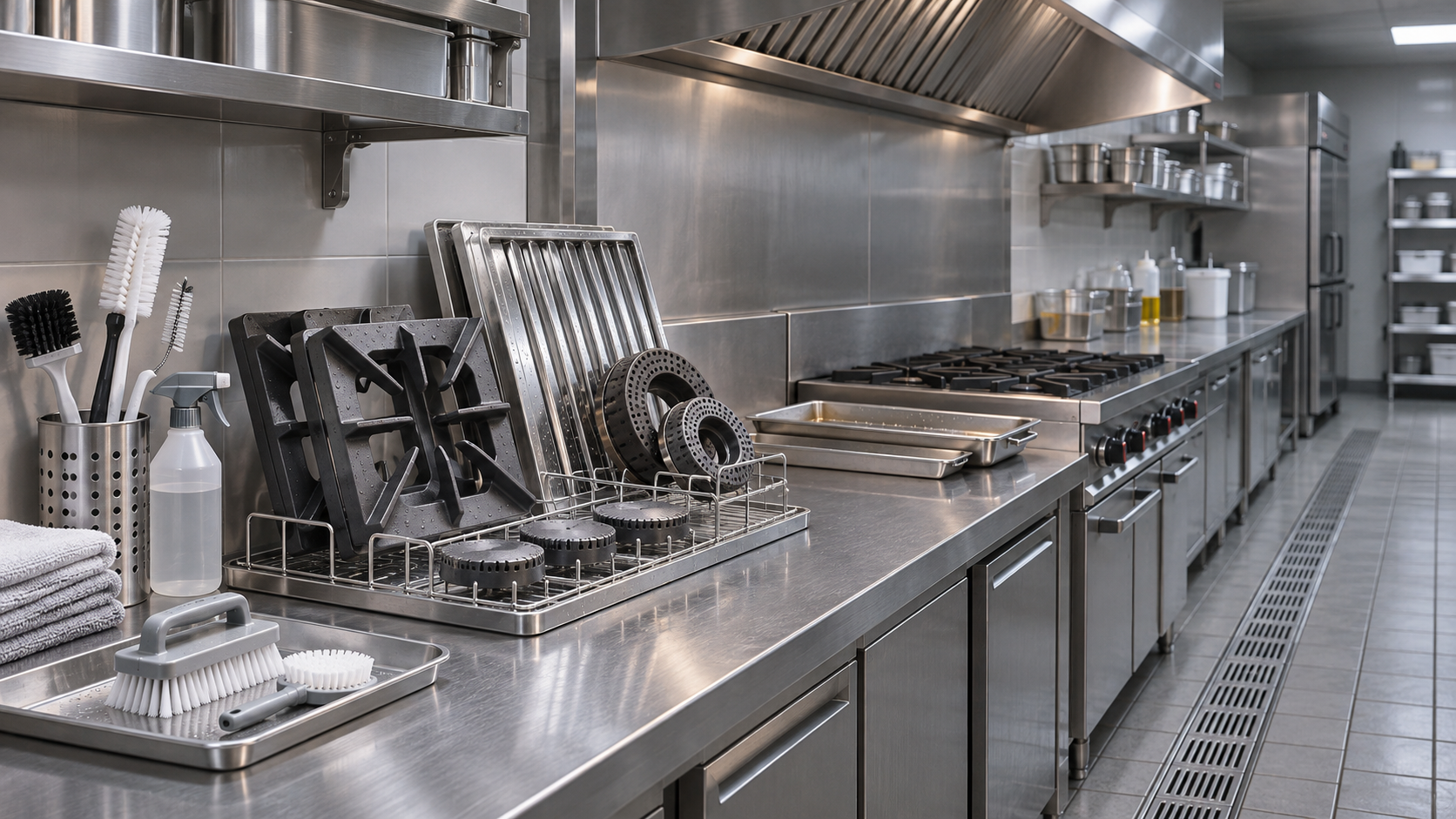
Where practical, inspect a representative unit rather than relying only on photographs. Open doors and drawers, remove filters and racks, and check for sharp edges, inaccessible crevices, or components that feel difficult to handle when wet. Examine welds and seams for a finish that supports cleaning. A polished exterior has limited value if debris collects around poorly accessible joints.
Pay attention to replaceable wear items. Door gaskets, seals, heating elements, pumps, and controls may eventually need attention even on well-built machines. Equipment designed for straightforward replacement can reduce disruption, provided those parts are available through a dependable service channel.
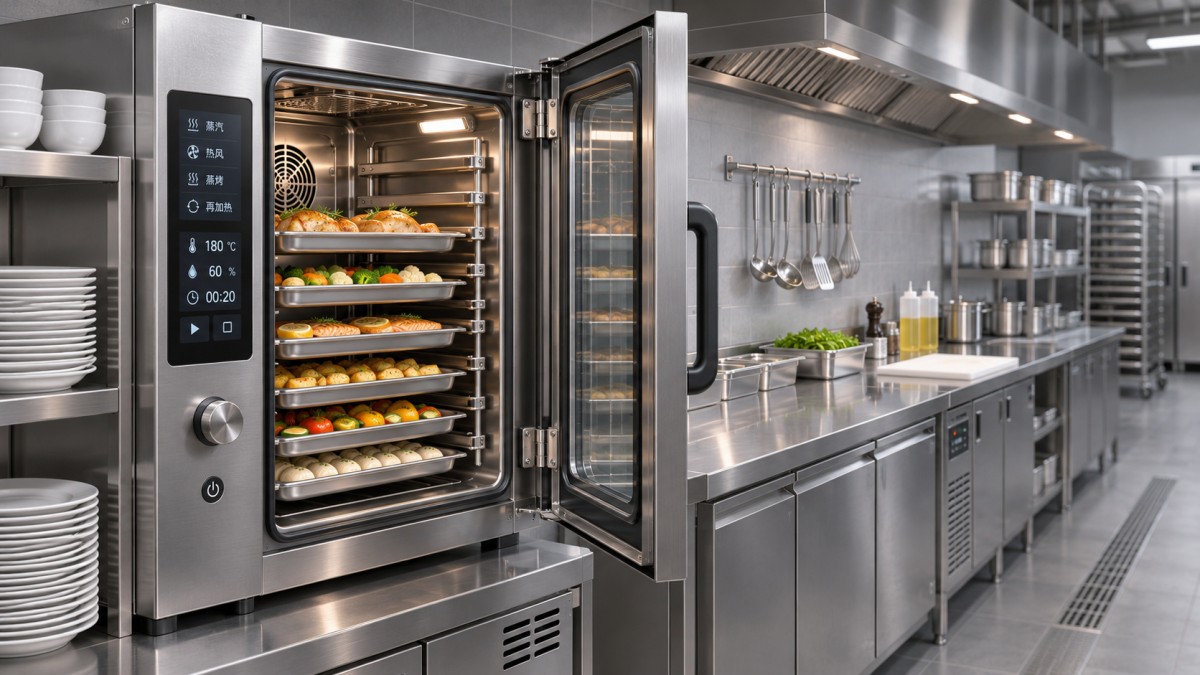
Match Each Equipment Category to Its Hardest Job
Different machines fail or underperform for different reasons. A common comparison checklist is useful, but it should be supplemented by questions specific to the equipment’s role.
- Cooking equipment: Assess recovery between loads, temperature consistency, usable cooking space, and access for cleaning. Combi ovens can support varied menus and batch sizes, but their value depends on whether the kitchen will use their functions and maintain the water supply and cleaning system as required.
- Refrigeration: Check usable storage layout, airflow around the unit, door traffic, and how temperatures are monitored. A cabinet selected only by external dimensions may not accommodate the hotel’s pans or allow staff to retrieve food without repeatedly obstructing airflow.
- Dishwashing: Compare output with the busiest return of plates, glasses, and cookware. Include the space and labor needed for pre-rinsing, sorting, drying, and putting items away. A faster machine cannot solve a congested loading area on its own.
- Food preparation: Match mixers, slicers, and processors to the product, batch size, and frequency of use. Check bowl and attachment compatibility, guarding, cleaning access, and the availability of replacement blades or other wear parts.
- Holding and transport: Consider how long food must remain in the unit, the route between kitchen and service point, and whether staff can safely maneuver it when loaded. Door seals, tray spacing, and resistance to impacts can matter as much as the stated capacity.
A feature is only an advantage if it supports the menu and staff workflow. Programmable controls may help standardize repeatable tasks, while a simpler interface may suit an operation with frequent staff changes or limited need for complex recipes. In either case, controls should remain usable in a busy, hot, and often wet environment.
Check Installation Constraints Before Comparing Final Prices
A suitable machine on paper can become a costly purchase if the building cannot support it. Before issuing a final specification, involve the facilities team in checking the available electrical supply, gas connection where relevant, water supply, drainage, ventilation, and access route. Equipment dimensions should include the clearances needed for operation, cleaning, and servicing, not just the footprint of the cabinet.
Water conditions deserve particular attention for steam ovens, ice machines, coffee equipment, and dishwashers. The treatment arrangement should be compatible with both the local supply and the equipment manufacturer’s requirements. Poor water management can affect performance and increase cleaning and maintenance demands; treatment equipment also introduces filters or other consumables that need to be included in operating costs.
Installation planning should extend to the delivery path. Measure doorways, lifts, corners, and any restricted access to the kitchen. Confirm whether the unit can be delivered in sections, whether the floor can support it, and what work is needed to remove the existing machine. These details can change both the installation schedule and the final cost.
For cooking appliances, the equipment choice must also fit the kitchen’s ventilation design and applicable local requirements. A change from one appliance type to another may have consequences beyond the connection point, so include the relevant design and installation specialists before placing the order.
Compare Service Support as Carefully as the Machine
In a hotel that operates every day, the length of an interruption can matter more than the cost of an individual repair. Ask each supplier who will service the equipment at the property, how a call is logged, and what support is available during the hotel’s operating hours. A supplier’s ability to sell into a market does not automatically mean it has technicians or stocked parts close to the site.
Request a list of common spare parts and consumables, along with their expected availability and ordering route. For critical equipment, discuss which items the hotel or service provider should keep on hand. Also ask whether technicians need manufacturer-specific training or diagnostic tools, and whether those resources are available for the proposed model.
Read warranty terms alongside the service proposal. Establish what is covered, who pays for travel and labor, how preventive maintenance affects coverage, and what happens when a replacement part is needed. A long warranty with limited local support may be less useful operationally than a shorter arrangement backed by responsive service.
Downtime planning should reflect the consequences of failure. Losing one undercounter refrigerator may be manageable if alternative storage is available. Losing the only dishwasher during a large event may require a contingency plan, such as access to a second machine or an agreed temporary alternative. Build that risk into the purchase decision rather than treating every appliance as equally critical.
Use Lifecycle Cost to Compare Competing Quotes
The purchase price is only one part of ownership. A lower-priced appliance may still be the right choice, but only after its installation, operating, and support costs are considered on comparable terms. Ask suppliers to separate these costs so that a quote with fewer included services does not appear artificially cheaper.
For each shortlisted model, compare:
- Equipment price, delivery, installation, commissioning, and removal of the old unit.
- Utility consumption under a stated operating condition relevant to the kitchen.
- Water treatment, cleaning chemicals, filters, and other recurring consumables.
- Preventive maintenance, inspection, and expected replacement wear parts.
- Warranty coverage, service call charges, and access to local repairs.
- The operational consequence of downtime and any backup arrangement.
Energy and water figures are most useful when they describe comparable workloads and test conditions. A model that performs well on a standard cycle may not deliver the same relative savings when it is repeatedly opened, run partially loaded, or left idle between services. Where consumption is a major decision factor, ask suppliers to explain the assumptions behind their figures and how the proposed equipment would be used in the hotel.
Automation can also change the calculation. A programmable cooking cycle or connected monitoring system may reduce repetitive checks or improve consistency, but only if staff use it and the hotel can support the system. Include training, connectivity, ongoing subscriptions where applicable, and the process for operating during an outage in the comparison.
Turn the Shortlist Into a Clear Purchase Specification
Before requesting final offers, describe the job the equipment must perform rather than relying on a generic model description. Include the expected peak workload, available utilities and space, required pan or rack sizes, cleaning constraints, service expectations, and any features that are genuinely necessary. Identify which requirements are essential and which can be traded off against cost.
Ask suppliers to respond to the same requirements and identify exclusions. This makes differences in installation, training, maintenance, and accessories visible before the decision is made. For a critical or unfamiliar machine, arrange a demonstration using representative products and workloads where practical. Include kitchen staff and the facilities team in the assessment: one group can judge the workflow, while the other can assess installation and maintenance access.
At handover, confirm that the delivered configuration matches the order, staff can operate and clean it, and the service contacts and maintenance instructions are available. The strongest choice is the one that fits the hotel’s actual service pattern and can be supported throughout its working life, not simply the one with the most features or the lowest initial quote.
Popular Tags
Kitchen Industry Research Team
Dedicated to analyzing emerging trends and technological shifts in the global hospitality and foodservice infrastructure sector.
Industry Insights
Join 15,000+ industry professionals. Get the latest market trends and tech news delivered weekly.
No spam. Unsubscribe anytime.


Contact With us
Contact:
Anne Yin (Ceramics Dinnerware/Glassware)
Lucky Zhai(Flatware)