
Why a glass juice dispenser leaks even with a tight lid
A glass juice dispenser that leaks even with a tight lid can quickly turn a refreshing drink into a messy frustration. If your glass juice dispenser keeps dripping, the problem may not be the lid alone. From worn seals to pressure buildup and uneven surfaces, several hidden causes can lead to leaks. Understanding these issues helps consumers choose, use, and maintain dispensers more effectively.
Why can a glass juice dispenser leak even when the lid feels tight?
This is the first question most buyers ask, and the answer is surprisingly simple: a tight lid does not always create a complete seal. In many cases, a glass juice dispenser leaks because the real weak point is somewhere else in the system. The lid may be secure, but the rubber gasket may be cracked, the spigot may be loose, or the jar opening may not be perfectly level.
A dispenser works as a combination of glass body, lid, seal, and tap. If any one part is slightly misaligned, liquid can escape. Consumers often focus on the lid because it is the most visible closure point, yet leaks more often begin around the spout connection or around a damaged seal. In some models, the lid also traps air pressure inside. That pressure can push liquid toward the spigot and create slow dripping even though the top seems fully closed.
Another overlooked issue is manufacturing tolerance. In the kitchen equipment market, product design quality varies widely between decorative dispensers and more reliable foodservice-oriented models. A low-cost glass juice dispenser may look attractive, but if the threading, gasket fit, or spigot mount is inconsistent, a leak can happen from day one.
Which parts of a glass juice dispenser are most likely to cause leaks?
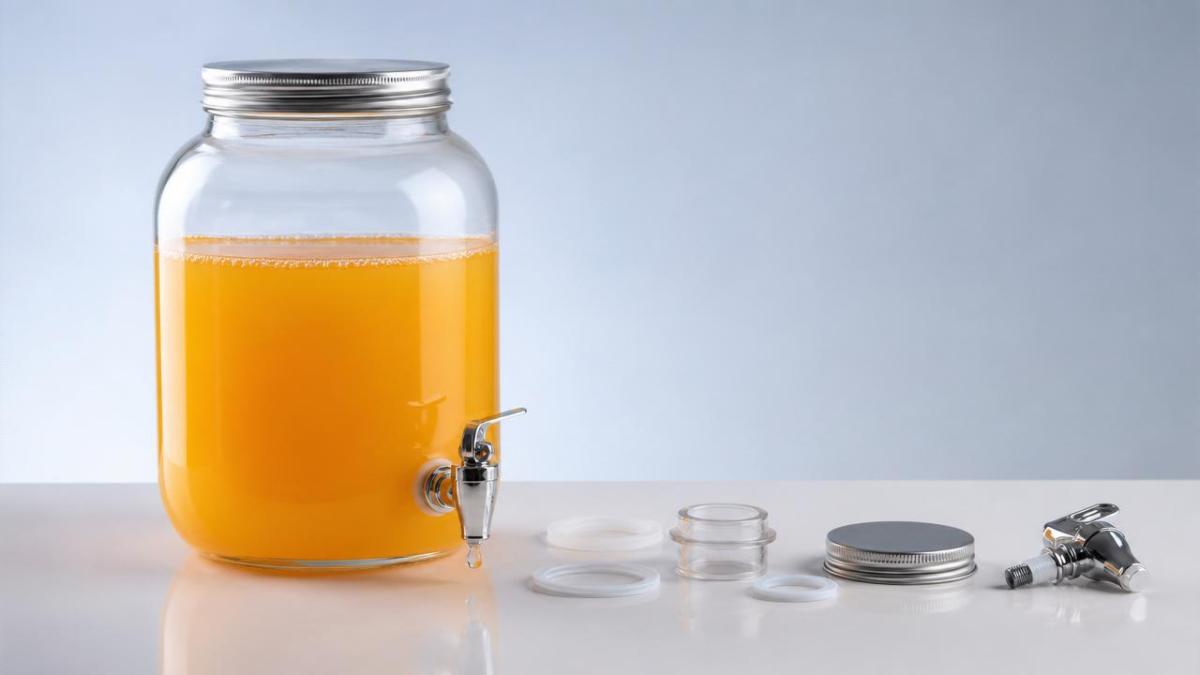
When trying to solve a leak, it helps to inspect the dispenser part by part rather than assuming the whole product is defective. Most leak complaints come from four common areas.
- The spigot connection: This is the most common source. If the inner nut is not tightened correctly or the washer is folded, juice can seep around the tap.
- The rubber or silicone gasket: A gasket can dry out, flatten, crack, or shift during cleaning. Even a small defect can break the seal.
- The glass around the tap hole: Tiny chips or uneven edges can prevent the spigot from sitting flush against the container.
- The lid seal and venting area: If the lid traps pressure or does not seat evenly, it may contribute to dripping or overflow at another point.
For end consumers, this matters because a leak is not always a sign that the entire glass juice dispenser should be replaced. In many cases, replacing a gasket or reinstalling the spigot correctly is enough. However, if the glass itself is warped, chipped, or poorly molded, repair may be temporary at best.
How do pressure, temperature, and filling habits make leaking worse?
Even a well-made glass juice dispenser can leak if it is used in the wrong way. One major reason is internal pressure. When the lid is tightly closed and liquid is dispensed through the spigot, air movement inside the jar changes. If the dispenser lacks proper venting, pressure imbalance can force extra liquid through the tap or create irregular dripping after use.
Temperature also plays a role. Pouring very cold juice into a room-temperature container may cause condensation around fittings, which can look like a leak. On the other hand, adding warm liquid to a sealed glass juice dispenser may expand air inside and increase pressure at the spigot. While most beverage dispensers are intended for cold drinks, some users forget this and use them for infused tea, warm cider, or freshly mixed beverages, which raises the risk of seal failure.
Overfilling is another frequent mistake. If the liquid level rises too high, especially above the spigot line or too close to the lid, movement during serving can force juice into places where it should not go. Fruit pulp, seeds, or ice cubes can also obstruct normal flow. Once the tap does not close cleanly, a slow drip may continue for minutes or even hours.
Placement matters too. A glass juice dispenser sitting on an uneven countertop, unstable stand, or outdoor buffet table may tilt just enough to stress the spigot fitting. In household kitchens and event settings, this is more common than many people realize.
How can you tell whether the leak comes from the lid, the spigot, or the glass body?
A quick visual check is helpful, but a structured test is better. Start by filling the glass juice dispenser with plain water instead of juice. Water is easier to clean up and makes leak patterns easier to observe. Dry the outside completely before testing so you can spot the first wet area.
Next, place the dispenser on a dry towel or paper surface. If water appears directly below the spigot, the tap assembly is the likely issue. If moisture forms around the lid or runs down from the top edge, the problem may be the lid seal or an uneven rim. If the outside stays dry until you open the spigot and then starts dripping afterward, the internal valve may not be closing fully.
If no visible source appears, inspect the glass around the tap opening in bright light. Hairline cracks, small chips, or rough manufacturing marks are easy to miss. These defects are more likely in decorative drinkware that prioritizes appearance over repeated use. For consumers comparing products, this is one reason to look beyond style and consider construction quality.
Quick leak diagnosis table
What are the most common mistakes consumers make when using or cleaning a glass juice dispenser?
Many leaks develop gradually because of routine handling rather than immediate product failure. One common mistake is overtightening the spigot hardware. People assume tighter is better, but too much force can deform the gasket, stress the glass, or misalign the washer. A snug, even fit is usually safer than maximum force.
Another mistake is reassembling parts while they are still wet or slightly twisted after washing. If the gasket does not sit flat, the next use may result in slow seepage. Dishwashers can also shorten the life of some rubber seals, especially in lower-grade dispensers. Hand washing the removable parts often helps preserve fit and elasticity.
Consumers also forget that fruit-infused drinks create extra strain on a dispenser. Citrus pulp, berry seeds, mint stems, and ice fragments can block the spigot and prevent clean shutoff. In busy household use or small gatherings, the dispenser may be opened and closed frequently, which increases wear over time.
Finally, some people store a glass juice dispenser with the lid sealed tightly between uses. That can trap moisture, encourage odor buildup, and affect gasket condition. Letting parts dry fully before reassembly is a simple maintenance step that reduces future leaking problems.
How do you choose a glass juice dispenser that is less likely to leak?
If you are shopping for a new glass juice dispenser, leak prevention starts before purchase. The first thing to check is the spigot design. A well-designed dispenser should use food-safe sealing materials, have a stable interior fastening system, and allow easy disassembly for cleaning. If the tap feels flimsy or the washer looks thin, long-term reliability may be limited.
Look closely at the glass thickness around the lower body where the spigot is installed. Thin or uneven glass increases the chance of poor sealing. A wide, stable base is also valuable because it reduces tipping and movement during serving. For everyday home use, practical stability matters more than novelty shape.
Lid design is another buying factor. Some lids are mainly decorative, while others include better sealing support. If you plan to use the dispenser outdoors, during parties, or for longer beverage service, choose a model with a properly fitted seal and a lid that sits evenly without forcing it into place.
In the broader kitchen equipment industry, products designed with foodservice durability in mind often perform better than purely seasonal gift-style items. For the end consumer, reading reviews about leaking, cleaning ease, and replacement part availability is just as important as checking appearance and capacity.
When should you repair the dispenser, and when is replacement the smarter choice?
A leaking glass juice dispenser is worth repairing if the issue is limited to the gasket, spigot assembly, or minor misalignment. These are low-cost fixes and often restore normal performance. If replacement washers or food-safe silicone rings are available, the repair is usually straightforward.
Replacement becomes the better choice when the glass body has visible damage, the spigot hole is uneven, or the dispenser leaks repeatedly after careful reassembly. Glass with hairline cracks should not continue in food or beverage use because the problem may worsen suddenly. Safety matters more than saving a decorative item.
It is also smart to replace a dispenser if its design makes cleaning difficult. Hidden residue inside the tap or around seals can affect hygiene as well as performance. In a market where kitchen equipment is increasingly judged by food safety, convenience, and durability, easier maintenance is a real value point, even for household products.
What should you confirm before buying, using, or comparing a glass juice dispenser?
Before making a purchase or trying to solve a recurring leak, confirm a few practical questions. Is the spigot removable and easy to clean? Are replacement seals available? Does the lid provide an actual seal or mainly a cover? Is the glass thick enough around the tap area? Will you use it mostly for water, juice, infused drinks, or pulp-heavy beverages? These details directly affect leak risk and everyday usability.
For consumers, the best glass juice dispenser is not simply the prettiest one. It is the one that balances appearance, stable construction, food-safe materials, and easy maintenance. If you need to further confirm the right product, parameters, or use direction, prioritize questions about seal quality, spigot structure, cleaning method, replacement parts, intended beverage type, and whether the dispenser is designed for frequent service or occasional display use.
Popular Tags
Kitchen Industry Research Team
Dedicated to analyzing emerging trends and technological shifts in the global hospitality and foodservice infrastructure sector.
Industry Insights
Join 15,000+ industry professionals. Get the latest market trends and tech news delivered weekly.
No spam. Unsubscribe anytime.

Contact With us
Contact:
Anne Yin (Ceramics Dinnerware/Glassware)
Lucky Zhai(Flatware)