
Restaurant supplies supplier red flags hidden in sample orders
A sample order is often treated as a simple product check, but for business evaluators it should function as a low-cost audit of the entire supplier system. When you review a sample from a restaurant supplies supplier, you are not only checking finish quality, dimensions, or usability. You are testing whether the supplier can execute consistently, communicate accurately, document properly, and meet compliance expectations under real commercial conditions.
That is why hidden red flags in sample orders matter so much. Small issues such as missing labels, delayed replies, inconsistent specifications, vague test reports, or careless packaging may point to larger structural weaknesses. These can later become late shipments, customs problems, warranty disputes, unstable product quality, or failed launches in your market.
For sourcing teams, procurement managers, and commercial evaluators in the kitchen equipment sector, the real question is not whether a sample “looks acceptable.” The real question is whether the sample reveals that the supplier is capable of supporting repeat orders at scale. A strong sample process gives confidence. A weak one exposes risk early, when the cost of walking away is still low.
What business evaluators are really trying to learn from a sample order
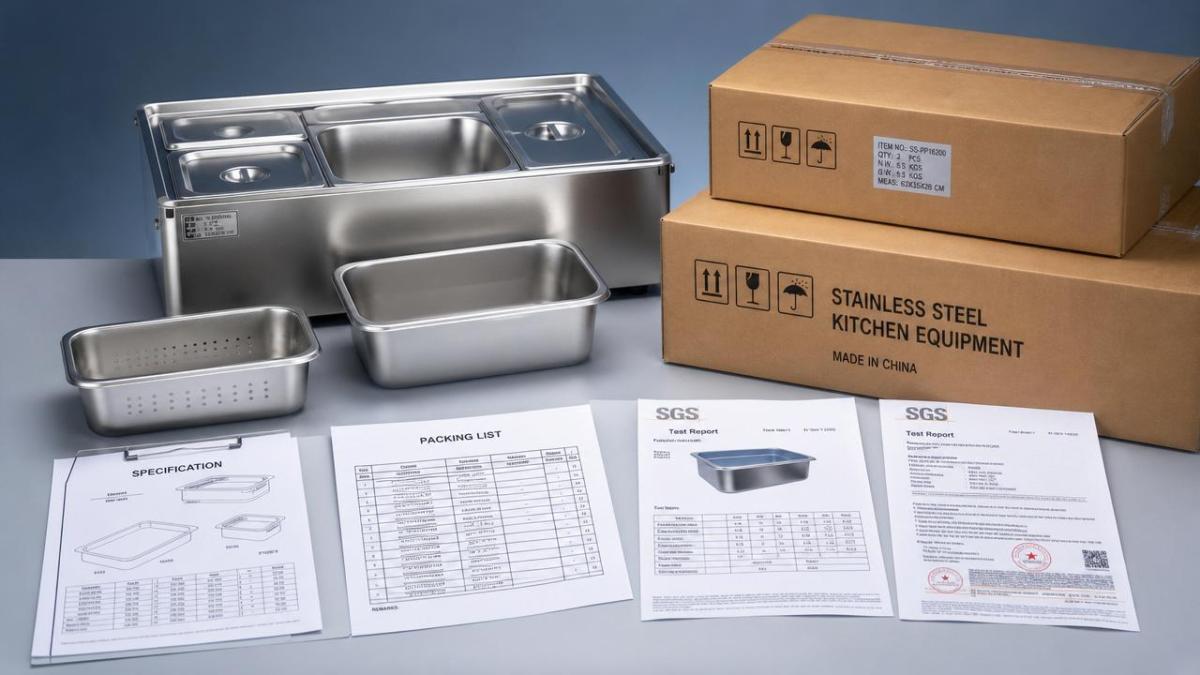
Most buyers request samples to validate product quality, but experienced evaluators use sample orders to test operational maturity. In the restaurant and kitchen equipment industry, a sample is a compressed version of the future business relationship. It shows how the supplier handles inquiry intake, quotation accuracy, engineering confirmation, packaging control, export documentation, lead time management, and after-sales responsiveness.
If a restaurant supplies supplier struggles with one sample unit, that weakness rarely disappears when the order grows to hundreds of units or multiple SKUs. In fact, scale usually amplifies the problem. A supplier that cannot maintain basic accuracy during a sample stage may later create inventory mismatches, compliance failures, damaged goods, or costly project delays for restaurants, hotels, or foodservice distributors.
This is especially important in global sourcing. Buyers of commercial kitchen equipment, utensils, food prep tools, storage systems, and restaurant appliances often depend on cross-border suppliers. In those cases, operational discipline matters as much as manufacturing capability. The sample order becomes one of the earliest and clearest windows into that discipline.
Red flags in product consistency: when the sample may not represent mass production
One of the most common hidden risks is that the sample is better than the actual production standard. Some suppliers prepare samples manually, use upgraded materials, assign senior technicians, or source better accessories only for evaluation pieces. The result is a sample that passes inspection but does not reflect what regular orders will look like.
There are several warning signs. The first is inconsistency between the sample and the quotation or specification sheet. If the weight, material grade, power rating, thickness, finish, or included accessories differ from the formal documents, the supplier may lack version control or may be intentionally flexible in a way that creates future disputes.
A second warning sign is hesitation when you ask whether the sample came from normal production. Reliable suppliers can explain clearly whether the item was pulled from existing stock, made on a standard line, or customized for evaluation. Vague answers such as “almost the same” or “production will be adjusted later” should trigger deeper review.
A third issue is visible craftsmanship that seems too perfect compared with the supplier’s usual catalog range or factory profile. If a low-cost supplier presents a premium-finish sample without supporting process controls, there may be a gap between what was shown and what can be repeated. Ask for in-line production photos, batch inspection records, and reference orders for similar products.
Packaging problems often reveal weak process control
Business evaluators sometimes focus so heavily on the product that they overlook packaging. That is a mistake. Packaging quality can reveal whether a restaurant supplies supplier understands export realities, warehouse handling, distributor expectations, and damage prevention. Weak packaging in a sample order often predicts future claims and hidden logistics costs.
Red flags include insufficient internal protection, poor carton strength, unsealed accessory bags, missing corner protection, no moisture control where needed, or packaging that arrives damaged under normal courier conditions. If a sample cannot survive parcel shipping, the supplier may not be ready for palletized export, container loading, or long-distance distribution.
Labeling is another critical signal. Missing SKU labels, incorrect carton marks, no country-of-origin indication, or inconsistent item naming can create downstream problems in customs clearance, warehouse receiving, and inventory management. For commercial kitchen equipment and restaurant tools, proper traceability matters, especially when products are sold through multi-channel distribution or to regulated foodservice buyers.
Good packaging should also match the supplier’s market claim. If the supplier says it serves premium hospitality groups or large distributors, the sample packaging should reflect that level of professionalism. Generic, careless, or improvised packaging suggests the business may not yet have the systems needed for enterprise customers.
Documentation gaps can indicate deeper compliance and accountability risks
Many sourcing failures do not begin with broken products. They begin with weak documents. A sample order gives you the chance to verify how the supplier handles quotations, specifications, test reports, declarations, manuals, and commercial paperwork. These are not administrative details. They are part of the supplier’s reliability profile.
Start with the quotation. Are item descriptions precise, or are they broad and ambiguous? Does the quote clearly identify materials, dimensions, voltage, plug type, certifications, packing details, lead time, and trade terms? If key details are missing at sample stage, future purchase orders may become vulnerable to interpretation disputes.
Next, review technical and compliance documents. In the kitchen equipment industry, depending on the product and destination market, you may need declarations related to food-contact safety, electrical safety, sanitation, energy efficiency, or material compliance. A capable supplier should know which documents apply and provide them in an organized way.
Red flags include expired certificates, test reports issued to unrelated companies, reports that do not match the exact model, low-resolution scans with missing pages, or repeated delays when asked for basic compliance files. These patterns may indicate that the supplier is acting as a trader without technical control, outsourcing blindly, or overstating its export readiness.
Instruction manuals and labeling files also matter. If the sample arrives with poor English, missing warnings, incorrect electrical information, or no cleaning guidance, the supplier may not understand market-entry requirements or end-user safety expectations. This is particularly risky for restaurant appliances and food preparation equipment used in commercial settings.
Lead time behavior during the sample phase is an early predictor of delivery reliability
Many evaluators forgive sample delays because they assume commercial orders will be prioritized later. In reality, sample-stage lead time performance often reflects the supplier’s planning habits, internal coordination, and honesty in timeline commitments. A delay itself is not always fatal. The real issue is how the delay is managed and communicated.
A trustworthy restaurant supplies supplier gives a realistic sample timeline, confirms milestones, and communicates early if something changes. A risky supplier offers aggressive timing to win interest, then slips repeatedly with incomplete explanations. This behavior usually reappears in production orders, especially during peak seasons or when raw material supply tightens.
Pay attention to the nature of the delay. Was it caused by engineering uncertainty, component shortage, factory overload, or simple inattention? Did the supplier provide evidence, revised schedules, and mitigation options, or just generic apologies? Professional suppliers treat timeline changes as commercial issues requiring clear ownership.
Also compare response speed across functions. Sales may answer quickly before payment, but technical questions, artwork approvals, and shipping confirmations may become slow or fragmented. That mismatch suggests the front-end sales process is stronger than the actual execution system. For business evaluators, this is a major warning sign.
Communication patterns show whether future problems will be manageable
Sample orders are not only about what the supplier ships. They are about how the supplier thinks. Communication quality reveals whether future quality claims, engineering changes, replenishment requests, and urgent delivery issues will be manageable or chaotic. This matters greatly when sourcing from overseas suppliers across time zones and languages.
One red flag is selective answering. If you ask five questions and receive responses to only two, the supplier may be avoiding weak areas or may lack internal coordination. Another warning sign is inconsistency between different contacts. If sales, engineering, and logistics provide conflicting answers, the supplier may not have a unified process for order control.
Watch for overpromising language. Statements such as “no problem,” “everything can be done,” or “same as your request” sound reassuring, but without specifics they often conceal uncertainty. Strong suppliers ask clarifying questions, confirm tolerances, explain limitations, and document agreed changes. Precision is a better sign than enthusiasm.
Problem ownership is equally important. If the sample arrives with defects or missing parts, how does the supplier respond? Do they investigate root causes, provide corrective actions, and update documentation? Or do they minimize the issue and push responsibility elsewhere? A supplier’s reaction to a small sample problem often predicts its handling of large commercial claims.
Price anomalies in sample orders can signal future cost instability
Buyers often assume a low sample price is a positive sign. Sometimes it is. But unusually low pricing at sample stage can be a warning if the cost structure does not appear sustainable. Some suppliers underquote to enter the account, then raise prices later, reduce quality in production, or add overlooked charges during shipping and documentation.
Look closely at the relationship between sample pricing and the bill of materials. If the product includes stainless steel, electrical components, precise fabrication, or specialized food-contact parts, the quoted price should broadly align with market logic. If it is dramatically below credible benchmarks, the risk may be hidden in material substitution, labor shortcuts, or future repricing.
Another red flag is unclear cost breakdown. For sample orders, reliable suppliers can explain tooling charges, logo costs, freight assumptions, packaging options, and how production pricing may differ from sample pricing. If numbers shift repeatedly without explanation, the supplier may lack cost control or may be negotiating opportunistically.
Business evaluators should also test whether commercial terms remain consistent under small adjustments. Ask for pricing on minor volume changes, alternative materials, or packaging upgrades. A stable supplier usually responds with understandable logic. A risky supplier may produce random pricing that reflects weak internal costing discipline.
How to turn one sample order into a structured supplier evaluation tool
The best way to reduce sourcing risk is to evaluate the sample order systematically rather than emotionally. Do not let a visually attractive sample override operational concerns. Use a scorecard that covers product quality, packaging integrity, specification accuracy, documentation completeness, compliance readiness, lead time adherence, communication quality, and corrective-action behavior.
Include objective checkpoints. Measure dimensions, verify material declarations, compare the delivered item against the approved specification, inspect carton labeling, review manuals, and confirm whether the supplier met each promised milestone. Even basic discipline in this process can reveal patterns that informal reviews miss.
It is also valuable to involve cross-functional reviewers. Procurement may focus on price and responsiveness, quality teams on defects and consistency, logistics on packaging and labeling, and commercial teams on brand fit and resale readiness. For restaurant supply sourcing, this broader view creates a more realistic picture of total supplier capability.
If the supplier performs well overall but shows isolated weaknesses, ask for a corrective-action plan before moving to a larger order. Strong suppliers usually welcome structured feedback. Weak suppliers often become defensive, vague, or impatient. That response itself is part of the evaluation.
When to walk away from a restaurant supplies supplier after the sample stage
Not every issue is disqualifying. A delayed courier, a minor cosmetic flaw, or a first-round labeling error can be corrected. The decision to continue should depend on whether the problem appears isolated and manageable or systemic and recurring. Business evaluators should distinguish between normal friction and evidence of weak supplier fundamentals.
You should seriously consider walking away when multiple red flags appear together: inconsistent specifications, poor packaging, unclear compliance files, missed timelines, evasive communication, and unexplained price changes. Any one issue may be fixable. Several issues together usually indicate a supplier that lacks control, transparency, or readiness for reliable export business.
It is also wise to step back when the supplier avoids traceability. If they cannot identify factories, production processes, test standards, or version-controlled documents, your future leverage will be weak. In the event of product failure or regulatory review, you may have no dependable path to resolution.
For buyers in commercial kitchen equipment and restaurant operations, the cost of choosing the wrong partner is rarely limited to one bad shipment. It can affect opening schedules, distributor relationships, foodservice customer trust, warranty budgets, and brand reputation. Sample-stage caution is therefore not slow procurement. It is smart risk management.
Conclusion: a sample order should test the supplier, not just the product
A sample order is one of the most efficient ways to assess a restaurant supplies supplier before making a larger commitment. The product matters, but the hidden signals around it matter just as much. Packaging quality, document accuracy, compliance readiness, delivery discipline, communication clarity, and response to problems all reveal whether the supplier can support stable long-term business.
For business evaluators, the key takeaway is simple: do not approve a supplier because the sample looks good on a table. Approve the supplier only if the sample process demonstrates repeatable operational competence. The most expensive sourcing mistakes usually announce themselves early. You just have to know where to look.
Popular Tags
Kitchen Industry Research Team
Dedicated to analyzing emerging trends and technological shifts in the global hospitality and foodservice infrastructure sector.
Industry Insights
Join 15,000+ industry professionals. Get the latest market trends and tech news delivered weekly.
No spam. Unsubscribe anytime.

Contact With us
Contact:
Anne Yin (Ceramics Dinnerware/Glassware)
Lucky Zhai(Flatware)