
Restaurant Kitchen Equipment Parts Sourcing Risks to Watch
Sourcing restaurant kitchen equipment parts can seem straightforward, but hidden risks in quality, compatibility, lead times, and supplier reliability can quickly disrupt operations and increase costs. For procurement professionals, understanding these challenges is essential to building a stable supply chain, protecting equipment performance, and avoiding costly downtime in today’s fast-moving foodservice industry.
Why sourcing risks are rising faster than many buyers expected
The risk profile around restaurant kitchen equipment parts has changed noticeably in recent years. Procurement teams are no longer dealing with a simple replacement-parts market where catalog numbers and price comparisons are enough. Instead, they are operating in an environment shaped by globalized manufacturing, shorter product life cycles, stricter food safety expectations, digital equipment upgrades, and more frequent supply chain disruptions.
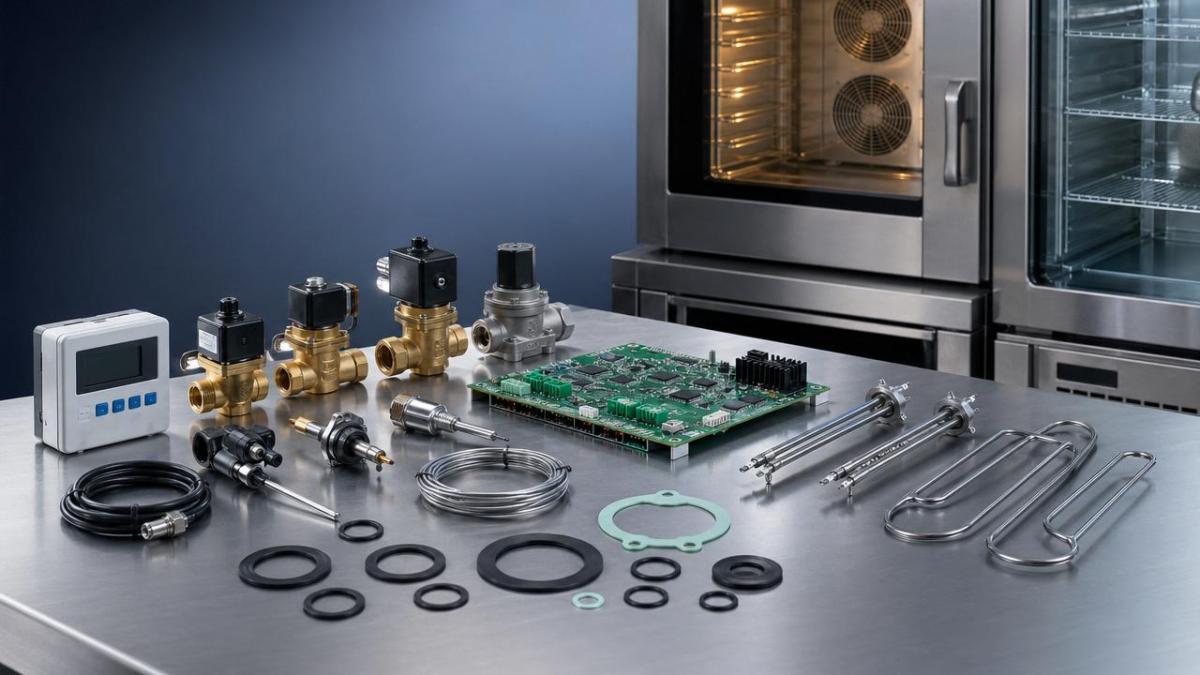
Commercial kitchens now depend on a wider mix of components than before: heating elements, thermostats, burners, valves, compressors, control boards, seals, hinges, switches, pumps, sensors, and smart interface modules. As kitchen systems become more automated and energy-efficient, the tolerance for part mismatch becomes smaller. A low-cost part that looks acceptable on paper can create hidden failures in safety, power consumption, or machine uptime.
For buyers in restaurants, hotel groups, service companies, and central kitchens, this means part sourcing is no longer just an operational task. It is a strategic procurement issue linked directly to maintenance performance, labor continuity, compliance, and guest experience. The biggest sourcing mistakes often happen not when teams ignore price, but when they underestimate how market changes alter the meaning of “fit,” “available,” and “reliable.”
The market signals procurement teams should pay attention to now
Several signals show why restaurant kitchen equipment parts sourcing is becoming more complex. First, equipment manufacturers are refreshing product lines more frequently, especially in energy-saving and digitally controlled categories. Second, more parts are sourced through multi-country supplier networks, creating variation in lead times and quality consistency. Third, maintenance teams increasingly need parts that match both mechanical structure and electronic control systems.
Another major signal is the growing pressure to reduce downtime. Restaurants and foodservice operators are running leaner teams, so unexpected equipment failure can affect service speed, menu availability, food safety, and customer satisfaction at the same time. In this environment, spare-parts procurement decisions are judged not only by unit cost, but by total operating impact.
These shifts make it more important to evaluate the full sourcing environment surrounding restaurant kitchen equipment parts, not just the part itself.
The most important sourcing risks to watch in the current cycle
1. Hidden compatibility risk is expanding
Compatibility used to mean matching model number, size, or basic technical specification. Today it can also involve firmware version, sensor calibration, mounting tolerance, temperature range, gas type, safety cut-off behavior, or communication with a control panel. This is especially relevant for ovens, refrigeration systems, fryers, dishwashers, combi equipment, and automated prep machines.
A part that is technically “equivalent” may still create unstable operation. Procurement teams should be cautious when suppliers offer broad replacement claims without clear test evidence or OEM cross-reference support.
2. Quality variation is becoming harder to detect before delivery
In a price-sensitive market, some suppliers rely on outsourced batches, mixed production standards, or changing component sources. For buyers of restaurant kitchen equipment parts, this can lead to parts that pass visual inspection but fail early under heavy kitchen use. Seals may degrade under heat, motors may lose stability, and electronic boards may show inconsistent performance in humid environments.
The biggest danger is not always complete failure. Sometimes the part works just well enough to delay detection while increasing energy use, repair frequency, or food safety risk.
3. Lead-time risk now includes unpredictability, not just delay
Procurement teams often focus on average lead time, but the more serious problem today is lead-time volatility. A supplier that usually delivers in ten days but occasionally needs six weeks can be more disruptive than a consistently slower supplier. The challenge grows when parts are imported, consolidated through trading companies, or dependent on upstream electronic components.
For restaurant operations, unpredictability is expensive because emergency purchases, temporary shutdowns, and last-minute technician rescheduling all multiply the original part cost.
4. Supplier reliability is under more pressure than catalogs suggest
A polished catalog does not guarantee stable supply capability. Some vendors are strong in trading but weak in traceability, technical support, or after-sales response. Others can fulfill standard orders but struggle with repeat consistency, document accuracy, or urgent replenishment. For buyers handling restaurant kitchen equipment parts, supplier risk now includes responsiveness, engineering understanding, packaging discipline, and willingness to solve failures after shipment.
5. Regulatory and food safety exposure is increasing
As foodservice operators face tighter expectations around hygiene, energy use, and workplace safety, parts sourcing has a compliance dimension. Materials used in gaskets, coatings, insulation, electrical connectors, and food-contact components may need closer review. Even when local regulations differ by market, the practical trend is clear: documentation, traceability, and safe-use confidence matter more than before.
Why these risks are affecting procurement decisions across the foodservice chain
The impact of sourcing risk is not limited to the procurement department. It spreads across kitchen maintenance, finance, operations, and brand reputation. The same late or incorrect part can create different problems depending on the business model.
This is why leading buyers increasingly evaluate restaurant kitchen equipment parts through a risk-adjusted lens. They ask not only “What is the price?” but also “What happens if this part underperforms, arrives late, or creates another callout?”
What stronger procurement teams are doing differently
A visible shift in the market is that stronger procurement organizations are becoming more data-led and category-specific. They are no longer applying one generic sourcing method to every spare part. Instead, they classify parts by criticality, usage frequency, technical complexity, and downtime impact.
For critical restaurant kitchen equipment parts, they often combine several actions:
- building approved supplier tiers rather than relying on a single low-cost source;
- keeping verified technical records, including model, revision, and installation notes;
- tracking failure patterns to identify weak batches or recurring compatibility issues;
- holding safety stock for high-downtime items while reducing excess stock on slow movers;
- asking suppliers for clearer traceability, inspection routines, and after-sales escalation paths.
This is not simply better process discipline. It is a response to a market where product complexity and operating pressure are both increasing.
How to judge suppliers in a market shaped by change
When market conditions shift, supplier selection should also shift. A vendor that was acceptable when demand was stable and equipment was simpler may no longer be the right long-term partner. Procurement professionals should assess suppliers based on how they perform under changing conditions, not just normal conditions.
What signals to keep monitoring over the next 12 to 24 months
Looking ahead, buyers of restaurant kitchen equipment parts should continue watching a few high-value signals. One is whether OEMs accelerate the use of proprietary electronics and software-linked components, which may narrow substitute options. Another is whether energy standards and sustainability expectations push more design changes into core kitchen systems. A third is whether regional manufacturing shifts improve resilience or simply create new layers of sourcing complexity.
Buyers should also watch internal signals: Which parts are causing repeated emergency purchases? Which suppliers are frequently revising delivery promises? Which equipment categories show the highest mismatch or return rates? These indicators often reveal risk earlier than market headlines do.
A practical response framework for procurement professionals
The best response is not to overreact to every disruption, but to build a more selective and resilient sourcing model. Start by segmenting restaurant kitchen equipment parts into critical, routine, and low-risk categories. Then align each group with the right level of technical validation, supplier depth, and stock planning. This creates a more realistic balance between cost control and operational protection.
It is also wise to strengthen communication between procurement, maintenance, and operations. Many sourcing failures happen because the part was purchased correctly from a commercial standpoint but incompletely from a usage standpoint. A shared review of failure mode, installation conditions, and urgency can improve sourcing quality more than price negotiation alone.
Final judgment: the smarter question is not where to buy, but how to reduce exposure
The sourcing environment for restaurant kitchen equipment parts is becoming more sensitive to quality variation, product complexity, and supply instability. That change affects procurement professionals directly because every part decision now has a clearer link to uptime, repair efficiency, food safety, and total operating cost.
If your business wants to judge how these trends may affect future sourcing performance, focus on a few questions first: Which parts create the highest downtime risk? Which suppliers can prove consistency under pressure? Where are compatibility checks too weak for current equipment? And which categories need a more resilient stock-and-sourcing strategy before the next disruption appears? Those answers will do more to improve procurement outcomes than chasing the lowest quote in a changing market.
Popular Tags
Kitchen Industry Research Team
Dedicated to analyzing emerging trends and technological shifts in the global hospitality and foodservice infrastructure sector.
Industry Insights
Join 15,000+ industry professionals. Get the latest market trends and tech news delivered weekly.
No spam. Unsubscribe anytime.
Contact With us
Contact:
Anne Yin (Ceramics Dinnerware/Glassware)
Lucky Zhai(Flatware)