Kitchen tools OEM: when customization delays launch plans
In kitchen tools OEM projects, customization is often the selling point—but it can also become the reason launch plans slip. For project managers balancing quality, compliance, sourcing, and delivery milestones, even small design changes may trigger costly delays across the supply chain. Understanding where customization creates risk is the first step to keeping product development on schedule and market entry on track.
Why kitchen tools OEM customization often disrupts launch schedules
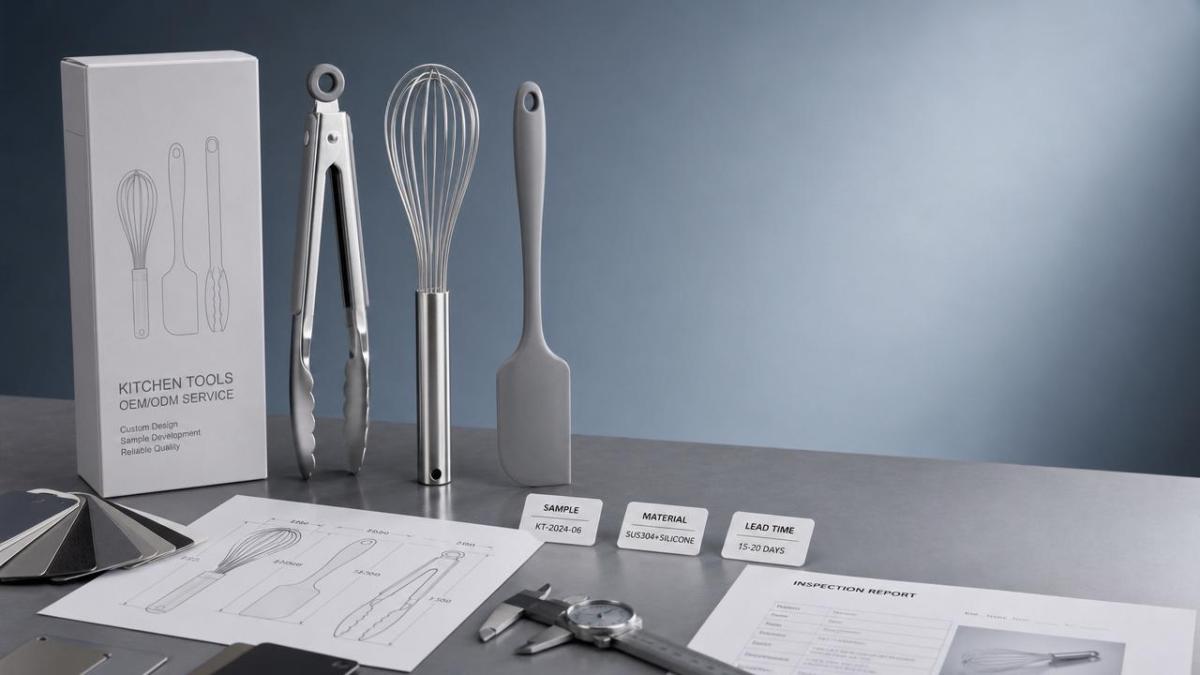
In the kitchen equipment industry, OEM development rarely involves a single variable. A custom handle shape, a new surface finish, a food-contact material change, or retail-ready packaging can affect tooling, sampling, test protocols, supplier coordination, and shipment planning at the same time. For project managers, this means a kitchen tools OEM program is not delayed by customization alone, but by the chain reaction it creates.
The issue is especially visible in global supply networks serving restaurants, hotels, central kitchens, food processing plants, and consumer markets. Kitchen tools may appear simple compared with automated cooking systems or processing machinery, yet they still carry strict expectations for food safety, durability, ergonomics, and production consistency. When launch dates are tied to store rollouts, seasonal promotions, or facility opening schedules, a few weeks of slip can affect revenue, inventory, and customer confidence.
- Design changes often force revalidation of drawings, dimensions, and usage requirements.
- Material substitutions may alter compliance checks for food-contact safety, corrosion resistance, or heat tolerance.
- Packaging customization can extend lead time because carton structure, labeling, barcodes, and drop-test requirements need separate approval.
- Multi-country projects add complexity when labeling, documentation, and market requirements differ by destination.
Customization is valuable, but only when scope is controlled
A well-managed kitchen tools OEM project can still deliver competitive differentiation. Custom grips can improve user comfort, proprietary packaging can strengthen shelf appeal, and tailored specifications can align products with foodservice workflows. The problem starts when customization enters too many layers at once without a freeze point. Project leaders then lose visibility over what is critical, what is optional, and what should be postponed to a later revision.
Where delays usually begin in a kitchen tools OEM project
Before setting a launch date, teams should map the most delay-prone stages. In kitchen tools OEM development, delays usually begin long before mass production. They often start in requirement definition, sample review, or supplier communication, then only become visible when the timeline is already under pressure.
The table below helps project managers identify common delay sources and their operational impact across product development and sourcing.
For most project management teams, the practical lesson is clear: launch risk is usually embedded in early decisions. If the kitchen tools OEM brief is weak, later efforts in expediting production often recover less time than expected.
The hidden problem: simple tools still have complex dependencies
A peeler, tong, whisk, spatula, or serving utensil may not look like a complex engineered product. Yet once a buyer requests a custom mold, silicone hardness range, stainless steel grade, retail insert, multilingual manual, or dishwasher performance target, the project becomes a coordinated industrial task. That is why kitchen tools OEM schedules should be built with engineering logic, not just with sales assumptions.
How to judge which customization requests are worth the time
Not every customization creates equal value. Project managers and engineering leads need a decision framework that separates revenue-driving features from launch-threatening details. In many kitchen tools OEM projects, a faster market entry with 80% of the desired customization delivers a better commercial result than a delayed launch with full specification complexity.
A practical screening method
- Define non-negotiables first: food-contact safety, functional performance, target cost, and required delivery window.
- Classify each custom request as essential, brand-enhancing, or optional.
- Estimate whether the request affects tooling, material sourcing, testing, packaging, or documentation.
- Approve a design freeze date and reserve later enhancements for version 2 or a future production batch.
This approach is especially useful in the broader kitchen equipment sector, where smart systems, energy-efficient appliances, and integrated workflows already compete for project budget and timeline attention. Kitchen tools should support the launch strategy, not consume disproportionate project capacity.
Standard platform vs fully custom kitchen tools OEM
The comparison below helps teams decide whether to customize based on an existing platform or start from a fully bespoke concept.
For many project teams, the second option is the most practical. It preserves room for brand expression while reducing the risk of missed retail windows or delayed site openings.
What project managers should confirm before approving a kitchen tools OEM timeline
A realistic timeline depends less on promised lead time and more on the quality of assumptions behind it. Before approving internal milestones, project managers should verify whether engineering, sourcing, quality, and logistics are aligned on the same version of the project scope.
Core checkpoints before schedule sign-off
- Has the material specification been fixed, including stainless steel grade, polymer type, coating, or silicone hardness where relevant?
- Are food-contact expectations documented for the target market, including declarations or test reports that may be requested by buyers or importers?
- Is the packaging structure approved, including carton marking, barcode rules, and palletization plan?
- Have sample approval criteria been defined in measurable terms rather than subjective comments such as “looks better” or “feels premium”?
- Has the factory confirmed production slot availability during the intended manufacturing window?
These checkpoints matter because the kitchen equipment sector operates under pressure from evolving food safety expectations, energy-conscious operations, and increasingly digitized procurement systems. Even for manual tools, documentation discipline and production readiness are becoming more important in international trade.
Timeline buffers should match the type of customization
If a project only changes logo and packaging, the timeline buffer can be smaller. If it includes new molds, mixed materials, or multiple export destinations, the buffer must be wider. A single “standard lead time” does not reflect the real behavior of kitchen tools OEM projects.
Compliance and quality points that can delay shipment at the last minute
Late-stage shipment delays often come from issues that were considered minor during development. In kitchen tools OEM programs, these usually involve food-contact declarations, labeling details, packaging markings, or inspection findings linked to consistency rather than function alone.
The following table summarizes common control points that should be reviewed before mass production and pre-shipment approval.
Project managers do not need to become compliance specialists, but they do need to ensure these checkpoints are assigned, dated, and documented. In many delayed kitchen tools OEM launches, the final obstacle is not manufacturing output. It is an unresolved approval item that no one owned clearly.
How to reduce delay risk without giving up customization
The goal is not to eliminate customization. The goal is to structure it so that launch-critical elements are protected. In a modern kitchen equipment supply chain, where buyers increasingly expect responsive design, efficient sourcing, and international compliance awareness, the best OEM partners help customers control variation instead of simply accepting every change request.
Recommended implementation approach
- Start from a validated base product whenever possible, then customize visible or user-facing elements first.
- Create a change-impact matrix showing whether each request affects tooling, material lead time, testing, or packaging.
- Run sample approval in stages: function first, appearance second, packaging third.
- Lock a final revision date tied to the production booking date, not just to internal design preference.
- Prepare fallback options such as neutral packaging, standard colors, or alternate material grades if the critical path slips.
This staged method is useful across commercial kitchens, hospitality supply, and consumer retail programs. It reflects the reality that not all product attributes carry the same business weight. Some protect safety and usability. Others mainly affect branding. Managing them separately improves launch reliability.
FAQ: practical questions about kitchen tools OEM timelines
How long does a kitchen tools OEM project usually take?
It depends on the level of customization. A project based on an existing tool platform with custom logo and packaging may move much faster than a fully new design requiring molds and multiple sample rounds. The most reliable way to estimate duration is to separate development time, approval time, production time, and shipping time instead of asking for a single total number.
What is the most common mistake in kitchen tools OEM sourcing?
The most common mistake is approving customization before locking requirements. Teams often discuss look and feel before confirming material grade, usage temperature, inspection criteria, or packaging needs. That creates expensive revisions later and makes the original launch date unrealistic.
Should project teams choose lower cost or shorter lead time?
That depends on the business objective. If the project supports a store opening, contract start, or seasonal sales window, shorter lead time may protect more value than a small unit cost reduction. If demand is stable and launch flexibility exists, teams may accept a longer cycle for a more optimized cost structure. Good kitchen tools OEM decisions compare total business impact, not just factory price.
Which teams should be involved before final approval?
At minimum, project management, sourcing, quality, engineering, and packaging should review the final version. If products are entering regulated or retailer-controlled markets, compliance and logistics teams should also confirm labeling, documentation, and receiving requirements before production starts.
Why choose us for kitchen tools OEM project support
In the kitchen equipment industry, success depends on more than manufacturing capacity. It requires coordinated control over specification review, sourcing feasibility, quality expectations, packaging execution, and delivery planning. We support kitchen tools OEM projects with a practical focus on launch reliability, not just customization possibilities.
- We help confirm product parameters early, including materials, structure, usage expectations, and packaging details that affect lead time.
- We can discuss product selection paths, from standard-platform adaptation to deeper custom development, based on your schedule and budget targets.
- We support timeline planning with attention to sample stages, production readiness, and shipment coordination rather than relying on rough estimates.
- We can review certification and compliance expectations at a general level so your team can prepare the right documentation path for target markets.
- We can arrange discussion around sample support, quotation structure, packaging options, and customization boundaries that protect launch dates.
If your kitchen tools OEM plan is under timeline pressure, contact us to review key specifications, customization scope, delivery expectations, sample priorities, and quotation details. A focused discussion at the start can reduce rework later and help your team move toward a more predictable launch.
Popular Tags
Kitchen Industry Research Team
Dedicated to analyzing emerging trends and technological shifts in the global hospitality and foodservice infrastructure sector.
Industry Insights
Join 15,000+ industry professionals. Get the latest market trends and tech news delivered weekly.
No spam. Unsubscribe anytime.

Contact With us
Contact:
Anne Yin (Ceramics Dinnerware/Glassware)
Lucky Zhai(Flatware)