
How kitchen prep table layouts differ across regional markets
From Europe to Asia and North America, kitchen prep table layouts reflect local workflow, food safety rules, labor patterns, and space constraints. Whether paired with a kitchen storage cabinet, commercial sink unit, or other kitchen preparation equipment, the right configuration can improve speed, hygiene, and cost control. This article explores how regional market differences shape practical design choices for buyers, operators, and decision-makers.
For procurement teams, operators, and business leaders, a kitchen prep table is not just a stainless work surface. Its size, undercounter storage, backsplash design, mobility, sink integration, and material grade all affect workflow and return on investment. Regional market differences also shape what is considered standard. A 1200 mm refrigerated prep table may fit an urban Asian kitchen, while a 2400 mm modular island table may be more common in North American institutional foodservice.
These differences matter when importing equipment, standardizing multi-site projects, or planning new kitchens for restaurants, hotels, central kitchens, and food processing operations. Buyers that ignore local layout expectations often face 3 common problems: inefficient staff movement, difficult cleaning routines, and non-compliance with local hygiene practices. Understanding regional logic helps reduce redesign costs, avoid installation delays, and improve operational consistency.
Why regional kitchen prep table layouts vary in the first place
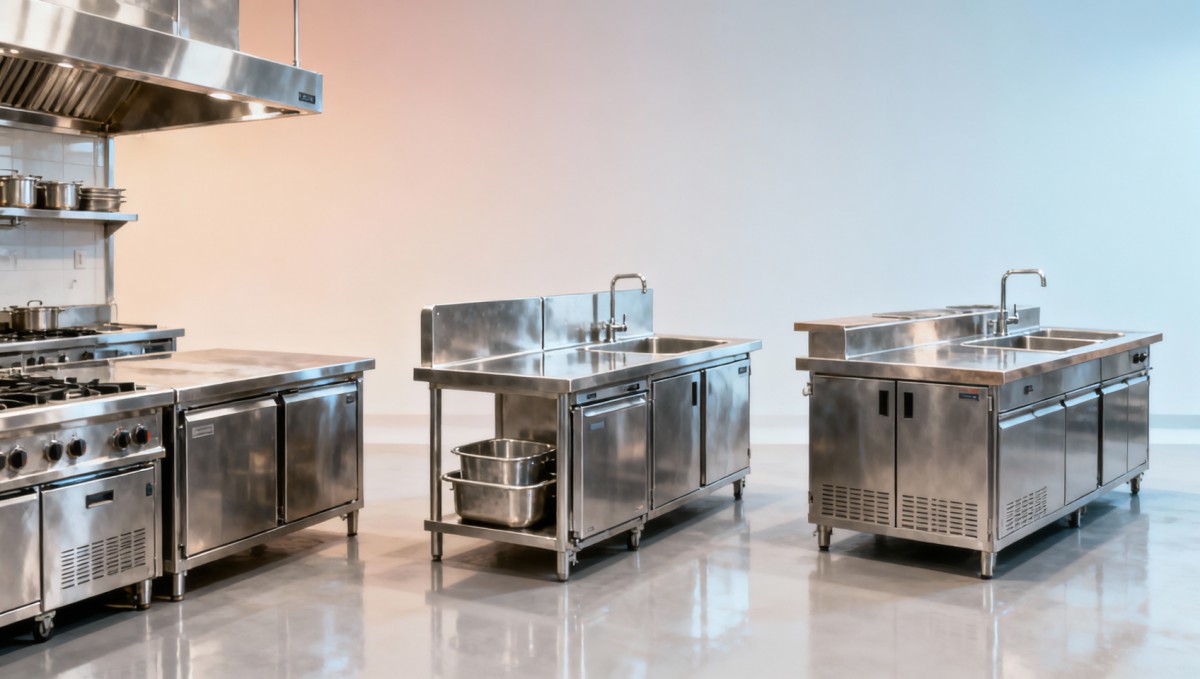
Kitchen prep table layouts are shaped by more than culinary habits. In most markets, 4 factors drive configuration decisions: available floor area, labor cost, food safety control points, and the degree of process standardization. A compact quick-service kitchen in Tokyo, for example, often prioritizes vertical storage and narrow prep lines, while a hotel production kitchen in Germany may favor separate zoned tables for raw, cooked, and pastry preparation.
Space is often the first constraint. In dense urban markets, prep tables between 600 mm and 700 mm deep are common because aisles may need to stay within practical widths of 900 mm to 1200 mm. In larger facilities, tables with 750 mm to 900 mm depth offer more landing area for trays, GN pans, cutting boards, and scales. The difference seems small, but over a 6-hour prep shift it affects reach distance, cross-traffic, and cleaning time.
Labor structure also influences layout. Markets with higher labor costs tend to prefer integrated kitchen preparation equipment that reduces walking and handoffs. This may include prep tables with refrigerated bases, waste chutes, overshelves, and nearby commercial sink unit access. In markets where labor is more available but kitchen footprints are tight, operators may still choose simpler tables and rely on station specialization instead of highly integrated workstations.
Food safety expectations create another layer of variation. Some regions prefer clear physical separation between vegetable washing, meat trimming, and final assembly. Others accept compact linear workflows if sanitation protocols are strict and cleaning cycles are frequent. Typical cleaning intervals in busy commercial kitchens range from every 2 to 4 hours for touch surfaces, with deeper sanitation at the end of each shift. That routine directly affects whether buyers choose open-leg tables, enclosed cabinets, or mobile units.
Four practical drivers behind market-specific layouts
- Floor plan efficiency: smaller kitchens need tighter table depths, mobile units, and more corner optimization.
- Workflow segmentation: high-volume kitchens may separate raw prep, finishing, and plating into 3 or more stations.
- Sanitation routines: local cleaning frequency influences open-frame versus enclosed cabinet designs.
- Utility integration: demand differs for prep tables paired with sinks, refrigerated bases, or power outlets for small appliances.
For buyers working across borders, the key lesson is simple: there is no universal “best” kitchen prep table layout. The best layout is the one that aligns with local operating logic, available labor, menu structure, and compliance habits while still meeting long-term maintenance and procurement goals.
How Europe, North America, and Asia approach prep table planning differently
Although there is overlap across markets, Europe, North America, and Asia often emphasize different layout priorities. European kitchens frequently place strong value on zoning, hygiene separation, and durable stainless fabrication suited to long service life. North American operators often focus on throughput, standardized station design, and compatibility with modular line equipment. Asian markets, especially in large cities, typically prioritize compact footprints, multi-function use, and fast turnover in limited spaces.
In Europe, prep tables are often selected as part of a broader system that includes a kitchen storage cabinet, wall shelving, sink stations, and ingredient flow planning. A bakery, butcher prep room, or hotel cold kitchen may use dedicated tables for one product category to reduce contamination risk. In these setups, 304 stainless steel is often treated as the baseline for wet or hygiene-sensitive zones, while enclosed bases are used to limit dust accumulation and support orderly storage.
In North America, larger back-of-house areas and high-volume service models encourage wider use of island prep tables, refrigerated sandwich prep stations, and mobile butcher blocks or worktables on casters. Workflows are often designed for speed and repeatability, especially in chain restaurants, cafeterias, and institutional kitchens. It is common to see table lengths of 1800 mm to 3000 mm in production zones, with clear separation between receiving, prep, cookline, and dispatch.
Across Asia, layout planning frequently balances intense production with space efficiency. In many metropolitan kitchens, prep table layouts need to support multiple menu types in a footprint that may be 20% to 40% smaller than comparable Western operations. That leads to stronger demand for under-shelf storage, folding side shelves, integrated chopping surfaces, and prep tables positioned close to sink and cookline areas to reduce steps per task.
Regional layout comparison at a glance
The table below summarizes common differences buyers should expect when evaluating kitchen prep table layouts across major regional markets.
For multi-market projects, this comparison helps procurement teams avoid a common error: copying one region’s preferred kitchen preparation equipment package into another market without adjusting workflow geometry. A layout that performs well in a suburban commissary may not work in a compact city-center restaurant or a hotel basement kitchen with limited circulation space.
What this means for sourcing decisions
If your business serves distributors, chain operators, or hospitality groups in different regions, product flexibility matters. Offering prep tables in 3 to 5 standard lengths, multiple leg or cabinet options, and optional sink or shelf integration can often improve fit rate and reduce project modifications during installation.
Key design variables buyers should compare before choosing a layout
A kitchen prep table layout should be evaluated as part of the whole workstation, not as a standalone product. Buyers should compare at least 6 variables: table dimensions, material grade, storage style, mobility, cleaning access, and adjacency to other equipment. These variables affect both day-to-day output and total ownership cost over 3 to 7 years of commercial use.
Dimensions come first. Common commercial table lengths range from 900 mm to 2400 mm, while depths often range from 600 mm to 900 mm. Height is usually around 850 mm to 900 mm, but slight changes matter when kitchens handle repetitive cutting, pastry work, or heavy pan loading. If a station is too low, fatigue increases. If it is too high, staff may struggle with fine knife work over long shifts.
Material and structure are equally important. Stainless grades such as 201 and 304 are both used in the market, but their suitability depends on humidity, cleaning chemistry, and exposure to salt or acids. Open-leg tables are easier to clean underneath and may cost less, while enclosed cabinet bases support storage control and visual order. A backsplash of 100 mm to 150 mm is often useful where wall splashing or debris accumulation is a concern.
Workflow adjacency should also be assessed carefully. A prep table placed 1 to 2 steps from a commercial sink unit can reduce motion waste in produce or seafood prep. In contrast, cold assembly or sandwich production may benefit more from refrigerated ingredient access directly below the worktop. Operators should map the sequence of receiving, washing, trimming, portioning, and transfer before locking in any layout.
Core specification checklist for procurement teams
The following table can be used as a practical comparison tool when reviewing offers from kitchen equipment suppliers.
This comparison shows that the “right” option depends on operating context. A compact restaurant may gain more from a narrow prep table with an undershelf, while a central kitchen may justify a larger modular layout with multiple specialized stations. Procurement value comes from matching the specification to actual process flow rather than selecting the lowest quoted unit cost.
Common selection mistakes
- Choosing length based only on wall space without checking staff turning radius and tray landing area.
- Adding cabinet storage below every prep table, even in wet areas where cleaning access should be prioritized.
- Ignoring whether the table must align with a commercial sink unit, dishwasher entry point, or pass counter height.
- Specifying one standard table model for all branches even though menu mix and local kitchen size differ by 25% or more.
Layout planning for different business scenarios and facility types
The ideal kitchen prep table layout changes significantly depending on whether the site is a restaurant, hotel, central kitchen, food processing room, or institutional canteen. In restaurants, speed and station overlap often matter most. In hotels, layout complexity rises because breakfast, banquet, à la carte, and pastry teams may share infrastructure. In food processing environments, process separation and washdown routines may take priority over front-line service speed.
For quick-service restaurants, prep tables are commonly arranged in linear or L-shaped lines to support ingredient replenishment and assembly. A station may need only 2 to 3 staff at peak time, but every extra step adds delay during rush periods. In such cases, undercounter refrigerated prep tables, topping rails, and nearby dry storage can create a compact high-output line. The design target is often to keep core ingredients within arm’s reach and keep restocking time below 30 seconds per cycle.
Hotels and institutional kitchens usually require more segmentation. Separate tables may be allocated for vegetable prep, meat trimming, pastry, cold kitchen, and temporary staging. This supports both menu diversity and batch control. In a banquet operation preparing 300 to 800 covers, a single multi-use table may become a bottleneck. Here, 2 to 4 dedicated prep islands or wall-line tables can improve consistency and reduce cross-contamination risk during busy production windows.
Central kitchens and food processing sites often prefer more industrial layout logic. Prep tables may be arranged by process direction, with one-way product flow from receiving to washing, trimming, portioning, packing, or dispatch. Mobile tables can be useful, but in higher-volume settings, fixed layouts with clear lane discipline often perform better. Cleaning, drainage, and floor slope also become more important, especially when wet prep takes place several times per shift.
Scenario-based layout guidance
- Restaurant kitchens: prioritize compact movement, dual-purpose storage, and fast ingredient access.
- Hotels: separate prep by menu category or production team to avoid congestion during overlapping service periods.
- Central kitchens: align table layout with one-way process flow and staging control for batch production.
- Food processing rooms: favor durable surfaces, easier washdown access, and stricter raw-to-finished product separation.
For operators and decision-makers, scenario fit is more valuable than generic feature lists. A premium table with many accessories may underperform if it conflicts with staffing patterns, cleaning routines, or utility placement. Good layout planning starts with task mapping, not with catalog selection.
Procurement, implementation, and long-term operating recommendations
Successful kitchen prep table procurement depends on translating workflow needs into measurable specifications. A practical sourcing process usually involves 5 stages: site survey, menu and process review, dimensional confirmation, equipment comparison, and installation verification. Even for standard products, a mismatch of 50 mm to 100 mm can affect door swing, drain access, or aisle clearance, which may then delay commissioning by several days.
Lead time planning matters as well. Standard stainless prep tables may ship in 2 to 4 weeks in some supply chains, while custom tables with sinks, drawers, or backsplash modifications may require 4 to 8 weeks. Buyers managing cross-border projects should also allow time for packaging review, customs coordination, and on-site inspection. Installation risk increases when kitchen preparation equipment arrives before utilities, floor finishes, or adjacent millwork are ready.
Maintenance should be considered during the buying stage. Open undershelves are easier to inspect and clean, while enclosed units may better protect supplies from dust and splashes. Weld quality, edge finishing, adjustable feet, caster durability, and load stability should all be checked. In heavy-use environments, a preventive inspection cycle every 3 to 6 months helps identify loose fittings, corrosion points, and leveling issues before they affect hygiene or operator safety.
Decision-makers should also think beyond the first purchase. If the business is expanding into multiple locations, consistent table families with modular options can simplify staff training, replacement part management, and future retrofits. Standardization is valuable, but only when it allows controlled variation for local market conditions. That balance is especially important in international hospitality and foodservice projects.
Implementation checklist for buyers and operators
The table below outlines practical checkpoints that help reduce procurement and installation risk.
These checkpoints are especially useful when kitchen storage cabinet systems, sink stations, and worktables are supplied by different vendors. Early coordination often prevents hidden conflicts and helps keep the full kitchen equipment package aligned with local operating realities.
FAQ
How do I choose between an open prep table and a cabinet-base table?
Choose open tables when sanitation visibility, floor cleaning access, and lower cost are the priority. Choose cabinet-base tables when controlled storage and cleaner visual presentation matter more. In wet prep zones with frequent washdown, open bases are often easier to maintain.
What table size works for compact urban kitchens?
In many compact kitchens, tables around 900 mm to 1500 mm long and 600 mm to 700 mm deep are practical. The exact size depends on aisle clearance, menu complexity, and whether refrigerated or dry storage is integrated below.
Is a custom prep table always better than a standard model?
Not always. Standard models usually reduce lead time and simplify replacement, while custom designs are best when the site has unusual dimensions, specific utility conditions, or special process requirements. Many projects benefit from semi-custom options rather than fully bespoke fabrication.
Regional market differences make kitchen prep table layouts a strategic choice rather than a simple catalog purchase. The best results come from aligning layout with local space conditions, labor patterns, sanitation routines, and business volume. Whether you are evaluating a compact prep station for an urban restaurant or a multi-zone setup for a hotel or central kitchen, the right combination of table dimensions, storage style, and equipment adjacency can improve efficiency, hygiene, and lifecycle value.
If you are planning a new kitchen, expanding into overseas markets, or upgrading existing kitchen preparation equipment, now is the right time to review your layout assumptions. Contact us to get a tailored solution, discuss product details, or explore more kitchen equipment options for your specific market and facility type.
Popular Tags
Kitchen Industry Research Team
Dedicated to analyzing emerging trends and technological shifts in the global hospitality and foodservice infrastructure sector.
Industry Insights
Join 15,000+ industry professionals. Get the latest market trends and tech news delivered weekly.
No spam. Unsubscribe anytime.
Contact With us
Contact:
Anne Yin (Ceramics Dinnerware/Glassware)
Lucky Zhai(Flatware)