
Restaurant supplies OEM: hidden costs in custom packaging
Restaurant supplies OEM can reduce unit costs and strengthen brand consistency, but finance decision-makers often face hidden expenses in custom packaging—from tooling and compliance to freight inefficiencies and inventory risk. This article outlines where those costs appear, how they affect total landed cost, and what procurement teams should evaluate before approving a packaging customization plan.
What restaurant supplies OEM means in packaging decisions
In the kitchen equipment and broader foodservice supply chain, restaurant supplies OEM usually refers to products manufactured by a supplier and delivered under the buyer’s brand, specification, or packaging format. For restaurants, hotels, food processors, and distributors, this model can cover everything from utensils and food containers to commercial kitchen accessories and small appliances. The appeal is clear: custom labeling, stronger brand recognition, and a more unified customer experience.
However, packaging customization is often evaluated too narrowly. Finance approvers may see the quoted box price, label price, or printing cost, but not the full chain of cost effects created by custom packaging choices. A carton redesign can change pallet density. A premium coating can increase minimum order quantity. A market-specific warning label can trigger artwork revisions across multiple SKUs. In restaurant supplies OEM, packaging is not just a branding layer; it is a cost driver that influences purchasing, logistics, compliance, warehousing, and working capital.
Why the industry pays close attention to hidden packaging costs
The kitchen equipment industry is becoming more international, automated, and quality-driven. Products move across borders more frequently, and customers expect consistent presentation, safe handling, and reliable compliance documentation. At the same time, restaurants and hospitality groups operate under tight margin pressure. That combination makes hidden packaging costs especially important.
For finance teams, the concern is not whether custom packaging has value. It often does. The real issue is whether the packaging plan improves total economics after including landed cost, replenishment efficiency, damage rates, and excess stock exposure. In a global sourcing environment, a low ex-factory packaging quote can still produce a high total cost if it causes poor cube utilization, customs delays, or frequent obsolescence during menu, language, or regulatory updates.
Core hidden costs behind restaurant supplies OEM custom packaging
The most common hidden costs in restaurant supplies OEM packaging are not always dramatic individually, but together they can materially change project profitability. Finance decision-makers should review them as a group rather than in isolation.
1. Tooling and setup charges
Custom inserts, molded trays, print cylinders, embossing plates, and die-cut templates may require one-time or periodic setup fees. These are often amortized over volume assumptions that look reasonable at launch but become expensive if actual sales are slower than forecast. For low- to mid-volume SKUs, setup recovery can significantly raise the effective packaging cost per unit.
2. Compliance and market-specific labeling
Commercial kitchen and restaurant-related products may need country-specific language, safety marks, recycling information, food-contact statements, or handling symbols. Even where the product itself remains unchanged, the packaging may require different legal text across regions. Each variation adds design management time, proofreading risk, and approval workload. Errors can create rework, delayed shipments, or non-compliance costs.
3. Freight inefficiency
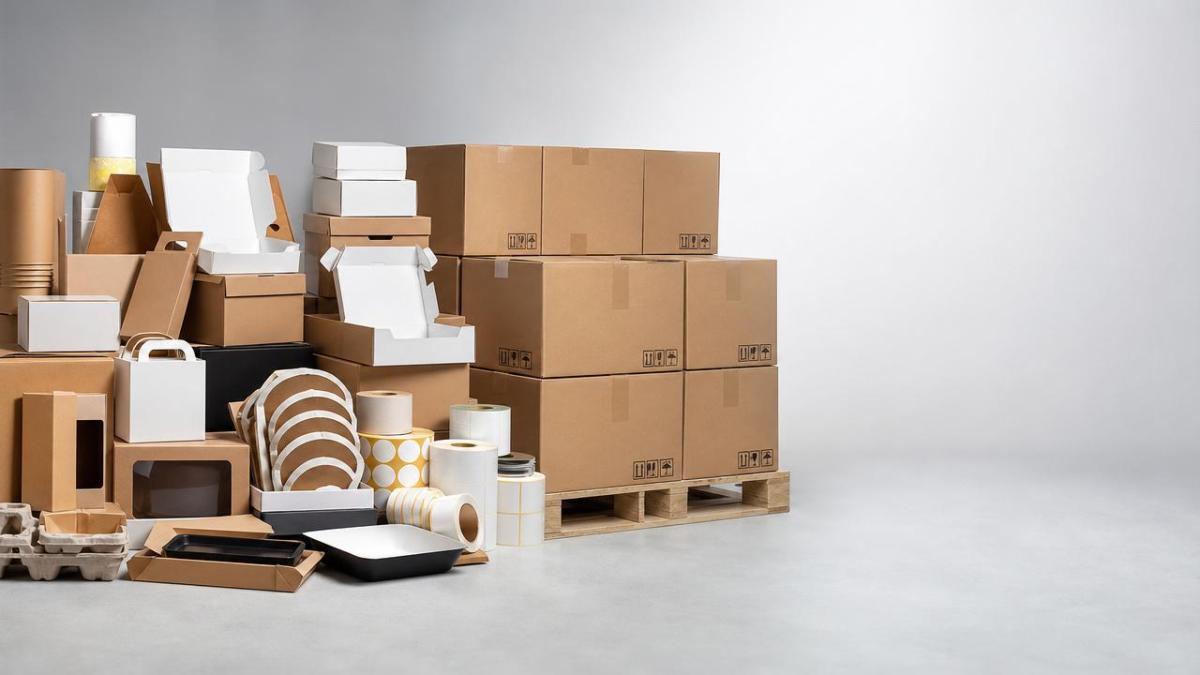
A larger box, decorative insert, or low-density protective format may improve shelf impression but reduce carton fill rate and pallet efficiency. That means fewer sellable units per container and a higher logistics cost per item. For import-heavy sourcing, freight inefficiency is often one of the largest hidden costs in restaurant supplies OEM, especially for lightweight but bulky goods.
4. Inventory and obsolescence risk
Custom packaging usually requires larger print runs or supplier-side MOQ commitments. If demand shifts, branding changes, or regulations are updated, old stock may become unusable. This risk is higher for multi-market distributors and private-label programs with frequent assortment adjustments. Finance teams should treat excess packaging inventory as working capital exposure, not just a procurement detail.
5. Quality failure and repacking costs
Packaging that is visually attractive but operationally weak can raise damage claims, returns, and labor costs. Repacking at a destination warehouse is particularly expensive because it combines material waste, labor, and shipment delays. In foodservice supply chains, where delivery timing matters, weak packaging design can also affect customer satisfaction and reorder behavior.
6. Internal coordination cost
Artwork reviews, cross-functional approvals, supplier communication, compliance checks, and sample revision rounds all consume internal time. These soft costs are rarely booked against packaging projects directly, yet they influence decision speed and total project burden. For a finance approver, repeated cross-department effort is a real cost even if it does not appear on the supplier invoice.
A practical overview of cost impact areas
The table below summarizes the most common cost areas and the financial questions they create in restaurant supplies OEM programs.
Where packaging customization creates real business value
Not every customization is a cost trap. In many cases, restaurant supplies OEM packaging supports measurable commercial value. For example, a distributor selling to hotel groups may need consistent packaging for easier receiving and private-label positioning. A chain operator may require standardized labeling to reduce confusion across locations. A manufacturer entering export markets may use upgraded packaging to support channel credibility and reduce transit damage.
The key is to distinguish value-generating customization from purely cosmetic changes. If a packaging revision improves stacking efficiency, speeds warehouse handling, reduces breakage, or supports multi-country sales, it can justify its added cost. If the change only upgrades appearance without improving sales conversion or operational performance, approval standards should be much stricter.
Typical scenarios in the kitchen equipment and foodservice supply chain
Different users of restaurant supplies OEM face different packaging priorities. Understanding the scenario helps finance teams evaluate cost logic more accurately.
How finance approvers should evaluate total landed cost
A useful review framework for restaurant supplies OEM is to move beyond purchase price and test the packaging plan against total landed cost. This includes material cost, fixed setup charges, inbound freight, customs impact, storage, handling labor, damage rates, and expected write-offs. If any one of these items is excluded, the business case may look stronger than it really is.
Finance teams should also ask whether projected sales volume is stable enough to support custom packaging inventory. Where demand is uncertain, flexible options such as generic cartons plus variable labels, or shared packaging structures across product families, may preserve branding while lowering exposure. In many cases, the best financial outcome comes from selective customization rather than full customization.
Practical recommendations before approving a customization plan
Before signing off on a custom packaging project, finance and procurement teams should require a structured review. First, confirm whether the packaging objective is commercial, operational, regulatory, or purely visual. Second, separate one-time costs from recurring costs and test payback under realistic sales scenarios. Third, request carton and pallet optimization data, not just packaging samples. Fourth, verify who owns obsolete packaging risk if artwork changes or orders are postponed.
It is also wise to ask suppliers about standardization opportunities. In the kitchen equipment sector, many products can use common inner protection, outer carton dimensions, or multilingual base artwork. These measures reduce complexity without abandoning private-label goals. For cross-border restaurant supplies OEM programs, packaging decisions should involve sourcing, logistics, compliance, and finance from the beginning, not after artwork is already finalized.
FAQ for finance-focused evaluation
Is custom packaging always more expensive in restaurant supplies OEM?
Not always. It can lower total cost if it improves transport density, reduces damage, or supports stronger sales performance. The issue is whether the full cost model supports the added complexity.
What cost is most commonly underestimated?
Freight inefficiency is frequently underestimated, especially for bulky kitchen and restaurant supply items. Small dimensional changes can significantly affect container utilization and landed cost.
How can companies reduce packaging risk without losing branding?
A common approach is modular packaging: standard structural packaging combined with market-specific labels or sleeves. This keeps brand visibility while limiting obsolete inventory and setup duplication.
A balanced path forward
For companies using restaurant supplies OEM, custom packaging can absolutely support brand value, compliance readiness, and better customer experience. But for finance approvers, the right question is not whether customization looks attractive. It is whether the packaging strategy produces a sound total return after accounting for setup, freight, compliance, inventory, and operational effects. In the kitchen equipment and foodservice market, disciplined packaging decisions often create more durable value than highly customized but poorly modeled programs.
If your team is reviewing a new OEM packaging proposal, build the case around total landed cost, scenario-based inventory risk, and real supply chain fit. That approach leads to smarter approvals, fewer surprises, and better long-term performance across restaurant, hospitality, and food processing channels.
Popular Tags
Kitchen Industry Research Team
Dedicated to analyzing emerging trends and technological shifts in the global hospitality and foodservice infrastructure sector.
Industry Insights
Join 15,000+ industry professionals. Get the latest market trends and tech news delivered weekly.
No spam. Unsubscribe anytime.
Contact With us
Contact:
Anne Yin (Ceramics Dinnerware/Glassware)
Lucky Zhai(Flatware)